
I’m very pleased to be a member of the Coleridge Memorial Trust, based in Ottery St Mary where Samuel Taylor was born.
Before I had joined, the then CM Project thought up and realised an absolutely brilliant idea, to have Coleridge’s poem Kubla Khan engraved in stone – granite imported from China – and then laid out in the local park at the Land of Canaan for people to read as they pass by.


As a member after this, I was enthused to be involved with others in the writing of the information used on mobile banners produced by the Project/Trust and which can be used for display in the local St Mary’s Church – where Coleridge’s father was the vicar – in schools, in museums, in village halls: any venue were presentations relating to the life of Coleridge and his work are made. Extracts from these banners are placed in two permanent lecterns at the Land of Canaan.

Two tears ago I reviewed a couple of then recent books on Coleridge, and am putting here now for interest. Originally posted February, 2014:
Two Coleridge Books
The Treachery at Nether Stowey, by Matthew Greenwood [Blue Shed press, but I don’t think the book is available here anymore, so you can buy here]; From Culbone Wood – In Xanadu, note books and fantasies, by Tom Lowenstein [Shearsman, and can be purchased here]
Both of these authors create narrative ruses to present their reflections on Coleridge, and as a reader your inclination to the formal or to the philosophical will determine which you will want to pursue. I think the poles I have just drawn are important to exaggerate so because both writers treat those styles to extremes.
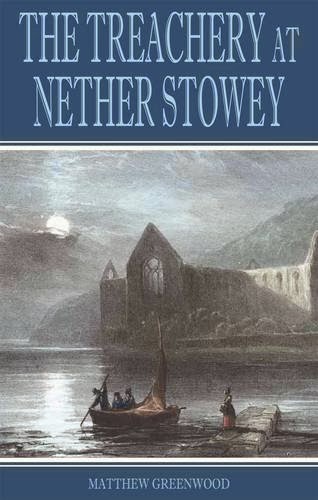
Matthew Greenwood presents a range of forensic, transactional pieces that are authored by various people watching and documenting the political and irreverent activities of S.T. Coleridge. The snippets of information come via imaginary letters, extracts from journals, memoranda, transcripts from meetings before The Board of Interrogation of the Privy Council and records of conversations with the Prime Minister, to name a selection. Their imagined authors range from the Duke of Portland to the Government Code-Breaker ‘Maddison’ and then anonymous sources, to name a selection. It is cloak and dagger stuff throughout and if this kind of relentless information-gathering and accusation is of interest you will probably be carried along by the varying sources and intrigue this can generate. I found the repetitive nature of such styles of writing – differing only in their type but not in voice or pace or even emotive impact – quite flat and ultimately uninteresting. But if the detailed and informed content of those imaginary observations are of themselves intriguing, then the studious representation of them will engage.
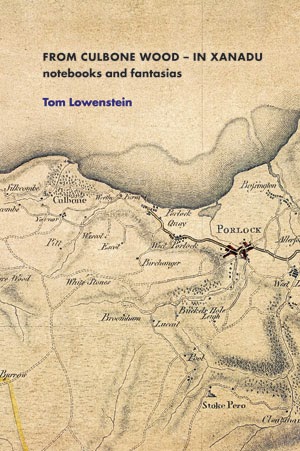
Tom Lowenstein presents a prose narrative in Coleridge’s voice [or not, it could be a more generalised if sympathetic voice, but I prefer to read it as STC] so it is singular as well as philosophical, though that isn’t to say it reads poetically all of the time. Indeed, this is a bravura piece of writing in many ways, but the intensity of Lowenstein’s encapsulation of Coleridge’s thoughts and expression can be rather academic and, perhaps for some, too learned. For example, there is a wonderful section early on where our author Coleridge ruminates on the syllabic considerations of changing Purchas’s Xaindu, as he puts it, ‘exfoliating to become Xanadu – a tri-syllable which was easy enough to tessellate into an iambic sequence.’ Now, I rather liked this learned launch into the mechanisms of metre, but it is easy to understand how some would prefer the imagined expose of treachery over the expose of measuring feet in a poetic line! Lowenstein’s research into and knowledge of Coleridge is impressive, as is Greenwood’s, but the imagined depths of Lowenstein’s explorations into the writing of Kubla Khan hold an intrinsic interest for this reader because it seems in such empathy with Coleridge as poet and philosopher whereas Greenwood is observing and examining from the outside. It is worth noting that there are also expansive poetic passages in Lowenstein’s book which are beautiful and evocative in their own right.
I can only repeat, reading either is very much a matter of personal choice as the extremes of each focus will alienate if you do not share in the intense ruse of the narrative.
 gravyfromthegazebo
Pingback: Coleridge’s Mixed Message and National Poetry Day | mikeandenglish
Pingback: Coleridge Banners | mikeandenglish