Certainties
I was sitting outside reading and initially just delighted that he had written I step to one side to let them pass, but it is so slippery…. rather than the prevalent silliness of slippey [even the BBC….]. When I later went indoors, there was a plain envelope on the floor beneath the letterbox. Inside was a pamphlet-like ‘Dictionary’ – as it said on the cover – but when I opened the slim volume there were mainly blank pages and only one definition which was this: elusive in meaning because changing according to one’s point of view. This confused but did not displease. I was, however, later disappointed that there was a handwritten note, on the final of the few otherwise blank pages, because it was addressed generally rather than personally To whom it may elude. That said, the smiley-face emoticon after this made me lol.
The universal literary question asks whether the story being told is about appearance or reality and in Ian Seed’s collection of prose poems Identity Papers it is of course both. But they don’t ‘elude’ for me or cause any anxiety about fixture because certainties would seem to be the ultimate illusion in our lives. I enjoy the uncertain journeys. These can slip and slide across the varying landscapes too.
Three poem narratives will serve as an immediate example of the shifting terrain under which these poems are precarious: Honoured Guest is unusual but relatively bland [as it should be, by the way]; New Neighbours disturbs in its mention of child abuse, and Documentary is quite beautiful in its story of a man recovering from mental health issues who we read walks on a sea of crushed forest, formed from dead trees over millions of years who then seems in danger, but at the end of the momentary observation shows a smile that radiates confidence.
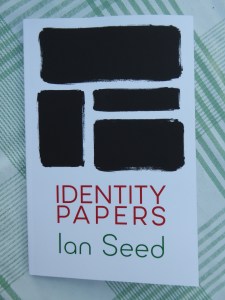
The book’s cover suggests something has been redacted, but transferring this as a metaphor to the poems’ quick if tenuous reads would be overstating. There are no black obliterations that require being found out – that would suggest there had been those prior certainties; and anyway, the darknesses of many of these narratives, like New Neighbours, have not been covered up. Nor has that in Late which seems like it could be linked to a ‘real’ life story of a mother who has lost a child in a hit-and-run, but Seed’s imaginary involvement in another near tragedy for her, and the tender absurdity of his offer to make amends, take us as readers beyond a literal response to her story to its shadier if still compassionate reflection.
There is much to smile about in the unravelling of unevents as well. The title poem is lightly teasing in a tale of a return to a former place and life, the closing enlightenment more comic than the tragedy it could have been, or would if a Hollywood film.
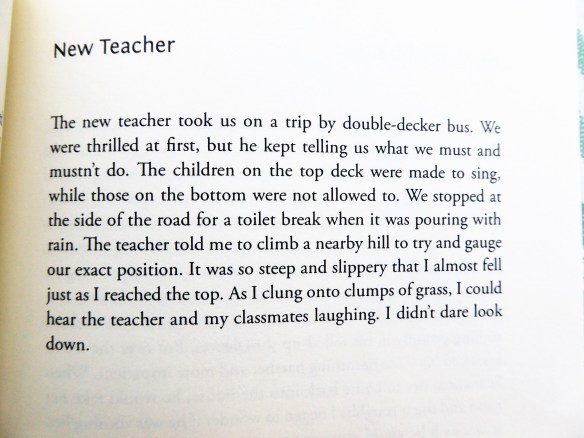
Like Seed’s Threadbare Fables reviewed here – and included in this volume – these poems toy with our expectations, arousing them. It’s hard to review that without spoiling the ride. Better to drive yourself up the dark alley or to the cliff’s edge. I’ll simply close by presenting one full poem as a taster, not as sinister or surreal or surprising as many, and not because of that word, but because I was a teacher, and I am as certain as I can be that it isn’t about me:
Read more and purchase here.
 gravyfromthegazebo