
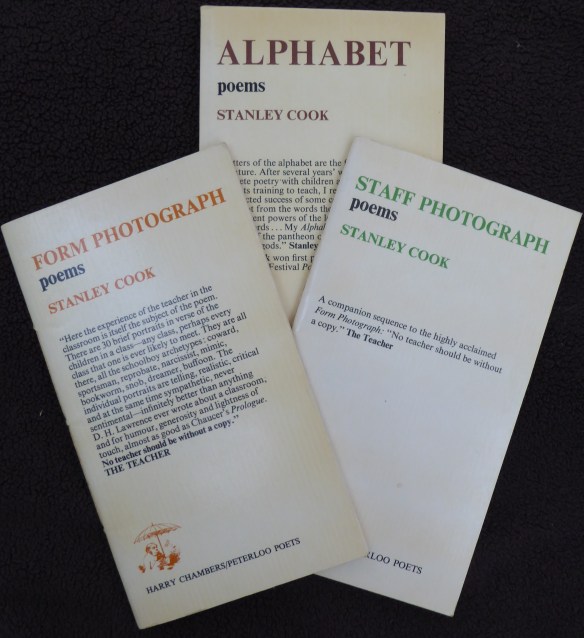
Form Photograph was first published in 1971, but reprinted in 1976 when both Staff Photograph and Alphabet Poems were published. I used examples from Alphabet Poems on some of my teaching practices in the late 70s, so probably 1977-78, prompts for student writing and this is where it all began. I also presented poems from Peter Redgrove’s From Every Chink of the Ark, 1977, where he too employed the alphabet as stimulus for his own writing [and I think I was quite adventurous using all of this: the energy and enthusiasm of the newbie!].
Cook’s staff and student poems reflect their time and are honest and direct to reflect realities one might avoid addressing so confessionally today. That’s probably as it should be, but I admire the openness of its era.
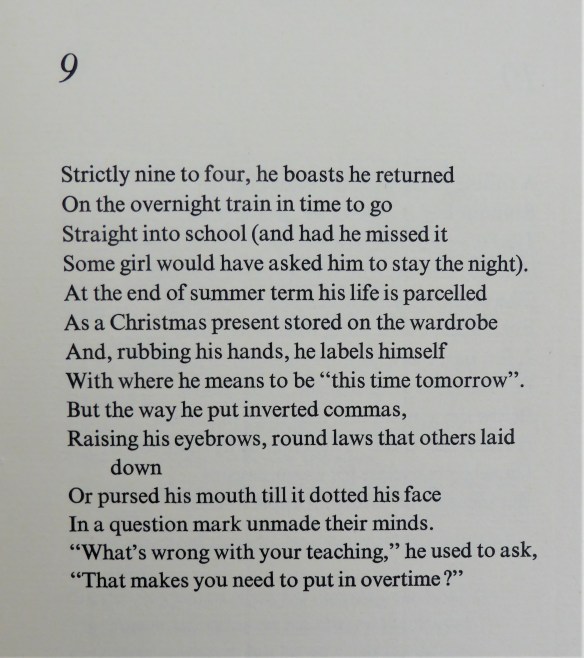
I’ll post one poem about a teacher, real or composite. As my former teaching colleagues return this week to work after their well-earned summer holidays, this one struck a chord even if it is about the end of summer term rather than a return after the break [and re. ‘had he missed it’, I recall a colleague and friend who claimed a few years ago he ‘missed’ the ferry and thus the first training day* at the beginning of the autumn term]. There is a little criticism in the stereotype presented, but the last two lines make some sense when I think of the huge extra commitment teachers have always made but especially so over recent years.
Today it is raining and I’m sure if I was returning to the job I would want it to continue. I always hated the first day back when the sun would suddenly decide to rage down, especially if I had just returned from a holiday saturated by a typical English summer. *Training Days: what a monumental waste of time when all you wanted to do was get ready for the immediate days to come: meet with the team, get the classroom sorted and the resources organised. All those presentations of ‘we have done well, but…..’, that dreadful and diminishing caveat, and the invited guests to demonstrate how they couldn’t do the job themselves and now instruct as invited guests.
This is an wonderfully assertive appraisal of the life and work of Stanley Cook here.
 gravyfromthegazebo
These poems are enchanting & learnable.
Auro Aradhya.
LikeLike