Where Is He Now

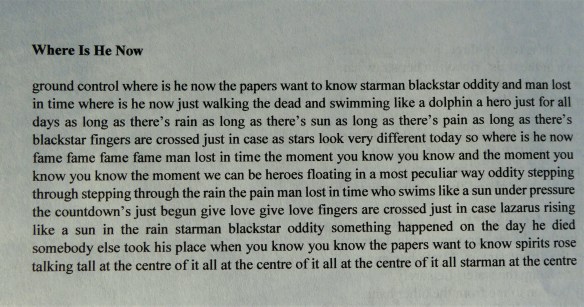
As mentioned in my previous post, delighted to have this poem published today in IT, but it was unfortunate they were unable to retain its original format. It is a cut-up, but the block of text and some line placings are intentional, so here it is as written.

bowie2

In the Making – again….

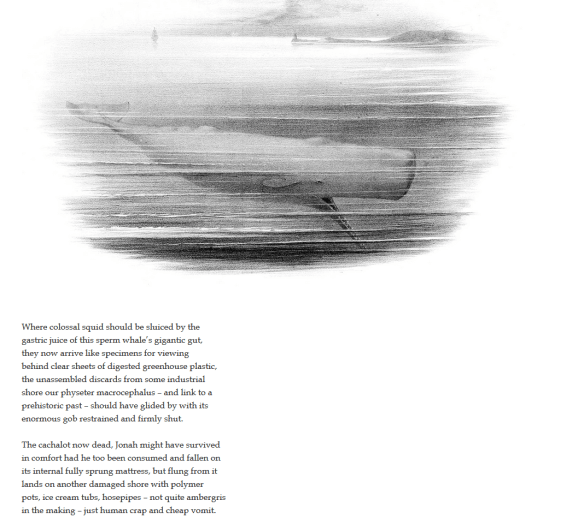
Always delighted to have my poems published, and In the Making [already posted on this blog] now appears on the International Times site and I will copy below as I do love the illustration, presumably an old one found out beyond.

I am also even more delighted to have another poem published there, a cut-up, written about David Bowie which you can see on the site here.

whale2

The Poetry of Bowie – ‘Five Years’

Pushing through the market square
So many mothers sighing
News had just come over
We had five years left to cry in
News guy wept and told us
Earth was really dying
Cried so much his face was wet
Then I knew he was not lying

I heard telephones, opera house
Favourite melodies
I saw boys, toys
Electric irons and TVs
My brain hurt like a warehouse
It had no room to spare
I had to cram so many things to store
Everything in there

And all the fat, skinny people
And all the tall, short people
And all the nobody people
And all the somebody people
I never thought I’d need so many people

A girl my age went off her head
Hit some tiny children
If the Black hadn’t pulled her off
I think she would have killed them
A soldier with a broken arm
Fixed his stare to the wheels of a Cadillac
A cop knelt and kissed the feet of a priest
And a queer threw up at the sight of that

I think I saw you in an ice-cream parlour
Drinking milk shakes cold and long
Smiling and waving and looking so fine
Don’t think you knew you were in this song

It was cold and it rained
So I felt like an actor
And I thought of Ma
And I wanted to get back there
Your face, your race
The way that you talk
I kiss you, you’re beautiful
I want you to walk

We’ve got five years
Stuck on my eyes
Five years
What a surprise
We’ve got five years
My brain hurts a lot
Five years
That’s all we’ve got

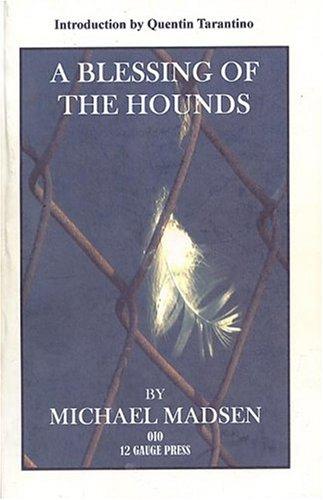
A Blessing of the Hounds – Michael Madsen

mar

Originally posted in February 2012:

A Woof And A Bark

I enjoyed watching Michael Madsen on this year’s Celebrity Big Brother [I’m a big fan – get over it] not that it did him any good, either for his sense of well-being and purpose, or from a viewing public perspective who knew little about his career and judged him entirely on his abrasive behaviour in the house. I guess some would explain that’s the point. I wouldn’t say I’m a massive fan because I haven’t really seen that many of his films. I’ve watched Reservoir Dogs and Donnie Brasco once, but a favourite that Madsen just happens to be in is Mulholland Falls.

I didn’t realise that Madsen wrote poetry. This emerged when the housemates were given the task of writing their own poems with Michael as judge, and when he read his aloud it was clear that this wasn’t a first. To cut to the chase, I ordered a secondhand copy of his collection A Blessing of the Hounds from the States and I have enjoyed reading it. As the fine poet Gerald Locklin states simply on the backcover blurb, Very clear and honest work. Dennis Hopper is more hyperbolic, claiming I like him better than Kerouac.

A nice little surprise was that as I was typing this post and dipping into the book to read a few I noticed for the first time that the book is signed by Madsen. It is addressed to Pablo, but that’s me now.

Madsen is clearly influenced by Hemingway and Kerouac and Bukowski and that simple connective which links these to his American voice capturing day to day reality in the simplest of language and unadorned imagery. Of course, Madsen’s experiences which provide the storylines are far from ordinary, and the name-dropping could seem bloated if it wasn’t so common as to simply be just how it is in his life. Most of the poems are diary entries of his daily observations, very often enlivened by the extraordinary people and places occupying these. Many are recordings of the barking of hounds and what they mean to say.

I said ‘unadorned’ but there is obviously an affectation in the American voice he uses, but that is what makes it poetic, and it is also to do with simple but certain structuring on the page. I’m not going to try and analyse it any further. It’s straightforward and accessible and engaging. Yes, it’s very often macho and brash, but there are sweeter moments – not that there needs to be, but there are – and at times he is inclined to ruminate and gesture seriously. Here’s the last stanza from an early poem in the collection called Paper which is about writing,

I just burned some hairs
off my arm with a cigarette.
Yeah, think about it.
I wonder what Earnest was thinking
when he loaded the gun.

mar2

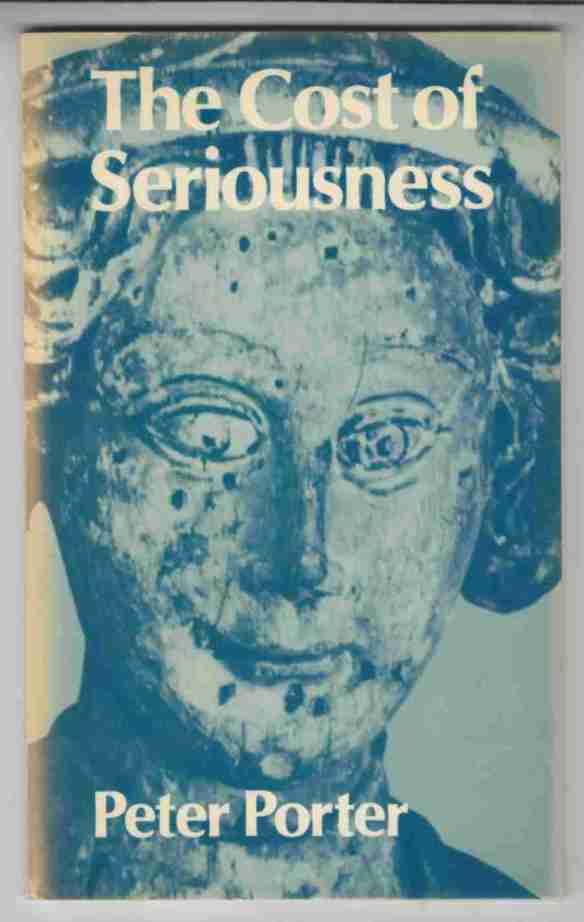
An Exequy – Peter Porter

Originally posted [though not on this site] in February, 2012:

porter - Copy

In wet May, in the months of change,
In a country you wouldn’t visit, strange
Dreams pursue me in my sleep,
Black creatures of the upper deep –
Though you are five months dead, I see
You in guilt’s iconography,
Dear Wife, lost beast, beleaguered child,
The stranded monster with the mild
Appearance, whom small waves tease,
(Andromeda upon her knees
In orthodox deliverance)
And you alone of pure substance,
The unformed form of life, the earth
Which Piero’s brushes brought to birth
For all to greet as myth, a thing
Out of the box of imagining.

This introduction serves to sing
Your mortal death as Bishop King
Once hymned in tetrametric rhyme
His young wife, lost before her time;
Though he lived on for many years
His poem each day fed new tears
To that unreaching spot, her grave,
His lines a baroque architrave
The Sunday poor with bottled flowers
Would by-pass in their morning hours,
Esteeming ragged natural life
(‘Most dear loved, most gentle wife’),
Yet, looking back when at the gate
And seeing grief in formal state
Upon a sculpted angel group,
Were glad that men of god could stoop
To give the dead a public stance
And freeze them in their mortal dance.

The words and faces proper to
My misery are private – you
Would never share our heart with those
Whose only talent’s to suppose,
Nor from your final childish bed
Raise a remote confessing head –
The channels of our lives are blocked,
The hand is stopped upon the clock,
No one can say why hearts will break
And marriages are all opaque:
A map of loss, some posted cards,
The living house reduced to shards,
The abstract hell of memory,
The pointlessness of poetry –
These are the instances which tell
Of something which I know full well,
I owe a death to you – one day
The time will come for me to pay
When your slim shape from photographs
Stands at my door and gently asks
If I have any work to do
Or will I come to bed with you.
O scala enigmata,
I’ll climb up to that attic where
The curtain of your life was drawn
Some time between despair and dawn –
I’ll never know with what halt steps
You mounted to this plain eclipse
But each stair now will station me
A black responsibility
And point me to that shut-down room,
‘This be your due appointed tomb.’

I think of us in Italy:
Gin-and-chianti-fuelled, we
Move in a trance through Paradise,
Feeding at last our starving eyes,
Two people of the English blindness
Doing each masterpiece the kindness
Of discovering it – from Baldovinetti
To Venice’s most obscure jetty.
A true unfortunate traveller, I
Depend upon your nurse’s eye
To pick the altars where no Grinner
Puts us off our tourists’ dinner
And in hotels to bandy words
With Genevan girls and talking birds,
To wear your feet out following me
To night’s end and true amity,
And call my rational fear of flying
A paradigm of Holy Dying –
And, oh my love, I wish you were
Once more with me, at night somewhere
In narrow streets applauding wines,
The moon above the Apennines
As large as logic and the stars,
Most middle-aged of avatars,
As bright as when they shone for truth
Upon untried and avid youth.

The rooms and days we wandered through
Shrink in my mind to one – there you
Lie quite absorbed by peace – the calm
Which life could not provide is balm
In death. Unseen by me, you look
Past bed and stairs and half-read book
Eternally upon your home,
The end of pain, the left alone.
I have no friend, no intercessor,
No psychopomp or true confessor
But only you who know my heart
In every cramped and devious part –
Then take my hand and lead me out,
The sky is overcast by doubt,
The time has come, I listen for
Your words of comfort at the door,
O guide me through the shoals of fear –
‘Fürchte dich nicht, ich bin bei dir.’

[from The Cost of Seriousness, 1978]

Not a poem from my youth, but one I have always liked intensely. It is very ‘poetic’ – the rhyming couplets; the sustained poetic references; its learned cleverness, and I can imagine the detractors because of this – but for me this control is a part of its formal grace and sincere dedication to Porter’s first wife, on whose death this poem is both an exequy but more passionately a eulogy. Indeed, it is the juxtapositions of taut poetic lines and content with tender confession which makes it so powerful, and ultimately honest.

Bishop [Henry] King’s model is itself a moving piece and can be found here.

Lifesaving Poems, by Anthony Wilson

life

My initial idea for an introduction to this review of Anthony Wilson’s excellent poetry anthology is now my second paragraph, because it is seemingly a little self-indulgent though a pertinent contextualisation for my appreciation. On reflection, it was obvious I needed to start with this: Lifesaving Poems is an expression of Anthony’s profound love for poetry. Reading this book fills one vicariously with the sheer joy of discovering and experiencing poetry in the way it did for Anthony – and I will continue using his first name as, though knowing him, it is more so because the honest description/confession of the book’s narrative accompaniment to poems elicits this familiarity.

For anyone genuinely attached to poetry – to read and possibly write as well – anthologies are a lifeblood. In reading Anthony’s, I couldn’t help but think of those collections and individual poems that have influenced and affected me deeply over the years, but especially in the beginning of my relationships. I will take this time to mention a few, as my review is essentially a celebration of the importance of memorable poetry anthologies, Anthony’s now added to the collection:

• my first, with handwritten dates – The New American Poetry [‘70], Twentieth Century Love Poetry [‘73], The Penguin Book of French Verse 3 [‘72], The Sphere Book of Modern Irish Poetry [‘75]
• others, not dated, the latter lost! – The Faber Book of Modern Verse, Penguin Modern Poets 10 [or The Mersey Sound], The Children of Albion
• later-in-life anthologies – Emergency Kit [Shapcott/Sweeney], The Fire People [Lemn Sissay]
• texts that I taught/used in the classroom – against the grain [McMillan], Watchers and Seekers [Cobham/Collins], Poems in My Earphone/Life Doesn’t Frighten Me [Agard], Is That the New Moon? [Cope]
• and worth an echoing mention: though having commentaries, they are by the range of poets collected, rather than a singular voice – Lifelines [Heaney]
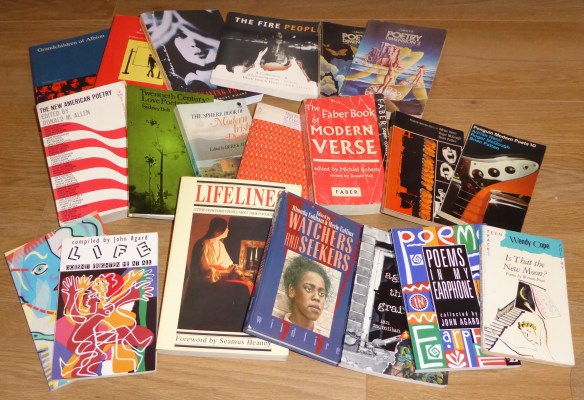
P1000352

And there are so many more, but not for now.

I didn’t mention the wonderful Michael and Peter Benton Touchstones books in my list above because Anthony does this for us in what stands as exemplification for all the wonderful recalls in Lifesaving Poems. The book’s third section ‘Talk in another way’ starts with the John Logan poem The Picnic [new to me, and one of the many joys of reading this book] and it is a lovely poem about growing up, essentially, and Anthony’s recollection of reading this from Touchstones in a school lesson resonates for so many reasons, but it is his appreciative rather than analytical response that engages here, and throughout, as well as the observations that plot his growing awareness of what poetry is and his place within this: ‘I also knew that lines like those quoted above were not the way people spoke. There was a sense that this was language which was both real and artificial at the same time’. His closing paragraph of this commentary is such an empathetic expression of excitement then, and now, as he discovers new poetry.

Another example of what I mean by Anthony’s appreciation rather than analysis is earlier on in the book when writing about the poem Slaughterhouse by Hilary Menos. Here, he is talking about discovery during membership of a writers’ workshop group between 2003 and 2005, Menos a member too. The following illustrates what I mean by the appreciation – it is looking closely at how a poem works, but it is the fellow writer’s celebration rather than critical unpicking: ‘I take great pleasure from the poem’s plain diction spiced with words like ‘rollicking’ and ‘striating’. I love the singsong music of ‘nudge’, ‘truck’ and ‘crush’; and ‘face’, ‘gates’ and ‘race’ masking the ‘necessary force’ and logic of the poem’s grim subject matter. There are also great phrases here: ‘the captive bolt’s blind kiss’; ‘the precise and subtle use of knives’; ‘couched in the companionable chill’.’

This is a book where Anthony’s discoveries really can ignite our own as readers. He presents and comments on the poem Corminboeuf 157 by Robert Rehder who is a poet again completely new to me, originally from Iowa. This is the American state just over the border from where I was born in Nebraska, before I moved to also live in Iowa, briefly. It is, I fully agree, a ‘charming’ poem – about a place in Switzerland. Go figure, as we might have said in Nebraska or Iowa, but not in French-speaking Corminboeuf. Unless we were Rehder who moved to and lived there.

I couldn’t resist that previous, but it is all part of the broad spectrum of detail we pick up in each commentary about the poems presented. As a teacher [and once the student too] I enjoyed reading Anthony’s commentary on discovering Plath – using her poem Mushrooms – in his A-level lessons at school. What unravels here is more about his life in a publishing firm for a short period of time, his own developing writing and widening circle of writing friends and influences, and further information on his experience and appreciation of Plath – her differing tones of writing, for example – and then the poem selected which wasn’t one from that school experience but which had been informed, in part, by it.

There are two list poems presented in the book’s second section ‘Ordinariness renewed’, and I am able to align myself wholly with the sentiment expressed in Anthony’s paraphrasing of a comment made by Kenneth Koch: ‘I am a sucker for a good list poem’. The first is The Black Wet by W.N. Herbert, for which he enthuses ‘I love the wordplay at the heart of the poem’s enterprise. The energy it generates reminds me of those music hall entertainers spinning plates’ and I think this kind of appreciation is refreshingly apt in its lively allusion; the second is Prayer/Why I am Happy to be in the City this Spring by Andy Brown, for which he again enthuses ‘There is so much pleasure in this poem. It makes me glad to be alive and to want to continue being so. I think I am secretly jealous of the line ‘birch trees / like Elizabethan ladies / pained white’. I see pallid skin, fragility, the effort of keeping up appearances. Most of all it makes me see both objects in a fresh way. Brilliant’. And it is. And I think it is brilliant to see a shared high regard for list poems championed with this kind of exuberance as well as generosity.

In commenting on the poem Kin by C.K. Williams, Anthony describes the ‘best education in poetry I have ever had’ and I will leave the detail for you to read. I was drawn particularly to the storytelling as well as elucidations here because I like Williams’ poetry but also because Anthony talks about Suffolk, albeit briefly, in the context of attending the Aldeburgh Poetry Festival, and I visited Aldeburgh quite often when living in Ipswich and beginning to want to be a poet and thus there are these personal links that attract and appeal and engage – links like others that will hook different readers. This commentary also proved interesting because Anthony refers to working there with Michael Laskey and Naomi Jaffa, and it is in the fourth section of the book ‘What it’s like to be alive’ that he presents the latter poet’s Some of the Usual. Yet again, both poet and poem are new to me, so the discovery of this free flowing list poem – moving through the mundane to peculiar to profound to appalling, and so on, has been genuinely rewarding.

I am trusting these personal enthusiasms are tempting those who are reading this.

I will draw this review to a close with two more largely personal references and observations. In the sixth section ‘Questions unanswered’ there is an extraordinary poem presented, ‘Underneath the mathematics of time’, written by an ‘anonymous ten-year old girl’, and it was given to Anthony from the singular person and talent Phil Bowen based on a writing game he used in schools. I love such writing games and the ‘accidents of meaning’ [my phrase] that they invariably produce from students who are animated by the likes of Phil and Anthony, work-shopping in schools, to take those leaps into metaphor and beyond in their writing. In this same section there is another list poem presented, this time a wonderful The Ingredient by the unique Martin Stannard who Anthony describes wittily as ‘Martin is a bit like Paul Scholes in that he has been plying his trade in plain view for ages (at least the duration of Scholes 17-year career), but mostly unfêted and unloved, in contrast to Manchester’s finest’. Anthony continues by saying he doesn’t know much about Stannard or where he lived [I’m not sure this is true…!] so I will take this opportunity to fill in some detail: Martin did live in Suffolk back in the 70s and was a member of the poetry writing group I was in, sending poems to one another by post for comment and support. In one poetic round robin, Martin completely lambasted my work – it was brutal – and quipped that if I continued to write like that I would probably do very well indeed in the future! I think he was wrong on both counts: my work could be pompous at times but worthily earnest on that incipient learning curve, and I have never achieved the success predicted. I mention because I have grown to keenly read Stannard’s acerbic poetry book reviewing, though it scares the hell out of me, and think his consistent poetic output over the years represents some of the most distinctive and finest written. Different experiences from Anthony and me, but we ultimately agree!

That was a long anecdote, but this is my blog and my review and my engagement with Lifesaving Poems. Genuinely closing now, I loved reading The Dog by Christopher North, the history of Anthony’s discovery of this, and his continuing marvelling at the deceptively simple poem; I also enjoyed immensely Anthony’s appreciation of Raymond Carver, probably my favourite writer, and his presenting the poem Prosser and empathetic comments on Carver’s ‘handling of sound to create mood and atmosphere’.

Having survived serious illness himself, it is no surprise that Anthony finishes his anthology with the poem Everything Is Going To Be Alright by Derek Mahon, yet again a poem new to me. Read this, and of course everything else in this life-lifting book, and you will realise it is.

life2

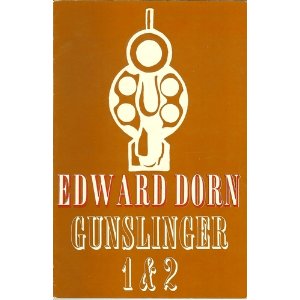
Edward Dorn – Gunslinger 1 & 2

From August, 2012:

dorn

.daeha sa kcab emas eht si I

There’s an excellent review of Edward Dorn’s Westward Haut by Steve Spence at the exceptional poetry magazine/blog Stride (sadly, no longer available…)

Reading this encouraged me to re-read Edward Dorn’s Gunslinger 1 &2, published together in 1970 when I got my copy and read aged 16. I’m not sure I’ve read it since, but loved revisiting and perhaps understanding much more this morning. At 16 I think I will have revelled in its surreal vision, as I perceived it then, and the comedy of the Horse Claude Levi Strauss that rolls joints with its hooves, the inquisitive narrator I, and the anti-hero Gunslinger/Slinger who is even cooler than another character Cool Everything who appears in Part 2.

This modern epic poem is many things: it is a poetic quest in search of the meaning of life in the 60s, a capitalist life embodied by and thus the story’s physical search for Howard Hughes, and Dorn adorns [a pun he would have playfully used himself, not flinching at its naffness] this ontological, existential and surreal exploration with many layers of satire. The narrative is at its most poetic and philosophical in Part 2, beginning

     This tapestry moves
as the morning lights up.
And those who are in it move
and love its moving
from sleep to Idea
born on the breathing
of a distant harmonium, To See
is their desire
as they wander estranged
through the lanes of the Tenders
of Objects
who implore this existence
for a plan and dance wideyed
provided with a schedule
of separated events
along the selvedge of time.

     Time does not consent.
This is morning
This is afternoon
This is evening
Only celebrations concur
and we concur To See
                      The Universe
is One

Its contemporary and counter-culture reference points – not necessarily endorsements – get reflected in, for example, the character Cool Everything who is met in Part 2 by the travellers from Part 1. He is carrying five gallons of ‘acid’ [LSD] which is quite quickly transferred to the by now dead body of I, and thus the journey continues. I’s death, however, is as uncertain as the reality being sought/explored,

    Life and Death
are attributes of the Soul
not of things. The Ego
is costumed as the road manager
of the soul, every time
the soul plays a date in another town
I goes ahead to set up
the bleechers, or book the hall
as they now have it,
the phenomenon is reported by the phrase
I got there ahead of myself
I got there ahead of my I
is the fact
which now a few anxious mortals
misread as institution. The Tibetans
have a treatise on that subjection.
Yet the sad fact is I is
part of the thing
and can never leave it.
This alone constitutes
the reality of ghosts.
Therefore I is not dead.

But I makes a perfect receptacle for Cool Everything’s acid!

When the travellers arrive at their destination, Universe City [Vegas], Dorn moves from the ontological above to his satirical mode – but it’s no less intriguing,

     We’re inside
the outskirts, announced the Horse,
a creature of grass and only marginally
attracted to other distortions.
Here we are in the sheds
and huts of the suburbs. There are
some rigid types in here.
It’s kinda poignant
but that doesnt move it any closer to the centre.
Yup! empty now of all but a few
stubborn housewives
and disturbed only by the return
of several husbands known to be unable
to stay away during this celestial repast
called lunch. Thats where youre out
before you leave. Theres a man
turning on his sprinkler, it should be illegal
a small spray to maintain the grass, the Edible
variety no one doubts.
But I see none of my friends grazing there
these green plots
must be distress signals to God
that he might notice
their support of one of his minor proposals
He must be taken by these remote citizens
to be the Patron of the Grass
Holy shit, Lawn grass…
from the great tribe
they selected something to Mow

Not the defining indictment of a capitalist culture just yet, but a comic musing on a twentieth century urban worship of the trivial, and perhaps appearance over reality and worth.

As I’m writing this I’m realising how much more I am trying to explain, and therefore quote as illustration, when this wasn’t my intention! However, as I’ve travelled this far –

As a conclusion/key point in the journey of sorts [the poem is carried on into other Parts that I haven’t read yet and which I need to find], the group arrive in the ‘city’ where, as I see/read it, the citizens greet the explorers as the Establishment [the Right/the rednecks] would greet the counter-culture [the Left/the hippies] in the 60s,

   A band of citizens had gathered.
They blocked the way. They too
were meshed with the appearance of I
Tho their interest was inessentially
soldered to the surface, and tho
they had nought invested, an old appetite
for the destruction of the Strange
governed the mass impulse of their tongues
for they could never comprehend
what the container constrained.
What’s That! they shouted
Why are his eyes turned north?
Why are his pants short on one side?
Why does his hair point south?
Why do his knees laugh?
Why does his hat stay on?
Wherez his ears?
The feathers around his ankle!
What does his belt buckle say,
What do his shoes say,
we cant hear them!
Why don’t his socks agree!
Theres a truckpatch in his belly button
does he have a desire to grow turnips?!
He hasn’t bought a licence for his armpits!
Look! they shouted,
his name is missing
from his shirt pocket
and his managers name
is missing from his back,
He must be a Monster! Look
His pocket meters show Red
and they all laughed ans screamed
This Vagrant, they shouted,
has got nothing, has no cash
and no card, he hasn’t got a Pot…

and the absurdity of the citizens’ questioning and conclusions mirrors in its dark comedy the clash of cultures and generations at that time, a darkness realised for example in the filmic representation of Easy Rider, my own experiences in Michigan [see Scott McKenzie review and elsewhere on this blog], Kent State, and much worse.

That’s probably where I connected most aged 16, and remarkably it still resonates. The political dimension is explored further in the ‘Literate Projector’ conclusion to Part 2 and I need to read yet again and consider further, trying to understand. But what a morning it has been, having read a review last night!

dorn2

Peter Reading – Shitheads

Over the past five years I have occasionally written reviews of poets and poetry and published on my music blog, the only one I had at that time. Over the coming weeks, I am going to reprise a selection of these in the hope that they may be of interest to ‘new’ readers of this blog. This is the first:

England’s finest unknown poet was perhaps Peter Reading, a complex and hilarious writer who mastered poetic form as well as mastering the most mundane to nasty realities of modern, atrophying existence as his subject matter.

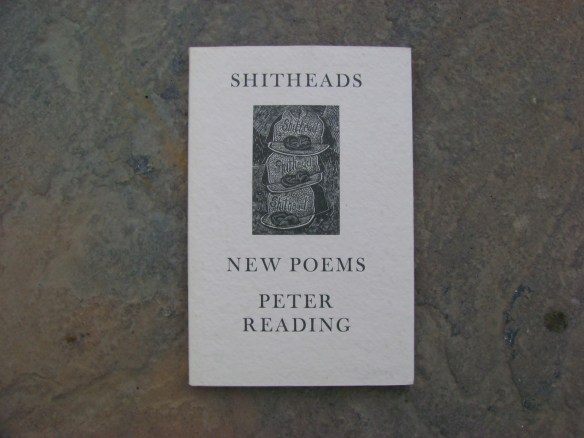
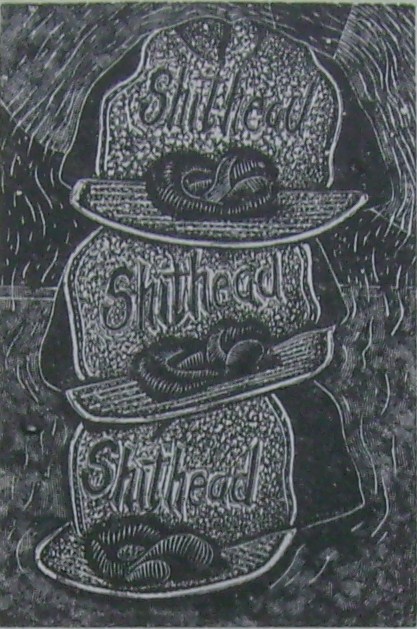
One of my most prized poetry books is a limited edition copy of Reading’s Shitheads, published by Michael Caine through the flippantly named Squirrelprick Press in 1989, the final year of Thatcher’s deadly decade. Mine is a signed – by both writer and publisher – and numbered copy of a planned 200. It is 125 of the 177 actually produced, 23 having been lost to damage at the cutting process. One of the special consequences of my having this copy is that I engaged in a short exchange of letters with a friendly and helpful Michael Caine about his production of this book and others – Shitheads being ‘entirely hand-printed, bound etc on mouldmade + handmade papers’. Of his hand-crafted books more generally he says ‘they’re more human(e) and most importantly, the papers are acid-free (glues also) so the books will last forever’. And he is right, Shitheads being palpably real, the tactile and visual aspects of the paper – rough edges and all – making it a physical pleasure to handle, and the cover has ‘a wood engraving by a friend of mine (Colin Kennedy)’ which is a raised image of three baseball caps with the word ‘Shithead’ on each and an accompanying turd.

peterR

This short collection contains translations of Catullus, and Reading poems about ‘unsatisfactory people’, those framed by a decade of greed and the pursuit of the self in England – and within a global context of a world environmentally, politically and morally diminishing: persistent themes in Reading’s work, and painfully apt for the financial decadence and culpable indifference of the corporate world today.

Reading’s poems do often satirise to soften the attack – though not always – but in this collection he leans to the jovial if dismissive dismay,

Holidaywise

Aspirant big-time publican (nagged by
              termagant tart spouse)
flies for the golf to Costa del Parvenu
              where are encountered:
       Chicken ‘n’ Turkey Chunks chief
       (puffing Habanas like mad);
       name-dropping, aitch-dropping rep
       (‘Sundries and Fancy Goods, me’);
Nearly New Motor Cars baron whose slattern
              wife is a quondam
        Tiller Girl tap-dancer trull;
        yuppie computer exec…

This must be seen in the context of other poems/characterisations/contexts, both in this collection and across all of his work, for Reading is consistent in his contempt for shitheads in all their slack and slight proclivities. He is particularly offended by the consequences of their behaviour and actions,

Managerial

Thanks, Mr Smith, for deciding Execly, when you abandoned
      people and purchased a car – just over 13 grand
                                                  (humans depreciate more).

Company limos, especially this one ( a silver Montego),
     ego-boost Reps and Execs, heighten the tone of the place.

That day you also saw fit to lay-off three hapless employees:
     millworker, driver, a clerk – also-rans not worth three fucks.

It loses the eloquence of its consistent invective when removed from the whole, but you get the gist. Placed against the translationese of Catullus poems, in their precise and varied metrical lines [a stylistic preoccupation and perfection in Reading’s work], these gain more relevance. I am not by any means informed on the work of Catullus, but there is apparently a close correlation between his exposure of society’s ills with Reading’s poetic pot-shots.

peterR2

In my early years of teaching I used  Reading’s poem At Marsden Bay from his 1983 collection Diplopic as a stimulus for getting students to think about the issues raised and how these are conveyed poetically. It is a poem about four sixteen year old louts who terrorize and kill kittiwakes nesting innocently where the boys have decided to prioritise their play. Probably based on real experience, it is also a metaphor for how a world ‘two hundred and eighty million years old’ can be instantly desecrated by the crass and cruel indifference of the modern world, here manifested by the presence of the four boys,

Three of the four are cross-eyed, all are acned.
Communication consists of bellowing
simian ululations between
each other at only a few inches range:
‘Gibbo, gerrofforal getcher yaffuga’,
also a low ‘lookadembastabirdsmon’.

The poem always worked immediately in rousing reaction to the stereotyping of the boys’ physical appearance and use of language! I mention it because the last poem from Shitheads I’d like to copy here shows Reading continuing with his concern for the destruction of our physical environment,

Vagrants

       Twenty-three Black Country ramblers, thank you
       (plenty of decibels, Brummagem blah-blah,
       Army Stores walking boots, anoraks, knapsacks,
       one of you wearing a Have a nice day badge
       one of you wearing a cap blazoned Shithead,
one of you chucking a drained 7-Up can into the heather)

       for cheering this lonely Shropshire upland
       with orange and crimson fluorescent clobber,
       shrieks, squeals, ululations and feculent litter
       (tampons and turds smirch bracken and whins), and for
driving away the only Hen Harrier in ten years here.

Marvellously miserable!

peterR3