
Jim,
there are fish, but not as we know them. There are many things, but not as we know them too. There is order and yet chaos as well. But there is his knowing, and we have to boldly go with it because that is why we are here, isn’t it?
It is.
We could discuss accessibility and such but this would miss an important point that I trust emerges more as I progress. I think these poems can seem challenging to read, but not for that bugbear of ‘complexity’ where complexity is for its own sake rather than as a reflection of something significant, and intentionally so, as with these poems.
If I was to say at the start these are ‘found’ poems that would set a context by which any perceived challenge in their reading would be explained and ‘accepted’. And they are found poems, but not as random – not that found writing has to be random – as this can suggest. Indeed, these poems are meticulously structured on the page: there are 39 poems, each with 8 stanzas and each stanza has 3 lines.
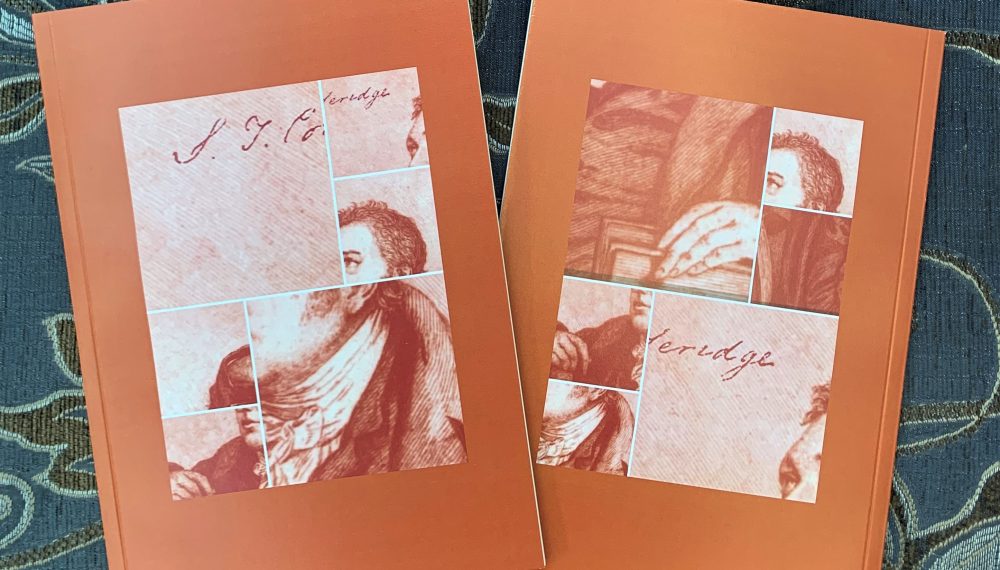
But to cut to the chase, the apparent randomness of the writing is reflective of a found technique [indeed, the back cover blurb tells us the poems are ‘produced through a mixing of word association, montage techniques and strange juxtapositions’] and accepting/acknowledging this is to read them without certain usual expectations, expectations like following an obvious narrative line. It is also to not see them as a challenging read. When I quickly stopped looking for obvious connectivity I was freed to simply enjoy the ride.
The first poem An even break will serve as a perfect illustration. The opening stanza is
‘Using big data to diagnose problems and predict
success is one thing. Yet there is no other path
and a key responsibility includes cooking with gas.’
This represents a familiar, though not exclusive, pattern throughout the poems: one line that has no connection to another, in this case the following line. The word ‘Yet’ actually suggests a link – this grammatical caveat – but the ‘cooking with gas’ is a complete surprise, and all the more fun to read for that.
The next stanza is
‘What’s your water source? Hopefully, people will
always subvert things yet we also found that parental
consent forms were inadequately completed.’
It might seem that ‘water source’ could be connected to ‘gas’ [in the context of utilities…] but it isn’t, and it is simply a matter of our expectations as readers. This becomes an early example of the ‘strange juxtapositions’ of that blurb but also a signal to relax as readers! It is quite likely also an indication of what it means to ‘subvert’ – though in a world of fake news and evasive truth, these poems mirror the disconnections we face each day in understanding, and as found items of that daily reality they perhaps are pieced together with more clarity of the real than the comfortable illusion we would expect/hope for.
Apparent snatches of conversation, signalled by italics in the poems, suggest other ‘meanings’, as in the third stanza
‘I’m not texting nobody. I can’t concentrate
on the bus. There’s too much noise. Just wait
‘til we get to town and we’ll sort it all out.’
and here is a narrative thread of sorts, but it is not necessarily a part of anything else in the poem. It is a part of the montage that makes up this opening poem.
The closing stanza is quite simply humorous as a construct,
‘It was a close-run thing and we remain unsure of
the implications. Peas can be frozen and will taste
delicious when defrosted. This swim is fizzing with fish.’
Why peas?
Why ask?
Jim,
there’s the fish ‘fizzing’, but why aren’t they red?
The point is not to inquire. Are these Birds Eye peas or a store-brand version? It doesn’t matter but they seem to use the same advertising.
Where there are connections, these might be said to be comic/absurd. In the second poem A closed door, the opening stanza presents
‘With her front legs resting on the surface and
her back on the reeds she waits. Like many
others we listened again to Lou Reed’s music.’
and this is the ‘word association’ of that blurb, though I think it is more indicative of, on the one hand, an overall playfulness, and on the other, the nature of our everyday reality where we are bombarded by sensory experience and encounter that sometimes merges and sometimes obfuscates and sometimes makes sense.
I could happily continue to illustrate from many poems but I simply want to recommend this collection for its innovation and positive, enjoyable challenges – ‘challenges’ I hope I have expressed as ways of reading and expecting, though most if not all familiar with Spence’s poetry as well as collections from Knives Forks and Spoons Press won’t need me to exemplify ways of reading contemporary, ‘alternative’ poetry.
I’ll close on one other poem from well into the collection, A lingering message. I don’t think there is anything like a gradation of meaning and/or internal connectivity as we read though the poems, but this one resonates with all the elements I have briefly alluded to. The opening stanza, in italics but not as obviously a snatch of conversation as I earlier suggested [!], sets a question, of sorts, that seems to get ‘answered’ in the following one where actual quotation marks indicate speech/conversation [this description essentially given to illustrate the silliness of trying to explain]
‘Are we marching towards a sunlit fungal future?
Here’s a tip for pole-fishing fans. For the rest of us
the drama and the violence of the sky is enough.’
‘“Isolation breeds hostility,” he said. Yet the
consciousness of rivalry was always there and
these conflicts are about different values.’
and I’m going to contradict myself – but I would like to think I am now at one with the poetry – by stating that this seems to have more significance than peas.
Later we read
‘“It’s unethical, it’s not illegal,” she said. A slew of
fungal technologies is creeping out of the woodwork
while the madhouse remains firmly rooted in the past.’
and I am thinking it just happens that what is found and montaged here reads more intensely as subject-matter than elsewhere. The unethical that is not illegal may indeed be the madhouse of justification for all that is rotten today in behaviour and excuse and disguise from those in power. That it is ultimately disguised in the madness of all the other competing snippets merged in these poems may be their very essence of revelation.
And in the penultimate stanza we find humour again
‘He rose from the table and was surprised to see
his own image in a great number of mirrors at the
same time. Ah! – we have a distinguished visitor.’
Reading is of course an accumulative effect. These poems as individual findings and joinings in eight stanzas can seem disconnected, but the repetitions across the pages are echoes that build and suggest. Just read Reef madness and Like no other and you are immersed in the richness of what they say as a part of the whole drive to them. You learn too – not that these are lessons – that there is more fungi than fish.
Jim,
why isn’t the collection called ‘Many Red Fungi’?
I think it is because fungi does not have fins. But stop calling me Jim.
For details where to order, go here.