‘Items’ by Martin Stannard – The Red Ceilings Press

P1020949

There are 18 items in this collection of items titled Items; however, we could call them poems, partly because they appear via the fine The Red Ceilings Press known for publishing poetry, but also because they look like poems, though they also look like prose so we could call them prose poems and they are written in stanzas or paragraphs so could definitely be either or the combo.

And I should stop there in case I get accused of copying a style.

But I will just dance a little bit more by saying that two fine poets Ian McMillan and Steve Spence write in their back-cover blurbs about Martin Stannard as a poet – McMillan describing him generously and correctly as ‘a major British poet’, and although Spence doesn’t actually use the word ‘poet’ he is, like McMillan, referencing Stannard’s previous work Poems for the Young at Heart – and what is also interesting here is how they both mention his mix of, respectively, ‘the avant-garde meets the mainstream’ and ‘the mainstream combines with the avant-garde’, so I wonder if they colluded – like some other important people in the world – and also ask myself if this is a euphemism for poetry that is actually accessible yet lively or some kind of temptation to the broadest church of readers possible?

And, as I said, I need to stop unless I sound like someone else reviewing a book of poems, as delighted as I would be to sound like that person, on this occasion.

On the mainstream/avant-garde curve, I am a little uncertain where that actually places Stannard. I do know that he has a playful and elusive and adventurous style of writing, certainly not ‘conventional/traditional’ in a mainstream sense, but not experimental, I don’t think, in the concrete poem end of a curve sense. I think of the Eric E. poems* – and Eric E. is a very, very close friend of Stannard’s – and these are certainly accessible if obtuse in their often apparently literal inquisitions and so on, and being such an influence in Stannard’s work I don’t then see him as either mainstream or avant-garde in that stated dichotomy even as merged [*read Martin Stannard’s interview with Eric Eric in Decals of Desire #3 here to experience some of that influence in being elusive and, as some might see it but some not, playfulness].

But all of that is history and therefore historical, as a certain Mrs Baxter would say, and turning to the items in this collection they are, without doubt, poetic. There are elements of the found in them – and I can prove this, but you’ll find that out for yourself, hopefully having read all of them first – and I think they are definitely lyrical, especially in the constant referencing to the sea and water and how this in reality and metaphorically has an impact on us as people who might live near it or at least read about it, as in ITEM 1,

‘If I stare long enough at the line dividing sky and sea
An idea comes into my head
Please come and write that water with me’

and whilst there is no manifesto in this collection of poems, and there wouldn’t, this could be one in the way it elicits the reader-response in finding/forming meaning/impression when experiencing these poems.

In as much as we build meaning from what we experience, lived or vicarious, rain in the form of weather perhaps can impact on our perception structures,

‘But if the weatherman is right
The tree house will not see the night through
The tree too, for that matter’
[ITEM 3]

and the lyrical with its inherent pathos comes upon us now and again as a surprise,

‘These days full of water remind me of cataracts
And how they are tears
Shed by an immense abandoned lover’
[ITEM 4]

The poem ITEM 9 says something to me about Stannard as a poet being imaginative as a writer, both in terms of the unusual in evocation and as a declarative – not manifesto – about how to see the world and write about it, with this stanza,

‘I wish water could be persuaded to burn
The corners of the room are dark
And only one of us is awake or half-awake’

and with this one,

‘Caress the keys of the typewriter as if
They’re the sensitive parts of someone you admire
Have an active imagination or no imagination at all’

And yes the poems deal in all aspects of love and sexuality, these core elements in our fluid lives, so in ITEM 12, Stannard refers to ‘my love’ with

‘I have plans for her
To one day wear my freedom fighter’s hat
She looked pretty hot in that Salvation Army uniform’

Not that any of this relaxes Stannard, as you will find by the end, or in the disliking he expresses in ITEM 8. The water in the poem is therefore tidal so flows both ways or, to be precise, many ways, which might be why there are no full stops, but I wouldn’t call that avant-garde.

Read this in one wonderful go, perhaps in a kitchenette where a blackbird can keep you company, and I’m not kidding. I think this is where we can go with poetry like this that isn’t anchored as much is. And I haven’t mentioned the lines in italics and there is a good reason for this.

Put your Item in the cart and buy it here.

The Truth Revealed in its Truthful Process – How to Find a True Poem

When you tell me he should testify because he’s going to tell the truth so he shouldn’t worry, well that’s so silly because it’s somebody’s version of the truth, not the truth. No, it isn’t truth! Truth isn’t truth.

[Rudy Giuliani, 19th August, 2018]


Truth. No, it isn’t truth! It isn’t truth! Tell the truth so he shouldn’t worry, well that’s so testify because he’s going to of the truth, not the silly because it’s somebody’s version When you tell me should. Tell me should.

[Text mixed, 19th August, 2018]


Truth

No truth
is truth

when it
isn’t the truth

and to
tell the truth

is somebody’s
version.

To testify
it isn’t

the truth
as – no,

don’t worry –
it should be

the truth
but isn’t,

it’s not silly
when you

tell the truth
it isn’t

the truth
when it is.

[Found poem, 19th August, 2018]

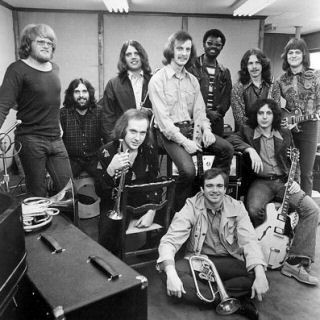
Top Fifty 40: Blood, Sweat & Tears – s/t, 1968

[Originally posted February 2012]

101

As the horns announce the distortion of their other entry into the mix, you know that after the opening flute tranquillity of Variations on a Theme by Eric Satie [1st and 2nd Movements], this is an album getting ready to launch.

And second track Smiling Phases also announces the great voice of David Clayton-Thomas. A Winwood/Capaldi/Woods song, Blood, Sweat and Tears tear it up with some wonderful horn arrangements by Fred Lipsius before transferring into the jazz middle with piano [by Lipsius] and some strutting Jim Fielder bass. The horns return to yank the song back to organ and Clayton-Thomas’ key vocals: the consummate B, S & T’s song.

This is followed by the schmaltz and lite jazz of Sometimes in Winter with writer Sam Katz on vocal. But those sweeping horns try to sustain fully the sound. This isn’t the strongest track in the band’s second outing, but it sets us up nicely for what’s to come next.

Fourth More and More reminds us of why we want Clayton-Thomas at the vocal helm. Drums and horns provide a more staccato rhythm in this song, and the funky bass with stabs of organ lead into the Katz guitar solo, one of the few rock guitar with effects contributions on the album, and a snatch from a similar sound on their excellent debut album with Al Kooper leading the band.

Fifth And When I Die, written by the brilliant Laura Nyro, keeps the clever song choices supporting the band’s progress. Its cowboy interlude lightens the mood and is fully in keeping with the jaunty bass and overall rhythm. The song’s gospel roots get played out in the lovely ending to this upbeat version.

Another superb song choice gets placed at number six with the Holiday/Herzog classic God Bless The Child.  The Clayton-Thomas vocal again carries this great track, perhaps a requisite when covering such an original. The song is arranged by Dick Halligan, and his organ into Latin piano-led interlude with swirling horns [Winfield/Soloff/Hyman] and saxophone [Lipsius] reminds me of the Buddy Rich Big Band and provides that lovely nuance to such a famous number.

Seventh Spinning Wheel is perhaps the peak on this big band vehicle. The cowbell introduces the beat, and Clayton-Thomas again controls from here on in, employing some distortion effects on an otherwise quite conventional playing. I love the squealing horns around the trombone drag, but could have done without the circus recorders at the end – a twee finale that prompts someone to say that wasn’t too good! But perhaps this is all part of the fun.

Wavering horns, drum roll and organ introduce eighth track You’ve Made Me So Very Happy. Listening to this and the whole album in 1968, its consistent jazz orchestrations, as on this beautiful romantic track, had a huge impact. These songs are essentially pop numbers and/or classic standards. There is very little rock guitar, apart from the one solo already mentioned, and even less in terms of sound effects. It’s the jazz that made it raunchy and heavy and so cool because as well as listening to rock we were all listening to jazz to find that ‘alternative’ sound. The band Chicago went the heavier and at times psychedelic route – and I love that – but this album and these songs retained a simpler but nonetheless distinctive sound that became a template for so many other jazz rock bands that followed.

The band’s self-penned and penultimate track Blues-Part II lets members solo and perhaps gives its nod to rock blues and improvisational moments to align it to the more experimental. A fine Lipsius alto sax solo dances above a simple repeated bass line, then slows to a melancholic layer before the bass picks up on Cream’s Sunshine of Your Love riff – a great surprise – and then there’s one other subliminal of a rock guitar lead, as two bars of Spoonful are played. Oh the homage and humour. It’s Clayton-Thomas who takes the song out on a crescendo of his soulful voice before segueing sweetly into the echoing flute of Halligan on the 1st Movement from Variations on a Theme by Erik Satie where it all began – until we hear a door close.

102

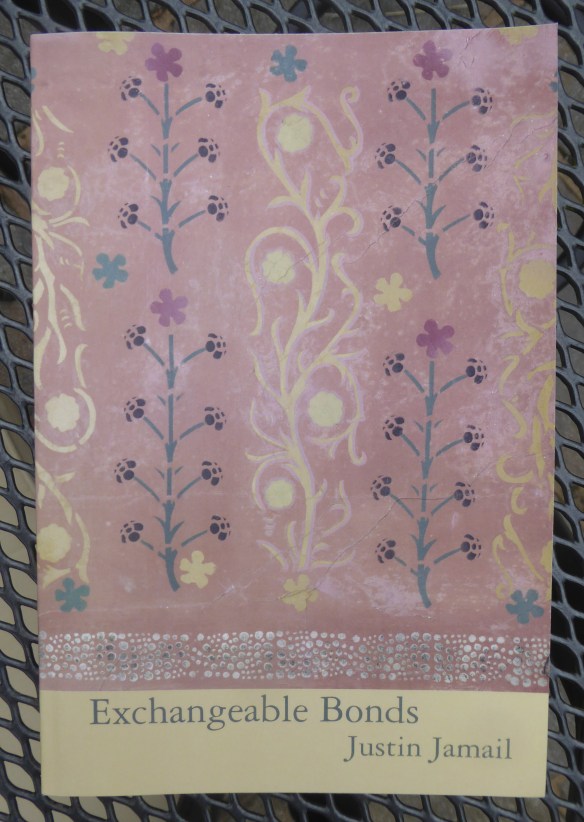
‘Exchangeable Bonds’ by Justin Jamail – Hanging Loose Press

P1020937

Reading his rare, unqualified enthusiasm*, Martin Stannard’s review in Stride of Exchangeable Bonds by Justin Jamail [here] was immediately persuasive so I acquired and have been reading the poems with my own admiration and bafflement.

I’ll begin my account with reflecting on expectation in reading such perplexing poetry and how one adjusts, if that’s the right word, to Jamail’s constant shiftings in meaning, focus or impression. Instead, I revelled – eventually – in his dancing around with ideas, imagery, suggestiveness or linguistic surprises. There’s nothing new in this, so I don’t need to explore the poles of poetic tradition and experiment. Where I am on a personal learning curve with these is their apparent links to a New York ‘school’ of writing and poets like Kenneth Koch and Paul Violi who are new to me.

Another personal take is in the paradox of my inclination to expect/want ‘meaning’ when I read and then my other appreciation of uncertainty and deflection, this latter aligned closely to my own significant [as in amount] writing of found work – not that Jamail’s is a ‘remix’ in this sense: probably far from it.

Having recently reviewed Matthew Sweeney’s final poetry collection [here], I think there is a notable divergence from his imaginatively [sometimes surreal] shifting narrative threads compared with Jamail’s writing, precisely because Jamail’s seems to eschew narrative, certainly in any linear sense. We can follow a Sweeney chronicle despite the way in which its content is constantly morphing; with Jamail the changes can be acute, disconnected and often mindboggling.

To illustrate what I probably haven’t explained all that well, an example of an apparent immediate disconnect is in the opening two couplets of Impatient to Assume,

‘Eight hours studying appliances
That pay for themselves over time.

Don’t laugh: it’s one way
To find out which tress grow in the flood.’

Of course, what follows begins to unravel, or ravel further.

On the other hand there is a more fluent/following-on in A Version of a Tragic Poem,

‘Out of the mild pleasantness of disaster
a secret thing
like a pigeon egg hidden
in plain sight.

Teetered in a zone of concrete and tar,
it came from a newspaper tray
where things continue
in time, and time…’

[with apologies that WordPress cannot accommodate some indented line placings, as in the original]

And then there is that which is, by comparison at least, quite connected, from On the Wonders of Creation and the Peculiarities of Existing Things,

‘The pleasures for which you came
Went on, or would have anyhow, as
Being there and looking felt the same.

The Book and city are a kind of Alaska:
Full of some things and empty of others, but listing
The pleasures for which you came:’

Then we go back to the delightful – genuinely so – perplexity of A Horse, a Hare, or a Peppercorn,

‘Overtake the creases in the meadow, this like failure
seems to one so bland as the nard of Texas, and
where are you? Trying to decide if this field
is a meadow. It’s something to do with moisture
or firmness, or the presence of both, I think.
The quality of fine hairs, too. And is this fish
a widow? Not yet. But don’t look so resigned –
the props, the vegetables shaped like a blanket/friends,
could arrive (or move?), and explain themselves
for once’.

Even titles signal their variables, as in the preceding two and these: At the Chinese Mustard Factory and The Effect of Sunshine on Dead Fruit.

Where I do see/find a linear[er] narrative in the way Sweeney invents one is in a Jamail poem like History of Umbreto Nobile.

The next is quite irrelevant in many respects, but there are poems that reveal themselves with ease, like those making up Two Encounters, and I’ll present the first one in its entirety, liking so much the final automobile image of Sheep Meadow,

‘The first time I walked
across Central Park
in the middle of the night,
I came across a stranger
with a telescope.

He introduced me
to his crowd and I got in line
to see Saturn, which looked
like an ivory Chrysler.’

The second, One Night This Guy Scared the Crap Out of Me, is again quite prosaic in storytelling, if more threatening.

There is so much more to experience. Isiah Writing Down a Dream has quite a lyrical closing about light; A Shank Is More than a Miss is a rumbustious runaround of playfulness about beef, a smudge, a fowl, a mother, and a table too near or not too near a harp, all to ‘(Great cheers)’; New England Speaking is a personal favourite with its many American touchstones all thrown together like ‘Wichita’, ‘Cadillac locusts’, ‘Cap gun Indians’, but most importantly the line ‘I left Omaha city in a bus-liner for the colonies’ because that is where I was born, and in In My Fancy Wallpaper the opening stanza just keeps surprising.

*I’ll close on this explanation lest anyone think I was being sarcastic about Martin Stannard’s poetry reviews which I always find sharp, often hilarious, and generally quite despairing about what he is tasked to read/review: in this recent article about his writing day here, he has this to say – ‘Some people think my reviews are mainly negative, sometimes verging on the harsh and cruel, but they’re wrong’ – and goes on to explain why this is wrong. If interested, have a read. I’m certainly glad I went with his positive recommendation of Exchangeable Bonds, and concur.

‘Poetry Reading’ by Charles Bukowski

charles - Copy

Because someone tweeted that today was Bukowski’s birthday, born 16th August, 1920, so it isn’t a landmark anniversary but that doesn’t stop us celebrating.

I thought I’d join the tribute by selecting a favourite Bukowski poem, but that’s impossible. So I’ve gone for this one which is from my copy of the Bone Sparrow Press Bone Palace Ballet which I’ve read often and occasionally used in my teaching.

I like its candour and lack of empathy and pretty accurate summation of what he wanted to and did write about:

poetry readings have to be some of the saddest
damned things ever,
the gathering of the clansmen and clanladies,
week after week, month after month, year
after year,
getting old together,
reading on to tiny gatherings,
still hoping their genius will be
discovered,
making tapes together, discs together,
sweating for applause
they read basically to and for
each other,
they can’t find a New York publisher
or one
within miles,
but they read on and on
in the poetry holes of America,
never daunted,
never considering the possibility that
their talent might be
thin, almost invisible,
they read on and on
before their mothers, their sisters, their husbands,
their wives, their friends, the other poets
and the handful of idiots who have wandered
in
from nowhere.

I am ashamed for them,
I am ashamed that they have to bolster each other,
I am ashamed for their lisping egos,
their lack of guts.

if these are our creators,
please, please give me something else:

a drunken plumber at a bowling alley,
a prelim boy in a four rounder,
a jock guiding his horse through along the
rail,
a bartender on last call,
a waitress pouring me a coffee,
a drunk sleeping in a deserted doorway,
a dog munching a dry bone,
an elephant’s fart in a circus tent,
a 6 p.m. freeway crush,
the mailman telling a dirty joke

anything
anything
but
these.

‘The True Account of Captain Love and the Five Joaquins’ by John Clegg – The Emma Press

P1020934

A Brief Review

This is a murderous little chapbook – I wanted to say ‘sweet’, positively, for its compact, neat and fine production by The Emma Press, but this doesn’t empathise with the theme – and the poetic narrative of cowardly opportunism, deception, blackmail and disintegrating hope is as absorbing as it is entertaining.

The book is a one-sit read and I did so today outside in the hot sun which was most apt for its heated story of decapitation and a vainglorious journeying with and without the head. That’s Joaquin Murrieta’s head, or it might not be, but it is definitely someone’s head, pickled in alcohol and watching developments with the same sense of wonder as we do.

Writer John Clegg, who won an Eric Gregory Award in 2013, offers up crisp narrative, an incantation of dialogue, and many deft poetic touches, mostly as couplets, that describe and depict, for example

‘There’s the flat rocklip
that kept the rifle level.

There’s the waterfall
whose shallow bristle

flung back sun
like rocksalt from a 12-bore.’

I haven’t mentioned Captain Harrison Love, the California State Ranger who travels with that head in a jar, but this would be telling. As for the four Joaquins – I say four assuming it is Murrieta’s head which means it can’t, strictly speaking, be five – there is a diminution in their story too that I also won’t spoil here for other readers.

And this is a semi-spoiler alert: for those who know Jim Thompson’s The Getaway, stop reading now.

I just want to conclude that The True Account of Captain Love and the Five Joaquins has its own unexpected finale which reminds of Thompson’s storytelling drive through grotesquery [OK, Clegg’s isn’t on the same blood-curdling level, but those eyes do pop out] to an ending we wouldn’t have expected, and I commend along with all the other good elements in Clegg’s text, his arrival at its own mystery.

More details and get it here.