
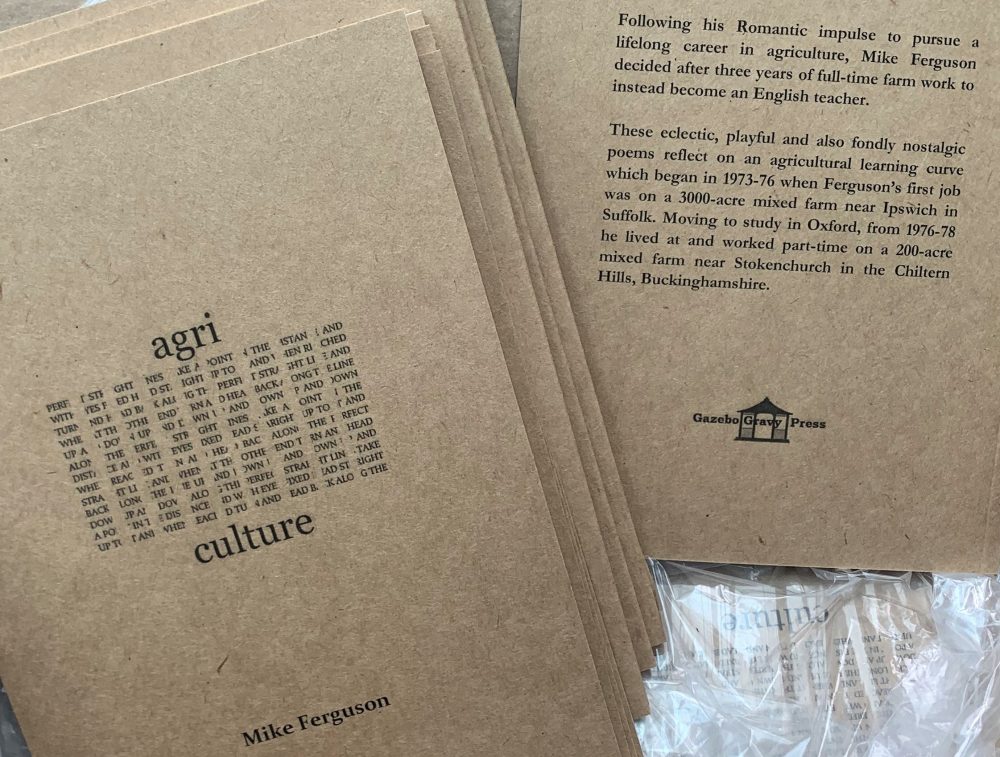
Over-cogged
even turning wheels
need to escape,
steel chunks
rather than
idea-balloons,
there is no room
for exclamation marks –
just pieces
that cannot
fit,
too many
too much
all sizes
all spinning
where there should be
beautiful things.
Over-cogged
even turning wheels
need to escape,
steel chunks
rather than
idea-balloons,
there is no room
for exclamation marks –
just pieces
that cannot
fit,
too many
too much
all sizes
all spinning
where there should be
beautiful things.
As I started this theme yesterday I will continue: another I was sent as advertisement automatically today [via amazon] not to intentionally annoy, but it has! I must have researched similar….
The quote from a ‘customer’ after the image says it all.
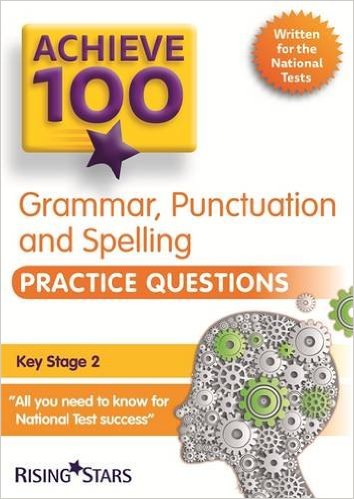
Haven’t used it yet but I think it will be excellent SATs practice for the year 6 child that I tutor.

Quite wrong for a reputable educational platform that disseminates teaching resources to link this wholly pragmatic item with anything positive about the teaching of writing.
Sadly supplied for teachers struggling to deal with meaningless SPaG SATs, the worst offense is this line Develop your students’ writing skills and help them prepare for GCSE.
This is not how to teach writing at any level, and it is most definitely not they way to treat students in preparation for GCSE writing.
Originally posted February, 2015:
…a fine poem in which Omaha gets a mention, though again not as destination but a place to pass through and move beyond
In the club car that morning I had my notebook
open on my lap and my pen uncapped,
looking every inch the writer
right down to the little writer’s frown on my face,
but there was nothing to write about
except life and death
and the low warning sound of the train whistle.
I did not want to write about the scenery
that was flashing past, cows spread over a pasture,
hay rolled up meticulously –
things you see once and will never see again.
But I kept my pen moving by drawing
over and over again
the face of a motorcyclist in profile –
for no reason I can think of –
a biker with sunglasses and a weak chin,
leaning forward, helmetless,
his long thin hair trailing behind him in the wind.
I also drew many lines to indicate speed,
to show the air becoming visible
as it broke over the biker’s face
the way it was breaking over the face
of the locomotive that was pulling me
toward Omaha and whatever lay beyond Omaha
for me and all the other stops to make
before the time would arrive to stop for good.
We must always look at things
from the point of view of eternity,
the college theologians used to insist,
from which, I imagine, we would all
appear to have speed lines trailing behind us
as we rush along the road of the world,
as we rush down the long tunnel of time –
the biker, of course, drunk on the wind,
but also the man reading by a fire,
speed lines coming off his shoulders and his book,
and the woman standing on a beach
studying the curve of horizon,
even the child asleep on a summer night,
speed lines flying from the posters of her bed,
from the white tips of the pillowcases,
and from the edges of her perfectly motionless body.

When a stolen bike is of more significance than the recent discovery of warts on your penis, the world of worry is terribly askew – or you have entered the world of Ian Seed whose collection of prose poems Makers of Empty Dreams present his distinctive narratives of mystery and uncertainty, as with opening piece City as part of a sequence about living in Milan, once with a bicycle and now a penile ailment. And if the world of A Level English Text Transformation was to continue its creative orbit, this contemporary text would be an excellent stimulus to imagining further scenarios – and I don’t mean ‘answers’ – for students to create, probably steered to mysteries other than those connected to genitalia.
Never one to refuse a ruse, the penile warts above are my way of rueing the other demise, this, as far as I can make out, the last year for the setting and assessment of AQA’s A Level English Language and Literature ELL4 Text Transformation coursework element. I became involved in teaching this unit reasonably early in the syllabus’s existence, and in my latter years in the job, when I was less and less able to celebrate creativity in the classroom, this was a last vestige of vibrant and exciting possibilities for student writing.
Before celebrating this further here, I would also like to mention the work of my GCSE students where for their Original Writing English Language coursework [it wasn’t even called ‘Creative Writing’, allowing for more transactional options, sadly in many respects] they wrote poetry based on my presentation of ‘Copycat’ poems, poetic models to offer structures for emulating whilst encouraging the most imaginative of content: my mantra of the time being ‘it must make grammatical sense, but it doesn’t need to make literal sense’. Over the years, these were consistently brilliant.
Looking on the AQA website yesterday it seems that the specification in which TT was a significant feature no longer exists for new teaching. The replacement specs are heavily constrained by the reduction [absence?] of coursework options, and terminal examinations cannot allow for a genuine writing process to be undertaken. This also prevents the kind of exploration that went into the selecting of texts for transforming, and then the writing of a chosen transformation. I admit I haven’t scrutinised the options that closely, nor across other Awarding Bodies, and I do know there is a Creative Writing A-Level in existence, but I think that is under imminent threat. I would be delighted to be corrected about any of this.
In the early days of the Eng Lang/Lit syllabus, there was a freedom to select a ‘literary’ work to then transform into another genre, trusting students and teachers to make informed and sensible choices. A number of the transformations I will be mentioning come from these freer days. This eventually changed – for whatever reasons: some silly school choices I’m sure, but also external forces to increasingly dictate a supposed cannon – and students then had to select from the defined list of authors as well as produce two transformations. It is important to mention that there was always an accompanying critical commentary where students analysed their choices and writing experience.
Looking at the list of authors yesterday [and I did teach to most of these in my final years] I was pleased to see the actual addition of two authors I had requested, but which hadn’t appeared on the list when I taught: Charles Bukowski and Raymond Chandler. I suppose others may have requested these, but I’m not sure this is the case. I’m proud to see them there, even in the final year of offering.
Bukowski and Chandler always provided colourful/engaging/disturbing characters and tales in their poetic narratives, as does Matthew Sweeney who I also used as a stimulus for students to possibly select as a prime source. Their stories, so often with open-ended trajectories for a reader’s imagination, are like those of Ian Seed, and many other writers, thus my mention of him at the beginning of this piece. Whilst not to be used in the same way as ‘copycat’ poems, where structures and patterns are rightly recycled, the narratives were rich sources of inspirations for transforming, and poetry worked especially well as most students were and are more comfortable writing narratives or dialogue [and monologue], thus the genre transformation element of the task was fulfilled. That said, over the years, many of my students wrote superb poetry transformations from prose, and many of these using experimental writing like found, concrete, cut-ups and humuments. It was such a brilliantly radical and adventurous time.
Over the latter years of my English teaching, the testing and measuring and judgemental culture in schools meant there was less time to be creative. Metaphor seemed to even disappear from the curriculum. Pragmatism and philistinism began to replace freedoms, and I don’t really need to stress this any further. In that context, Text Transformation, even in its more prescriptive format, was an oasis of creative joy. I am sorry to see it go as I have and will forever keep the fondest memories of it, exemplified by the very small selection of transformations I am going to close with here. I have read hundreds so cannot possible account for them all, nor should I try. I don’t believe I ever read a ‘bad’ transformation [maybe a very occasional lazy one!], but I certainly read mainly amazing and outstanding pieces from those students who didn’t normally write creatively, to those who did, and to those I know continue doing so now. How bloody privileged is this to have been involved in!
In no particular order:
Having written these [because I have physical copies here at home] I am reminded of what an absolute snapshot they are, and the fact that there are so many others I simply cannot recall in the full detail needed to use as examples.
Without mentioning specifics, some of these students received responses from the authors of the transformed sources [living, yes…] which were stunning additions to critical commentaries, and in all cases were effusive in their praise. Again, how brilliant!
The numbnut scribes at the DfE whose job is to explain away the professional and/or public rejection of that Department’s equally numbnut ‘educational’ implementations have failed yet again to grasp the argument [but then they wouldn’t would they – drafters simply compose deflections: they are not a part of the policy-making*].
The May 3rd parental boycott of SATs with the provision of alternative ‘outdoor learning events’ [read more here] is such a positive action and argument against the nonsense of these tests, that action growing in response to the widespread criticism of the tests by people in the know [teachers and educationalists] as well as a sensitised response to this government’s general ineptitude when it comes to educational matters.
As ever, the DfE drafters’ dodges and deflections have an uncanny paradoxical knack whereby in seeking to defend against criticism they actually exemplify the very problem, this latest on the proposed boycott using that one word which sums up a key error in government thinking about teaching and learning: to manage it –
A Department for Education spokesperson said: “We are clear that tests should not be a cause of stress for pupils – they help us ensure schools are performing well, and we know the best schools manage them successfully.”
You cannot, in fact, successfully manage a flawed testing regime. The teachers at school now and for past decades deal with and make the best they can of bad and even dangerous policies, but this isn’t really the kind of ‘management’ being implied by the statement. Indeed, the parental boycott is the type of necessary response which stops that institutional, professional altruism that puts student welfare above what should be immediate protest and resistance. Teachers have coped by rasping the barbs from government decision-making for too long.
* [not that the policy-makers themselves have a clue….].
Advertere
Or actually I should be condoning and reinforcing, not being a fan of independent education, nor the inequalities it contributes to an already fractious system.
Following an omnibus [relevance of pompous term shortly…] into Sidmouth this morning, I was observing its Back of Bus Advertising for Queens College, Taunton, and that ad being on a mobile signage it rightly relied on image over text.
The image was of a cherubic young boy/lad, with slightly ruffled hair [oh to be a Boris in the future…], reading a book: an activity one would normally recognise as a positive educational endeavour.
However, this little snot was reading an Oxford Dictionary! Now, as someone who actually compiled his own personal dictionary – but in my late teenage years and as an aspirant writer – I am not averse to recommending the learning of words. As an English teacher as well, I obviously encouraged the use and exploration of a dictionary for general and also specific learning and writing situations. But as an image and advertisement for the activity of reading as well as, presumably, a ‘good’ [expensive!] education?
How dreadful. How apt, perhaps. If wanting to transmit a sense of tradition and formality, why not Shakespeare? Dickens? A generic book of Poetry?
But as I said, maybe I should applaud the silly pomposity of the idea.
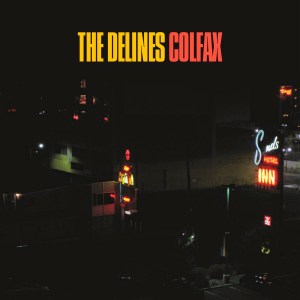
I am a stalwart fan of Willy Vlautin, especially as a writer of four important novels, but also as a songwriter where his narrative style and thematic preoccupations have a further outlet. I have posted reviews on this blog of those four novels – this page indicates all my relevant posts – and more recently I re-posted a review of his latest album with his band Richmond Fontaine. This too is a review of another album Colfax with his more recently formed band [relatively speaking] The Delines, but it tends to deal with the narratives more than the music, as brilliantly evocative and empathetic as that music is, and continues to be.
Originally posted October, 2014:
Telling Tales
Two of the latter songs on this album by Willy Vlautin and his band The Delines sum up its central theme of people with a desperate, or even knowingly empty hope for a better life. Whilst the stories of each of these two is told by a separate female persona, every female persona across all of the 11 tracks is linked by their shared sense of ennui, a collective everyperson of accepting despondency – made beautifully plaintive by the haunting music through which Vlautin carries these tales and the sweetly lamenting voice of Amy Boone who sings their narratives.
Seventh track State Line exemplifies the brisk musical vignette in every song, and here the stark message is presented in the line my whole life can be seen in one scene. That scene is relayed as the time when she was a young girl of 15 and left home having stolen her folks’ car and made it as far as the state line, this a metaphor for the boundary which prevents all of us from moving away and beyond whatever it is that stifles and diminishes our lives. The narrative is reflected through her life now as a 44 year old woman who never made it away and beyond in all those years since that teenage attempt, where she feels everyone else is blurring by in their better lives, unable to grasp [as all these vignettes tell us] that no one actually escapes – it just seems so because one has to believe it is possible. The most despairing line in this song is how the teenage attempt was prompted by the realisation that she should leave with the certainty of a life doomed to drown in that house or to drown in the world. And we know the outcome as the song closes on the repeated line stuck on the state line.
Eighth track Flight 31 presents a different but equally transient mode of transport and fruitless means of escape. The persona here imagines how her travel to a lover’s arms in a different city embraces an effective break because it won’t be long now…probably over Toronto….it won’t be long now….I’ve been drowning for years now, I’ll just drown in your arms and the hope for change and something better is anchored by the more obvious connotation of ‘drowning’ when first sung rather than the romanticism of the second reference.
The slow meditative musical backdrops for these two songs have been played at this empathetic pace from the start. Album opener Calling In begins with slow strummed guitar then slower pedal steel painting the backdrop wistfully when our first persona of the many begins her story, this time about a couple who decide to stay at home from work by calling in sick to stay in bed and watch the day fade, trying to escape the ordinariness of their lives and as slaves to precarious, unrewarding occupations. The music has a long slow pan again, as if the despair/resignation has nowhere to go, and then the declaration, so full of that empty hope, gets posited with darkness ain’t such a hard road, let’s never go back, a repeated line, any tentative conviction there is lost in the repetition of the musical surround.
The semi-title and second track Colfax Avenue is told by a wife who gets a call at home about her hurt brother and then tells how she goes out in search of him, leaving husband and kids at home – the familial tie of siblings made stronger by his apparent vulnerability. She searches the alleys, the liquor stores and the bars they still let him into after he returned from being in the army where she can only guess helplessly at what happened to him – in the army what do they do? – and now she can only worry that nights can be so long and it’s so cold outside, he’s just a kid and he’s seen too much, he’s just a kid. This narrative is so Carveresque in the nothingness of where the story goes: there is no ending, it just is. There is no resolution.
Third track The Oil Rigs at Night has an opening line Golden lights on the oil rigs at night that paints a seemingly poetic picture, drawing our female persona this time to something meaningful that seems to shimmer there. However, we learn that her husband works on those rigs – 23 more days he’ll be away – and she contemplates leaving home before he returns, her connection to him now just an endurance having been childhood friends, but any spark blew out if it ever did exist, the scenario of where she might go and end up as an even emptier reality offering the simple – though dark – solace of difference, but the line at least I won’t be cursed adds bleak layers to that familiar pang of feeling trapped by ordinary life.
The fifth and my favourite track I Won’t Slip Up is yet again a tale of leaving, no matter how fleeting or far: the escape is all that matters. Here we have another younger female protagonist, not yet fully buried in her life and trying to tell herself – and those probably too knowing to listen and believe – that she has her hopes and ambitions in perspective and therefore control: It’s Friday night and I just can’t stay at home and I know your shift starts at midnight…so come on, come on…hey Ray, could you give me a ride into town….I won’t slip up, I won’t slip up….. She wants to momentarily escape as far as Lombard Street….have a couple of drinks…. I get so tired of people worrying about me. It is a clichéd but all the more real for this tale of a mom who lectures her and a boss who out of daily and endemic mistrust checks up on her work [checks the till]: her life is constantly and diminishingly monitored/measured by others. The repetition of the promise I won’t slip up is so achingly doomed, the melancholic organ and pedal steel fading out empathetically with that hopelessness. The pathos is so painful, truly painful. It is a beautiful tune, that organ tone somehow so apt, and it is this balancing act of the music and the stories – the sweetness and the pain – that makes this album so paradoxically uplifting. I think it is so because there is an honesty in the observation, and because of that there is hope in the listening. At least someone understands and someone is telling the stories for others to engage with and hear.
Transactional Writing – Making the Meaning Clear
I’m sure it is clear to any readers of this blog that I am opposed to English SPaG SATs as they are not usefully connected to the teaching and learning of writing.
However, I am no slouch when it comes to criticising poor writing, and as English teachers we obviously have a responsibility to help all of our students become effective communicators in all linguistic modes.
So here is a task for year 9 English and beyond, probably a GCSE transactional writing challenge.
When I rang the customer service number today of the company that emailed me the piece that follows, I pointed out their communication was poorly written and indeed intimidating as it was telling me my electricity meters needed to be physically removed from my house as I was switching supplier. You’ll imagine the conversation that followed when the person I was speaking to claimed they had personally written it, especially as they claimed its meaning was clear.
The task is to present the ‘communication’ as it is, with the instruction for students to discuss and then re-write so it is clear and meaningful. Areas of particular note for clarification are:
• the supply that is monitored by the meters is being ‘taken back’, rather than the meters themselves
• the expression ‘take back’ needs amending and improving
• the missing word in the paragraph beginning ‘Please be advised…’ needs to be extrapolated from the intended sense and inserted, with appropriate follow-on
• the paragraph beginning ‘Once you meter…’ needs an entire correction so that it is accurate and meaningful
Task 1 resource:
Dear ,
We hope you are well.
We have been advised by your new supplier that they wish for us to take back the meters at your property that you switched to them, the meter they will be sending back has the MPAN 22xxx19111xxx with the meter serial number 67xxxx8.
Please be advised that there are two meters at your property and some companies are unable to support just one of these meters on their and therefore they need to supply both the meters at your property.
Once you meter that you switch is back with us you are more than welcome to stay with, you are also more than welcome to switch again with both meters.
If you have any further questions or queries please do not hesitate to contact us.
Kind Regards
Customer Service Team
As an extension activity, and to provide a more comic look at transactional/formal writing, the following email, again received today from the supplier I am meant to be switching to [or thought I had as indicated so on the 8th April], can be explored as an example of entirely euphemistic, but perhaps equally meaningless writing. The task would be to write a similar customer service email that reassures a client without offering a single concrete piece of detail.
Task 2 resource
Hello ,
Just to keep you updated on your switch, everything is still under review but moving in the right direction and will all fall into place within the next couple of weeks!
Kind Regards
The Energy Team

As this government’s proposals for Education continue to unravel into thin threads of meaninglessness [metaphor] there is the paradox that one of its latest ideas [ironic comment] may in its nonsense prove correct, if unnecessary [just a mess].
One of these areas of ridiculousness has of course been the insistence on proceeding with SPaG SATs, though it has had to abandon those for Key Stage 1 after they were posted online. The SPaG tests are ridiculous because they are built on foundations of jelly, and the arguments for seeing it as this have been presented on this site and beyond with informed conviction. I will, however, add one further observation to present my objection to their reliance on discrete areas of language study: at my secondary modern school in the late sixties, my English teacher made us work through clause analysis [using a popular book of the time The Art of English] which primarily meant copying out the rules and examples neatly onto loose-leaf lined and hole-punched A5 sheets of paper and forever being none the wiser as to their actual significance apart from their permanence in fountain pen ink on the pages I still have, somewhere.
Yet in a paradoxical suggestion of agreement with one aspect of these lessons – and an apt expression of this as you will see shortly – we also learned about figures of speech, once again writing these out as copied definitions with examples. Terms like metaphor, paradox, litotes and tautology have been a part of my constant vocabulary as a writer since that time, or certainly since I began to write thoughtfully and meaningfully about what mattered to me, though never ever knowingly using a particular kind of clause for a premeditated purpose and effect.
All of this to laughingly labour [alliteration] how the latest government proposal announced today provides the perfect definition for the following:

