Ten Albums of 2019 Recommended – No. 3

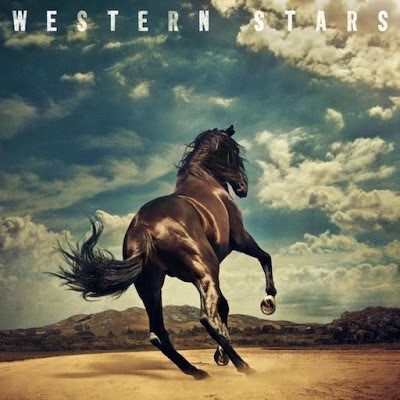
Bruce Springsteen – Western Stars
20

Pedal Steel and Strings

He is the Boss. He can do what he likes. He has.

One of those ‘likes’ is to set up a battle between pedal steel and pop orchestration. I will need to listen to the whole album a few times to acclimatise myself to this conflict, and to decide if the dichotomy is less so and more a synergy. We shall see.

Opener Hitch Hikin’ is a remarkably simple melody, plucked banjo in the back, a rise up and down made great by the distinctive vocal, beautifully sung. Strings do sweep with the sway, but this is carried on the homely highway bound, dashboard picture of a pretty girl narrative of all our nostalgic listener’s hitchhiking memories. Second The Wayfarer foregrounds more string sweeps and a punchy piano start, a breezy popish tune embracing the Springsteen drawl and then string surges that surprise. Remember, this is an early response. I am on the second listen and I’m not swept away yet. Horns have just joined the wayfarer’s pop sojourn. It could be a 60s Western film score. Third Tucson Train has Springsteen in more strident vocal, horns a little pretty in the mix, but an echoing guitar anchoring to expectations. Its storytelling builds into the whole and is emboldened by it.

The album’s title track is fourth on the album, and we are in Nebraska, that’s Nebraska-esque musical territory. Chug-strummed acoustic guitar. I don’t know if that’s a term, but it is those forward, percussive strums. Pedal steel haunts. This is beautiful.

Here’s to the cowboys, and the riders in the whirlwind
Tonight the western stars are shining bright again
And the western stars are shining bright again

Tonight the riders on Sunset are smothered in the Santa Ana winds
The western stars are shining bright again
C’mon and ride me down easy, ride me down easy, friend
‘Cause tonight the western stars are shining bright again

I woke up this morning just glad my boots were on

This is a man/artist glad to be alive and recalling and sharing and so are we. Fifth Sleepy Joe’s Café celebrates I hope a great place because the gesture will be more memorable than the music.

Then it’s Drive Fast (The Stuntman), another persona narrating a life lived hard, survived and again glad to be alive, carpe diem as a means of forgetting the scars because that is in the past. Pedal steel drives here too, as it should. Seventh Chasin’ Wild Horses is going to be a favourite, a classic Springsteen descending melody, the vocal matured in its storytelling, and yes, pedal steel a yearn of sound remembering as well. Banjo too. Simple plucks, but announcing the first contest where orchestral strings swarm all over the pedal steel’s lamenting, a pop sweetness I might learn to lose myself in, but not just yet as a further soar seems too paradoxical with its portentous timpani roll and then horns – and wait for it, the pedal steel comes in at the end like a slow train passing by. This seems to segue seamlessly into next Sundown, a clear echo of Campbell and Webb, something filmic in the breezier pop orchestrations of this accompaniment. This isn’t the anthemic sound of Born in the USA where the big build has a different depth and punch; and it isn’t wall of sound either – I don’t think – but with the chorus and its vocal/lyric mirrors there is a pop sensibility winning.

21

Therefore, aware perhaps of my and others’ questioning, next Somewhere North of Nashville is back to Springsteen in emotively strained voice, pedal steel having pushed the entire orchestra aside.

Stones is the tenth track and as yet there isn’t a stand-out but there is a sustained quality, as we would expect, despite the ‘battle’ of backgrounds I have set as the ruse for this review. Though I have quoted lyrics from the title track and narrative hints from others, this is another element that grows with listening. On this track, strings again feature as an orchestral feature that I don’t get. They aren’t – and probably can’t be – adornments to songs in the way George Martin worked it all those years ago. And here a solo violin is accompanied by a ‘cowboy’ twang of guitar, that Campbell/Webb influence again. It does seem incongruous.

There Goes My Miracle is the most perfected as a pop ballad, a strange vocal echoing of the main line, and a sense of grandeur attempted from the late Scott Walker template, though not as resonant in tone or execution. Perhaps I have the reference point wrong – the precursors are many and anathema. It is pleasant enough. The penultimate track is Hello Sunshine and an up/down bass line precedes pedal steel that comes around like a welcome touchstone of history. Strings sweep through again as an inevitability. Robert Frost would smile at the lyrics, and there is no harm in this, though having invoked the poet I am not sure he would lean all that far to the hopeful philosophy.

So the acoustic pluck of closer Moonlight Motel, matched along the melodic line by Springsteen’s gentle singing, pulls me in again to what I want and like the most. And pedal steel wins here, though the competition doesn’t exist anyway. Cymbals shimmer instead. Lovely.

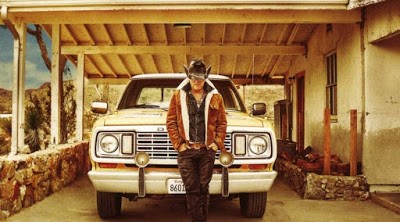
In the middle of writing this review, my vinyl copy arrived, a great picture of Springsteen averting his gaze on the back, Stetson-of-sorts pulled down with a bowed head as well. It will probably stay wrapped for keeping, those strings unlikely to take on a more fulsome and welcome existence by the turntable’s playing.
22

[What follows is a subsequent, brief review which would go some way to explaining how this albums makes my No.3]:

 Bruce Springsteen – Western Stars, the film version

23

Orchestral Cowboy

The introductory orchestral sweeps seem to be announcing widescreen blockbusters at the drive-in, and you can hear the Country guitar-twangs even though this is only strings.

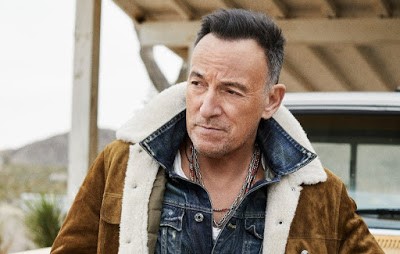
My initial reaction to Western Stars was a little reserved, probably a little critical, but that was down to interruptus expectation, and as is often the case with great albums [I’ll mention now Neil Young with Crazy Horse Colorado which sounded at first insubstantial but is in its simplicity and after further listening totally gorgeous] Springsteen’s latest has grown hugely on me.
24

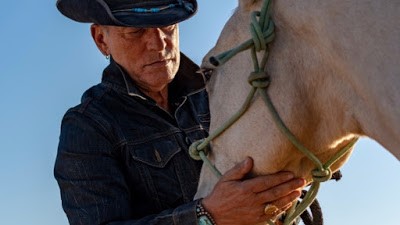
This has been furthered with this filmed-in-a-barn live set, again with orchestra and backing singers and cowboys riding all over the strawfloor’n’plains metaphor, and each by now familiar symphonic intro and/or sudden interjection signals that great personal delight.
25


Ten Albums of 2019 Recommended – No. 4

Baby Rose – To Myself

17

Mode of Cool

Baby Rose [Rose Wilson] is a 25 year old singer-songwriter with the time-burred vocal of someone steeped in many more years of experience. Whilst pleasingly generic in terms of its soul/R&B songwriting, along with overlaying and other effects – like the malleable/bending piano chords and percussive beats to Artifacts – it is the voice that establishes the enduring quality of this debut.

18

Opener Sold Out starts with a car-starting-and-moving-off sample when Rose’s jazz-soul vocal then fills the vacated space with resonant, warbling vocal depths, these adorned with other harmonies and soothing grooved instrumentation; next Borderline is a punchier but again smoothed-out affair, the vocal ‘accent’ that slight affectation [a la Amy Winehouse] I find unsettles these ears, but for many it is obviously a requisite style. That Rose’s singing rises above everything in its impressive presence is the great capture of this album, All to Myself a passionate and breathy lament; penultimate Over a hypnotic swathe of matured vocal mastery, and closer Show You a light orchestral number in the Burt Bacharach mode of cool.
Being one of my most listened-to albums of the year exemplifies how any ‘unsettled’ initial response has been overtaken by the abiding groove, soul and vocal warmth/depth of its revisiting.

19


Ottery’s Aeolian Harp

colour cover

Ottery’s Aeolian Harp exists for now as a digital chapbook, probably complete, and written in celebration of the poet Samuel Taylor Coleridge with many references to the home of his birth, Ottery St Mary.

It may get produced in the new year as a hard copy – definitely so if someone would like to publish – at which point it would be sold to raise funds for the Coleridge Memorial Trust STC statue project.

For now, as an end-of-year taster, read and download here: Ottery’s Aeolian Harp

Ten Albums of 2019 Recommended – No. 5

Lucy Rose – No Words Left

14

Admirable Art

This is a delicate and sweet collection of songs, the essence of pretty but with a clarity that defies affectation – what I mean is Rose has a voice that is effortlessly pure and is so across a range of the gentle to soaring, as in tracks Pt 1 and Pt 2 of the album’s title where the wordless expression across piano and then strings coalesce in a simple but powerful beauty.

Song after song after song all about me and my misery Rose is honest and direct in her lyrical introspections, and the harmonising choruses with occasional light orchestrations can be pop-perfect or more jazz inflective, either quite distinctive. Opener Conversation is sublime in its fine melodic lines and lyrical honesty – no one lets me down like you do – and the harmonising with again strings in comforting lament and some emotive energy at times. The piano and vocal mapping on Solo(w) is plaintively gorgeous, this with its shadow of saxophone setting the jazzier trajectory and an incantation of solo to intone deep personal feeling, this augmented by and I’m afraid and I’m scared and I’m terrified how these things won’t ever change for all of my life in the following track Treat Me Like a Woman.

15

[the following is a ‘bonus’ live review]

Consummate Collective 

Lucy Rose’s album Something’s Changing is one of my top three of 2017 – quite likely the number one – and that is in a whole year of, as ever, outstanding music. When I heard she was playing Exeter I had to go to the gig. My only concern was whether she could deliver such sublime singing live, though additionally the supporting harmonies and instrumentations that complement her fine voice so well on the record.

From her opening song at The Phoenix, Intro, the same as on the album which she performed nearly if not in its entirety, the vocal was exquisite [and I have noticed in other reviews that the words sublime, exquisite and delicate often occur, so we concur] but the band was as perfect an accompaniment live as on record. And the entire gig was a flawless encapsulation of the singer-songwriter in command of her crafting and on-stage delivery.

In my album review I namechecked Joan Wasser as a contemporary touchstone, as well as Joni Mitchell from the past, both to which I still adhere. I’d add Feist to the contemporary highest ranks of Rose’s vocal company, and it was pleasing to read somewhere that Rose cites Neil Young and Joni Mitchell as influences.

In conversation with the audience, which is clearly an important connection for Rose – especially in gauging a liking for what she is playing – there was genuine warmth but also a vulnerability in her confidence, an artist’s uncertainty about how far people are communing with her music. It is clear she has over the years encountered fans who want to share their own stories, relating these to the often plaintive narratives of Rose’s song-writing. This need to empathise seems to be as strong for Rose as it is for fans, and The Phoenix was packed with a knowing audience to – for last night at least – assuage whatever artistic fragility seems, ironically, an important element of Rose’s personality and performance.

The stand-out of the evening was I Can’t Change it All, a signature melody, but in this song’s rising shifts and volume, Rose and band were a consummate collective.

16

Ten Albums of 2019 Recommended – No. 6

Rosalie Cunningham – Rosalie Cunningham

11

Music Circus Ringmistress

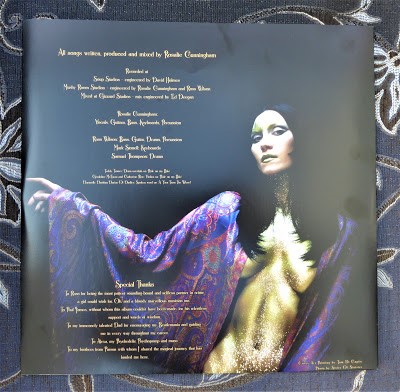
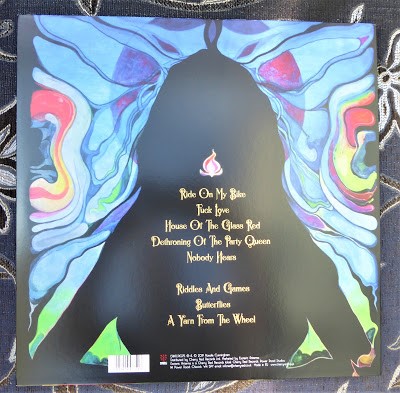
Rosalie Cunningham’s eponymous album is a delightful showcase of her distinctive and fulsome talent as multi-instrumentalist, vocalist and songwriter. The psychedelia of her significant time as leader of superb band Purson is still wonderfully evident, but there is a coherence of the music circus to this fine set of tracks, and by this I mean a theatre of gypsy folk to psyche pop elements merging in the big tent circle of this performance.

In many music reviews I often cite precursor touchstones and then either hasten to confirm the intended compliment or apologise for what are probably familiar [perhaps ad nauseam] references to musical echoes. Unabashed now, I simply reflect on hearing forebears like Clear Light and early Doors, then Affinity as well as one cosmic waft of Hawkwind opening a track, and also a favourite influence mentioned by Cunningham herself in the album’s inner sleeve, the Beatles, and by implication, George Martin.

All these inspirations coalesce in Cunningham’s assured interpretive flair, a musical focus she has honed with instinct and determination throughout her musical career and celebrated in this solo album.

12

Rather than work chronologically through individual songs, I will highlight the collective pulses of this record from happily engaged notes I made on a first listen, starting always with the voice, Cunningham’s fulsome and resonant vocal and the occasional great swathes of warbling perfection and the harmonies quite beautifully expanded and overlapped. There are 60s/70s fuzz buzzes and space-rock backdrops. There is a portentous, punchy start. There are continuous examples of solo excellence in clever guitar leads, a pounding bass, and layered organ swirls.

Instrumentation and genre merge playfully and evocatively, from lounge piano to wah-wah to marching beats to orchestral keyboards/mellotron to the operatic, and on closing tour-de-force A Yarn from the Wheel, spoken narrative and rousing screams.

13

Ten Albums of 2019 Recommended – No. 7

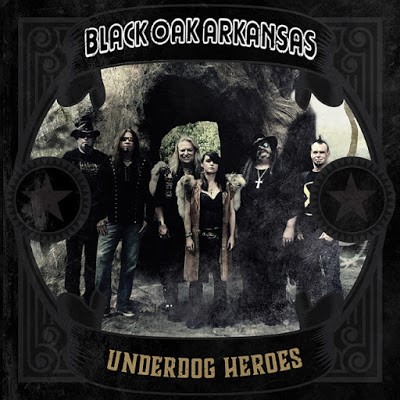
Black Oak Arkansas – Underdog Heroes

9

Keeping the Faith*

This is a paradox of an album – not good/bad; I think it is damn good – but in the polished/raw qualities it relays: the polish of its production, and the rawness that is inherent in the bass-growl of Jim ‘Dandy’ Mangrum’s signature vocal, here foregrounded throughout and often echoed-up for sustaining effect. ‘To The Rescue’ indeed. There is often a talking pace to the delivery, as in the dirtiest walk of The Wrong Side of Midnight, like Beefheart on a tab of sass. Great vocal support from Sammy B. Seauphine.

Rickie Lee Reynolds and his excellent guitar playing also provides a significant anchor to this album’s success, for example superbly on opener Don’t Let it Show, as is the shredded lightning of a contribution from Shawn Lane [who passed in 2003] on Do Unto Others.

Another ‘narrative’ offering is third track Channeling Spirits paying talking homage to other musicians, and this is a sweetly resonant song intoning a lineage from a range of artists. Reynolds’ guitar work on this is a glorious overlay of lead.

Next Ruby’s Heartbreaker is written about former band member Ruby Starr, a hugely powerful vocalist in her own right, and this is a dynamite tribute, using wonderful catches from the chorus of Grand Funk Railroad’s Heartbreaker as well as Reynolds in Funkadelic’s Eddie Hazel mode.

If you want it real dirty – so that’s hot ‘n’ nasty – check out The Devil’s Daughter with Seauphine featured on vocal. With lines such as like a blow job from hell, but boy I’ll bite off your balls it is the lyrical poetry of ‘don’t take this too seriously – just fucking enjoy’.

And I am. Nostalgic and nostalgia notwithstanding.

10

*Their second album, 1972’s Keep the Faith, is one of my life-long favourites.