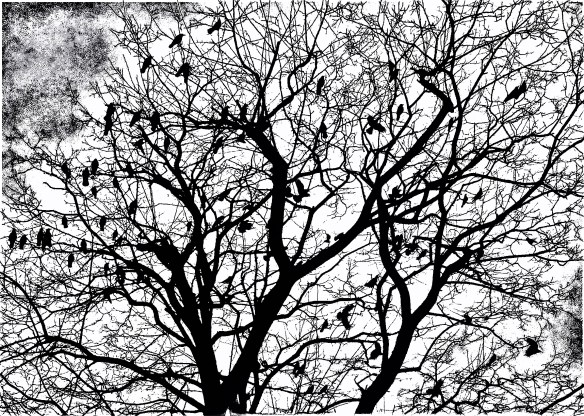
On the garden’s false acacia this morning.

On the garden’s false acacia this morning.
Most pleased to be sharing the first of my three ‘persona’ poet poems at Stride this morning, with my usual but nonetheless sincere thanks to Rupert for his continued support and platform. Today’s is ‘from’ Peter Reading.
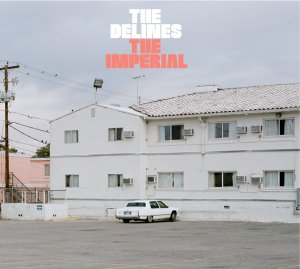
Willy Valutin’s latest The Delines album The Imperial is lyrically as it always is – an encapsulation of a world-weary, blue collar reality. The ‘beauty’ of a starkly sustained expression of such is in the music: songcraft, obviously, but most precisely with this group [rather than previous, Richmond Fontaine], the vocal of Amy Boone, and the band, notably here in the horn laments and their soul-infused layers.
In tracing the narrative focus of the lyrics we can see how Vlautin never adorns – and I mean ‘lyrically’ as in beautification of language/expression – but always captures the heavy burden of having lives destined to failure and sorrow. That we learn to strongly empathise comes from the honesty of that and its relentlessness, how the characters do not feel sorry for themselves but just live it [and I would not necessarily say endure], and then of course how, crucially for The Delines’ pair of releases, Amy Boone gives it a direct voice.
Opener Cheer Up Charley does not exactly elicit the empathy I am arguing for, but it sets an immediate ordinariness to the struggle
Cheer up Charley
You know your wife
She ain’t coming back
And I know she broke you
And it breaks my heart
To see you laid so flat
You’re using up all your vacation days
If you lose your job on the docks
It’s a job you’ll never get back
So come on cheer up Charley
Cheer up Charley
Interestingly here, there is an external voice offering its support and sympathy when this is not usually the case in the storytelling. What matters here is our awareness of the emptiness of that exhortation to cheeriness for Charley. It won’t happen. It can’t happen.
Second, the album’s title song, is another dialogue – or actually singular address to our new persona – and its closing stanza/chorus wraps up the inevitability in one reference to cause
The Imperial Apartment 315
Imperial all those nights just you and me
Imperial we were living on clean money
Imperial before your cousin came to town
And you all got involved
In that deal that went south
Imperial you and me
Why did you do it?
Why did you do that to me?
and the rest is the inexorableness of effect. The apartment is – I want to say metaphor, but it’s too real for that – a small impersonal place of habitation, a place for everyperson and not a home or environment for building a future when relationships break down either out of losing a connection or it being disrupted by outside influence.
Next in a trio of opening hard-luck accounts, Where Are You Sonny?, the opening verse sets our scene of separation, where
We park in the lot at Walgreens
You get out and slam the door and leave
A pint of Crown Royal you throw back
At the car and me
Windshield cracks
A woman carrying a baby walks by
Next to me there’s an old couple
Whose car won’t start
And the snow keeps drifting down
and Sonny isn’t seen again, so life – to whatever parameters of ordinariness it ever was – has changed forever. In that one moment of presumably an argument, a great chasm has been created. The reference to Walgreens and Crown Royal establish the familiar and root it there, but those four last lines of this verse, which are seemingly as normal, are heavy with their simple sense of things that are never right/working.
In the next Let’s Be Us Again, Vlautin continues to paint the hopelessness of hoping as we know change cannot occur. So when we hear
The leaves have changed
And we’re together again
I’ve waited so long
Do you think we could be us again?
Let’s go downtown
And hide in some old lounge
And let it get loose and easy
Let’s be us again
Oh let’s be us again
we know it is a transient moment of connection and desire for a return to whatever was, but won’t be again. Like leaves, but this is a singular cycle. The song is a slow soul-blues, and Boone sings with such sweet reminiscence and forlorn optimism that it can be painful to think too hard on it, the horns a rousing backdrop of prettiness than could fool us as well.
I’ll present Roll Back My Life in its entirety, brief as it is in the completeness of a further mini-portrait of dark hope
Roll back my life
Past all those years
Of just scraping by
And pour me a drink
Turn down the lights
And roll back my life
Roll back my life
So I can see where not to stall
and the solo vocal of Boone with single piano accompaniment and faint guitar at the very end echo in a room that is empty – how can one ‘stall’ in a life that is so far past the point of imagined divergence from the inevitable? I think this is an evocative lyric in its simplicity, but the plaintive music slows it all down to crystallisation.
The sixth track on this album is Eddie and Polly, a seemingly upbeat song after the loneliness of the preceding, and we have a pair of characters who are starting off in their togetherness, but already doomed [well, we just know…] but also in the qualifying ‘desperation’ of their loving in the second and third lines
Eddie and Polly blow into town
Desperately in love
Desperate and in love
Eddie and Polly go on a spree
Hit every club around
Paint themselves into the ground
Can’t you see
Chipping is how the habit is made?
Can’t you see
It’s how the morning drink takes hold?
This is from the first stanza of three, and in the second Eddie and Polly start to fight, and in the third they break up. The song’s call and response of can’t you see in all three verses is almost comic in its lightness, but their separation is not so lofty because this is how you make scars.
Holly appears in the next song Holly the Hustle, though it isn’t necessarily the same person, and that is fundamentally irrelevant because all personas/characters are the same. This is more straight storytelling in the Vlautin novel-esque vein, though a finite lifespan condensed, and through a series of misjudgements and wrong turns, Holly makes only momentary victories in her hustling so is doomed all the same, and violently so
Holly the Hustle got beat up
By a man in El Paso she misjudged
She was nineteen with two broken ribs
Three busted fingers and nowhere to live
She healed up in Phoenix
And worked a married man
Took him for sixty grand
She moved to Pasadena
And it worked the same
But he left her in the Santa Anita Inn
Drunk and bleedin
In That Old Haunted Place there is a musical crescendo to rouse our sense of knowing the inevitable, and here the voice of someone who left for a better place aged sixteen may well be determined not to return, but that will be the complete success of decision-making: escape to another same. Where there is ‘hopefulness’ it is in the brief mention of other characters who did try to help our speaker: Eileen who kept me from living on the streets, and the others for whom the persona feels he owes a debt
I owe you this and I owe you that
For putting shoes on my feet
Clothes on my back
Fed me every day for sixteen years
And now I need to pay you back
I’m sitting flush and you all know
So you say I need to give you
What I’ve always owed
but he ain’t going back and will have to live with the guilt. That is unfair. And the cycle is likely to continue. This is a song most like many of Vlautin’s novels where within the overall despair and forcing to endure there are people who offer occasional humanity to our protagonists, and as readers we take some comfort from this, however sparse.
The penultimate song on the album is He Don’t Burn For Me and is a heartbreak lament. It is quite simply saddening in the irretrievable decline
Stop me from thinking this way tell me it ain’t so
I’m so broke up and worried I’m barely me anymore
He won’t talk about us gets more distant as time goes
Spends his nights out drinking with his brother
It’s dawn before he comes home
and the nature of having to rely on another is a bleak prospect for the future.
The closing song Waiting on the Blue reverberates its despair like the keyboard notes that layer beneath its storytelling. It is brief and stark like Roll Back.. so here it is complete
I know the night will end soon
I just get so weary waiting on the blue
Garbage trucks will start banging
Delivery trucks too
They’ll be my saviors
From thinking about you
I know the night will end
I just get so tired
Soon the birds will start singing
Alarm clocks ringing too
I’ll be saved once again by the blue
and the music is so much a part of the pain and weariness conveyed, a stratum of almost siren-sounds near the end coming to attend to that, not that there is any treatment – especially as it is only the blue which alleviates a worse despondency. But yet again, Boone’s empathy of delivery is palpably heartbreaking and transfers understanding to us, and thus some degree of purpose in writing about these everywhere lives.

It made the BBC headline TV News throughout yesterday, and the guidance from the Royal College of Paediatrics and Child Health [RCPCH] on how much time young people should have contact with ‘screen time’ [similar to the recent smartphone-access musings of Education Secretary Damien Hinds] does – if not answer the question about amount of time – demonstrate the gulf between its intelligent thinking on this ‘issue’ and Hinds’ soundbite posturing.
That parents had reportedly expressed annoyance at the RGPCH for not announcing a definitive time ‘allowance’ suggests a lack of their own self-judgement, though not if – as viewers – we gauged what we heard from the thoughtful and sensible observations made by all parents interviewed about the guidance for the BBC News.
The RCPCH research and general conclusions were not a riposte to Hinds or the concerns of others on this matter, but they do represent a measured and still openly questioning platform upon which to further articulate calm and doable adjustments, for example the rather sensible suggestion that screen time is avoided one hour before going to sleep – though this, in the real world and across a colossal spectrum of young people in similarly vast and variable environments, can be little more than the reasonableness of its recommendation.
But rather than explore further that guidance, I just want to reiterate my previous two postings about this where I seriously question the understandings and intentions of the Education Secretary issuing ‘advice’ that is both embarrassingly naïve as well as nebulous.
Additional, 7.1.19: I obviously agree so am referencing here – this article Don’t fall for the moral panic over children’s screen time by Nesrine Malik in today’s ‘Guardian’ is another sensible critique of the sweeping calls to limit screen time, addressing, as I have briefly in previous postings, the socio-economic and cultural complexities completely ignored [not comprehended?] by the likes of Damien Hinds.


New Year’s Eve
“I have finished another year,” said God,
“In grey, green, white, and brown;
I have strewn the leaf upon the sod,
Sealed up the worm within the clod,
And let the last sun down.”
“And what’s the good of it?” I said.
“What reasons made you call
From formless void this earth we tread,
When nine-and-ninety can be read
Why nought should be at all?
“Yea, Sire; why shaped you us, ‘who in
This tabernacle groan’—
If ever a joy be found herein,
Such joy no man had wished to win
If he had never known!”
Then he: “My labours—logicless—
You may explain; not I:
Sense-sealed I have wrought, without a guess
That I evolved a Consciousness
To ask for reasons why.
“Strange that ephemeral creatures who
By my own ordering are,
Should see the shortness of my view,
Use ethic tests I never knew,
Or made provision for!”
He sank to raptness as of yore,
And opening New Year’s Day
Wove it by rote as theretofore,
And went on working evermore
In his unweeting way.
Thomas Hardy
Is the choice of the best we can say for Education Secretary Damien Hinds that he is either
[i] half full of well-intentioned if naïve ideas, or
[ii] half empty of well-intentioned if naïve ideas?
Or is it worse than this: half full of naivety/half empty of naivety?
Perhaps the appropriation of the half full/half empty dichotomy doesn’t really work either semantically with this expression [sans ‘glass’] or when there isn’t even with Hinds a suggestion of positivity?
Am I guilty of a negative tilt in finishing the year by mentioning Hinds again?
Probably, but that is because his most recent recommendation for bettering the experiences and lives of young people is so woefully, well, naïve, by suggesting the limiting of young people’s access to ‘smartphones’ along with ‘parents’ [*] also setting an example by limiting their own, and in this he is promoting a fantasy as a remedy.
His post-Activities Passport [AP] panacea for addressing whatever the ‘problems’ are, is, as reported in this TES, worryingly promoted as plausible. Like that AP, the idea is rooted somewhere in a reflection on What We Might All Consider Doing To Some Degree Wherever And Whenever Possible To Maybe Help Young People In A Complex World. And I mean as amorphous as this.
I understand that my being simply sarcastic is not enough as a riposte, so I return and refer to what I see as a fundamental disconnect between such pie-in-the-sky suggestions from Hinds and the curricula over which as Education Secretary he presides.
In another TES article about Hinds’ AP, he is quoted as observing,
“When I first became education secretary, almost a year ago, I went around asking everyone I met what they wanted for their children.
“The instinctive answer that came back was never about the curriculum or qualifications, vital as these are – what they wanted first and foremost was for their child to be happy and healthy.”
This sounds sensitive and sensible enough to be expressed by those concerned about their children/young people for whom they care and for an Education Secretary to endorse, as he claims he does, but he doesn’t!
How do I conclude this? In the first instance, as also stated in the TES article about Hinds’ AP,
The activities are intended to support parents and schools in introducing children to a variety of experiences and fulfilling activities.
However, the Department for Education told Tes that schools will not be given any additional funding to help pupils achieve these goals.
Well, to use an element of popular culture communication Hinds would severely limit: LoL!
In the second, the irony is that according to Hinds and already quoted, ‘everyone I met’ didn’t refer to ‘the curriculum or qualifications’, but he knows full well this is the driving force of how young people [at primary and later secondary school level] experience directly that over which he presides. If at primary level students are adversely effected by the teaching and testing of SATs – as is consistently and widely reported, and which in English seems to me undoubtedly the case – then no amount of essentially unattainable for most [excuse paradox] extra-curricular activities and/or limited use of smartphones is going to counter. If at secondary level students are adversely affected by the GCSE curriculum – as is widely and generally reported re. increased stress and mental health issues, and by professionals on how the GCSE focus encroaches into year 9 as well as diminishing areas of the curriculum which are creative and exploratory [the ostensible purpose of the AP] – then no amount of…
I have written enough on this blog with which people can agree or not about how I would scrap SATs and also address the dirge of a GCSE curriculum without repeating this now, though these opinions have to be my actual considered riposte to Damien Hinds’ recent thoughts on improving young people’s well-being. He needs to focus on that which he can change, if he had an actual will to do so. For him to indulge in ‘remedying’ aspects of cultural and socio-economic factors that do dominate the lives of all, but especially young people, is his right as a person and a politician, but seems to me misplaced as well as offensive for its naivety when coming via his role as our Education Secretary.
[*] he doesn’t mention carers/others – as reported – in his Daily Telegraph article

One could [perhaps] for a nanosecond [if that] consider Education Secretary Damien Hinds’ ‘activities passport’ [*] as a well-meaning gesture if it wasn’t so ridiculous.
And if it was a fully-funded curriculum initiative for replacing SATs…
It isn’t ridiculous in the general ideology that young people of primary school age should play and explore and create, but it is when Hinds presides over a curriculum that at primary and secondary levels places the barren acquisition of knowledge above all else, and especially at the expense of playing, exploration and creativity.
That such a curriculum has been knocked together with the remnants and thus many missing parts of some Education Golden-Age lego-bricks’ set by Gove & Gibb explains the further nonsense of Hinds’ most recent intervention in ministerial non-performance [but anything, no matter how desperate, to try and deflect from Brexit…]. Wait – was there an activity suggestion ‘Write Malvolio’s defense of the Brexit Deal’ or did I dream that?
And the ‘activities passport’ itself reflects a different kind of illusory golden-age of childhood development, steeped in Scouting and Guiding and other uniformed molding. It is ironic in that its design to turn students from their ‘gadgets’ – this sweeping manifestation of technological modernity – is so antiquated that it seems to crave a complete transformation of young people’s experience of growing up today rather than seeking to build on and make positive sense of a 21st century world they cannot, and should not, try to escape completely.
There are many ‘activities’ which are not of themselves ludicrous or unattainable or in any way unacceptable. There were bound to be a few sensible ones: law of averages and so on. But the somewhat comic range of Take part in a Roman banquet to Roll down a hill? Presumably this wasn’t devised by a Think-Tank [though on second thoughts…] but rather a morning assignment when a small group of DfE minions were locked in a store cupboard and tasked to produce a list before that day’s coffee break.
And a significant observation which I’m not going to waste my time explaining, it is also a list that is middle-class and rural/rustic.
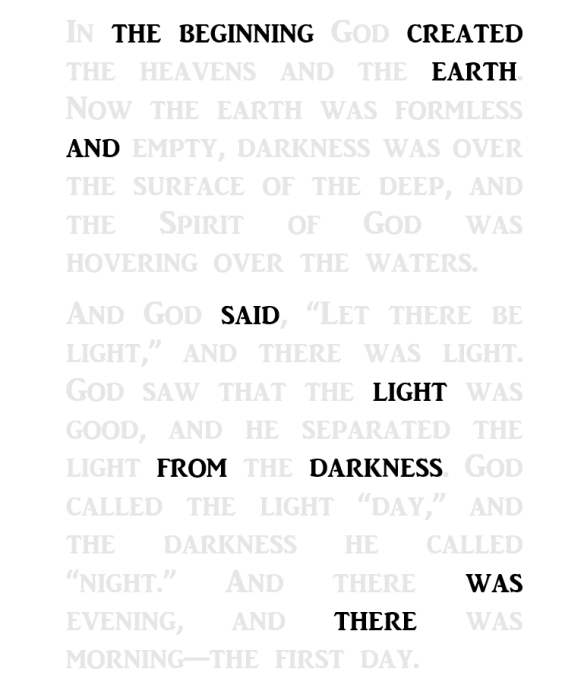
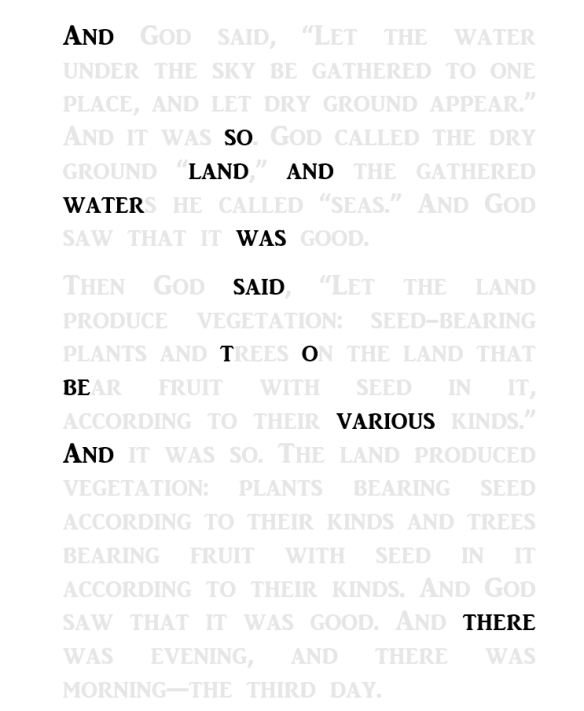
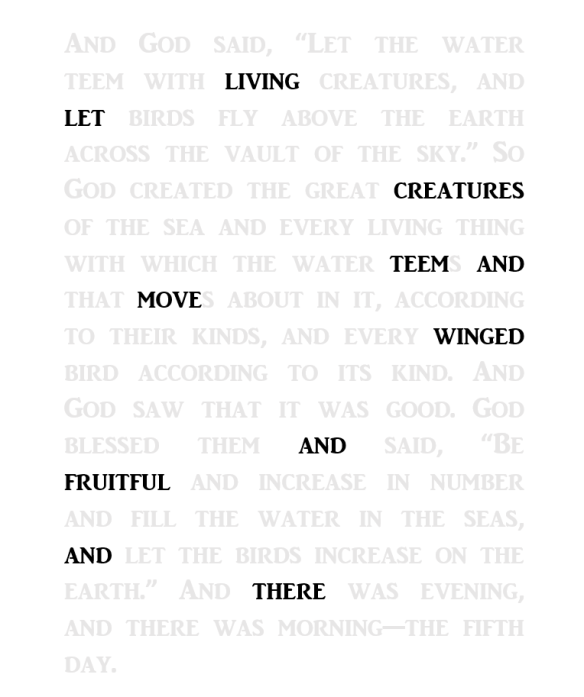
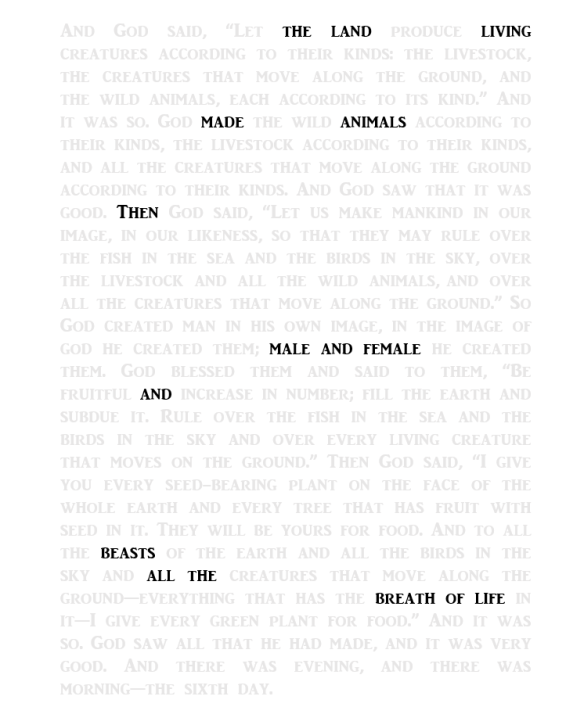
The opening found poem for this posting is just that, a random word-generated response to Hinds’ ‘activities passport’ which will follow this paragraph. Having thus randomised Hinds’ list, I crafted/created new ideas from it. Indeed, why not try one yourself, or better still if an English teacher, use the list as a cut-up writing exercise [1] with young people who do, yes, need and crave the kind of activity that frees them from the knowledge-gadgetry of their compulsory school curricula.
[*] Schools Week report [1] Complete as a proper scissors and paper cut-up.
Hinds’ Activities Passport List
Visit a farm
Paint a self portrait
Plant some bulbs and watch them grow
Go on an autumn walk
Make leaf rubbings
Make a sandwich
Taste a new fruit
Visit a place of worship
Fly a kite
Make a paper boat and see if it floats
Perform a song
Re-tell a story to an audience
Post a letter
Meet a friend’s pet
Search for butterflies outdoors
Take a photograph
Make a treasure map
Dress up like a pirate
Look up where you live on a map
Have a teddy bears picnic
Record different sounds and ask others to guess what they are
Make some biscuits
Make and taste chapattis
Make a puppet
Put on a shadow puppet show
Borrow a book from a library
Discover what is in a pond
Create a piece of art for an exhibition
Look up at the stars on a clear night
Perform a dance
Go on a hunt for some insects or small creatures
Make a home for an insect or small creature
Create a class collage
Create a comic strip
Take part in a play day
Roll down a hill
Make a daisy chain
Join an extra-curricular club
Build a den
Perform in front of your class
Plan a party
Play a board game
Learn a poem off by heart
Take a trip to the seaside or walk alongside a river
Bake a cake
Buy something and check your change
Write a weather report for your class
Build a bridge and test its strength
Become a nature detective
Dress up as a superhero
Make a film
Start a vegetable patch
Pick blackberries
Get soaking wet in the rain
Go bird watching
Learn a French song
Walk barefoot on the sand or on a nature trail
Start a collection and share it with your class
Walk to a local landmark
Make a mask
Compose a piece of music
Take part in a Roman banquet
Eat something you’ve not tried before
Create a mosaic
Design and make a board game
Climb a tree
Create a soundtrack for a piece of film
Make a pinhole camera
Make a musical instrument
Light a candle
Learn a new game
Make something out of wood
Cook outdoors
Learn to play a game of cards
Tell your class about your favourite character from a book
Produce rubbings of fossils
Try yoga
Eat something you have grown
Visit an art gallery
Stay away from home for a night
Make chocolate
Create a display for show and tell
Write and perform a poem
Perform in a play
Watch a play or a dance production
Use a camera to document a performance
Choreograph a dance
Make a sculpture
Create a sculpture trail
Explore inside a cave
Walk through a forest
Learn about a new religion and visit a new place of worship
Make up your own game and teach it to someone
Visit a museum
Skim stones
Visit a castle
Swim outside
Learn to sew on a button
Go hiking
Take part in a treasure hunt
Take part in a debate
Learn something new about your local area
Learn to moon walk
Make and launch an air powered rocket
Use an OS map
Go orienteering
Do a blind folded taste test
Write a story for the Reception class
Make a large scale model
Visit a science laboratory
Write a play
Experience a Victorian school room
Put on a performance
Make papier mache planets
Climb something that is taller than you
Walk to the top of a hill
Write in hieroglyphics
Pick litter in your local area
Plan and cook a meal
Design and make an electric model
Keep a diary for a week
Take a trip on a train
Send an email
Learn to knit
Write a speech
Vote in a school election
Plan a tour around your local area
Interview someone
Visit a local charity and find out how you can support them
Learn how to access the news
Design a product or business idea and pitch it to ‘investors’
Choose objects to put in a time capsule
Write and record/broadcast a radio play
Sleep under canvas
Make a dessert
Organise tea for parents and carers
See the sun set
See the sun rise
Go on a picnic
Visit a new city
 gravyfromthegazebo