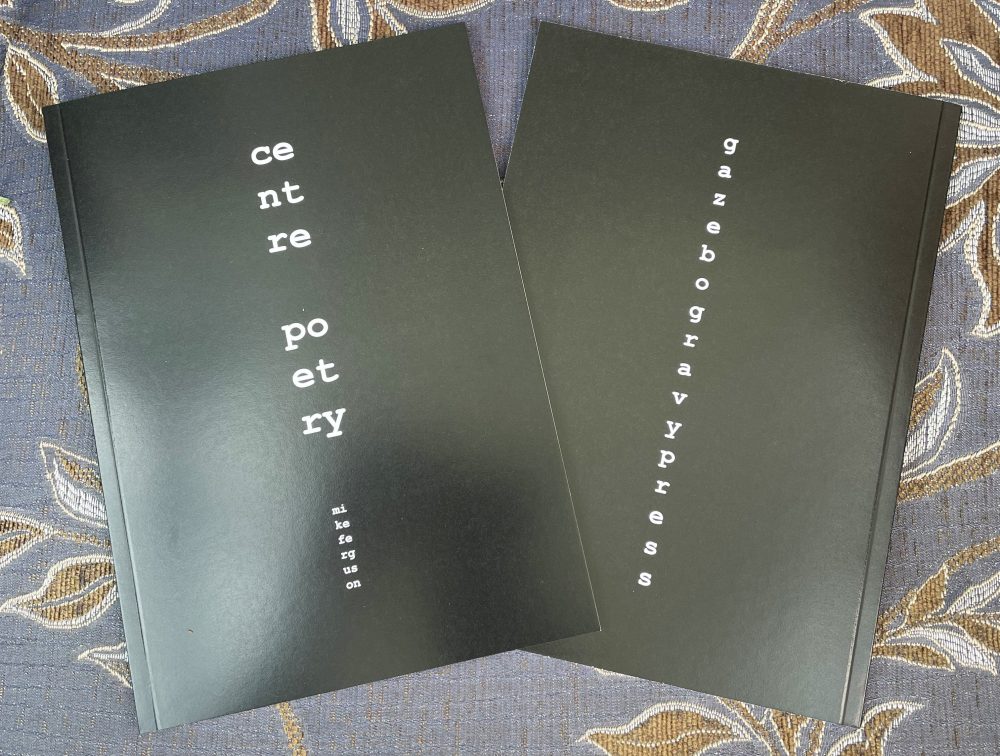
Book Reviews from Another of My Blogs for Here ~ 1: Child of God – Cormac McCarthy

child - Copy

More Travels With Cormac (from 2012)

I’ve just started reading The Crossing, second in Cormac McCarthy’s Border Trilogy. Those following this blog will know I started reading his work with No Country for Old Men, and then All The Pretty Horses. I have written about the wonderful, lengthy compound sentence structures he uses in that latter novel mentioned, and he continues with these in The Crossing.

I am writing now briefly about Child of God, his novella that I have just finished. In looking for a copy of a cover to post with this, I read that the book was written in 1974 [I hadn’t looked when I read!]. Shows how stupid I am: I perceived of him as a modern writer, in a recent time sense, not the literary one of which he clearly is ‘modern’. It must have been prompted by a sense of the recent movie of NCFOM, and The Road, which I haven’t yet read. And ATPH was written in 1992. It hadn’t struck me that he had started writing and was published in the sixties. And I have only really taken note of him this year. Astonishing.

Child of God is a brilliantly and at times beautifully written story of the disgusting and despicable Lester Ballard, a man-thing who roams and ruts and routs around the hill country of East Tennessee. I’m not sure that there is a classic tension in what we as readers feel about this nasty protagonist, who is never even an anti-hero, and who never seeks our forgiveness or understanding either consciously or otherwise. I don’t believe McCarthy does. Ballard’s isolation both socially and physically in the story isn’t compromised by any authorial hand-holding. You must read this to experience the degradation for yourselves. The only one of two palliatives I can offer is that there are moments of humour. But they don’t last long.

The other is the writing style. At times, this sickening story is expressed so poetically that this could provide the only chance of being serenaded to some kind of empathy, but it is never about a Macbeth who is given salvation and redemption though a heightened language. There are many styles too, from vivid description to first person vernacular by unidentified speakers. Near the end, the sheriff and his deputy think and express themselves as templates for the Sheriff in No Country for Old Men. Here, fairly randomly, are two poetic narrations: the first about fireworks –

High above their upturned faces it burst, sprays of glycerine flaring across the night, trailing down the sky in loosely falling ribbons of hot spectra soon burnt to naught. Another went up, a long whishing sound, fishtailing aloft. In the bloom of its opening you could see like its shadow the image of the rocket gone before, the puff of black smoke and ashen trails arcing out and down like huge and dark medusa squatting in the sky

and the second, hounds attacking a boar –

Ballard watched this ballet tilt and swirl and churn mud up through the snow and watched the lovely blood there in its holograph of battle, spray burst from a ruptured lung, the dark heart’s blood, pinwheel and pirouette, until shots rang and all was done

There are countless more, some where the poetry is more lyrically in tune with the qualities being described, others even more antithetical in the grotesque juxtapositions of beautiful language and horrific events/situations. In this respect, there is schizophrenia in the reading, and I highly recommend the madness.

Coleridge Farewell

cropped-cropped-col1.jpgI have today announced on our social media outlets the ending of the Coleridge Memorial Trust’s activities and existence as an organisation.

I will include the wording of the announcement at the end of this post. The farewell is a celebration of our work and, on a personal level, a fond goodbye to my management of our Twitter and Facebook accounts.

I am adding to that fondness and celebration here by posting a TextArt sequence based on STC’s famous comment on poetry, taken from the whole quote:

Prose = words in their best order; — poetry = the best words in the best order.

For those familiar with the working of Text Art, and certainly the approach through which I explore found poetry/text, using the phrase ‘the best words in the best order’ has an extra significance in being transitioned through a sequence,

bestwords1bestwords2bestwords3bestwords4

Thank You and Farewell

The Coleridge Memorial Project began life in 2009 as a working party of the Ottery St Mary Heritage Society designed to raise local and wider appreciation of the poet and philosopher Samuel Taylor Coleridge, especially the fact he was a native of our town Ottery St Mary, Devon, UK, and a pupil at the original King’s School. The Coleridge Memorial Project – now CM Trust – was incorporated as a separate not-for-profit body in April 2010.

Our lifelong project to create a Samuel Taylor Coleridge Memorial Statue was unveiled on the 21st of October, 2022 – the anniversary of STC’s 250th birthday – at St Mary’s Church in Ottery St Mary, the town of his birth.

At yesterday’s CMT meeting, it was agreed that having achieved the Trust’s main objective to bring a STC memorial statue to Ottery, we would conclude our business as stated in the following resolution:

This meeting, called under the provisions set out in section 12 of the Coleridge Memorial Trust’s current constitution, agrees to wind up the affairs of the Trust with immediate effect. Any excess funds and other assets of the Trust remaining after all accounts have been settled, will be transferred to the Ottery St Mary Heritage Society, on condition that any funds will be ring fenced for future use in support of Coleridge memorial work in Ottery St Mary.

This note is to convey that resolution but also thank all of those who have supported our work over the years, especially during our fundraising campaigns for the memorial statue, and including those for the Coleridge Poetry Stones at the Land of Canaan, OSM.

I have managed the social media side of promoting the work of the CMT, contributing information related to this over the years, but also more generally about the life and work of Samuel Taylor Coleridge.

On behalf of the CMT I also then want to thank all of those who have followed us here, liked and commented on our posts, and offered encouragement and insights. This especially goes out to those who supported and promoted our Crowdfunder campaign, and all of those who made donations.

The response in particular to the realisation of our memorial statue project was wonderful!

The Crowdfunder campaign was personally a delightful learning curve, my posting a wide range of STC related images and commentaries, but especially quotes from my reading of  ANIMA POETÆ from the unpublished note-books of Samuel Taylor Coleridge and the Letters of Samuel Taylor Coleridge. What a Romantic genius!

~ Mike Ferguson

T&F3T&F4

cropped-col1-1.jpg

Intense Empha

int

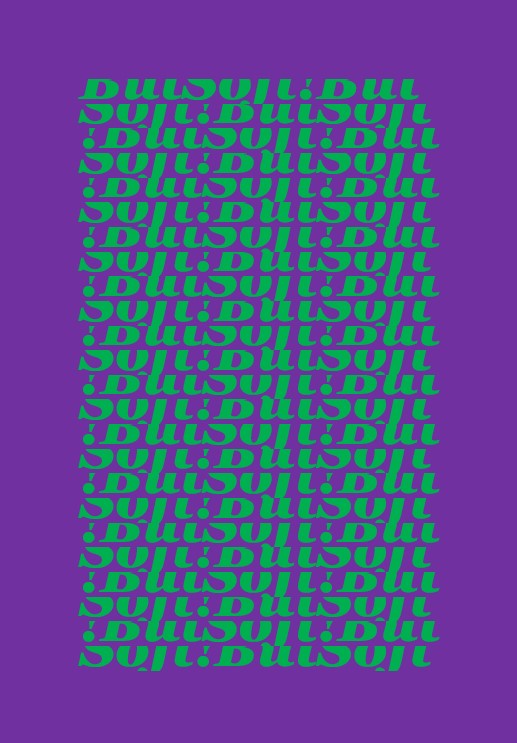
A follow-on posting from the previous, these TextArt transitions are prompted by the Intense Empha ‘error’ in the Word style bar. The interesting thing this time, and it is the first time this has ever happened, I could not work through further than four found versions because any subsequent ones corrupted the pattern/sequence (I haven’t included the first template here). Sometimes this happens if there is a gap in the intial template, but I could not find one and could not fix. That’s fine, as the process is to work to what is found rather than manufactured. I suspect that somewhere there was a ‘mathematical’ glitch in the pattern, and this was beyond me to sort…

int1

int2

int3