
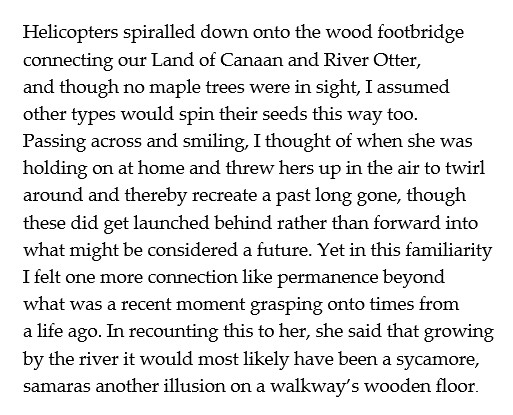
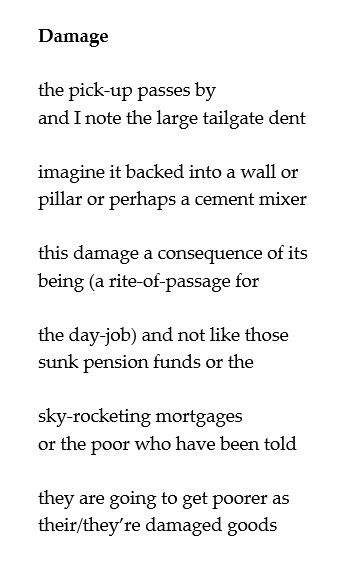
Delighted to have my concrete poem here on the Beir Bua Press site (publisher of my poetry collection &there4). Thank you Michelle.

Delighted to have my concrete poem here on the Beir Bua Press site (publisher of my poetry collection &there4). Thank you Michelle.

This chapbook/pamphlet is a delight to read, and personally for a variety of reasons: it is from Ian Seed whose work I always enjoy; it is from Like This Press which is the publisher through which I first discovered Seed’s work – Threadbare Fables, 2012; Italian Lessons, 2017 – (and I am fond of other publications/presentations, so it is good to see its return after some years), and the collection itself reveals a storytelling slant* for a writer I might not have expected – though this in itself is of further interest in considering any possible different responses for someone ‘new’ to Seed, or like me, has that precursor experience.
I’ll hopefully illustrate this ‘distinction’ as I write more….
There are 15 prose poems in this collection, titled One through to Fifteen. One is a sweet prose piece of love at first sight/sexual attraction set in a discotheque where The Doors’ ‘Break on Through’ delivers a literal if possibly exaggerated namecheck for the encounter: its lyrics could suggest dramatic/metaphoric meanings, but I’ll quote the last four lines to be entirely neutral,
‘Break on through, break on through
Break on through, break on through
Yeah, yeah, yeah
Yeah, yeah, yeah…’
On my initial read, I thought it namechecked an actual time – and thus lapped into my age-era – but it was ‘a sixties special’ disco evening, and of course our protagonist and the girl he meets are young adults, not teenagers. That said, the teenager-esque feeling of the encounter is bedded in an innocence that is both tender and foreboding (remembering the collection’s title…). Two sets another time-frame, ‘The discotheque closes at 4.00 am’, and we can see this progression is going to be a narrative; an unravelling.
As the sequence develops, there’s scene-setting that is realist and informed by the locale and other ordinary markers, like descriptions of a train compartment, yearning for a coffee, and a love of Italy where this all takes place. The short-story telling finesse of the whole is down to the writer’s craft, that experience with the form and how to evoke across a myriad of tones and purposes: here for clarity of place and moment.
We learn the girl’s name is Donatella as more facts provide the narrative landscape. Ordinariness in the revelation of new love is both a setting of expectancy for that forecast of betrayal, but also, for those of us who happily know Seed’s prose poems/work well, an unexpected calm in terms of human experience (which I’ll anchor for context to a review observation I made about Seed’s Italian Lessons – a linking text, obviously – when I stated: ‘Italian Lessons fulfils such certainty and uncertainty… from the randomness, surprises [absurd, comic or disturbing] and dislocations of place and experience that feature…’). Donatella’s life is gradually revealed, and she is established as someone without complexity (or that ‘uncertainty’) but occasional surprise, like the way she responds to the boss where she works.
I warm to the normal intricacies of this everyday account of a life, like the preparations for a first day of a new teaching job in Turin at the Liceo Linguistico, Via Arsenale. I think this is for me partly as a backdrop to the milieu for so much of Seed’s prose poems over the years where Italy is the stage for many indeterminate, aching, and emptying experiences. Here it is rooted in a less fragile existence and experience, though it isn’t without problems.
Nine is indicative of this continuing close storytelling. The longest in the collection, there is an account of teaching, a focus on students (many from the 25 of a single class snapshot in crisply illuminated details) and a reflection on a parents’ evening which all produce a clear portrait. Some sense of discontent in life at the time is expressed, but for me again, the special reveal is a concluding line which is a window into how this life shaped Seed as a writer. In making an observation about the book Portable Jung that he is reading, Seed states,
‘Reading the book makes me wake up in the night with strange dreams, which I write down and turn into little stories’.
In Ten, for further example, there is an encounter which concludes as an echo/premonition of what we might normally expect of many of Seed’s prose poems, including those I recall so well from Threadbare Fables.
In the closing prose pieces where there is a conveying of more personal encounters and a pertinent comment on reading ‘Italian literature in Italian’, it has become a narrative which advances its focus as memoir, and this has been the natural engagement of my reading. This has also been the natural reflection of this review. That the collection presents a distinct normalcy (for want of a better word, but I trust my illustrations have delineated the variations/variables of a writing lifespan) is the aspect I most recommend for its warm or mildly darker candour, self-reflection, and evocation of relatable experience.
*I did say ‘might not’ for the apparent mystique, but of course this isn’t really the case, and a most recent story The Touch in The Fortnightly Review, developed at length, can be read here. One ‘might’ also say, it has a signature ending…
To get the pamphlet, go here.
To read more of my reviews of Ian Seed’s work, go here.
~

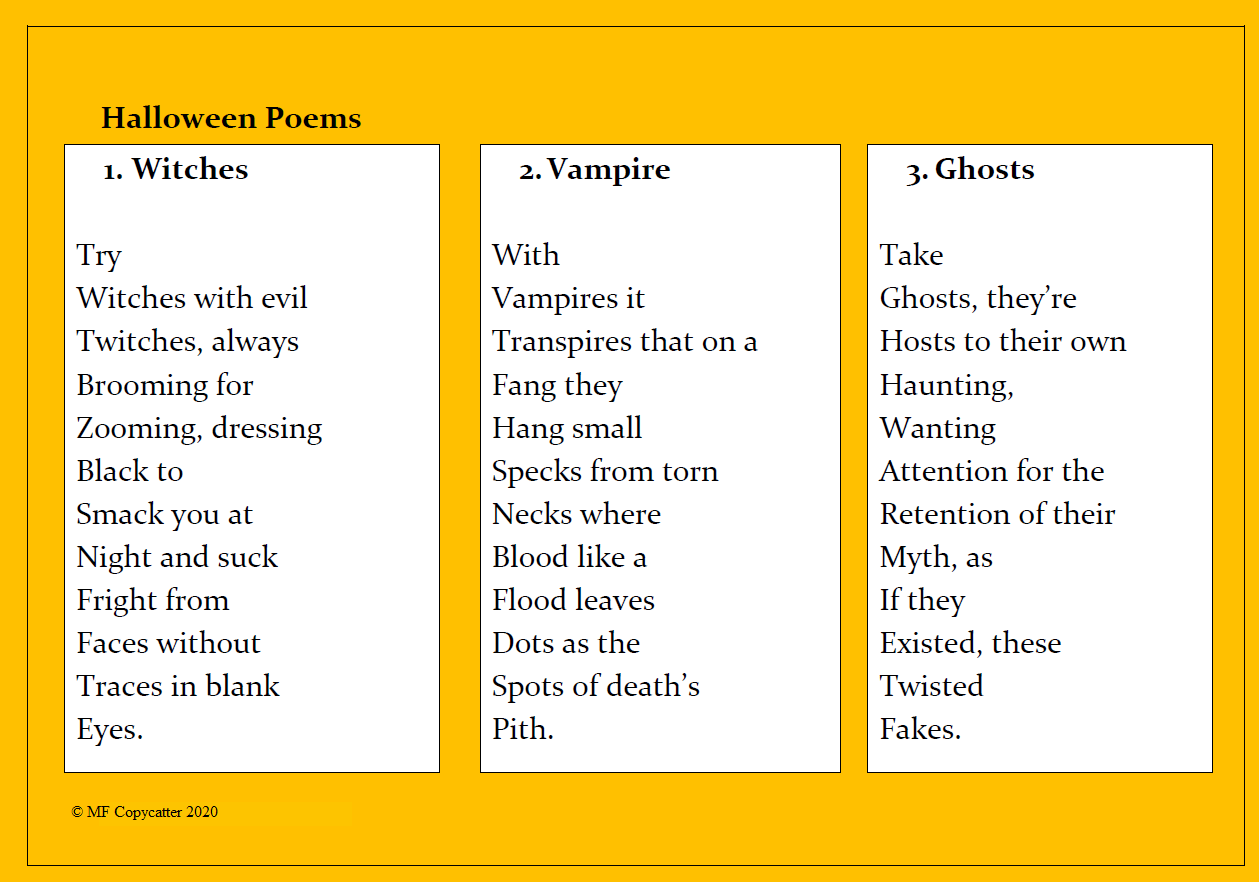
I am delighted with the delight generously expressed in this review of my poetry collection &there4 by Mab Jones for buzz BOOKS. You can read the review here.
~

Thank you to IT and Rupert for posting my poem here today.
Never a particular fan of statues, over the past five years I have fundraised for a memorial statue of Samuel Taylor Coleridge to be placed in the town of his birth, Ottery St Mary.
Accepting the convention and tradition of this to honour his life and writing, I also posted over those five years significant information about his writing on social media which was prompted by my intensive reading and research, especially from his notebooks.
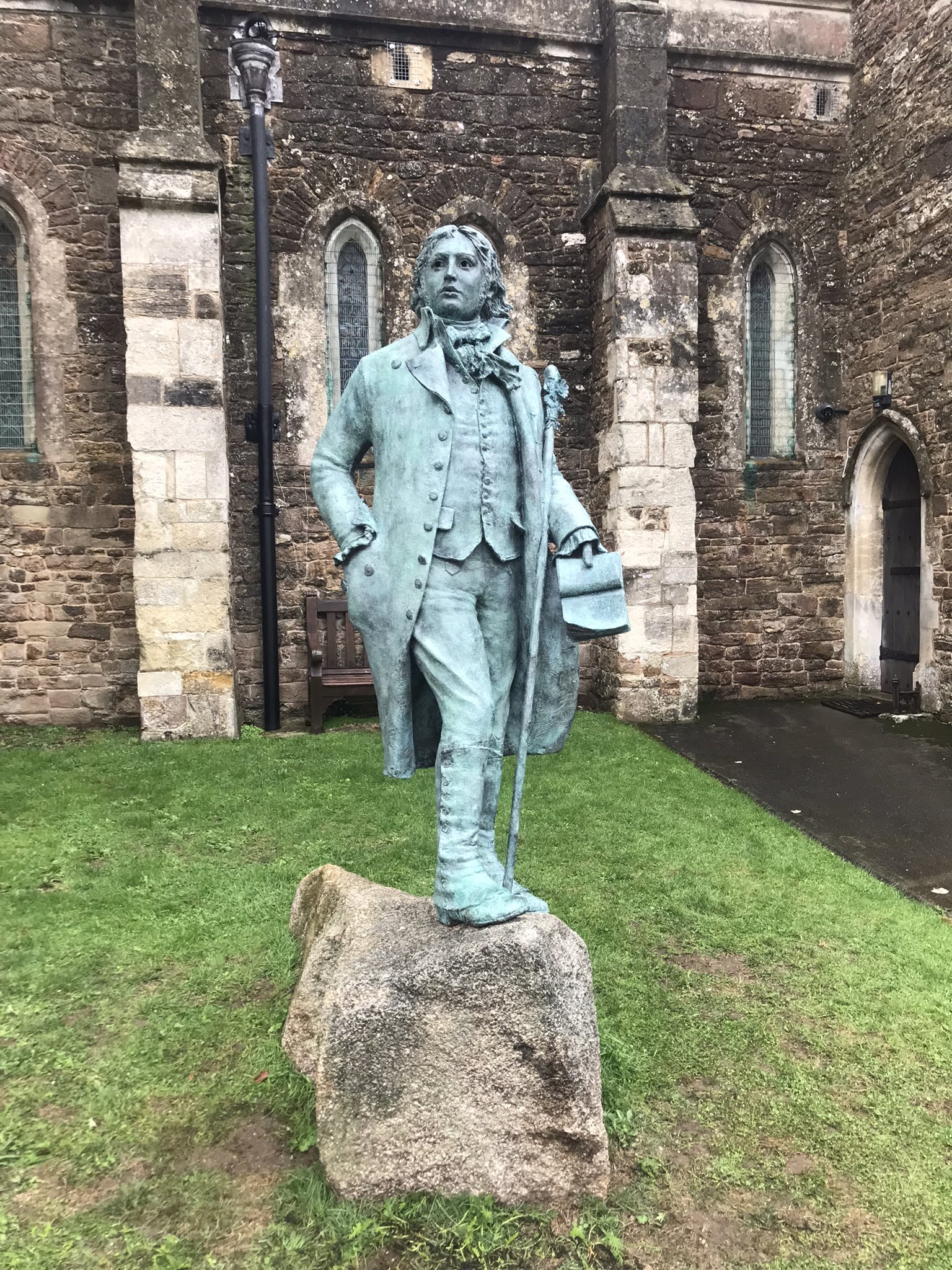
The statue, sculptored by Nicholas Dimbleby, was unveiled at St Mary’s Church, Ottery, on 21st October, 2022, the 250th anniversary of Coleridge’s birth. As statues go, it is a fine one, and portrays him in his younger years, striding with walking boots and stick, gazing out and with a notebook in hand to record his thoughts and feelings. The statue itself and its unveiling provided a genuinely upbeat celebration of STC as poet and philosopher, especially for those of us who worked so hard to achieve this.
There was a church service after the unveiling. The statue being placed in the St Mary’s church grounds – where Coleridge’s father was vicar and where Samuel played as a child – it was natural for there to be this other dimension to the day. It was also a natural recognition of Coleridge’s Christian faith and therefore celebrated in the readings and sermon. I didn’t attend the event for various reasons and certainly would have found the church service uncomfortable to be present for and sit through.
This and what I will say next in this paragraph, briefly, are entirely personal thoughts and feelings: I did watch the service, which was streamed live, and I found the total embrace of and focus on Coleridge’s orthodox faith too much to bear, though I do accept much of its reality. However, I was particulalry annoyed with the reading of Romans 8: 18-28 where that Christian notion of personal suffering reeping its spiritual rewards always triggers one of my fundamental objections to Christian faith, and indeed of any religion. More broadly, the entire embrace of this orthodoxy completely shut out acknowledging the pantheism of Coleridge’s other, if more youthful, spiritual beliefs (or more pertinently, feelings) and to a degree also then ignored the statue’s representation of STC in his younger poetic prime.
I therefore wrote the following, personal reflection:
Samuel Taylor Coleridge Memorial Statue
and The Sermon
i
a gift seldom allowed
or accepted
but this to be a rare communion of interests
and the sermon’s appropriation
ii
we had given him to the church
standing on the stone we also gave
placed within their ground/s
~ where he had played ~
and in that consecration of earth
for us, yes, but everyone else too
where he was soon to be completely consumed
by theology
iii
the rain came and the wind blew
and the indigo unveiled
its bronze
iv
a family convened
with the other congregation
and those who could not /
would not attend
where in that moment of celebration
all was as one within us all
which echoed from
another moment of pure coalescence
v
what does not change
is how a sermon will change things
(yet first in the deception
of a reading)
vi
For I reckon that the sufferings of this present time are not worthy to be compared with the glory which shall be revealed in us
~ Romans 8: 18-28
his rheumatism
his boils
his despair
his fevers
his melancholia
his treacherous bowels
his neuralgia
his creative drought
(his kidney stones,
bladder cancer,
hypochondria)
his constipation
his misery
his gloom
his addiction
his penury:
“O God save me from myself”
unaware he was to be
doctrinally saved
For we are saved by hope: but hope that is seen is not hope: for what a man seeth, why doth he yet hope for?
vii
aesthetic theory vs christian faith
or even
a light in sound, a sound-like power in light
vs
The Incomprehensible!
viii
NB: for the process toward disillusion, one could blame the French…
ix
NB: for the process toward personal belief and recovery, he writes ‘that selfsame moment I could pray’
x
faith tempered in the crucible of suffering
~ from The Sermon
A great poet* must have the ear of a wild Arab listening in the silent desert…
~ from Goodreads and Samuel Taylor Coleridge; *substitute theologian (imperative from The Sermon)
we see the orthodoxy
we see the symbol
we see the imagination
we see the link
we see the anglicanism
we see the resource
we see the appropriation
x 2
we see the mutuality
we see the spirit
we see the poet
we hear the poet
let us worship the poet
worship the harp
worship the young hope
worship the strength
worship the precocity
worship the reading
worship this interpretation
xi
my confession:
i know the translucence
and the beauty of its language
like the pure crystal
of its symbol
i know the primary imagination
and the I AM
(which is respectfully capitalised)
as the POWER and AGENT
i know the theory of the sublime
worked aesthetically
and not through
suffering
i know
because that
is what
I read
(i know i capitalised)
xii
theology is philosophy
unless you believe in it
xii
but i do not
because of the reproof
and the bidding of him
to be humble
in suffering
in this vain theology of
the sermon
xiii
standing on his stone
beneath the church tower’s bells
it can be only music
and poetry he hears
in the way i have placed him there
~

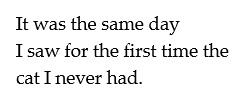
Samuel Taylor Coleridge is a global great, and my thanks to IT and Rupert for posting this celebration of his life and work here.
The video on IT is my sound and image reflection on STC as we near the 250th anniversary of his birth: more details when you visit the site.
~
 gravyfromthegazebo