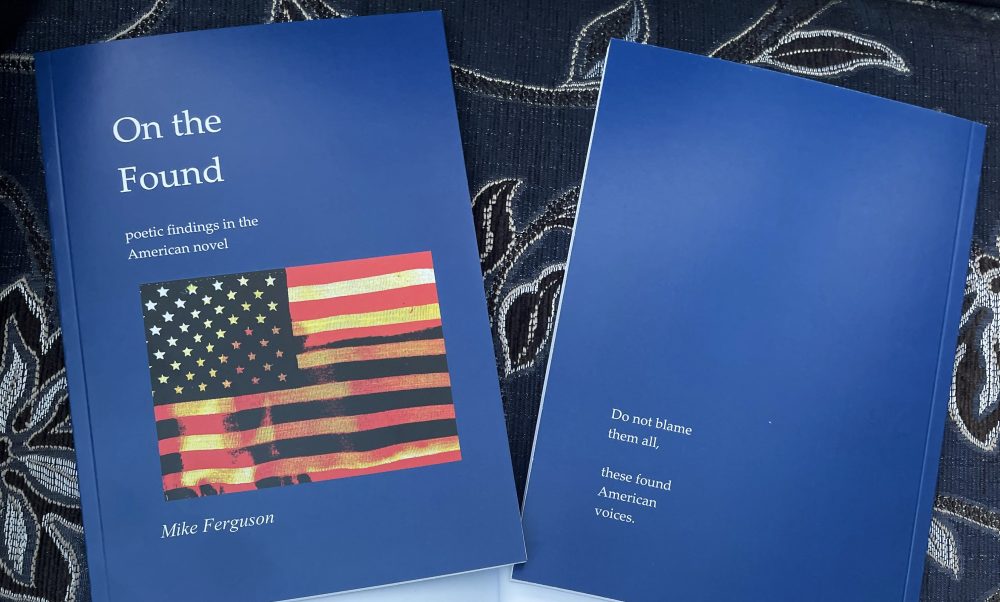
John Michael “Ozzy” Osbourne (3 December 1948 – 22 July 2025)

I cannot claim to be an unwavering, lifelong fan of Black Sabbath and Ozzy Osbourne – not like those thousands and thousands paying their heartfelt and endearing eulogies on his passing yesterday – but I can claim to have a lifelong love of Back Sabatth’s debut album (my review to follow) and a lifelong awareness and love of the phenomenal impact/influence on heavy music the band and Ozzy undeniably had and will continue to have since their beginnings.

I am listening to Ozzy’s 2022 album Patient Number 9 as I write this – blasting it out – and am loving every second. Not just via the obvious nostalgia one day after his death, but for its perfect encapsulation of the Black Sabbath sound, Degradation Rules with signature harmonica a la their first album blaring out at this exact moment.

The following are whole pieces and extracts of various observations on Black Sabbath as band and Ozzy Osbourne as an individual from my music blog Some Diurnal Aural Awe. I’m posting because I have gone back to read for the pleasure of being reminded. In doing so, I am loudly revisiting so much of what I have written about, and I mean listening to the music reviewed at that time. I am also revising ‘Ozzie’ to Ozzy from now on…

25.2.12

Black Sabbath – Black Sabbath (1970)

Rain, tolling bell, thunder, drawl of a heavy riff, and slow bleak questions before the apocalypse strikes its shocked response Oh No,  Black Sabbath announces Black Sabbath, and the demons, wizards and devils therein are dark procreative forces announcing a new genre through this Satanic birthyell, or the viviparous voice that is Heavy Metal God Ozzie Osbourne.

Raw as a pig’s hide kicked by a mad farmer’s boot in the wild black of night, the relentless ramrod riffs and largely monosyllabic lyrics pound out again and again the most sublime new testament of Rock. By the time we get to N.I.B. – 40 seconds in to be precise –

DAA DAA DAA DAA DAA DAA DAA DAA DAA DAA

the most memorably malevolent iambic pentameter in Rock is fully realised: OH YEAH!

Diablo Tony Iommi lays down his own straightforward but powerful incantations in dark worship at the altar of Blue Cheer, and Fiend Geezer Butler provides roars from other visiting daemons carried on the rumbling rolls of Beast Bill Ward.

I bought this album not really knowing who or what it was – but drawn by the cover – somewhere on a market stall in London. I played it for the first time, as memory serves, at the house of a female student friend and other likeminded 5th year musical vampires where we sucked its fresh blood with relish. I do believe there was a collective and spontaneous headbang, but reality and myth merge after all these years.

I do know that its dark drones merged with simple melodic lines still thrills today. I might be wrong, but it seems to me that Paranoid has more acclaim, and War Pigs is the common choice for a fans’ anthem, but this debut raw assault on the senses has left its permanent mark on my musical hide and long listening ride.

3.6.13

God is Dead? – Nietzsche and PR

I’m looking forward to the release of the new Black Sabbath album next week. Of course I am. How can you not want to hear another work from the founders of metal?

Planet Rock has been giving considerable airplay to the single God Is Dead? It is wonderful. It is also ludicrous. It is wonderful in the way that it so clearly re-presents the Sabbath sound –  those neanderthal slow riffs and the guitar breaks that do just enough to be heavy. Then there’s Ozzie’s distinctive vocal. But it is ludicrous too in the way it seems to be aping that original sound. Ozzie’s vocals in particular seem to have an obvious disconnect with the rest of the music, presumably an add-on in the studio, perhaps like all the other parts, and perhaps like many other bands and their recordings. Maybe I’m wrong, but this certainly doesn’t sound like a live – and energised by that immediacy – performance. The polish undermines what ought to be Ozzie’s raw emotion. And as for asking ‘Is god really dead?’ Why the fuck should the hard man of rock give a toss. The dark worshipper of satanic suggestiveness shouldn’t give a flying beheaded bat’s pizzle whether god is alive or deceased. And asking the question would appear to counter a lifetime of not tossing.

I know all musicians approaching their own mortality have a problem re-presenting what made them vital in their youth. The Stones would seem to somehow just about achieve this – apart from Jagger trying to justify recent outrageous ticket prices by citing dubious claptrap about ‘supply and demand’, and bleating about the cost of funding a tour.

Maybe that’s why Ozzie allegedly fell off the drink and drugs wagon so recently. It couldn’t have been a PR stunt to posit some Sabbath street-cred ahead of the tour and release, surely?

7.6.13

Black Sabbath – 13

Age of Pathos

Released on the 10th June, but streamed over the last few days, like thousands and thousands out there I have been listening to Black Sabbath’s latest 13 and Ozzie’s long awaited return to the band after 35 years. I was asked today if I like it – the obvious question to address in this review – and I think I prevaricated far too much, though essentially I gave an appropriately paradoxical answer. I do and I don’t. As I said of single God Is Dead? it is both wonderful and ludicrous.

As someone who still recalls the brilliance of hearing that first album, aged 15, I can’t possibly retrieve the same ecstatic enthusiasm for this album that tries so hard to recreate the original sound, which it does so effectively. Interestingly as I write, I’m listening to fifth track Age Of Reason – very loud – and this is proving pretty damn cool as it is in many ways least like the music of Sabbath’s first LP which other tracks echo so closely, like opener End Of The Beginning. One thing I’ll say from the off: when Tony Immoni lets loose on any one of these eight songs it is beautiful to hear.

Part of my less enthusiastic response is in finding the lyrics preposterous. Perhaps when I was 15, semantics weren’t really an issue when it came to heavy music. The titles of four songs on 13 declare the pretentions of the pseudo-philosophising: End Of The Beginning; God Is Dead? Zeitgeist; Age of Reason. And the line Is this the end of the beginning, or the beginning of the end, losing control or are you winning, is your life real or just pretend…reanimation of the sequence, rewinds the future to the past….yada yada yada…and I’m chuckling knowingly rather than headbanging mindlessly.

I know this is the wrong approach! I know. Perhaps it’s also knowing so much about Ozzie these days – that reality TV programme; the interviews; seeing a clip of his live performance at Perth this year where his oblivion is worrying and pathetic – his singing live is dreadful. Knowing makes this contemporary packaging of the Black Sabbath sound too disingenuous for me.

But the thumping with harmonica and now Immoni scorching a solo on Damaged Soul playing still loud as I type pulls me in for that momentary escape back to times before, and it is enjoyable. Even far out. But the reality is it just makes me want to put that first album on – always the best and favourite without any question – and then dip in and out of the next three.

The album’s ending on a thunderstorm and tolling bell is neither satirically aware nor metaphorically significant. We clearly understand by now that much on this album is judicious pilfering from the past, and it will obviously be their last offering. This explicit echo from the start of their debut and iconic gem is a mistaken gesture in pathos.

So I’ve just put Age Of Reason on again, louder. 

2/2/19

Ozzmosis – Perry Mason, Ozzy Osbourne

Obviously the brilliance of this song is no surprise to metal heads and/or Sabbath sycophants, but I stopped listening to Ozzy after the fourth Black Sabbath album, and if I’m honest, I confined myself almost exclusively to their first superlative outing. Listening to Planet Rock is re-educating me in its narrow narcotic of classic rock, and I have been hearing a lot of Ozzy lately with his undeniably charismatic voice. I think I initially heard this song as a live recording at the first Ozzfest in 1996, which is stunning, especially the guitar shred. The album track played with the volume on afterburn is an explosion of metal pomp and power, thundering its neatly neanderthal riff. And as the title playfully puns, I have absorbed it fully. Spliffing.

14.2.20

Ordinary Man – Easily Edible

While Eat Me does chew on some meatier riff-food, this is heavy rock embroidered, Beatles-esque, life lyrically romanticised, grandiose and highly enjoyable.

22/12/22

Patient Number 9

Every overblown cliché of OO/Black Sabbath is retro-riffed in the most glorious pomp and hyperbole possible. May well have listened to this more than any other in 2022. Clears the heads and makes me smile.

18/10/24

Memoirs of a Madman – Eating Habits

Belting out the collective insanity of the Oz this morning, and it is often wonderful musical madness, but it is also so heavily stylised that its parody of Heavy Metal, certainly when recalling that first and monumental Black Sabbath album, exemplifies the journey to and arrival at the Kingdom of Pop Metal. Immensely enjoyable, but less bat’s head and more the sham sophistication of consuming the ortolan.
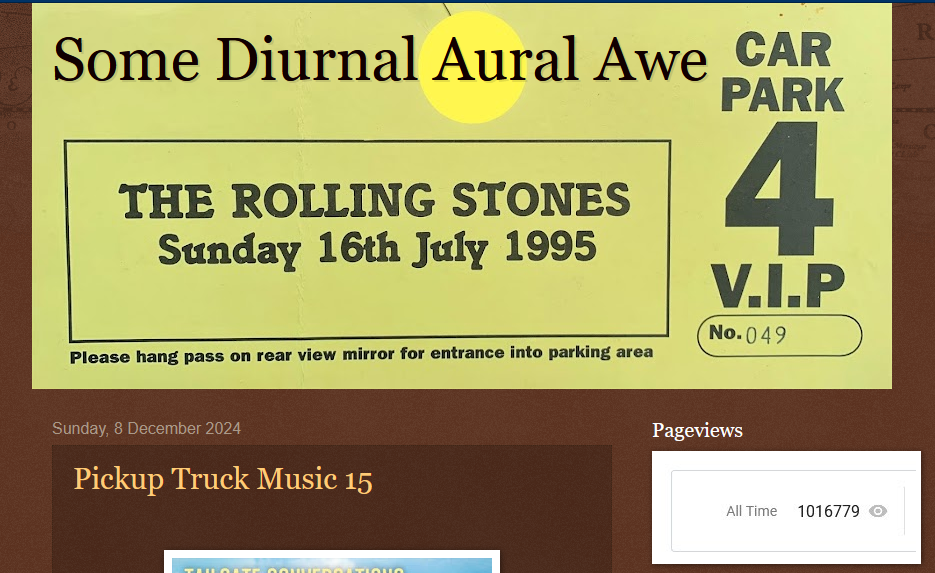
One Million Page Views! A Brief History of SDAA, & This Year’s Much-Reduced Album Reviews…

I began my music blog Some Diurnal Aural Awe on 6th January 2011. In that year I made 432 album review posts (maybe a live gig or two). This year I have made only 23 posts – most being my themed album cover ones – with only 7 album reviews.

In this genuinely potted history, I do want to balance that ‘decline’ detail about reviews with the announcement that my site has to date had ONE MILLION page views! That’s 1,016,779 to be precise: a figure I have only confirmed today (having last checked and posted when it was just over 700,000).

I have always loved and listened to loads of music, and do so today as much as back in 2011. But back then, I wanted a place to write (love of writing and a need to write) and thus set up the music blog. I felt I had a lot to say about past and contemporary music.

Having retired from teaching in 2010, I had more time to write, and did so intensely on Some Diurnal Aural Awe (that daily reference the impulse and design). Long story short, my writing focus has shifted from music reviews to poetry, but domestic commitments have changed over that period to significantly lessen the time I have for album reviews. I listen to the music when writing other things. As I write this piece, it is St. Vincent – Todos Nacen Gritando.

To celebrate this history, I am posting this year’s 7 album reviews here on gravyfromthegazebo (a site where I used to also write quite a bit about education and politics: how things change).

If of further interest, do visit SDAA here: https://somediurnalauralawe.blogspot.com/ Perhaps you’d like to check out the Prolific Period!

36 – Reality Engine, album review (2.8.24)

36 Ambient Words…

Reviewing ambient music like this would, it seems from those who normally do, require a flamboyant mix of technical jargon refined to ‘ambient’ synonyms and further refined (or exploded) to philosophical ruminations.

Take the tags on Reality Engine’s Bandcamp page for this release: ambient / ambient electronic / atmospheric / dark ambient / deep / drone / electronica / electronica ambient / ethereal / meditation / minimal / dub / soundscape / soundscapes / techno / Indianapolis

I presume this is produced by an algorithm? Whatever the source, it is itself fascinating. The ambience in the list of ambient is a necessary torchbearer for meaningfulness, though the adjectival dark would be better replaced as a qualifier if it was meditative. Atmospheric is quite apt, though I would shape this with emotive somehow. Dub? Surely digital is a more apt d-word. I like the sense of important difference implied by soundscape and soundscapes, though this is clearly tautological. Minimal? I think it is the opposite: expansive or loop-large… Yes, neologisms would do.

My favourite tag-word here? Ethereal.

To this I will add gorgeous, peaceful, restful, restorative.

Done.

A Lily – Saru l-Qamar, album review (7.4.24)

Haunting Beauty

The tracks on this affecting album are mysterious and often haunting, their past origins as reel/cassette tape recordings infused with the distortions of their distant times as well as the effects used in re-presenting them within new musical soundscapes.

Here is a slice of the background details presented on A Lily’s Bandcamp page:

From the 60’s until the modern era, it was common for Maltese families to receive reel tapes from relatives abroad. Maltese emigrés resettled in Australia, the UK, Canada etc. would record their news onto cassette – often in the form of għana, traditional Maltese song – and mail the tapes back home.

The musical backdrops are ambient and repetitive, loops of sound wrapped around long ago and relayed into the present. It is the voices that carry a sonic past with most impact, seemingly lyrical intonations now molded in preserving electronica. Most are carried on pulses of sound like heartbeats resurrected from beyond. Obtained from

Archival recordings provided by Magna Żmien Foundation  / Dan il-proġett huwa megħjun mill-Kunsill Malti għall-Arti

they are now their own archives of memorial music.

Daniel Herskedal – A Single Sunbeam, album review (10.4.24)

Beats of Beauty

This is an album I keep coming back to for its instrumental serenity and mesmerizing vocal from Marja Mortensson, a South Saami Norwegian singer. With its percussive pulses and her wordless incantations, the tuba and bass trumpet playing of Herskedal meld to a haunting of melodic threads across all tracks. There is ambient programming as constant backdrop, and the percussion continually drives. Horns take on loops of their sweet melody, and Mortensson punctuates this with startling vocal idiosyncrasies. Gorgeous. With title track A Single Sunbeam, gentle drumming and other rhythmic beats support a solo horn emerging from the quiet to an increasing rise with programmed strings.

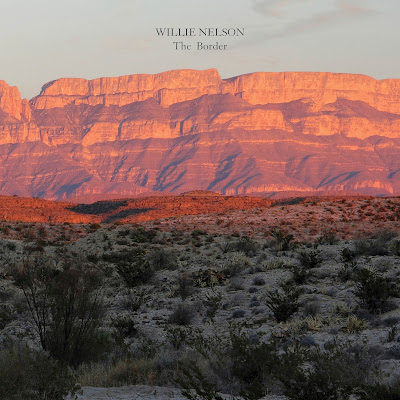
Willie Nelson – The Border, album review (1.6.24)

The Songwriter

This cover image released by Sony Music shows “The Border” by Willie Nelson. (Sony Music via AP)

Willie Nelson’s latest The Border is like a set of swan songs as it reminisces on a long life and a lifetime ago – this nostalgia so redolent in the continual reference to hearing music (often of his own) on the radio, and more poignantly in the many references to musical legends and friends who are literally in the past,

Once upon a yesterday
We were children working hard at play
Tomorrow was a world away
Time was standing still
The magic of the radio
Taught us songs we didn’t know
We sang ’em loud and we sang ’em low
Once upon a yesterday

We heard them sing on Saturday night
Kitty and Roy and Hank
And for a lot of what we know of love and truth
We have them to thank

(Once Upon a Yesterday)

Perhaps rather than swan songs it is about writing such – though also the lifeblood of songwriting in general – and all on this collection reflect and reveal everything in that, especially the intensely emotional.

On the title song, Nelson’s vocal in its lower level has that gruff edge of older age, but when rising higher, he sings as purely and sweetly as ever. And he swings too as on What If I’m Out of My Mind, but one of the real beauties in this collection is the simply touching, I Wrote this Song for You,

I wrote this song for you
I poured out my soul
I hope you hear it on some lonely
Late-night radio
I hope it makes you smile
When I’m not there to hold on to
That’s the reason why
I wrote this song for you

I worked out the melody
On my old guitar
Then I finally found the words
At the bottom of my heart
I know that that’s not much
But you know it’s what I do
The music speaks for me
So I wrote this song for you

I found this remarkably tender in its predictability and, for example, the childlike linking of ‘melody’ with ‘guitar’.

One of the most evocative is Hank’s Guitar where Nelson dreams of being Williams’ Martin D-28, and the metaphor/personification plays perfectly in the comfortable cliché of honest belief (the writer’s and ours); the referring to tears and crying tugging at other kinds of strings,

Last night I had a dream
That I was Hank’s guitar
He held me close against his chest
And he wrote “Your Cheatin’ Heart”
He drank a lot of whiskey
As he wrote down all that pain
When he sang it back to me
His tears fell on my strings

He picked me up and tuned me
And he played me all night long
He cried while he was singing
All those lonesome songs
Funny how a dream can be so real
And make you wonder who you are
Last night while I was sleeping
I dreamed that I was Hank’s guitar

Then he put me in my case
We got into that blue Cadillac
As we pulled out of Montgomery
I had a feeling that he wouldn’t be coming back
Next thing I knew
I was given to the Country Music Hall of Fame
That’s when I woke up
To the moanin’ of a lonesome midnight train

He picked me up and tuned me
And he played me all night long
He cried while he was singing
All those lonesome, lonesome songs
Funny how a dream can be so real
And make you wonder who you are
Last night while I was sleeping
I dreamed that I was Hank’s guitar

Last night while I was sleeping
I dreamed that I was Hank’s guitar

The Texas swing of Made in Texas reminds that Nelson’s signature instrument is of course a real thing too

It started in the back of my daddy’s ol’ car
I was born beneath that old lone star
I hit the ground pickin’ this old guitar
I was made in Texas
Like Bob Wills sawing on San Antone Rose
Dance hall rhythm’s all in my soul
Tell everybody everywhere I go
That I was made in Texas

and the rest of the song evokes those other legendary C&W influences and peers who helped to shape his musical history.

Lest it all seems rose-tinted, there is the ruminative actual or imagined in a song like Nobody Knows Me Like You, as here from its second verse,

When my heart turned to stone
The lonesomeness you must have known
Wounds I’ve caused with deep regret
The pain of loss I can’t forget
Nobody knows me
Nobody knows me like you

There does seem to be an overarching, autobiographical reckoning in the closing song How Much Does it Cost where the ‘songwriter’ both asserts as much as reflects. The title’s question is surely rhetorical when the ‘heartache’ as much as all the other thoughts and feelings of Nelson’s lifetime have been his constant musical fuel and bounty,

How much does it cost to be free?
Free from the heartache still living in me
I’ve given my heart, my soul, and my mind
How can I pay up and quit doing time?
And why am I always trying to make it all rhyme?
‘Cause I’m a songwriter and always will be
But how much does it cost to be free?
How much does it cost to be free?

Nala Sinephro – Endlessness, album review (8.8.24)

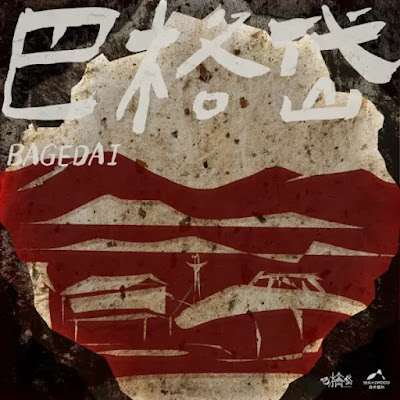
Bagedai – Bagedai, album review (27.9.24)

Exuberant

From China’s Ximeng county, a remote area of the Wa people (using information online), this is a delightful collection of musical tracks made especially exuberant by the joyous singing of five leading female singers. There is a wonderful merging here of traditional and modern music traditions, the latter a recurring, reggae infused highlight. To also highlight the vibrant performers:

Line up

Li Chunlong (Guitar)
Li Weiwei (Percussions, Winds, traditional folk instruments)
Na Hong (Vocalist)
Na Hongjing (Vocalist)
Na Long (Vocalist)
Nido (Keyboard)
Tang Zhongwei (Guitar)
Wang Jidong (Bass)
Yang Zijie (Drums)
Ye Wu (Vocalist)
Yue Haotian (Trumpet)
Zhou Lifang (Vocalist)

Peter Evans – Extra, album review (20.11.24)

Romp

On opening track Freaks, an echoing horn wrestles with the pulsing bass until it breaks free to blast its sound at pace – a lively start. On next I See, the drums pick up the pumping beats, and Evans’ horn dances along with staccato bursts – more jostling to share the energy. This is the full-on template for an album of eight Evans originals. There’s playfulness too – near the end of Boom, the pip and squeak of horn sees out another rouser; on Nova, the horn imitates a soprano sax in places, and on Movement 56, electronics kick into the mix for the fun of it, becoming an airplane landing. A delightful collection.

Peter Evans; piccolo trumpet, flugelhorn & piano / Petter Eldh, bass & synthesizer / Jim Black, drums & electronics