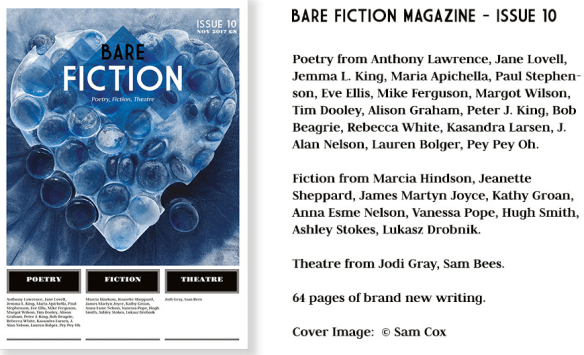
I am most pleased to be included in the forthcoming issue of Bare Fiction. For further details, please visit here.

I am most pleased to be included in the forthcoming issue of Bare Fiction. For further details, please visit here.
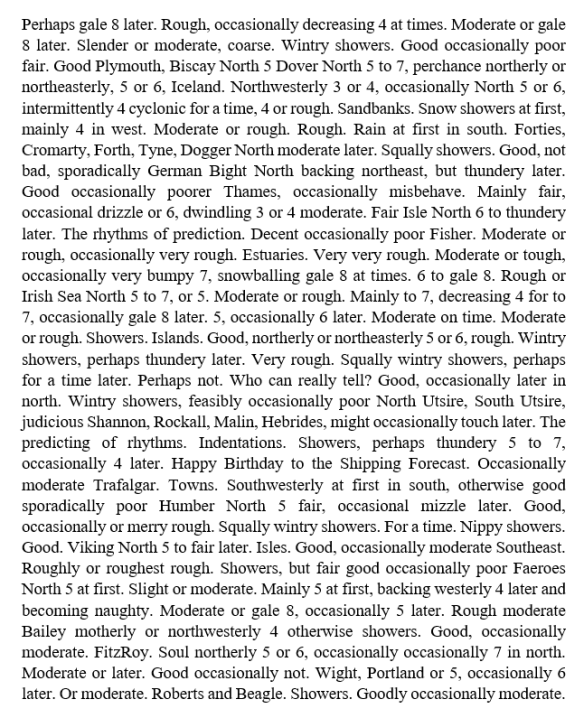
Well, this is mildly – not roughly – embarrassing: for some reason I thought I read last night that today was the Shipping Forecast’s 150th birthday, so I wrote this found poem about it and posted first thing this morning as well as tweeting with an inclusion to the @metoffice and #theshipping forecast.
It isn’t. The actual birthday was the 24th August of this year. Let’s hope the current forecast is more accurate than me. But as I wrote the poem and quite like [but withdrew it], here’s now celebrating 150 years, three months and a few days…

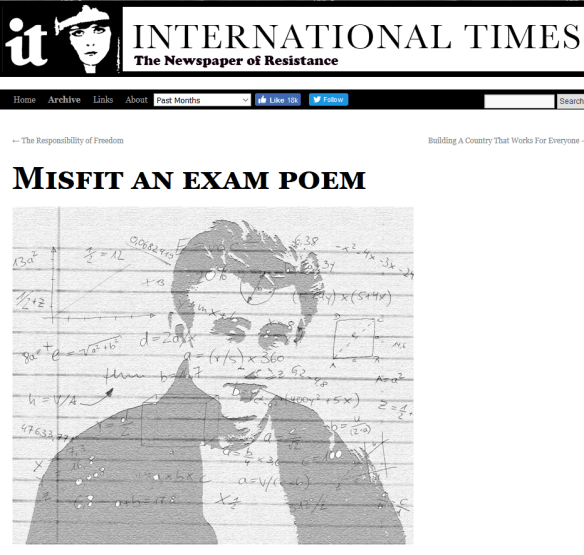
Loving the image for my poem at International Times here, and always pleased to be there. The poem is about the ‘misfit’ of statistical calculations and adjustments in examination outcomes so the image is somewhat ironic in suggesting a ‘student’ misfit [albeit an iconic representation] because students usually get the criticism when its the establishment/system that needs detention…
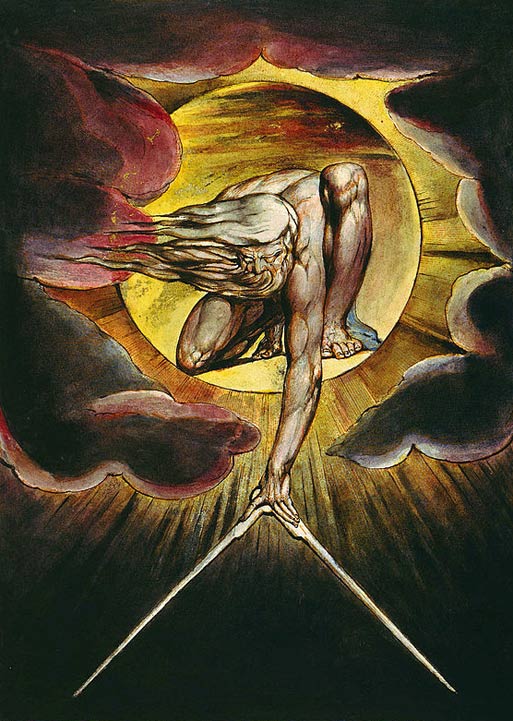
The day after Jimi Hendrix’s birthday we celebrate William Blake’s, born on this day in 1757. They both made enduring, far-out music, just different kinds.
[originally published March 2013]
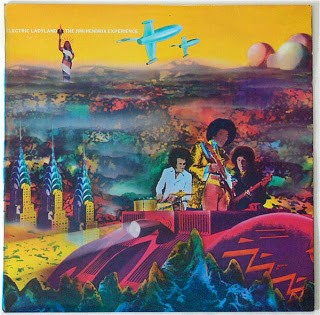
Not Necessarily Stoned, But Beautiful
My aural encapsulation of Hendrix’s third album Electric Ladyland is not unique I’m sure, but it is specific in that it is Part 1 of the actual release as a double album because I could only afford – I seem to recall – a single copy at the time. What this means though is I have a distorted feeling for its tracks and their chronology because Sides 1 and 2 of Part 1 constitute the record as I know it, but they are in fact an odd sequence abstracted from the whole of the double album.
What this means in a dramatic sense is that the first four tracks I know and love of my Side 1 are Still Raining, Still Raining; House Falling Down; All Along The Watchtower, and Voodoo Chile [Slight Return], but these make up Side 4 of the original double. The next three tracks I know and love and relive as the psychedelic follow-on from my Side 1 to my Side 2 are Rainy Day, Dream Away; 1983….(A Merman I Should Turn To Be), and Moon Turn The Tides…..Gently, Gently Away, but these make up Side 3 of the original double.
That’s a bit convoluted, but critical because as I have written so many times, especially with Top Fifty selections that are primarily from my formative, teenage musical years, the sequence of songs are utterly embedded in memory and then expectation when listening to the album – and the myriad of precise memories links in to that sequence indelibly. Listening to the album as intended on my cd copy does not resonate, therefore, in the way I expect and treasure, and the way my Top Fifty notion of this album must be. The ‘correct’ sequence produces a corrupted and distorted emotion if I listen to it – as brilliant as that ‘version’ is.
For example, those first four tracks on my Part 1 album are the quad-core of the whole album’s more melodic, even ‘pop’ essence, All Along The Watchtower being a prime example. Fourth track for me Voodoo Chile (Slight Return) was the only version I really knew for some time, and yet it ‘should’ follow on, albeit at a distance, from the fourteen minute live version as track four on the original double: I say distance because it is the closing track sixteen on the original double.
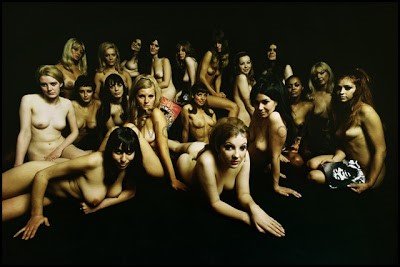
I’ll leave that exposition there because although it could be expanded, there’s little point when, I trust, the essential point is made. So for me, Side 2 of Part 1 is the psychedelic arrival for Hendrix, a sound presaged by the song Are You Experienced from his debut and realised here on his self-produced third album, Chas Chandler having thrown in the towel because of his disenchantment with Hendrix’s recording habits: irregular arrival/attendance, surprise invited guests, intense repeat recordings of numbers, his drug-taking. In terms of that psychedelic/differing musical trajectory, Rainy Day, Dream Away has, for example, the jazz saxophone of Freddie Smith dancing with Jimi’s guitar licks. And then 1983../Moon…. is fourteen minutes combined of outerspace narrative and effects wrapped around one of Hendrix’s more beautifully melodic tunes – all the echoes and distorted vocals, references to beyond the will of god, clanged bells, Jimi’s own echoed bass playing, swirls of spaceship and other sounds, and guitar/effects seagull squeals giving at the very least an impression of faroutness as a teenager’s mantra for living life from then. It is this extended musical psychedelia that introduced to me in 1968, aged 14, the kind of aural trip I could take in differing ways later on.
I know I haven’t mentioned in detail Voodoo Chile, but what more can be said of this premier guitar anthem? I will, however, just mention that I bought Crosstown Traffic/Gypsy Eyes as a single, CT being a radio hit which I thought very cool at the time.


Very pleased to have my poem published at The Poetry Shed here.

Bobbie Says
Bobbie says
he worked Omaha
Murray Dance Instructor
that’s how he made extra money
a terrific swing dancer
not the jitterbug
and he was fair-minded
but no liberal
Bobbie says
he bought old cars
and talked to them
wanted to live to be
an Old Fanatic
worked at an oldsmobile dealership
that’s all I know
before teaching mechanics
and West Coast Swing
Bobbie says
he had a sugar way to make a living
a junkie for
motorcycles and sweetness
not the Hells Angels
fixing them up
and finally the pain
Bobbie says
I remember him strong
all his life
the manly man
he was proud of it
but wouldn’t see the Dr Man
Bobbie says
he ate candy
chain smoked all day long
was proud of it
wasn’t able to go back
it was the sugar
but he didn’t suffer or linger

Bobbie says
I just remember him strong
probably not a liberal
lots of fun showing off
dancing on a motorcycle
Bobbie says
that’s how much she loved him
in what we shared

You are proud
and mightily so
after all these years
and that act of faith
in your defiance is
the same as priests
speaking at funerals
though they offer
different promises
so arguing against
or making it sweet
is the same nothing
of hope that hoping
alone cannot make
and dreadful as it is
or is not in thinking
I’ve seen enough of
what it was for now
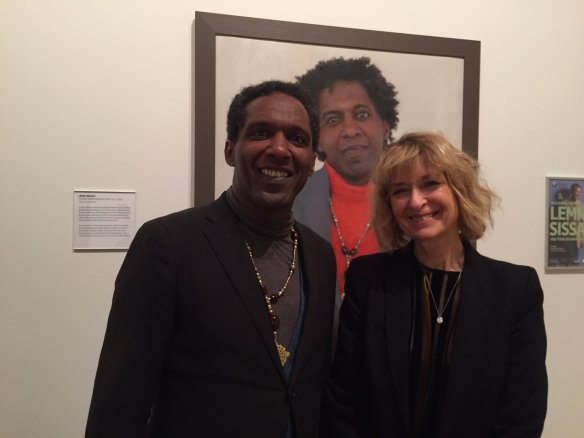
I had a most enjoyable evening yesterday seeing Lemn Sissay in conversation with Fiona Graham-Mackay at Exeter’s Royal Albert Memorial Museum, both there to discuss the collaboration of portrait artist and sitter, an unscripted and therefore honest discussion that included notions of what ‘transformation’ either experienced in the process of meeting, as well as a discussion about the creative process where Lemn reminded us how we are all creative, from finding solutions to problems to the act itself.
The evening included an opportunity to see Lemn’s portrait by Fiona, along with three rooms of others, as part of the BP Portrait Award 2017 exhibition touring from the National Portrait Gallery and currently at the RAMM.
There was also a wonderful poetry reading from Lemn in the second part where, as usual, he entertained with performance and anecdote, this latter including those heartfelt assertions on creativity and other important matters [e.g. care leavers, adoption] about which Lemn is so passionate and convincing.
Lemn read a few poems from his collection Gold from the Sun and this included a bravura performance of Mourning Breaks where for the moment we were all ‘growing wings’ and that is one of the many positive effects and impacts of seeing and hearing him.
Thanks Lemn.

For a fuller and personal appreciation of Lemn, read here.
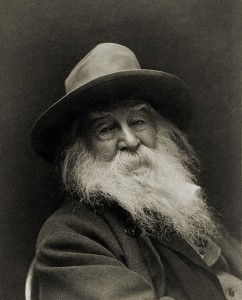
Scene.—A large family supper party, a night or two ago, with voices and laughter of the young, mellow faces of the old, and a by-and-by pause in the general joviality. “Now, Mr. Whitman,” spoke up one of the girls, “what have you to say about Thanksgiving? Won’t you give us a sermon in advance, to sober us down?” The sage nodded smilingly, look’d a moment at the blaze of the great wood fire, ran his forefinger right and left through the heavy white mustache that might have otherwise impeded his voice, and began: “Thanksgiving goes probably far deeper than you folks suppose. I am not sure but it is the source of the highest poetry—as in parts of the Bible. Ruskin, indeed, makes the central source of all great art to be praise (gratitude) to the Almighty for life, and the universe with its objects and play of action.
“We Americans devote an official day to it every year; yet I sometimes fear the real article is almost dead or dying in our self-sufficient, independent Republic. Gratitude, anyhow, has never been made half enough of by the moralists; it is indispensable to a complete character, man’s or woman’s—the disposition to be appreciative, thankful. That is the main matter, the element, inclination—what geologists call the trend. Of my own life and writings I estimate the giving thanks part, with what it infers, as essentially the best item. I should say the quality of gratitude rounds the whole emotional nature; I should say love and faith would quite lack vitality without it. There are people—shall I call them even religious people, as things go?—who have no such trend to their disposition.”

