
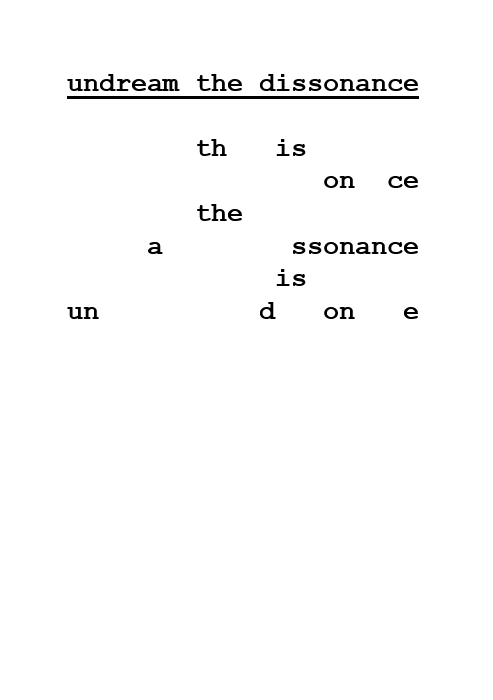
Considering Suella Braverman’s obscene stunt in Rowana yesterday, I am all the more pleased to have this poem at International Times. With my thanks to IT and Rupert.
You can read the concrete poem here: https://internationaltimes.it/rant/

Considering Suella Braverman’s obscene stunt in Rowana yesterday, I am all the more pleased to have this poem at International Times. With my thanks to IT and Rupert.
You can read the concrete poem here: https://internationaltimes.it/rant/
This is generative/progressive work with text that augments into found patterns. I am trying to find ways to post on this site which allow opening them individually rather than having to place as whole chronological pieces:


And yes, left-clicking on each will allow you to view individually. This is more accurately termed as SymbolsArt here…
Pleased to have Rupert Loydell’s sort-of* review of my found poetry collection On the Found at International Times. Thanks to them and him.
*it ranges amusingly well beyond this
You can read it here: https://internationaltimes.it/finding-meaning-anywhere/
Because the mattress is off the bed ready for turning and new coverings, I can get to all of my stuff in boxes stored beneath.
This is always a nostalgic experience as I am a hoarder of all things ‘past’ – and thankful for that – so findings in a quick search can be welcome reminders as with this:
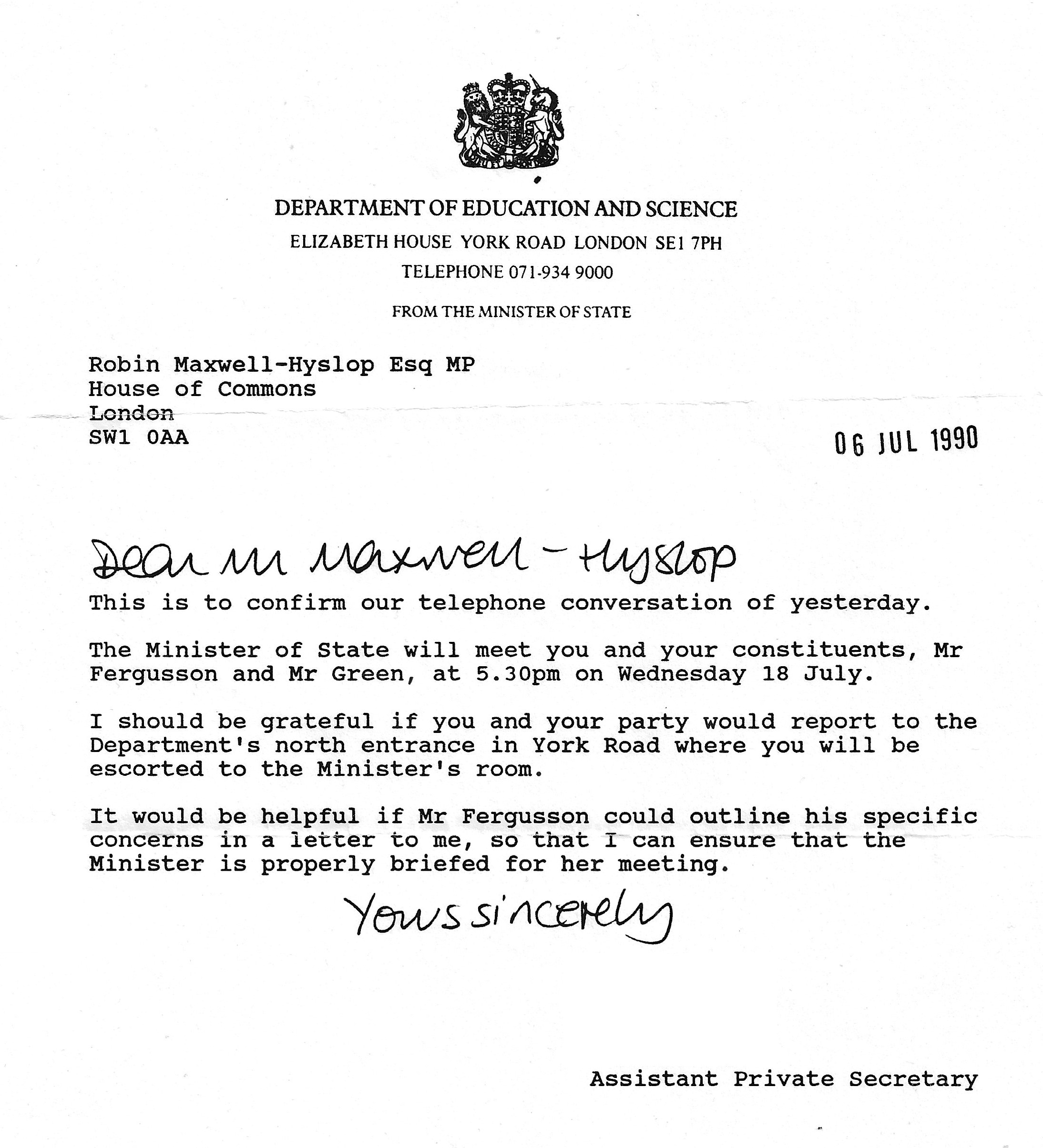
This letter refers to a meeting with Angela Rumbold, the then Minister of State (Department of Education and Science), and related to her Education responsibilities.
I was at this time ten years into my English teaching career, having had quite an exciting decade of independence and creativity, but I was now beginning to encounter Government interference in this – the issue at this stage being the proposed reduction of GCSE English coursework from 100% to 70% (yes, this is a haunting example of relativity…)!
I have removed the name of the Assistant Private Secretary but left those of Robin Maxwell-Hyslop and Trevor Green, who have both passed. Trevor Green was my dear friend but also Headteacher at the time, and Robin Maxwell-Hyslop was our school’s constituency MP.
There is no need to go into great detail: what this recalls is a time where in my teaching I was always supported fully by Trevor, and though Maxwell-Hyslop was a Tory MP – and his government was implementing policies with which I and Trevor disagreed – he was always supportive of our 11-18 comprehensive school.
The meeting was successful in as much as I was listened to politely and allowed to express trenchant views, but of course this never had any influence on the policy with which I objected. The circumstances around this will, however, always remind me of how wonderful it was to work with a Headteacher who had your back, but also a local MP who put his constituency responsibilities above and beyond ideology.
They were, quite simply, better times and I was lucky to have had them.
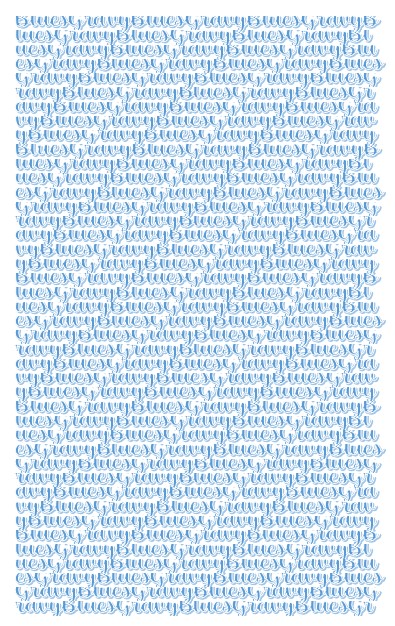
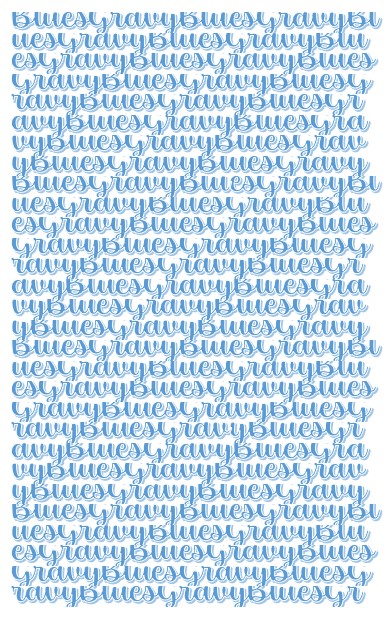

These were prompted by how a recent tweet of mine appeared:

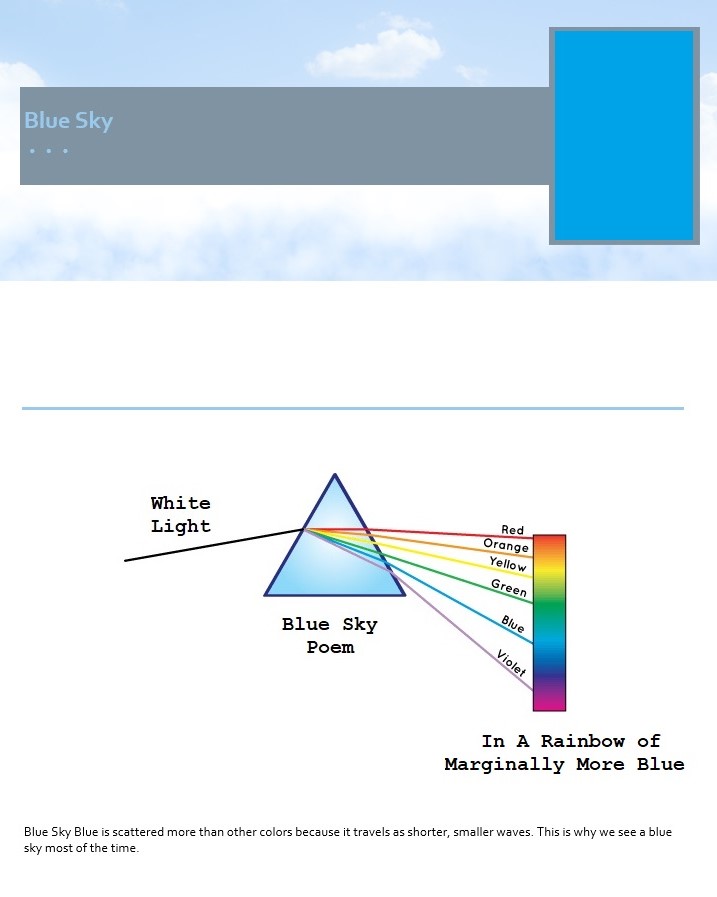
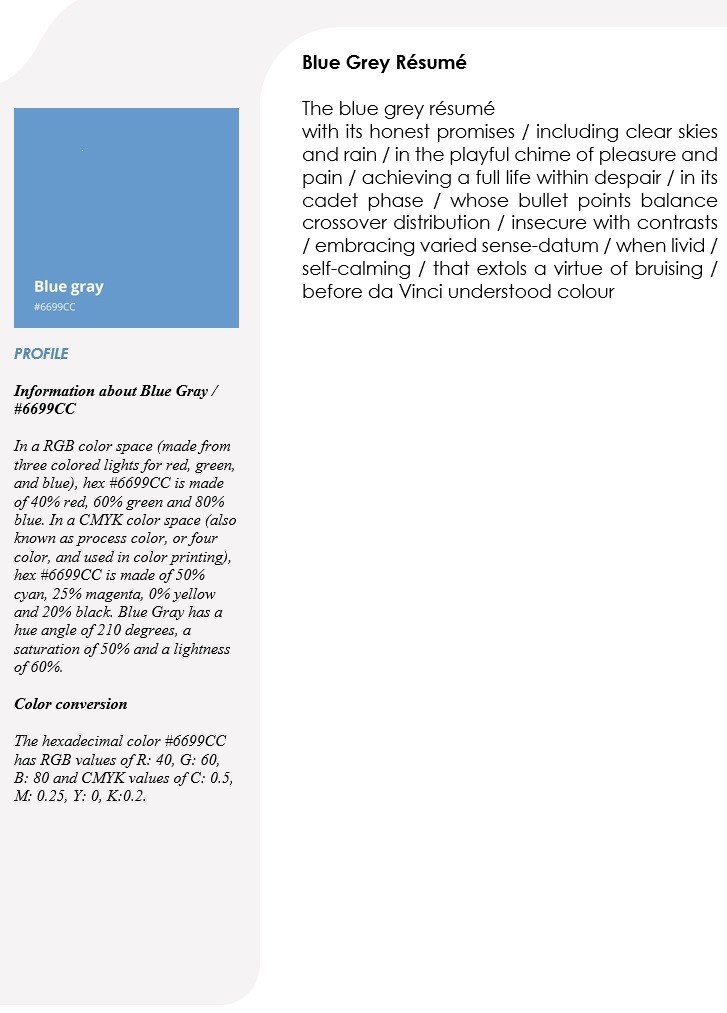
I produced these a couple of years ago using the Blue Spheres template in Word


My thanks to Rupert for writing this review that goes well beyond my found collection to observations on found work in general and the processes of writing and reading. Thanks also to Tears in the Fence for posting. Read the rest of this reveiew here: https://tearsinthefence.com/2023/02/28/on-the-found-by-mike-ferguson-gazebo-gravy-press/
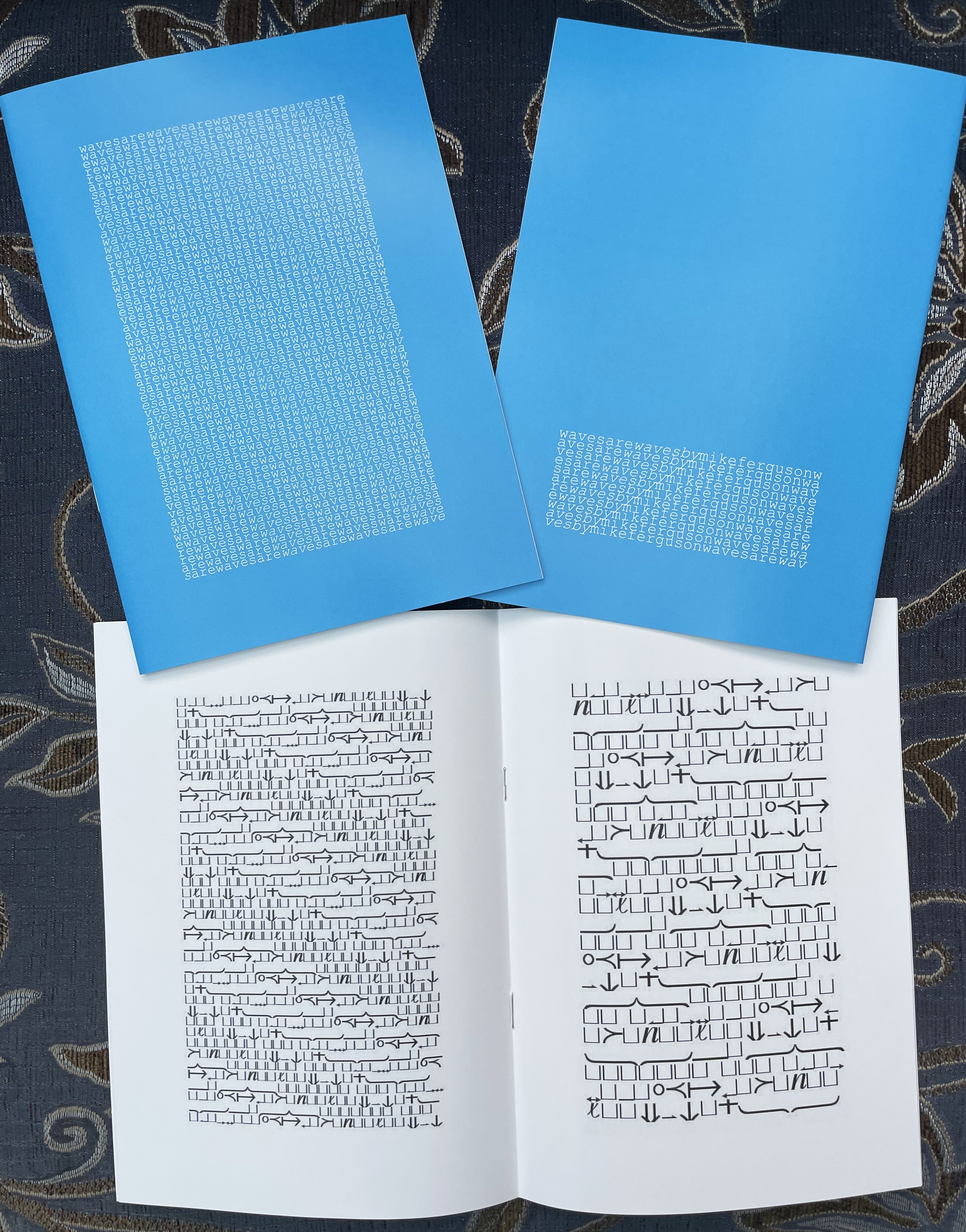
More of my generative textart – with some font symbols – from Gazebo Gravy Press. The found patterns emerge from incremental shifts, and repetition becomes more than just repeating (a phrase to chew on…).
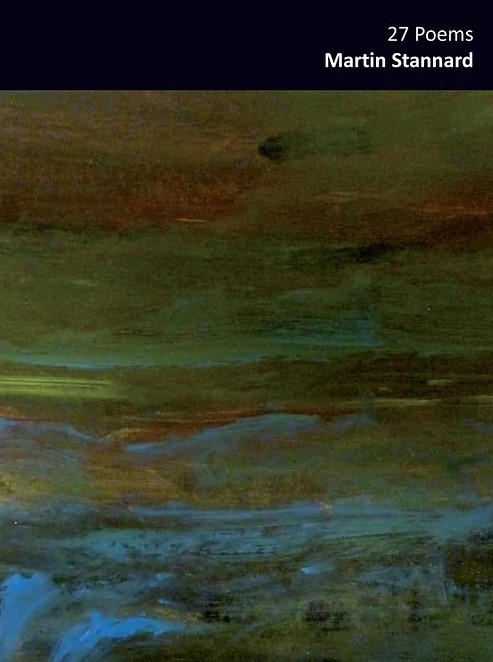
Pyjamas and Ennui
We – those of us who read poetry and therefore obviously listen to music – no doubt all know the dark suggestiveness of the number 27 as in age-of musicians, but there are many other areas of consideration that can be prompted by this.
The Guardian recently ran a food article titled ‘27 eye-opening and invaluable tips from top chefs’. The first two of these were genuinely of interest: putting Marmite in parboiling water so the potatoes will look deep-golden when roasted (a deception, but in times of widespread toxic deceit, this is a moderately palatable – excuse the pun – trick); improving soups and stews by adding chopped, boiled sweet potato for thickening and taste.
That was it though, really. The inevitable ratio of rice-to-water dilemma was addressed with yet another idiosyncratic and unlikely solution.
Wikipedia offers 59 significances of the number 27. None of these mentions food.
In Martin Stannard’s Red Ceilings Press chapbook 27 Poems, there are similarly no such mentions, apart from the generic reference to ‘food and drink’ and the metaphoric expression ‘full of beans’. And then there are the ‘swede saplings’ and ‘beet babies’ and ‘tender carrot kiddies’, but these don’t count, surely, being all about intention and possibility? Even Stannard asks ‘What do you think?’
COFFEE (the title of 1 of the 27 poems) isn’t a food.
You could think Stannard’s reference to books – ‘You might starve without them’ – qualifies as food, but that’s clutching at spaghetti. This is from the poem SOLITUDE which does tap into a recurring theme of isolation and loneliness, often mocked, so a serious concern.
There is a poem titled BANANA which isn’t about this as a foodstuff (on its own, that is, but is with custard) and the references to ‘roast chicken, roast potatoes and Brussel sprouts’ could be seen as a serious dent in my argument up to now, but I would call this a collective ruse as Ars Poetica: evidenced by these closing lines
‘I don’t know why more people don’t write
more poems about these kind of things.
If you want more people to read more poems
you should write more poems about this stuff.
I would read them.’
WINE is another poem title but that is the same as COFFEE.
‘Milk’ is mentioned (continuing this theme on Drink, not Food) and this is from a poem titled COW.
And before my rationale gets completely destroyed by the ‘smell of fish’, it is worth looking quickly at a few other recurring poetic commentaries, like those on ‘pajamas’ and ‘ennui’, but also how all 27 poems are tapping into the poles of our daily lives from the domestic to the political and, as in RED, things both deeply philosophical and hilarious, like exploring the nature of reality and the purpose of tissue requirements.
Though Stannard does offer a hint at the central focus of all in this collection with ‘I make stuff up’, he clearly isn’t fabricating an observation on political corruption and general abuse of power when he writes
‘…From thence we’ll repair to
Bernie’s Breakfast Bar and continue to
plan the overthrow of the dastardly despot
who has turned our Paradise of Peace into a
Trading Estate haunted by the shadows of
men and women who linger around puddles
to share desultory banter regarding the
tyrant’s odd sexual preferences.’ (PLAN)
I’m guessing we’ll all have ideas about who this could be.
Another poem ends with the plaintive ‘O, cost of living!’ and it is possible that exclamation mark is denoting an element of the satirical.
I could say more about the familiar delight of reading Stannard’s poetry in this collection – the brisk absurd narratives and the glimpses of a sardonic take on these farces of life as well as the joy/humour in which this is celebrated and exposed – but the Classic Punjabi lamb curry wafting from the slow cooker is telling me my food is nearly ready.
Read more and get here at the excellent Red Ceilings Press: https://www.theredceilingspress.co.uk/product-page/27-poems-martin-stannard
 gravyfromthegazebo