‘The Sisters Brothers’, Book and Film

I first read The Sisters Brothers by Patrick deWitt 7 years ago, and haven’t returned, yet. Maybe I will having just seen the film last week.

It is a fine interpretation/representation and I never find it all that useful to compare a film made from a book. I loved the book, and I enjoyed the film. The brotherly bond, tested by the brutality of their lives and the ‘normal’ sibling tensions, is realistically and humorously portrayed in the film; the scene-setting – the cinematography – is often quite beautiful. I feel there was more brutality and more humour in the book, but I can’t be sure.

What I do have for certain is a review of the book written in 2012 and I am reprising it here:

Fraternal Fighters

This is a wonderfully comic and enriching story about the brothers Eli and Charlie Sisters, killers on a job-related quest. Their lives and sustained survival are underscored by menace and mendacity, but the telling of the siblings’ mean and murderous journey is delivered with an opposing calm and honesty by Eli – and the simple but wholly absorbing narrative and dialogue of writer Patrick deWitt.

Their story encompasses brotherly love and hate, greed, frontier existentialism, drinking, weight worries, teeth hygiene [every dentist should have these extracts printed in pamphlets replacing irrelevant surgery magazines], killing with aplomb, the work ethic, commitment, altruism, and, of course, the journey through which this and so much more is variously embraced and rejected.

Care and concern for horses has a place in this tale too. Eli’s horse Tub features strongly throughout and is both absurdly and metaphorically central to the themes of friendship, reliance and pragmatism.

Eli is the younger brother, and though less coldly clinical in killing than Charlie, his temper makes him no less effective – however, fraternal love will always make them a deadly duo because there is such an instinctive bond when it comes to either hunting out their prey or dealing immediately with unforeseen interference in this. But it is Eli who ruminates on the killings afterwards and yearns for a different life.

Both serve the Commodore, their mysterious but powerful employer, and his retributive, murderous instructions are theirs to carry out without question and however far it takes them – in this story across gold-rush California in search of Herman Kermit Warm who has offended their brutal boss. At first we don’t know what this offense was, and it isn’t meant to matter to the brothers whose fame is based on their relentless expertise in fulfilling such duties. But we do find out and this is where the story begins its shifts and presents uncertainty into the Sisters Brothers’ world – well, at least initially into Eli’s thinking.

There is a redemptive ending yet at a considerable cost, but I won’t spoil the story by saying anything further on this. Needless to say, the reading journey following theirs is a delightful and rewarding experience.

Ergo

I’m too weary of, and realistic about, venting on Trump/Iran and BJ/indolence as it would be an inevitable waste of time so am turning my attention back to the Grammar ‘advice’ [see preceding post] that continues to intrude within my Twitter feed – consequence of an algorithm that identifies someone who has previously commented on use of language?

I’ll state now I am not opposed to being concerned about general grammar awareness [not as rules], and, for example, the properly supportive/encouraging exemplification of how word choice and variety, including the value of a wide vocabulary, is useful for anyone’s writing.

But this next one pissed me off:

gram1

What irritates is the line ‘Even native speakers of English…’ which is, above and beyond the arrogance, clearly taking as read that English-as-second-language writers get things ‘wrong’ most often in terms of being ‘precise/accurate’! How dare they?! Learn another language and fail to employ its nuances perfectly!

It is also the ‘so-so’ vs ‘great’ writer dichotomy that annoys as well when thinking of my previous posting about finding alternative words to ‘sleep’ [being clear, I don’t object to the notion] WITHOUT also acknowledging/demonstrating the effectiveness of simplicity or use of repetition.

I know these advisory dictates are meant to be as they are – simplistic and colourfully/cartoonishly so – but I am constructing an argument…

Then there is this next one:

gram2

Oddly, in calling such words ‘pretentious’ it is picking up on the fad-usage of certain language words/terms, and also ironically arguing for a celebration of the simple, which I would endorse. And it’s not just because I recall using ‘oeuvre’ a few times that I object – and ‘ergo’ is pretty crappo – but probably because it is easier than trying to deconstruct what is wrong with our world ‘leaders’ [assholes / fuckwits / numbnuts / twats / bollockbrains…] today.


Thus, Your Honour, I Rest My Case…

rest my case

Sleeping by Raymond Carver

He slept on his hands.
On a rock.
On his feet.
On someone else’s feet.
He slept on buses, trains, in airplanes.
Slept on duty.
Slept beside the road.
Slept on a sack of apples.
He slept in a pay toilet.
In a hayloft.
In the Super Dome.
Slept in a Jaguar, and in the back of a pickup.
Slept in theaters.
In jail.
On boats.
He slept in line shacks and, once, in a castle.
Slept in the rain.
In blistering sun he slept.
On horseback.
He slept in chairs, churches, in fancy hotels.
He slept under strange roofs all his life.
Now he sleeps under the earth.
Sleeps on and on.
Like an old king.

[OK, slept as past tense and past participle of sleep, but you get the idea: such grammar ‘advice’ – the above wasn’t directed at students so not a teaching suggestion which would have made this response so much more angry – isn’t always good advice…]


‘Silver’ by Tom Nance

images

My starting post for this New Year is a special one for two reasons.

The first is for the fine writing of Silver, a reflection on photography, growing up, and one son’s relationship with a parent. Its clear beauty is very much in the fond and tender remembrance of this father introducing his son to the mystique and pragmatics of photography, especially in how personal detail and technical aspects of the photographer’s craft unite so naturally. The deep affection for a Dad, others involved in the learner’s story, and a celebration of the quality of various equipment are merged into a powerful sense of all belonging to one another.

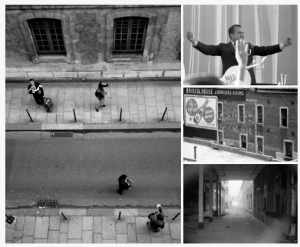
There is both sensitivity and drama in the tracing of being mentored and learning, from awe to adventure to aspiration, this latter illustrated by just a few photographs to present snapshots – no other word will do – of a much larger history: posted along with the Silver text. Mentoring and admiration do go beyond the familial in this overall account, but the father/son core is its foundation.

Humour and music are further vehicles for carrying the narrative along. And all of this creates a strong and palpable sense of who the writer is and what has over time shaped his thoughts and feelings.

Which leads to the second reason for this being so special. The writer, Tom Nance, is my brother, and we have only recently discovered one another – near the end of March, 2019 – after 60+ years. This is an extraordinary story in its own right, and one that might be told at another time, but for now it is a private journey of delightful finding. Silver is, however, a wonderful taste of that personal sharing being made public because it has a much broader interest to convey.

As the writer of this blog I share quite prolifically a sense of who I am, but this posting allows me to complement that with a sense of my brother Tom who is now such a significant part of my story.

This is part of his.

To read Silver and see full-sized images, follow the links below:

SILVER ~ Tom Nance

1. Street Musicians

2. Campaign

3. Reluctant

4. Abandoned

Ten Albums of 2019 Recommended – No. 1

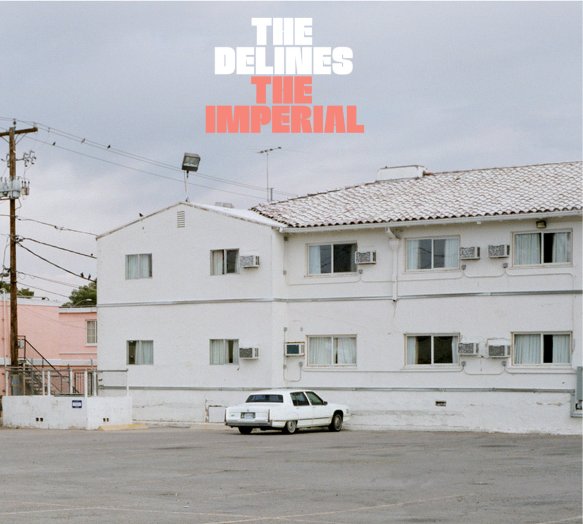
The Delines – The Imperial

28

Beautiful Weariness

The seemingly hopeful exhortation for Charley to ‘cheer up’ in the album’s opening song is surely as empty as a recession-closed mini-mall car park? Is it remotely possible that this sad man has never heard the full story before?

Don’t believe it Charley; don’t imagine reality is ever other than narrated as it is.

Ill fortune and fortuity are far too persuasive in this real world for false hopes. No matter how good and positive things might have been, the bad cousin will visit and spoil it all, as in Imperial Apartment 315, a habitation for everyperson.

Sonny knew this. Sonny just disappeared. What is the point? How can there be a way out when a scene of sudden dislocation is accompanied by

A woman carrying a baby walks by
Next to me there’s an old couple
Whose car won’t start
And the snow keeps drifting down

In these opening three songs – Cheer Up Charley, The Imperial, Where Are You Sonny? –  the horns of Cory Gray and Kelly Pratt fill the plaintive role normally supplied by pedal steel, though that is sure to come. This is exemplified further in the blues of fourth Let’s Be Us Again with its repeated yearning for a return to better times that cannot possibly be retrieved, despite the dreaming.

And once more, as with most Vlautin songs, this thematic certainty is reinforced in Roll Back My Life with such a melodic beauty that as listeners we somehow manage to keep our heads just above annihilation, the lyrics as spare and yet complete as always,

Roll back my life
Past all those years
Of just scraping by
And pour me a drink
Turn down the lights

And roll back my life
Roll back my life
So I can see where not to stall
I can see how not to fall
For those who I did fall
Roll back my life

In Eddie and Polly there is musical irony in its early 60s echo, a hint of the upbeat with the jingle of bells and a repeat chorus of can’t you see?, but in a storytelling that ends with such potent imagery as this is how the hurt become maimed we are in familiar territory, that pedal steel here now, it too ironic in ostensibly eschewing the lamentation.

It is wonderful to hear Amy Boone gracing the dark with her light, a vocal that speaks to the truth of each song’s narrative, not spoken but there are no lavish runs, and this clear-as-truly-felt delivery adds an authentic stoicism as well as tender understanding. Wonderful too that she has returned to performance from injuries sustained in a car accident.

29

One of the most dramatic of songs, musically speaking with its crescendo of determination, is That Old Haunted Place, a tale of failure and blame and the recurring theme of trying to move on from the inevitable, here a decision-making from someone who left home at sixteen who might just make it, away that is but likely not from the unavoidable to come.

Penultimate He Don’t Burn for Me is painfully simple and true, a soulful song of regret at the loss of love painted in the description of ordinary and everyday heartbreak. And oh those horns, swaying together in the melodic line to just about hold us all from falling, a final burst as the song finishes to massage as much as is humanly possible.

Closer Waiting on the Blue is the poetry of late night inevitability, the slow sad keyboard of Gray wrapped tight with Boon’s beautiful weariness, the horns like distant sirens called out to the painfulness.

This is another memorable album from Vlautin, Boone and fine band.

30


Ten Albums of 2019 Recommended – No. 2

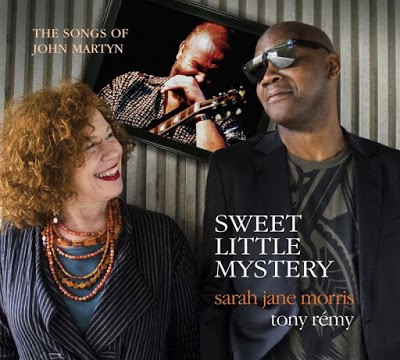
Sarah Jane Morris – Sweet Little Mystery [The Songs Of John Martyn]

26

John Would Love This Too

It would be impossible trying, and wrong as well, to divorce the indelible songcraft of John Martyn from the quality of performance in those who cover any of his songs. And there is solid evidence of how covers of Martyn’s glorious songs over the years resonate from their inherent excellence and memorable sound: an obvious example would be the 2011 compilation Johnny Boy Would Love This….A Tribute to John Martyn; and if you go on YouTube there is an abundance of recorded/live versions of his songs by a wide range of artists and interpretations that have at their core attraction the Martyn melodies before we get to the cover nuances.

Sarah Jane Morris and Tony Rémy surely earn an endearing and enduring place in that lineage of covering John Martyn with their distinctive album Sweet Little Mystery. I say ‘distinctive’ in that very context of Martyn’s central place – always – in versions as outlined above: Rémy’s precise yet varied guitar work and Morris’ deep, powerful vocal establish themselves throughout the portrayals of a range of Martyn’s songs, from his early sweetness to later jazz sass.

Opener Fairytale Lullaby presents these in its perfect, simple essence – acoustic guitar and voice unified on the melodic line. This is followed by an orchestral Couldn’t Love You More where an expansive sweep of sound rides this beautiful expression of love. I can imagine those uncertain at the orchestrating, down to the 60s horn swathes a la Herb Albert and female pop chorus, but it works.

The big test for me is third Head and Heart, my favourite all-time Martyn song. Again Rémy begins with guitar picking out the melodic line until Morris joins on to it with a force that carries conviction and empathy. It breaks to a percussive and bass-led instrumental that again works, especially when Morris rejoins at this increased pace, the slight funk taking the song to a new place that asserts the promise in its lyric/title: love me with your head / love me with your heart, again and again, Rémy riding this out in a controlled, tight solo.

Call Me is Morris sultry and soulful, Rémy soloing with acoustic precision. Over the Hill – what a sublime selection – is again funked-up [so to speak], certainly an upbeat take on what is a ‘folk’ classic in Martyn’s early work, this version introducing a gospel-esque tangent, the female chorus rousing in its climbs. Superb.

26a - Copy

Then it’s Solid Air, so fan expectations will be high, whether that is the hyper-stalwart anticipating failure; others perhaps demanding a fidelity that misunderstands the purpose of interpretation, or, like me, just waiting for more of this perfect homage. Morris is in fulsome vocal here, emotive and inflected slightly in that way Martyn began to vocalise instrumentally, and deeply mimetic on You’ve been getting too deep. Rémy’s guitar is yet again precise and controlled, the bass line throbbing the drive onwards. The song ends on a long adamant repeat You’ve been walking your line / you’d better walk in your line that Morris growls menacingly/passionately at the final.

One World is again funked-up jazz-cool. And it’s always the song shining, but without question this interpretive take also glows. The title track is adorned with some organ, and Morris yet again occupies the centre with such a soulful singing. By this stage you become aware of just how much light has been shed on these songs, this essentially about the darkness of being alone and yearning for a past long gone. And the illumination isn’t incongruous, surprisingly perhaps, having been the default throughout.

Did I suggest light, and upbeatness! Well, May You Never gets a Free-esque [Andy Fraser] cover, and I love it, this Martyn anthem strutting its bar room fights and behind your back dirty talking. Penultimate Carmine is a fine rocking take, Morris making musical mischief in the title’s name and lyric, turning turning the screw into a playground chant that rolls out to a scorching guitar.

Closer I Don’t Wanna Know is the song I first heard from these two a while back. I remember being excited and complimentary then about the homage so clearly heartfelt as well as independent and creative. Here horns again burst out the love, and a chorus sings the soul of the song’s mantra. Rémy on another scorching solo never apes Martyn’s playing on the whole collection and that has been such a good call, Morris reminding in more vocal squeals the muscular impact she brings to bear on so many of these originally acoustic and sombre songs.

If a John Martyn fan I think you owe it to yourself and his memory to get this excellent, vibrant and honest tribute. And of course get it if you like great songs brilliantly performed.

27 - Copy

[No. 1 posted this afternoon]

Ten Albums of 2019 Recommended – No. 3

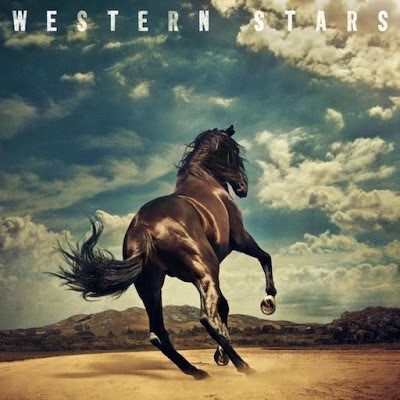
Bruce Springsteen – Western Stars
20

Pedal Steel and Strings

He is the Boss. He can do what he likes. He has.

One of those ‘likes’ is to set up a battle between pedal steel and pop orchestration. I will need to listen to the whole album a few times to acclimatise myself to this conflict, and to decide if the dichotomy is less so and more a synergy. We shall see.

Opener Hitch Hikin’ is a remarkably simple melody, plucked banjo in the back, a rise up and down made great by the distinctive vocal, beautifully sung. Strings do sweep with the sway, but this is carried on the homely highway bound, dashboard picture of a pretty girl narrative of all our nostalgic listener’s hitchhiking memories. Second The Wayfarer foregrounds more string sweeps and a punchy piano start, a breezy popish tune embracing the Springsteen drawl and then string surges that surprise. Remember, this is an early response. I am on the second listen and I’m not swept away yet. Horns have just joined the wayfarer’s pop sojourn. It could be a 60s Western film score. Third Tucson Train has Springsteen in more strident vocal, horns a little pretty in the mix, but an echoing guitar anchoring to expectations. Its storytelling builds into the whole and is emboldened by it.

The album’s title track is fourth on the album, and we are in Nebraska, that’s Nebraska-esque musical territory. Chug-strummed acoustic guitar. I don’t know if that’s a term, but it is those forward, percussive strums. Pedal steel haunts. This is beautiful.

Here’s to the cowboys, and the riders in the whirlwind
Tonight the western stars are shining bright again
And the western stars are shining bright again

Tonight the riders on Sunset are smothered in the Santa Ana winds
The western stars are shining bright again
C’mon and ride me down easy, ride me down easy, friend
‘Cause tonight the western stars are shining bright again

I woke up this morning just glad my boots were on

This is a man/artist glad to be alive and recalling and sharing and so are we. Fifth Sleepy Joe’s Café celebrates I hope a great place because the gesture will be more memorable than the music.

Then it’s Drive Fast (The Stuntman), another persona narrating a life lived hard, survived and again glad to be alive, carpe diem as a means of forgetting the scars because that is in the past. Pedal steel drives here too, as it should. Seventh Chasin’ Wild Horses is going to be a favourite, a classic Springsteen descending melody, the vocal matured in its storytelling, and yes, pedal steel a yearn of sound remembering as well. Banjo too. Simple plucks, but announcing the first contest where orchestral strings swarm all over the pedal steel’s lamenting, a pop sweetness I might learn to lose myself in, but not just yet as a further soar seems too paradoxical with its portentous timpani roll and then horns – and wait for it, the pedal steel comes in at the end like a slow train passing by. This seems to segue seamlessly into next Sundown, a clear echo of Campbell and Webb, something filmic in the breezier pop orchestrations of this accompaniment. This isn’t the anthemic sound of Born in the USA where the big build has a different depth and punch; and it isn’t wall of sound either – I don’t think – but with the chorus and its vocal/lyric mirrors there is a pop sensibility winning.

21

Therefore, aware perhaps of my and others’ questioning, next Somewhere North of Nashville is back to Springsteen in emotively strained voice, pedal steel having pushed the entire orchestra aside.

Stones is the tenth track and as yet there isn’t a stand-out but there is a sustained quality, as we would expect, despite the ‘battle’ of backgrounds I have set as the ruse for this review. Though I have quoted lyrics from the title track and narrative hints from others, this is another element that grows with listening. On this track, strings again feature as an orchestral feature that I don’t get. They aren’t – and probably can’t be – adornments to songs in the way George Martin worked it all those years ago. And here a solo violin is accompanied by a ‘cowboy’ twang of guitar, that Campbell/Webb influence again. It does seem incongruous.

There Goes My Miracle is the most perfected as a pop ballad, a strange vocal echoing of the main line, and a sense of grandeur attempted from the late Scott Walker template, though not as resonant in tone or execution. Perhaps I have the reference point wrong – the precursors are many and anathema. It is pleasant enough. The penultimate track is Hello Sunshine and an up/down bass line precedes pedal steel that comes around like a welcome touchstone of history. Strings sweep through again as an inevitability. Robert Frost would smile at the lyrics, and there is no harm in this, though having invoked the poet I am not sure he would lean all that far to the hopeful philosophy.

So the acoustic pluck of closer Moonlight Motel, matched along the melodic line by Springsteen’s gentle singing, pulls me in again to what I want and like the most. And pedal steel wins here, though the competition doesn’t exist anyway. Cymbals shimmer instead. Lovely.

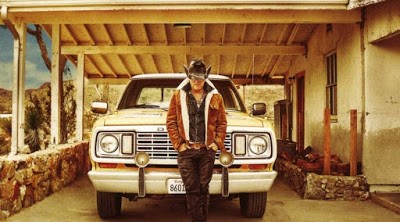
In the middle of writing this review, my vinyl copy arrived, a great picture of Springsteen averting his gaze on the back, Stetson-of-sorts pulled down with a bowed head as well. It will probably stay wrapped for keeping, those strings unlikely to take on a more fulsome and welcome existence by the turntable’s playing.
22

[What follows is a subsequent, brief review which would go some way to explaining how this albums makes my No.3]:

 Bruce Springsteen – Western Stars, the film version

23

Orchestral Cowboy

The introductory orchestral sweeps seem to be announcing widescreen blockbusters at the drive-in, and you can hear the Country guitar-twangs even though this is only strings.

My initial reaction to Western Stars was a little reserved, probably a little critical, but that was down to interruptus expectation, and as is often the case with great albums [I’ll mention now Neil Young with Crazy Horse Colorado which sounded at first insubstantial but is in its simplicity and after further listening totally gorgeous] Springsteen’s latest has grown hugely on me.

24

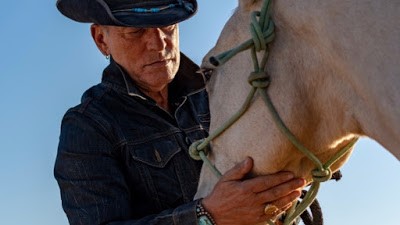
This has been furthered with this filmed-in-a-barn live set, again with orchestra and backing singers and cowboys riding all over the strawfloor’n’plains metaphor, and each by now familiar symphonic intro and/or sudden interjection signals that great personal delight.
25