Here’s The Truth – National Poetry Day, 3rd October, 2019

Here’s the truth
of writing a poem
about Truth –

It isn’t a stroll
in the park, but
a good walk outside.

It’s not a slam
dunk, but
that dribble of hope.

It isn’t a piece
of cake, but
kneading dough.

It’s not a
doddle, but
a doodle will do.

It isn’t plain
sailing, but
row row row.

It’s not easy
as pie, but
working out the recipe.

It isn’t a push-
over, but
pulling all in.

It’s not a bowl
of duck soup, but
a soupçon of homemade.

It isn’t falling
off a log, but
hanging on.

It’s not a cake
walk, but
dancing in the mix.

It isn’t a
picnic, but
your alfresco lunchbox.

It’s not a
milk run, but
pulling the cart.

It isn’t child’s
play, but
playing with words.

It’s not
kid stuff, but
poetry for youth –

that’s the experience
of writing a poem
about truth.

[A final edit of a poem for students writing their Truth poems on National Poetry Day]

Incredulity Paradox ©

I want to lay claim to this term.

Incredulity Paradox – definition: at a news conference with Donald Trump yesterday a Pakistani journalist claimed that the President could get the Noble Prize if he mediated a Kashmir peace deal between India and Pakistan. Trump responded that he should receive it anyway “for a lot of things, if they gave it out fairly”.

An obvious response is ‘Did he really fucking say that?’ An obvious response is ‘Of course he really fucking said that!’

This is the Incredulity Paradox.

This symptom/scenario has existed for centuries, exemplified through Greek tragedy and Shakespeare’s plays – to name two popular portrayers of the human condition – but the 21st century, and our current decade, have seen its crystallisation to a fundamental fact of daily life, especially through our political world and its institutions/representatives.

Had I the inclination and cleverness, I’d cite in detail many recent, incredulous/not incredulous examples, but we all know it exists. There are those who do not know it exists.

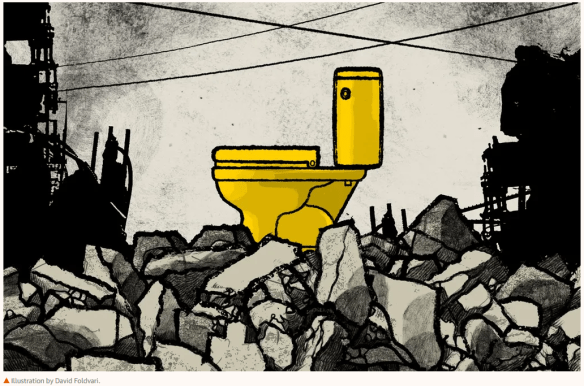
David Mitchell’s Flush

toilet

[Illustration above from yesterday’s The Sunday Observer]

I have written previously about my Monday morning breakfast pleasure of reading Stewart Lee’s satirical sketches from the day before in the new review, see here.

Today’s [yesterday’s] was written by David Mitchell, as is the norm when Lee, having a regular short break, hasn’t penned one. Like a number of repeated attempts to flush away that clog in the base of a toilet bowl, Mitchell’s lengthy metaphor regarding the theft of the golden loo from Blenheim Palace took forever to arrive at some sort of satisfactory conclusion.

That this was regarding the turd which is David Cameron and recent media confessions in support of hawking his autobiographical stench of a memoir, just about saved the satirical day.

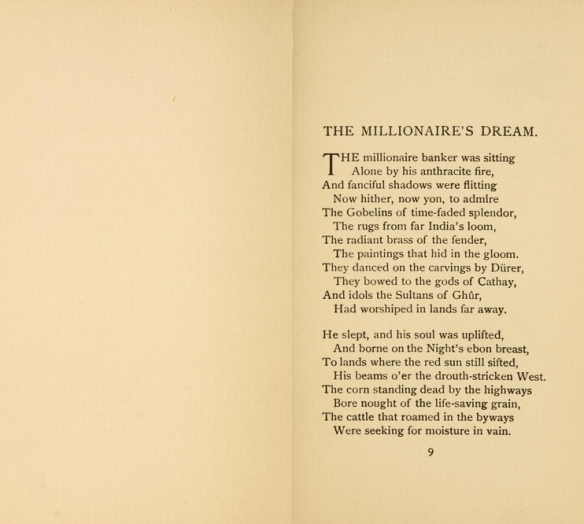
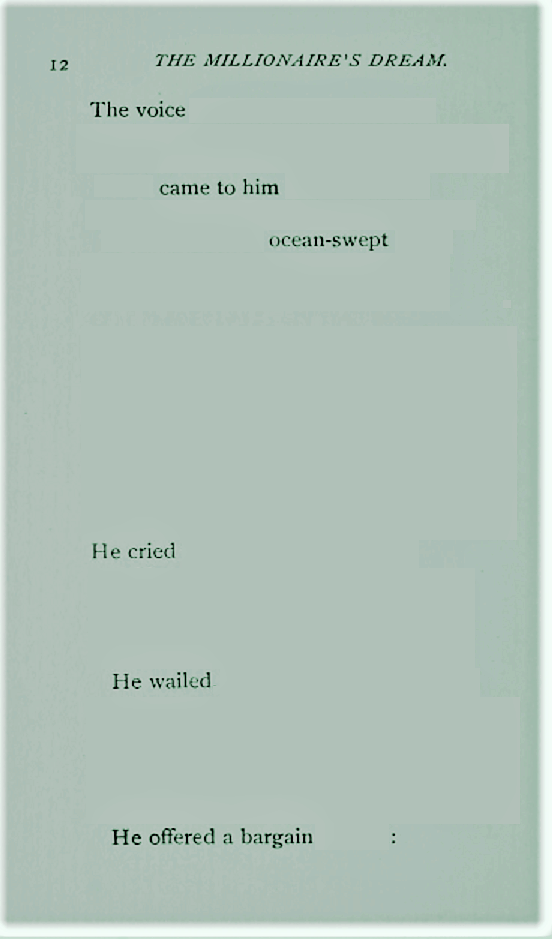
Nebraska 29: ‘The Millionaire’s Dream’ by Isabel Richey [the long read, literally]

abc

Isabel Richey [1858-1910] wasn’t born in Nebraska but lived there. She is cited as perhaps ‘the first woman in Nebraska to publish books of poetry’.

Her poetry collection A Harp of the West reflects their time, though they are earnest enough. This poem seems a distant take on A Christmas Carol, but it is a standard Christian morality tale.

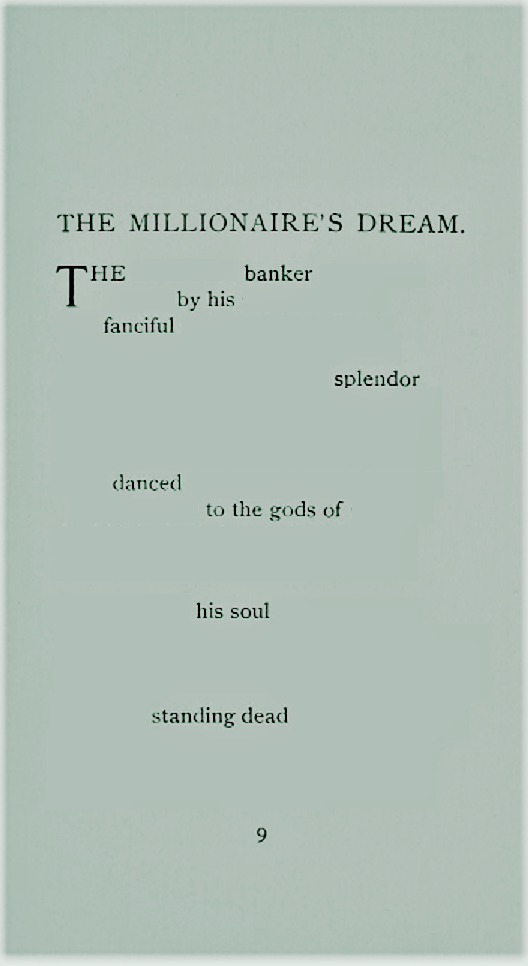
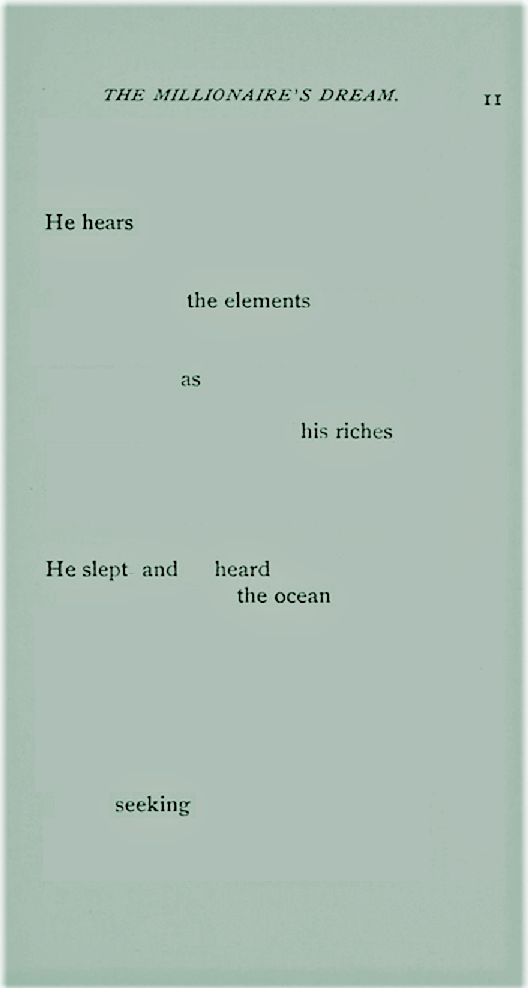
My following found/erasure poem reflects a banker disinclined to alter,

1a23a4a5a

2008 has an enduring impact, not that things were all that different long before, as Richey shows in her original.

Nebraska 28: ‘Subtitle’ by Weldon Kees

We present for you this evening
A movie of death: observe
These scenes chipped celluloid
Reveals unsponsored and tax-free

We request these things only:
All gum must be placed beneath the seats
Or swallowed quickly, all popcorn sacks
Must be left in the foyer. The doors
Will remain closed throughout
The performance Kindly consult
Yours programs: observe that
There are no exits. This is
A necessary precaution

Look for no dialogue, or for the
Sound of any human voice: we have seen fit
To synchronize this play with
Squealings of pigs, slow sound of guns,
The sharp dead click
Of empty chocolatebar machines
We say again: there are
No exits here, no guards to bribe,
No washroom windows.

No finis to the film unless
The ending is your own
Turn off the lights, remind
The operator of his union card:
Sit forward, let the screen reveal
Your heritage, the logic of your destiny

1935/36

[‘Nebraska __’: a slow, long series on this blog featuring poets/writers from Nebraska, associated with Nebraska, who mention Nebraska or similar, the State of my birth]

Cultural Capital

CC

I have only superficial ‘knowledge’ of the concept of Cultural Capital in the work of Pierre Bourdieu, but I do understand that its philosophical and pragmatic significance is more complex than as reflected in the soundbite appropriations from people like Michael Gove and Nick Gibb.

I say people not to be euphemistic – though one could so surmise – but I cannot attribute the word ‘education’ to these two, regardless of their past and present attachments to it, the word that is.

Obviously, Ofsted has given its institutional credence to the educational import of Cultural Capital, not that the phrase/idea doesn’t inherently possess such in so many obvious ways, but theirs is no less suspect for being ‘developed’ [oh the miasma of language] than Mikey and Nicky and the commercial organisations [see here] now using the term to promote their wares.

To substantiate my reservations about such soundbite ‘thinking’ [……] behind Cultural Capital, here is Gove’s interpretation [*], from 2013, of how the acquisition of cc facilitates social mobility,

… you will find children learning to read using traditional phonic methods, times tables and poetry learnt by heart, grammar and spelling rigorously policed, the narrative of British history properly taught. And on that foundation those children then move to schools like Eton and Westminster – where the medieval cloisters connect seamlessly to the corridors of power

and I think this is pompously reductive enough to not require any analysis. That those like Gove as well as Johnson and Rees-Mogg can catwalk such achievement like the deception of high fashion it is, also speaks for itself.

For a much more informed and persuasive analysis of the interpretations/meanings of Cultural Capital, I acknowledge and recommend Barbara Bleiman’s English & Media Centre blog article What do we mean by cultural capital? here [*and from which I borrowed the Gove quote].