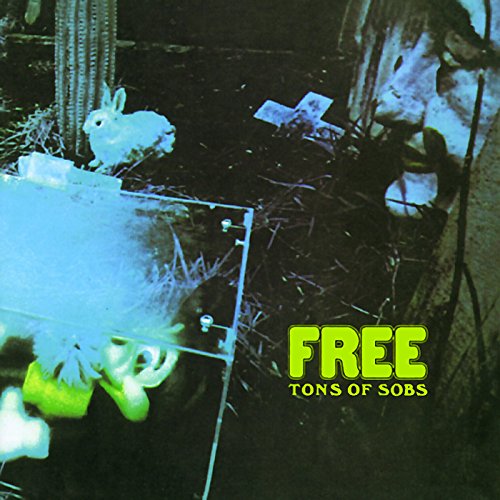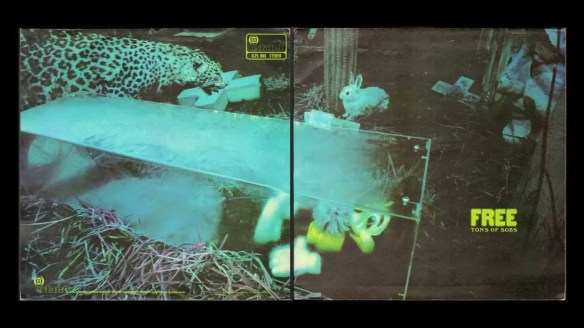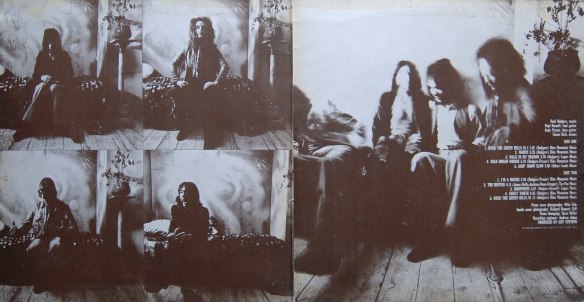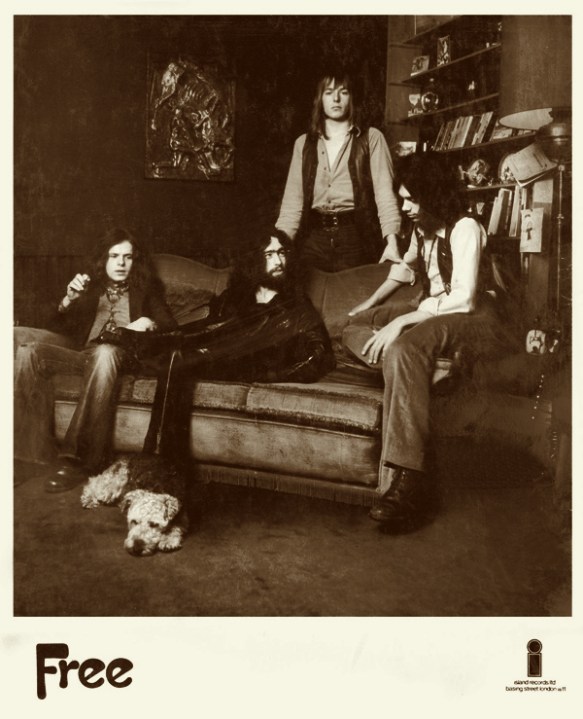
Top Fifty 43: Free – Tons of Sobs, 1969

[Originally posted September 2011]

109 - Copy

As we all know, the album begins with the beautiful and acoustic slow Rodgers ballad Over the Green Hills [Part I] with its gorgeous harmony rise and then suddenly, out of nowhere, comes the chugging and pulsating guitar, bass, drums and piano beat of Worry, and one of rock’s greatest debut albums is launched – indeed greatest rock albums of all time.

I first heard Free on The Old Grey Whistle Test and despite my research I can’t find what year this was. And it was Paul singing Over The Green Hills [the ‘complete’ version I think] that excited me most – another example of my love of ‘pretty’ music having its impact. It was the voice of course that made its instant impression too, and soon after I bought the album Tons Of Sobs.

110 - Copy

Third track Walk In My Shadow is signalled by the wail of Kossof’s guitar and the thumping simple bluesbeats continue. Kossof’s guitar is staccato and edgy until it dances around Fraser’s three repeated rhythms and takes over from Rodgers until he returns to woawoo woawoo with a voice turning all sounds immaculate.

You don’t need your horses baby, you got me to ride/You don’t need your feathers baby, I’ll keep you warm inside and the Rodgers/Fraser writing partnership gets its first metaphor-laden spot: pre-politically correct ethnic naming of Wild Indian Woman and with a simplicity to presage so much memorable songwriting excellence to come.

Fifth track Goin Down Slow by St Louis Jimmy is a measured blues around which the album seems to revolve because the blues is such a fundamental part of Free’s early sound. Kossof keeps it so simple and yet dynamic throughout. One of the greatest Rodgers/Fraser songs I’m A Mover is the sixth, and the Fraser bass lines do their brilliant walking up and down the line. Seventh The Hunter is one os the strongest versions out there.

111 - Copy

Perhaps my favourite on the album is the Rodgers /Fraser Moonshine. Another slow and simple blues, Kossof’s guitar haunts in the background whilst Paul and Andy lay down the foundations. Kirk’s drums roll heavily to introduce another succinct Kossof solo.

The album closes on a return to Over the Green Hills [Part 2] and it is as if the 34 vibrant minutes wrapped within this sombre song’s warm embrace have been an outburst, an eruption to announce the following lava flow wherein we were all melted by its advancing glow.

I never got to see Free live but I’ve seen Paul Rodgers twice: once in Cardiff [1993] at the launch of the Muddy Water Blues album [with Steve Lukather on guitar] and in Poole [1997] at the launch of Now. Outstanding both times, naturally.

112 - Copy


‘I Am in Need of Music’ by Elizabeth Bishop

I am in need of music that would flow
Over my fretful, feeling fingertips,
Over my bitter-tainted, trembling lips,
With melody, deep, clear, and liquid-slow.
Oh, for the healing swaying, old and low,
Of some song sung to rest the tired dead,
A song to fall like water on my head,
And over quivering limbs, dream flushed to glow!

There is a magic made by melody:
A spell of rest, and quiet breath, and cool
Heart, that sinks through fading colors deep
To the subaqueous stillness of the sea,
And floats forever in a moon-green pool,
Held in the arms of rhythm and of sleep.

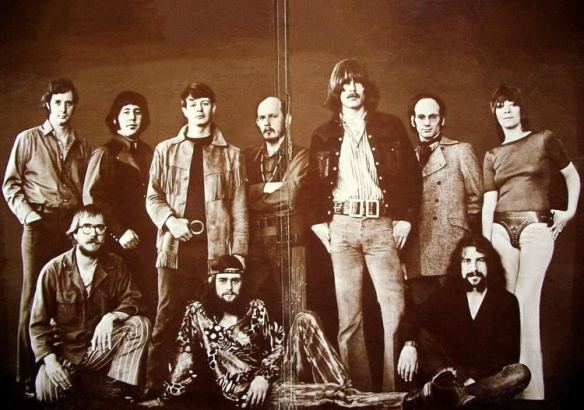
Top Fifty 42: Ten Wheel Drive with Genya Ravan – Brief Replies, 1968

[Originally posted January 2012]

107

This is a superb album, driven by a big band sound a la Blood Sweat and Tears [Genya Ravan had expressed her desire to front this kind of sound – oh I want a horn band – so the achievement of it is an apt quality] and made distinct by her supreme vocal.

Ravan has writing credits on two of the songs – increasing this input with later albums – and keyboardist Michael Zager, with others in the band, are responsible for most of the rest. In many ways it is formulaic of that BS&T/Chicago sound, but this is to its credit. The playing throughout is tight and at times titanic. Stand-outs for me are Come Live With Me, a light ballad with acoustic guitar, harmonica, soft background saxophone, and the sensual invitation of Ravan’s vocal Come live with me, I want you so bad baby that struts along the melodic line; the other is the totally stunning Stay With Me [Ragavoy-Weiss], a pleading blues lament that Ravan screams out in the most sublime vocal pain and yearning.

How Long Before I’m Gone is one of those more titanic numbers and showcases the band’s rousing credentials. Ravan again belts out the core attraction, but there is a fine soprano sax solo by David Leibman, and the horn section keeps it lively as the song works through its differing paces, including a Latin groove with swift solos by Steve Satten on trumpet, Dennis Parisi on trombone, and Leibman again on tenor sax. When the song returns to its opening, pounding melody you realise what a great ride it has been. The album finishes on a beautiful, lushly orchestrated number with heavy jazz elements, Interlude: A View of Soft, where Ravan hums/scats rather than sings, and it is gorgeous, especially as she duets with the echoing saxophone solo. It is the personification of peacefulness.

There are, of course, other vocal gems from Ravan throughout this album, and whilst she did go on to have a solo career I don’t believe she has the wider recognition as one of the greatest female vocalists that she should.

ten wheel - Copy

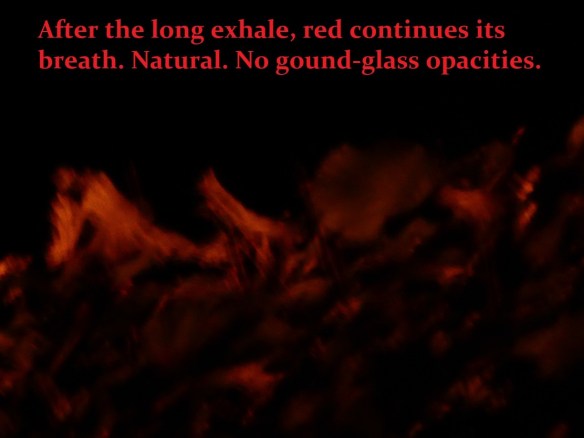
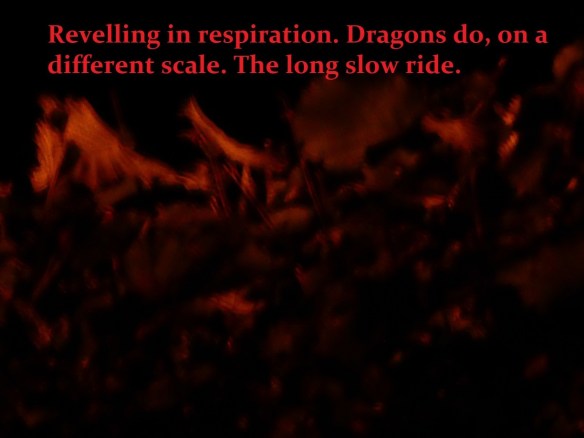
Red Breath and After the Pause

afterthepause

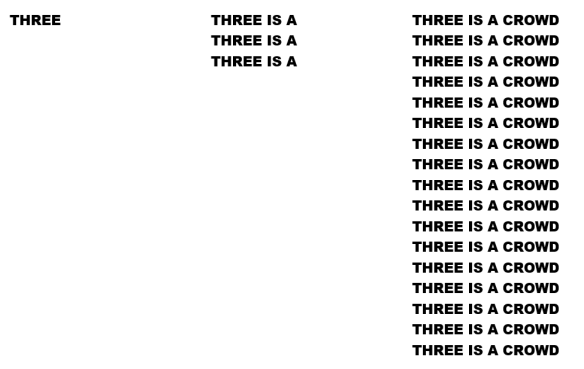
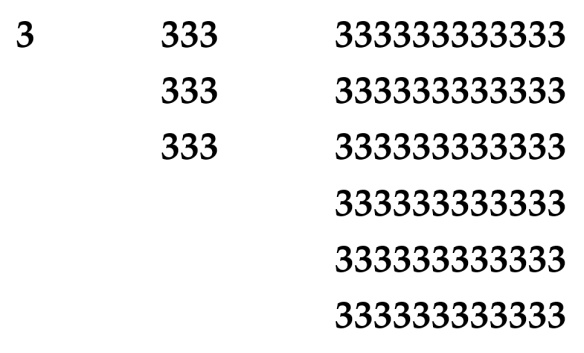
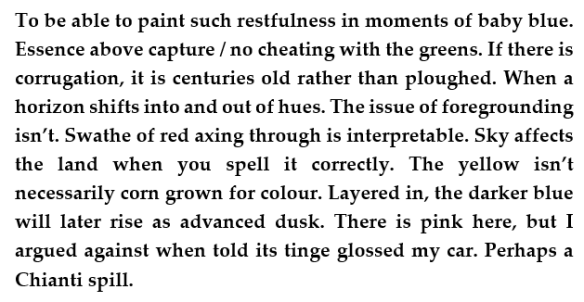
Always delighted when my work gets published, especially when my ‘prose poem with visual element’ [as distinct from visual poetry] appeared today at After the Pause.

There was a miscommunication, however, in the process. I submitted the three elements of the poem and it was accepted, but as I found out today, only one element – the end of the narrative.

This being the case – and an honest mistake – I’d like to reconstruct the narrative here, with [I wish I had initially organised it so as a collaborative posting!] a tempting for readers to go to the online journal to complete their reading. Therefore, I will post the first two parts here now,

redA (2)

redB (2)

and for the third and final part, go here.

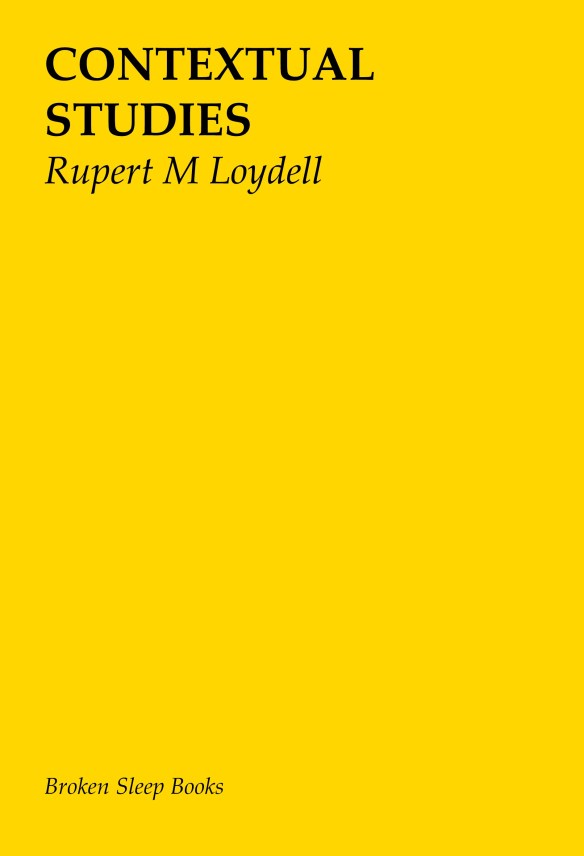
‘Contextual Studies’ by Rupert M Loydell – Broken Sleep Books

Rupert mnodot Loydell paperback front cover (002)

‘The greatest possibility open to us lies in giving ourselves up’

– Tom Clark, White Monkeys

I’ve never heard Rupert Loydell sing, either unaccompanied or ‘along with every word’ to a melody from a well-known album playing, but I expect – like the rest of us – it is far more empathy than perfect tone. What I can fully hear is the anger inside his experience when comparing the ‘hippy nonsense’ of his ‘favourite album played’ with the ‘snapshot’ [selfie] culture he finds himself surrounded by today in bars like the one where his nostalgic preference is being heard [In the Corner]. In this respect he has nailed it, or more precisely, nailed his opinions to the sticking place.

Loydell will always nail it in this significant sense. In a world that isn’t what it was ‘meant to be’ but rather an endurance test of compromise and adjustments over promise, the one still-point of integrity is a firm opinion. This doesn’t mean everything felt and expressed is full of absolute confidence. Far from it. In Uneasy Rider – this a playful adjustment to past and present – Loydell expresses his firmness with the comic caveat of honest balance,

‘I am stronger than steel and more elastic than rubber
bands, have an internal spring bar to prevent my brain
from twisting’

and this is the coping mechanism for living in and writing about a world full of constant and meaningless change as well as safe zones of continuing experience. When being nostalgic

‘…for familiar things like
depression and anxiety’

becomes your safety net as well, the compromise is all about acceptance and realism, however often it is being ‘chased by darkness’.

So what are the reliable constants when you are waiting for one to come along while ‘supping a pale ale made by a brewing company I have never heard of’? Well, there’s friendship, though this too has its flux,

‘How strange friendship is. We string it out across
distance, sometimes rooted in shared pasts, sometimes
more about where we find ourselves in the present. At
other times it is a kind of jogging along, because we
work together or live in the same village.
Sometimes it is not really friendship, but at other times
there is something in the air, and when you first meet
you know something is up and invite them back for a
drink.’
[X and Y]

If this seems rather prosaic that’s because it is. How do we reflect on the everyday and make it real? By being honest, and not exaggerating, as here. That is one of the many strengths of these prose poems: reflecting on significant matters in our life with the clarity of truth. That, by the way, is also expressing firm opinions.

If you want the poetic – and this isn’t a competition, it is a writing mirror held up to the real – the prose poem Out of Focus (16 Snapshots) provides plenty of lyricism. For example, the first is soothing in its dealing with colour, itself a painter’s observational sensibility,

‘This showroom shows off blue glass, blue glaze and
the way the light falls through etched windows.
Chequered tiles turn blues to grey and the table and
fire surround are worn metal that does not reflect.’

Later there are

‘Vertical shadows beyond the painted line at the edge
of the space. Pillars holding up the darkness above, a
single window offers an empty backlit silhouette.’

And in the penultimate view, which has been punctuated by people and events, past and present, along the way,

‘It is the landscape out of focus, not my eyes.
Everything slopes to the foggy left, the brown grass
is almost pink, the middle distance white as though
bleached out.’

and we should note within this last but also preceding how there is uncertainty seen and expressed within the details, how thinking and writing about it is a processing. Reading is like walking around the exposition being described – you can ‘navigate the exhibition by instinct or buy a folded paper guide’.

In the title poem, the world of work [actual or an amalgam] seems to impinge on what we can do in this world of ours: new methods and approaches are rooted in accountability we probably don’t trust, and the offering of ‘free pens and stationery’ usurps integrity. This is, of course, the mundane, but it is emblematic of a world changing [OK, obviously – always has and always will] but changing away from the reference points where we started and valued them. And yes, context is everything, always has and…

Perhaps there is more certainty in having rules to follow. There certainly is when these are delightful metaphors and a thoroughly acceptable, comic ars poetica, like rule 6,

‘Poets using motorways will be aware that the third
eye can be opened or closed at any time. It should
only be opened to improve rhythmic flow and reduce
congestion’
[The Rules of Motorways]

When the darkness does, however, chase us, there is no motorway with which to escape. All we can do is try to understand, calculate the best way – traditionally through religion – or find alternatives like writing about it all, seeking a more comfortable nuance in a different darkness,

‘There is nothing beyond geometry, we must
understand our world through seeking its edges.
Collateral damage is disheartening. What’s another
way of thinking about war? The dark inner part of the
moon’s shadow.’
[A Phenomenon Seldom Understood]

If my invocation of ‘writing about it all’, as Loydell has, doesn’t seem convincing, read the wonderfully fine lines of Sacred Ground, the book’s penultimate poem.

I’ll close on a quote from The World We Desire because this captured for me what I had intuited in my reading of the whole. In this, the writing/poetry/expression is how we learn to cope with the world we desire but cannot have as such, as the poem actually concludes ‘the world that awaits us is not the world we desire’,

‘A continuous process transforms consciousness,
adjusts people to abnormal conditions and encourages
them to pursue and commit to the expression of
emotion.’

As Tom Clark concludes his poem White Monkeys [and the epigraph which begins this review is that poem’s first line]:

‘…it appears we’re meant to endure life on a dying planet by becoming aware of emotion.’

For further details about and to buy Contextual Studies from Broken Sleep Books, go here.