Sadness of the SATs Season

It is both sad and infuriating to read how the SATs season is rolling inexorably round yet again, this annual external testing regime to appease governments by supplying statistics that, by and large, and without doubt in English, have little to do with teaching and learning.

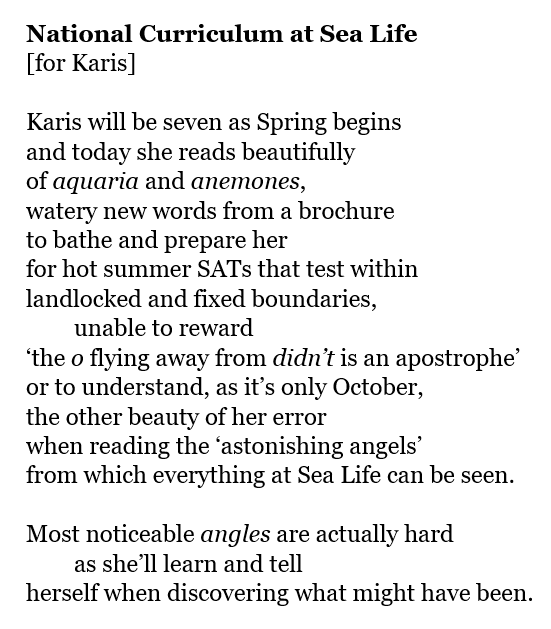
Sadder still to remember I wrote the following as a parent and English teacher in the latter part of the 90s [published in 1998] and this testing still exists and its meaninglessness prevails,

SeaLife2


Top Fifty 21: Affinity – S/T, 1970

[Originally posted December 2011]
57

I’ve been listening to the Time Machine, A Vertigo Retrospective compilation of artists from this superb label with a great prog, jazz-fusion, folk and rock roster, for example, Colosseum, Juicy Lucy, Clear Blue Sky, Manfred Mann, Black Sabbath, Cressida, Affinity, Bob Downes, May Blitz, Nucleus, Gentle Giant, Jade Warrior, Platto, Tudor Lodge, Warhorse, Uriah Heep, Gravy Train and The Sensational Alex Harvey Band.

58

As ever I was musically prompted and again to consider an album for my Top Fifty, this time Affinity’s single eponymous release of 1970. It features the outstanding vocals of Linda Hoyle and the soulful pounding organ of Lynton Naiff. Whilst receiving positive critical reviews, Affinity doesn’t appear to have been that widely popular a band and album at the time, certainly in comparison with other Vertigo acts, and this may be because of the number of covers on the album and the fact that the group only released the one disc, splitting up in January 1971. There has been a more recent resurgence in interest with new compilations of earlier material as band Baskervilles, instrumental numbers, live performances and alternative versions.

As with so many of my choices for this category, the music matters, but it is also about the time I was listening and the influence it had then and the memories that remain and are triggered when listening now. There’s a storming version of All Along The Watchtower, influenced by Hendrix rather than Dylan, and the organ playing is a powerhouse structure upon which Mike Jopp lays some classic wah-wah guitar, in many ways formulaic of the jazzrock sound of the time, and especially the English leanings of bands like If, Ten Wheel Drive and similar. I love it. Other key tracks are the similarly loud and driving I Am And So Are You, Mr Joy and the brilliant witches’ recipe lyrics and cauldron-boiled organ and guitar of Three Sisters. There is a sweet version too of John Sebastian’s Cocoanut Grove [spelling on album].

Linda Hoyle went on to record an excellent, but again single album Pieces of Me. Naiff went on to play with Toe Fat, but I’m not sure about the others. The original Affinity album is worth quite a bit of money and I treasure mine.

59


Breaking News – ‘Have I Got News for You’ Stinks

HIGNFY

Last night’s ‘new’ series of Have I Got News for You was truly awful, hosted by the parody of Jeremy Paxman that is Jeremy Paxman these days [see here too] and the in-grey-decline that is the bitterly unfunny Ian Hislop and the only occasionally make-you-smile Paul Merton, but not when pulling his trademark ‘I am incredulous’ face. One other guest, the lively Josh Widdicombe, needs to watch this episode again and start thinking now about how he avoids becoming a has-been like at least two of the already mentioned three.

The fourth guest was Steph McGovern who held her head buoyant just above the general parapet of poo, at one point rightly calling Paxman a patronising git, a tag he later threw back at her, proving only how it had clearly got under his pompous skin when initially applied and what a pathetic hurt child he can be.

I know this programme is shite and yes I could have avoided watching it to have this confirmed. In my defense, I did first watch my recording of the excellent The City and The City, and after this with half an hour until bedtime I thought I would dip into the recording of Hasbeen I Got News… because I had that time to kill. What does strike me on reflection is how HIGNFY could be like a television programme that is still clever and good but exists only in one of the parallel worlds of The City… [a premise I am, like many, still trying to understand fully] yet it can’t be seen by those not privy to that other existence.

Or it could just be crap there too.

Where St Paul and St Mary Meet in Winter

I am fifty-four miles from Plymouth –
A/38 then A/380 –
and yes that’s thirty more than on the I-94
but words are as the crow glides,
less in output than the $2-$3 for gas
as predicted
online.

My Mississippi was always a spelling of vowels
unlike those who live there along its side,
winter’s snow of 6-9 inches another set of numbers
not shared – today’s Siberian Arctic draft
less threatening than a
Thunder Bay
attack,

or is it up from Omaha where I was born
when it would be $30-$60 for fuel
unless driven on its drift?
Here in Ottery, Coleridge’s secret ministry of
cold is perhaps one thing the same as St Paul’s,
like Fitzgerald writing about winter there
in his dreams.

How we both have carnivals – ours to presage
barrels and their bright flames, the name of
Guy Fawkes historically ablaze, like the
light and flight of Moon Glow, King Boreas and
Vulcan Victory, how we both parade by
nomenclature and
mythology.

‘The coldest metropolitan area in continental USA’
compared with our winter average of 8 °C [though,
apparently, we have Thunder Days, not
recorded]. We’ve no designated winter wardrobe:
no snowboots, ear warmers, mitten keepers for the
children. Marijuana is also illegal here, whatever
the weather.

I’d buy a block of ice from the Palace
but would it travel? Imagine your winter flown to
our St Mary, vanishing as a form but still
shaped in memory; imagine fellow travellers
telling their tales of the ice was here, the ice was
there, the ice was all around until it
disappeared.

We turn a corner together and see it is beautiful,
despite the labyrinth of miles and time. We have had
snow this year, though not here, and as the sun
meandered across the clear blue sky today it was hot.
Saints endure in all winters: we share and
are tzadik, wali, rishi, guru
and arthat.

Elk Horn – Danmark På Prærien

wmill1 - Copy

Velkommen to
flaeskesteg
rullepolse
skinke,
to a prairie’s past
pickled in a waft
of windmill sails, to
kringle and
dansk lagkage,
to Grandparents’ home
still on 173, to
Lutherans and
licorice, to
VikingHjem and
Andersen’s tales,
to cherry bombs
and blasted chicken heads,
to
prairie
grass
waves,
to
-sen
after
-sen
after
-sen
to Carlson, my mother
Aasta May, to
smørrebrød
aeblskiver
medisterpolse,
to Exodus and
Grandpa’s Elim
Children’s Home, to
flora Danica and
blue fluted,
to my one-time højskole,
to rock fights and
burning a farm down –
nearly – to
Grandma’s kyllingesteg,
to
Alma
Emery and
Glenn, to
Aasta Schack and Axel
and all of us,
to 98.7% English only [and
Danish declining],
to 76.7% who drove alone, to
Grandpa’s slow smooth safe drive
into town, to a
Blended Service of the Eucharist
and easy-to-follow
old-songs-sung-in-an-upbeat style,
to Snagajob at
Walnut
Atlantic
Kirkman
Avoca
Exira
Harlan
Shelby
all only
10-15 miles from Elk Horn
where there are no offers, to
empty bourbon bottles
in the barn, to
no school on Friday so
Spartan fans can cheer
girls’ basketball, to
Danes and
Lady Danes who
still drift across the years
in EHS
and lessons learned
in the colours
of change, to pickled
Red Cabbage and
Red Beets in jars,
to remembering
and now.

wmill3 - Copy


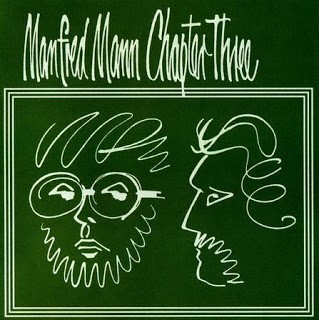
Top Fifty 20: Manfred Mann Chapter III – s/t, 1969

[Originally posted December 2011]

55

I could quite easily get lost in the Vertigo label’s psychedelic swirl and spin out a large number of its acts for my Top Fifty. But one that definitely earns its place there rather than from some dizzily spun projection is Manfred Mann Chapter III and the band’s eponymous album released in 1969.

Formed by Mann and long-time collaborator Mike Hugg, this is a wormhole hyperdrive away from the popworld of Manfred Mann’s previous music, and it transported me up and beyond within its cosmic, jazz-infused launch at my tender age of 15. I’d been listening to Archie Shepp, Ornette Colman, Charles Lloyd and other ‘modern’ jazz at the time, and it’s the saxophone solos that appealed first in listening to this album. Mann’s instrumental Konekuf is a big band number that starts with a slow rising melody akin to Strauss’ Thus Spoke Zarathustra but it breaks into a sax and brass cacophonous free-for-all that I thought then – and still do – was brilliant in its wild and angry squeals and screaming. Saxophonist Bernie Living was a core member of the band, but additional sax players were Clive Stevens, Carl Griffiths and Dave Coxhill, so I’m not sure which of those first three [Coxhill playing baritone] is responsible for the solo on this amazing track.

Opener Travelling Lady, which began life as a Hugg popsong in the mid sixties, displays the quieter and more melodic aspects of the album, but this too breaks into a freeform jazz saxophone display. Snakeskin Garter, as far as I can recall, was also used in an advertisement for some men’s cologne. This song, as with most of the others, has Hugg on whispery-gruff vocals and this provides a rather sombre, though for me totally apt tone to all of the tracks.

I got this album when I was in the fifth year of my secondary modern school on a large sprawling council estate. I’ve written before about my positive experience of attending this school, and also of having a track from this album, Mister Your’re A Better Man Than I [composed initially for the Yardbirds in 62/63], played in our house assembly, done so by the rather formal but nonetheless niceguy Housemaster who then sermonised on its lyrics which were to do with human inequality and therefore ‘meaningful’ for an assembly. I was proud of introducing that song to my more popster peers.

Another school experience also involved this album. Although a secondary modern, the school still harboured pretentions based on grammar and public schools so it had a house system: six different house names accommodated within three separate but replica round buildings, each single building split in half. Another aspect of the architectural and structural aping of such a traditional system was that all students in the fifth year had their own separate common room within each of the six houses. I belonged to a small group of incipient hippies getting into underground music and we used to bring our albums into our common room and play them on the record player there. This had the effect of driving most of the others away, especially when listening to an album like Manfred Mann Chapter III [or a Black Sabbath or similar] where we sat in our corner being introspective and cool and earnest and headbanging.

There was a volume two of this band released in 1970, and other live and demo additions, but the band could not be sustained because of its size and the wilder jazz of its musical ethos, and so Manfred Mann Chapter III disbanded and became the Earth Band in 1971.

Whenever I fancy a self-inflicted musical mindmess I play Konekuf very loud. To consolidate that mental tribulation you could play it just before or after Do Wah Diddy Diddy and experience what happened to the Manfred Mann musical timewarp continuum!

NB: I discovered and wrote this next in February 2012 precisely for its reflection on the song Konekuf, so I will add it here :
56

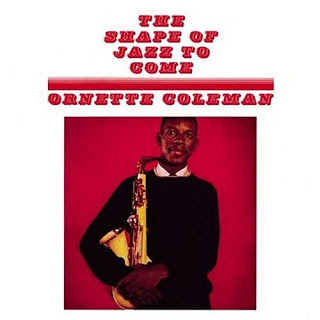
I’m not surprised that this opening track on Coleman’s iconic album is superb: I’m surprised because I have heard for the first time the melodic line that forms the saxophone solo in the Manfred Mann Chapter III track Konekuf. I had never made the connection, loving the MM cut and not really knowing Lonely Woman. So is it a simple rip-off? Homage? I couldn’t find any references and/or explanations online, but I did get another surprise, which may or may not be accurate, when I read that Konekuf spelt backwards was Mann’s caustic comment on racial attitudes and policies at the time – and for those of you who don’t get it because of your age, it alludes to the Conservative MP and racist Enoch Powell and, presumably, his infamous rivers of blood tirade.

Incredible how I will now listen to a song I have known and loved for over 40 years with an entirely new set of markers. More shock than surprise really.
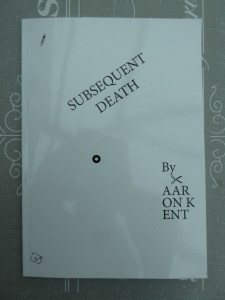
Subsequent Death by Aaron Kent – zimZalla Press

P1020385

Death is in reflective but also creative mood in this text, recounting the taking of eight separate people to the ‘afterlife’, though as a euphemism it should be the afterdeath in the context of these candid and often self-righteously angry descriptions, as with the first about a Father.

Death deals in cynicism too [!], as with the Priest’s taking where being devout and devoted to themselves are playfully compared. I like the dismissive scepticism in logic as well [not formatted as in the text]:

But the Priest: He spent his whole life in support of death, so why won’t he stop squirming?

The Captain, the Mother, the Brother, the Artist, the Soldier, and the Doctor, the antithesis of me, also all get their comeuppances, figurative and literal.

It is interesting, as a quick observation on the kind of messages Death delivers, that with the Artist there is a hint of the philosopher in Death’s mediation/meditation on this taking:

I see the glory of glazed eyes in all of the
lost artists who blame nobody but themselves

Death can be lyrical,

There are lenses for every death.

Some cast rose light
and give the deceased the glow they never could have held
when sleeping with a beating heart.

Death can be prosaic,

I know this isn’t about me, but I’m a player at the table. Well, more like the ace of spades in a game of poker, or the dealer in a game of blackjack.

[both from ‘Two. Priest’]

There really is so much more to read in the nuances and caustic declaratives across these eight decompositions.

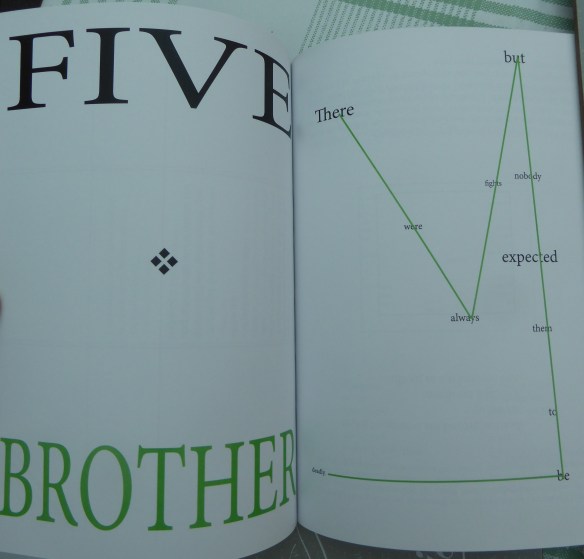
Another element I commend to readers is the playfulness of the poems’ formatting. This is a text rich in exploring the impact/effect/highlighting/obfuscation of presentation, and at this highly engaging in-its-own-right aspect, the book is a thrill.

There is reading across pages, whole page text, text split by red lines, repetitions/echoes/continuations/compilations, text in and outside of grids, and sdrawkcab text.

Another excellent production from zimZalla – get it here.

P1020386