North 40th Street, Omaha

omaha2

It can be hard but also isn’t
to remember once living here,

six or seven years old and sitting
alone on the walled porch watching

strangers and the occasional
cool cars passing by, unable to recall

what dreaming of then was beyond
new polished chrome and bright colours

to replace the grey primer of what might
have just been for damage and age. Or inside

at those bigger times, believing in presents
unwrapped on the living room floor

as shiny and bright as a customised
Christmas and that sheen of a better life –

then with mom’s homemade smorgasbord
afterwards where I do hold on, perhaps that

omaha3

red wagon the one gift to take another
time up to the main road and corner

of Hamilton Street, panhandling my used
toys from its flat bed all worn dull by then,

small change for the bakery’s doughnuts
now a music store, windows filled with

pumpkin heads instead. And in the back yard
seen fenced off like a demarcation at the side,

omaha4

my escaped pet garter snake flattened
by someone’s random car as yet another

act of indifference, no more or less
thoughtless than my peeing into the rainwater

collected in a bowl for washing her hair
on that woman’s own front porch, or so

omaha5

I was told she had, but enough for this
believing if there was payback to be done

way back then in Omaha, in a duplex still here
and someone else’s beginnings as their home.

How Do We Cut the Risk of Nick Gibb’s Glib Solutions?

health - Copy

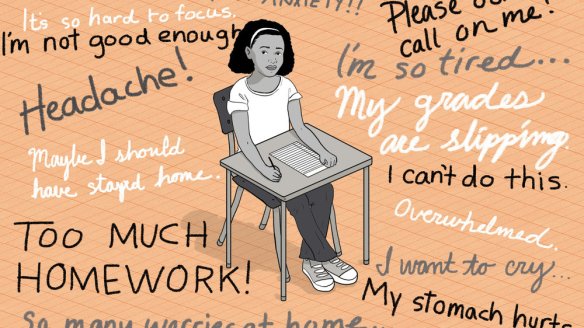
I accept I only have the information as reported here to go on, but knowing how stupid Nick Gibb is both through what he has said previously and the curriculum realities over which he presides, I am not surprised at the truly obnoxious – and upsetting – observations he has made regarding student mental health issues.

The call to increasing the regularity of taking exams as one method for reducing student stress and anxiety is too banal to take seriously, but we have to, unfortunately.

What is extraordinary is this following reported comment:  “Exam pressure has always been part of being at school. Nothing we’ve done has made it worse.” There are so many things wrong with this and it is difficult to know where to start in unpicking its blatant nonsense. Here are a few points:

Nick Gibb makes that all too familiar error of comparing his own school experiences with those of the whole nation’s students. Many politicians latch on to this ridiculous personal anchor. They did for the 30 years I was a teacher and have done ever since. We can presume Gibb had a proclivity to learning and some relative privilege in this with schools he attended and parental/social environment as support.

He is quoted as saying he thrived on the ‘rigour’ of his best educational experiences, one reported example being his obtuse but celebratory comparison of Music being taught precisely like Chemistry in one of the schools he attended. It worked for him – allegedly – so it must work for everyone else. That he clearly extrapolates such ‘rigour’ as a means of preventing students from being anxious and suffering mental health problems is frighteningly lacking in empathy as well as being, quite simply, dumb.

It isn’t just the timings and number of examinations that cause students anxiety, and his idea of starting formal examination in year 7 as a conditioning against this is ludicrously myopic. And that is being polite. I have argued often on this blog that it is the type of examining that matters, not the amount– to broaden the notion – of assessments that can/need to be made. A simple example is the utter meaninglessness of Key Stage 2 English GPS which demands a demanding kind of learning [it isn’t learning, is it?] and pressure to be ‘correct’ where there are no finite answers – other than those required by the prescriptions of a mark scheme only a zealot like Gibb would see as a positive ‘rigour’ rather than, in this example, totally anathema to the realities of understanding how Writing [and thinking] works.

The pressures for students at GCSE in particular, in schools that over many years have themselves become the furnaces of industrial target-setting and, to expand the metaphor, the cauldrons of intense pressure to be melded to these, has been a ‘modern’ phenomena that Gibb cannot compare to his school days nor dismiss as surmountable by students taking more exams.

And the other 21st century pressures affecting students which I surely don’t need to delineate here add yet further incendiary realities to that.

I don’t want to get caught up in my own diatribe so will leave the analysis at that. What I mean is I am genuinely horrified [thought not surprised – an essential paradox with people like Gibb] that he has been so dismissive of student mental health issues and latched onto examining as a method of addressing.

My feelings on this must be shared by countless others with any humane, knowing thoughts. But I had to say something.

NB [8.2.18]: Even yesterday’s Daily Telegraph couldn’t bring itself to endorse Gibb’s ridiculous ideas and instead presented some of the critical backlash.

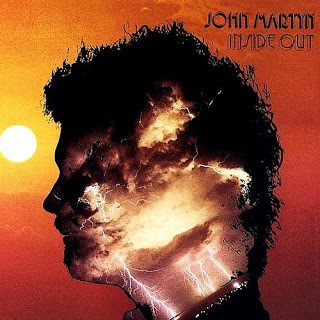
Top Fifty 12: John Martyn – Inside Out, 1973

[Originally posted March 2013]

29

Sublime Inside Out and Anywhere Else

This is a cheat as I have already posted in September, 2011 what follows from the next paragraph [frightening flight of time], but as I recently acknowledged regarding the first three Jimi Hendrix albums – and even perhaps the first three Quintessence albums considering my most recent posts – there are artists whose work must appear in my Top Fifty, and John’s seven studio albums from numbers 5-11 have to be there: omission and inclusion of others at their expense is simply pratting around with variety rather than honest application of feeling as well as actual playing time.

John’s fifth solo album [seventh studio], released in 1973, this sublime collection marks the beginnings of his musical trajectory towards jazzier writing/performance and the use of his voice as a distinctive instrument to match his peerless guitar playing. The songs are bolstered by Danny Thompson’s supreme double bass playing as well as by luminaries like Steve Winwood on keyboards and Chris Wood on saxophone.

First track Fine Lines is a beautiful melodic song in John’s inimitable folk-acoustic style, but the slur in the voice that will become so prevalent across this whole album and all future work has its incipient roots here. Third Ain’t No Saint signals the much more experimental writing too: a jazz-chant about Love [as John writes comically and always somewhat self-effacingly, as if his seriousness shouldn’t be taken that seriously: love…love…love…love…tra la la…triddly dee dee], the voice oozes this word over dancing acoustic riffs with tabla and other energetic percussion provided by Remi Kabaka.

Inverted title and fourth track Outside In makes psychedelic use of the signature Echoplex that John perfected, especially when playing live. This song is gloriously expansive in its guitar range and with Thompson’s bass dancing in and out of the groove. The saxophone puts in layers of slow romantic jazz with John’s punchy bursts of more chanted love, it is love, guitar now echoing and looping its waterfalls of sweet chord sequences, until the voice growls and shouts out in ecstasy. John has spoken of the inspiration behind such a sound:

I don’t think I would have done some of the stuff on Inside Out if I hadn’t heard ‘Karma’ [‘Karma’ by Pharoah Sanders, released in 1969]. The only reason I bought the Echoplex was to try and imitate Sanders’ sustain on my guitar…I pursued the fuzz box and its various accompanying things just to try and get the sustain that you can get from a sax. I just really wanted infinite sustain at the press of a button. And I almost achieved it. And it sounded so sweet to me. And I knew that people would like to hear it because nothing like it was around. If it makes me feel good, I kind of have this touching faith that it’s going to stay with somebody else.

Sixth track Look In is a fuzzed-up rock gem, and the Martyn growl continues to mature, though the song finishes on his delicate best. Beverley is a beautiful instrumental for then wife, with Thompson’s bowed bass perhaps full of lament under the acoustic core and then gorgeous straining electric lead. Eighth Make No Mistake is classic Martyn songcraft but with the voice again working through more range and variation, and this too ends on a love-chant

A love
Love again
A love supreme, divine
Anyway that you want it to be
Love – Its love, its love
Love! Love! Love!
A love supreme, a love supreme

Make no mistake,
Make no mistake, its love
Make no mistake, its love…

30

Penultimate track Ways To Cry is starkly emotive in its honest, complex message If I ever took another woman I was in my need for you/If I ever took another woman I was bleeding for you, and last track So Much In Love With You signs off on a pure-jazz, voice-hazed declaration that not only indelibly brands his love-statement into our aural consciousness, but fully establishes the direction of so much of his future sublime music.

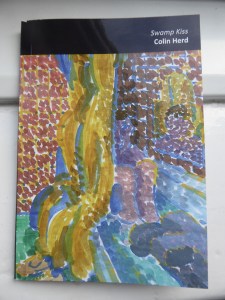
‘Swamp Kiss’ by Colin Herd – The Red Ceilings Press

P1020102

If poetry is metaphor, which of course it often is, then I need to select an apt one to characterise/tag this collection of Colin Herd’s, so I’m going for Pinball Poetry which I trust is suggestively sprightly enough to counter any hint of trivialising.

Because I am not. For me, these poems are – here it comes – shot from their first line to propel their way here, there and everywhere, bouncing from one idea and language encapsulation to the next, often as complete tangents and often as links that are nonetheless surprising: the former exemplified in the scatterings of Poem on a bath mat / Poem on a shower curtain with its richly relentless line after line after line of

‘Hello Yes As Soon As Possible
obsessed with pumpkins and polka dots
all the sweat in and around and over’,

the latter exemplified in a – relatively – extrapolated take on

‘jouissance or puissance?’

from I doubt you want me which also contains two little but likeable jokes on the names Bill and Will.

Yet it could be in the way they are read. Poems like Book Lungs and Here I wriggle with a sunken butt are clear narratives – well, clearish in their linear momentums. My favourite sister’s uncle tells a delightful story.

What is a description anyway in a world that at all levels defies describing? What is truth? It would seem it is all a ‘chewed shape’ and Herd continues to see it appearing and disappearing and reappearing ‘more chewed than you remember’ and so the poetic grasp is a ping from one to the next, sprightly and chewable over and over and over for the reader.

Another bright nifty collection from The Red Ceilings Press, you can purchase here.

Trump Poetry

genius

I am very pleased to have another ‘Trump’ poem published here, and again at the feisty forum of the International Times.

I found yesterday in a reconnaissance through my PC files that I have a body of poetry written in response to The Donald, and I have collected these under the ironic title The Inspiration of Trump. As with Genius, most are found in his own distorted words, themselves a reflection of his – being ironic again – thinking.

I wrote here about the P.E.N. Anthology of Poetry from 1973 and that night I watched the amazing, unsettling programme Nixon on Nixon, In His Own Words on TV – recounted largely about that same year but also into 1974, the words of Nixon himself on the Watergate affair truly frightening in reflecting the same denial and arrogance of Trump today [it is more expansive and complex than this…]. Nixon of course had more guile and inherent intelligence compared with Trump, but it is both astonishing and deeply disturbing that the abuse of power would seem to be as commonplace today as it was then.

What I did wonder was how much poetry was written explicitly about Nixon and Watergate at that time compared with the amount about Trump today. Interestingly, there was only one direct political poem in the ’73 P.E.N. anthology, and that was Michael Hamburger’s poem Newspaper Story.

I did find today this reference to The Poetry of Richard Milhous Nixon, a volume compiled by Jack S. Margolis and published in 1974. These too are found poems taken from the Watergate tapes, so, and not surprising, the methodology is the same. The book is no longer easily available, but three original copies are for sale on Amazon marketplace starting at £166 [or $65 from .com]. Here’s a poem from the book,

IN THE END

In the end
We are going
To be bled
To death.
And in the end,
It is all going
To come out anyway.
Then you get the worst
Of both worlds.

nixon - Copy


No Amateurs in the New Poems of 1973

P1020074

Having to move a bookcase and its contents is a good way to encourage a pause and then a browse of some of those long unread books you’ve taken off the shelves for the shift. I had a quick scan of a 1997 Ambit and then this first of two P.E.N. Anthologies, the other from 1975.

I thought it would be interesting to remind myself [it could well be the 40+ years since I really looked] and write about what was ‘new’ in 1973, hoping to find some as then undiscovered and now celebrated poet. I lose track of how old – excusing the obvious opposite – established, currently famous poets are, but a quick check on the names collected revealed these were already well-established writers, and the work selected was therefore ‘new’ to that year and, apparently, unpublished. These luminaries will give an indication of that revelation: Fleur Adcock, W.H. Auden, Charles Causley, Douglas Dunn, D J Enright, Gavin Ewart, Thom Gunn, Seamus Heaney, Ted Hughes – and stopping that early in the alphabet suggests what will follow in more ways than the surname order.

All good poems, by the way, but I needed another angle on what I might write, and it came timely in Stewart Conn’s Introduction and in this opening line to the intro proper,

‘A marked polarisation is evident in English poetry, and the public’s response to it, today’

and I will pick out this other line from a little later,

‘The trend is healthy so long as it is for the right reasons, and provided the poetry’s real strength underlies local colour’

It should be obvious from these two extracts where this is going: I am of course referring to the very recent Rebecca Watts PN Review article ‘The Cult of the Noble Amateur’ and the subsequent furore this has generated, obviously the forensic blog response from Hollie McNish and the debate’s reporting in, for example, The Guardian, including the Dan Paterson response, as well as attendant social media commentary, and, among many others I have read, the Soraya Roberts The Baffler article ‘No Filter’ which you can read here [and I link because this might not be as obvious as the others – apologies if I am wrong].

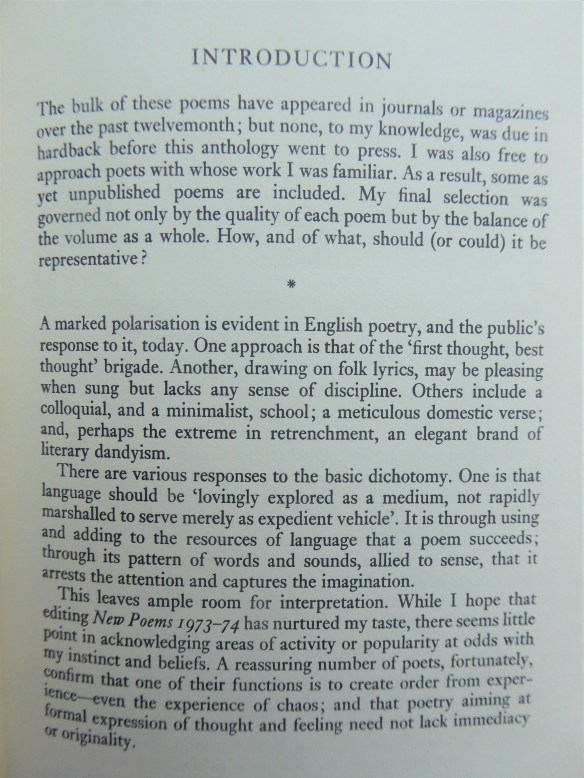
No, I am not entering the debate and not endorsing any views referenced here. Chicken? Probably. But I was fascinated to see the parallels – no more than this – in Conn’s Introduction which I will post in full for you to read if you will, as well as his further observations on how poetry/writing engages with its ‘new’ world of 1973, the parallels with today quite captivating as well,
P1020068

P1020069

P1020070

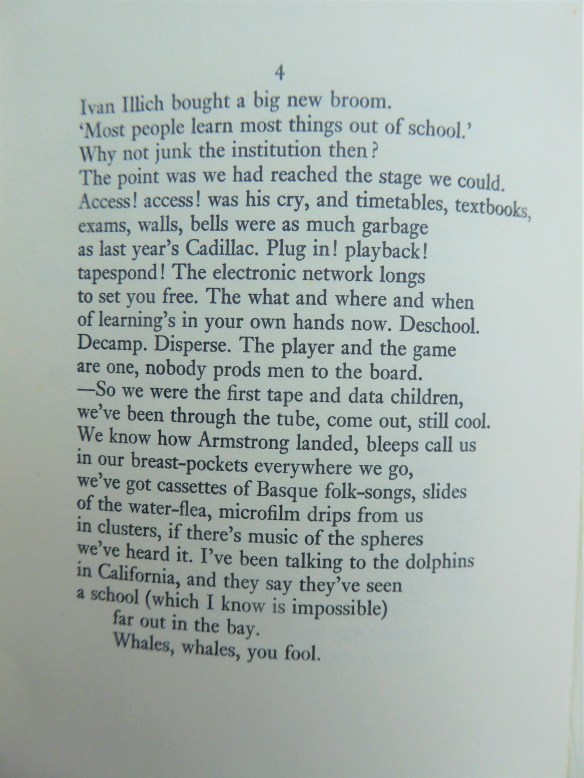
I want to select one poem as illustration from the whole, and this has proved difficult, most being today quite well known. In the end I went for the following from Edwin Morgan, a favourite writer of mine, one of four poems from a sequence called School’s Out. In the first, Morgan uses Plato as his main reference point; in the second it is Milton; in the third – and I really enjoyed this – it is Summerhill’s A.S. Neil, and in my chosen fourth it is Ivan Illich, but more important [and in an echo of Conn’s introductory comments on the impact of the then modernity] how in education, like poetry, we embrace as subject matter and indeed means of production the new technologies and/or similar,

‘We know how Armstrong landed, bleeps call us
in our breast-pockets everywhere we go,
we’ve got cassettes….’

and whilst these references, and those you will read next in the full poem, seem and are dated, it is what they represent and mean that still reverberates, though I particularly like Morgan’s humorous final take on this,
P1020073


Falling Behind in the Pencil Grip

In the 2017 Ofsted report Bold Beginnings – as if an assertive alliteration generates meaning – it is concluded that many 4 and 5 year old reception class children are ‘falling behind their peers’.

While the report recognises the importance of listening to ‘stories, poems and rhyme’ – though this seems the oddest trilogy, and it doesn’t initially mention writing stories and poems – the conclusion seems to be that this, and other aspects of learning at this stage, aren’t formalised enough:

The EYFS profile (EYFSP)3 is a mechanism for statutory summative assessment and if this doesn’t demonstrate that the perceived best learning is right, children are ‘falling behind’.

And when the report does mention children writing, this is the focus:

In schools visited where writing was of a high standard, the children were able to write simple sentences and more by the end of Reception. They were mastering the spelling of phonically regular words and common exception words. These schools paid good attention to children’s posture and pencil grip when children were writing. They used pencils and exercise books, while children sat at tables, to support good, controlled letter formation.

‘Pencil grip’. There’s another title for a new found poem. But for now, here is what I found in the report’s opening Executive Summary:

Reception Years

It was
comprehensive

this falling
behind

their imagination,
painful and

unnecessary
at the

heart of the
curriculum,

a missed
opportunity

for their
life ahead –

our children
spelling

spelling,
selling synthetic

preparing for
Inspection, exposed

to critical
consequences

in their stories
and poems years.