Nebraska 26: ‘Lines in Late March’ by John G. Neihardt

I whistle; why not?
Have I not seen the first strips of green winding up the sloughs?
Have I not heard the meadow-lark?
I have looked into soft blue skies and have been uplifted!

Where are the doubts and the dark ideas I entertained?
What have I caught from the maple-buds that changes me?
Or was it the meadow-lark— or the blue sky— or the strips of green,
The green that winds up the sloughs?

I sought the dark and found much of it.
Is there in truth much darkness?
Have the meadow-larks lied to me?
Have the green grass and blue sky testified falsely?

I want to trust the sky and the grass!
I want to believe the songs I hear from the fenceposts!
Why should a maple-bud mislead me?

Reproduced from Lyric and Dramatic Poems by John G. Neihardt. Copyright 1926 Macmillan Company. Copyright renewed 1954 by John G. Neihardt.

I forget my precise – if it ever was – rubric for posting ‘Nebraska’ poems. Initially, they referenced the state directly or places therein, and then it seems relevance was the poet’s link to Nebraska. All will suffice. Neihardt was a one-time resident in Nebraska as well as Professor of Poetry at the University of Nebraska.

I like the challenge of the questions here and the defiance within that.

Showing a Heifer

tractor

I haven’t of late written anything specifically for posting here on the blog, so I will now.

But it won’t be about education or politics. No creative writing ideas either. Not another poem.

It is about showing a heifer.

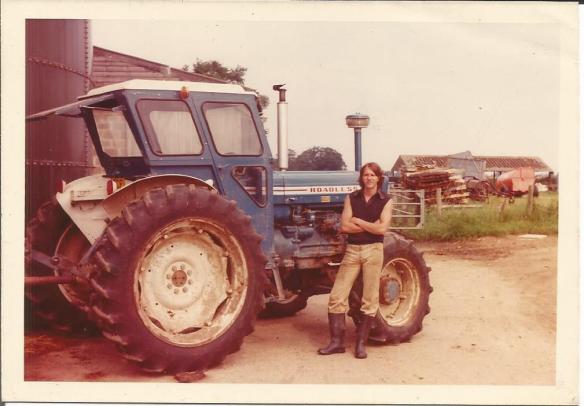
In the late ‘70s I worked on a very large farm in Suffolk for three years. In this time I became a highly skilled tractor driver and fork-lift aficionado as well as a professional irrigater from laying basic moveable sprinkler system pipes to using the latest [at that time] equipment like a self-propelled ‘Dolphin’ system and a ‘whirligig’ – not a brand name – huge helicopter-arm irrigation machine driven onto the fields to spray great gushing circles of water. I also did so many more rustic jobs from winter potato riddling – including bagging, threading and stacking 112lb hessian sacks of spuds – to winter man-harvesting of sugar beet with a special handheld puller and knife.

Then there was feeding the animals, especially early morning tractor-filling troughs for the cows with maize silage [the glorious sweet-rot of it]; mucking out the animals – tractor with front loader in the large sheds and by hand in the smaller; chainsaw felling of trees for making into fencing posts; farm fencing, including putting in our own posts [no concrete used] and bracing corners with natural, hand-axed wood wedging; making a horse lunging ring by hand and sight…

…and there I am lyrically waxing, which isn’t genuinely what I meant to do, but it is fun to recall and I am proud of the range of experiences and skills I acquired, but rather than continue with accounts of more, I should mention a few jobs I didn’t do, like

milking cows; showing heifers.

That is until The Suffolk County Show one summer of seventy something. I have no recall how I was persuaded to or why, but I was asked if I would show one of the farm’s Frisians at the Suffolk County Show and I agreed, probably because it was a day off from the routine. Something new. Something simple.

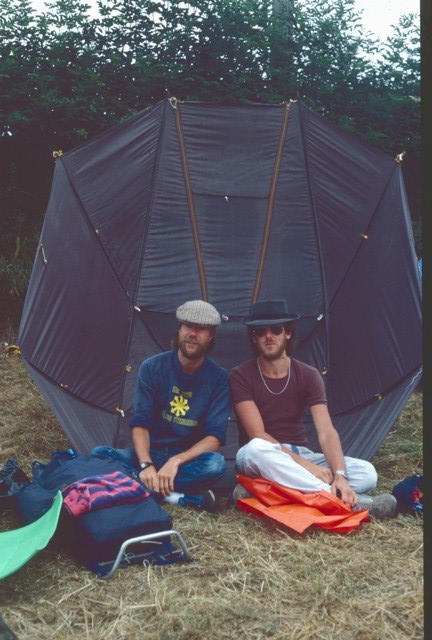
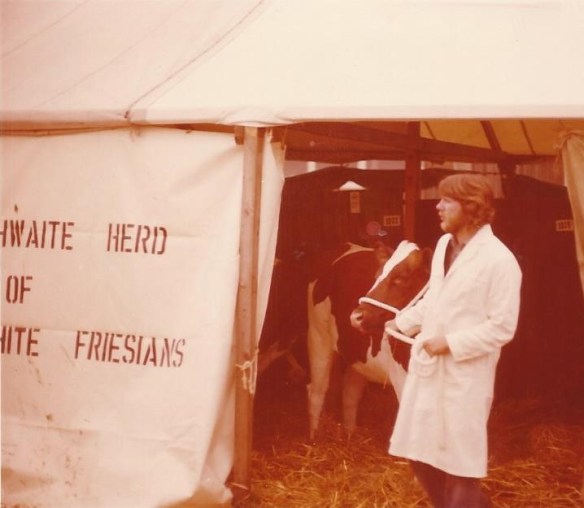
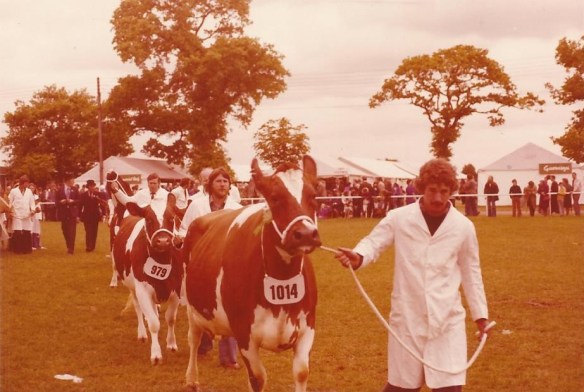
I also have no other memory of events leading up to the showing or anything else to do with the Show other than that showing, which I will recount in a minute as I remember this very well, but I do have these pictures of me at the tent and then with my heifer, number 979, right at the beginning of my showing her in the Show ring in front of quite a few people, maybe in the hundreds around the entire four sides of the arena:
1st cow - Copy

2nd cow - Copy

Not in either of these two pictures, but I think at the same time, a young boy between I would guess and remember 10-12 years old, was leading and showing a bull. A full-grown massive bull, being led by the boy holding on to the bull’s nose ring with a rope, a rope similar to the one I am using to lead my heifer.

Events like these have their traditions and protocols and one of these is for those doing the leading/showing to wear a clean white coat, and I am wearing mine. You can see the judges in their smart suits and bowler hats in the background. All very prim and precise.

The rest is history and that is all I remember. Nothing between the second picture and the only subsequent event I vividly recall and which, thankfully, was not photographed – or perhaps it was and I just don’t have a copy. My heifer decided to go independent. Remember – in all the time I had worked on the farm and of all the highly skilled and often quite complex, demanding jobs I had perfected, showing a heifer was not one of them. I had never walked a heifer. I didn’t this time either, not very far.

The heifer took off. My one and only mistake – I don’t believe I made any error whatsoever to prompt the heifer to run – was to hold on to the rope. Hold on with the strength the many demanding jobs on the farm had nurtured me physically to do. So I was running with the heifer. Do you know how fast a heifer can run? It was certainly much faster than me. But I held on. I even held on when I tripped and fell and was dragged to the ground.

Can you imagine how much shit is lying on a showground where animals are being paraded all day? That khaki, liquid green primarily of cows? And do you remember the white show coat I was wearing?
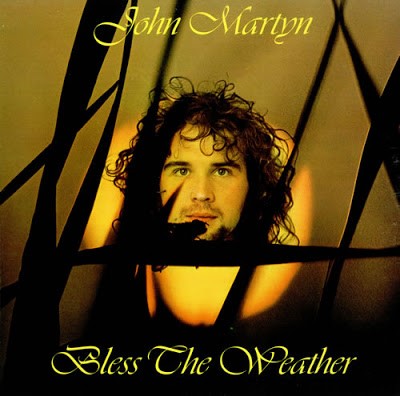
Top Fifty 9: John Martyn – Bless the Weather, 1971

[Originally posted April 2013]

18

If I was only allowed one album out of all that I have and even all that are available from forever, it would be John Martyn’s Bless The Weather. And if similarly I was only allowed one song out of all those available in the infinite musical universe, it would be Head and Heart from this album.

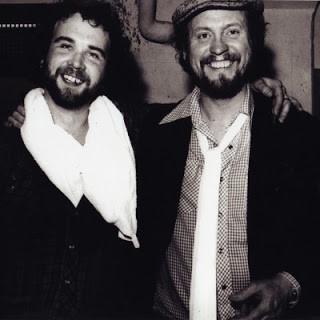
This third solo album presents John at his sweetest – the sweetest songwriting, the sweetest vocal and the sweetest guitar playing, all as on opener Go Easy with its honeyed guitar chords and the youthful vocal register so different to the gruff slur and growl of John’s eventual vocal instrument. Second and title track Bless the Weather is of course a classic in the broadest sense but also in Martyn’s oeuvre, the distinctive slap guitar playing of John himself and then the accompaniment of great pal and genius double bass player Danny Thompson, a match made in whatever sonic heaven oversees such musical gifts bestowed on this aural world and where John now roars and jokes in a Scottish accent utterly incomprehensible and yet innately and cosmically endearing. The expressions of emotion in both these opening tracks reflect all of the happy hope and positive romanticism for life and love we all then had a right to wish for and now embrace  wherever it was achieved and still endures – whatever loss being tempered by the beautiful expression of that initial idealism. [Photo: John with Danny]

19

Third track Sugar Lump reminds us that John was also a rocker and a rogue – the boogie rhythms, the punchy harmonica and the guitar licks presenting his other great musicality; the lyrics reflecting his naughtiness, his wicked charm [of course there’s a long blues tradition of lyrical innuendo aped here, but John was also hilariously obscene when performing, especially in his expletive-laden banter with Danny on stage]: Get down mama to my sugar cube/Get down mama, won’t you try to make it move, my sugar cube.

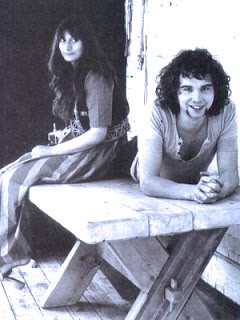
Tracks four and five, respectively Walk To The Water and Just Now, are further examples of the felicity Martyn had with prettiness in melody and sentiment at this time, the former graced with the surprise of steel drums, the latter the simplest and yet sweetest strummed guitar with piano accompaniment presenting a gorgeous song, reminiscent of a folk sound honed on his two previous albums with then wife Beverley. [Photo: John with Beverley]

20

And then there is sixth Head and Heart, a song gently but profoundly honest in its expression of love where fear is so much a part of its declaration. The guitar work is again classic Martyn with the slap and pluck of the rhythm and then quick lead licks, Danny Thompson bending his notes and running them up and down in that magical partnership, and the lyrical poetry of lines like

Only got my fate
A bird above you
You know we all get scared from time to time

Love me with your head and heart
Love me from the very start
Love me with your head and heart
Love me like a child

Seventh is the plaintive beauty of Let The Good Things Come with Beverley echoing lines in the background, and eighth is another in the treasure chest of these sweetly crafted gems, the tender Back Down The River – guitar and vocal in the sweet symbiosis of this folk quintessence and time in Martyn’s career.

21

Not really true – Island was shrewd and commercial enough to see the greater potential in John going solo; and it is technically his third solo album

The penultimate instrumental Glistening Glyndebourne introduces the jazz aura that would become an increasingly strong influence in Martyn’s writing and performance, but more importantly, it introduces the electro-acoustic cosmos of Martyn’s guitar world, here presented through the echoplex prism which electronically echoed and repeated and swirled the beautiful melodies and skills of John’s playing. As I have written elsewhere, it was at Essex University in Colchester where I first heard John playing with his echoplex, having gone to see and hear this acoustic folk god which Bless the Weather had introduced, when at some stage in the set and suddenly without warning John flicked a switch somewhere on a machine and in my and most other unsuspecting heads, and this psychedelic tsunami of echoing sound surged through the PA which, as they say, blew me away. If there was one musical experience that I could relive, it would be this special and extraordinary one which to this day amazes in its recalled surprise and joy.

The album closes on another surprise, John’s simple version of Singin’ In The Rain with all its folk jollity and skill in the guitar playing.

It must be obvious that even though I am not going to produce a chronology for my whole Top Fifty – whenever eventually finished – this album will definitely be at the top. It is there first and foremost for the music, but also for the memories of a time in my life where such perfection in that music and honest joy in its lyrical expressions encapsulated genuine content. The encapsulation also of full awe – no diminishing qualifier for this album!

22


Jenny Joseph and ‘Is That the New Moon?’

P1020006

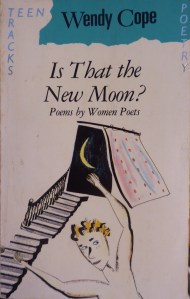
Many years ago I used to teach the poetry anthology Is That the New Moon? Poems by Women Poets to my sixth form English Literature students. Edited by Wendy Cope, I imagine this was a coursework text, but I can’t actually remember for certain.

The poems collected were, and still are, dynamic and challenging. Published by Lions Teen Tracks in 1989, these were aimed at teenagers – Wendy Cope states in the Introduction girls aged 13-16, though I’m not convinced that was a sensible target audience, and she does additionally write I see no reason why it shouldn’t also be read by women, or by men and teenage boys – and they touched then on ‘issues’ still relevant and vibrant today, taking on a resonance in the contemporary light of 2018, not least in this popularly ascribed ‘Year of the Woman’.

But this isn’t my key reason for writing now. I am referring to this book on the day after the death of Jenny Joseph was announced. Her famous poem Warning is, not surprisingly, one of those collected in the book.

I had such fun teaching and working with students on this collection. One of my fondest memories is of the posters [they were much more than this] small groups of students produced for display to convey the significance of the poem they had chosen to study and exemplify primarily through a visual representation. If I can find the photos of these I will post at a later time.

The collection includes classics like Maya Angelou’s Still I Rise, Grace Nichol’s Beauty and Sylvia Plath’s Mirror, but the poems I recall creating the most impact, for reading and study, were these:

Age to Youth – Judith Wright
Between the Lines – Carole Satyamurti
The Buddha’s Wife – Ruth Silcock
Comprehensive – Carol Ann Duffy
In the Men’s Room(s) – Marge Piercy
Kissing – Fleur Adcock
Malta – Helen Dunmore
Nice Men – Dorothy Byrne
Translations – Adrienne Rich
Warning – Jenny Joseph

For most of those recalling the passing of Jenny Joseph yesterday, mainly on social media, Warning is the poem they often cite and celebrate, and quite rightly so.

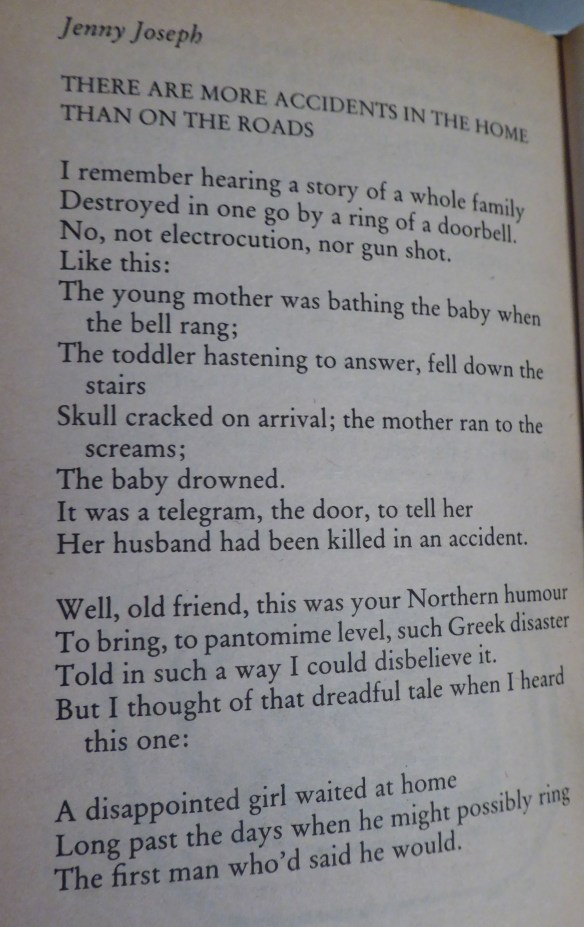
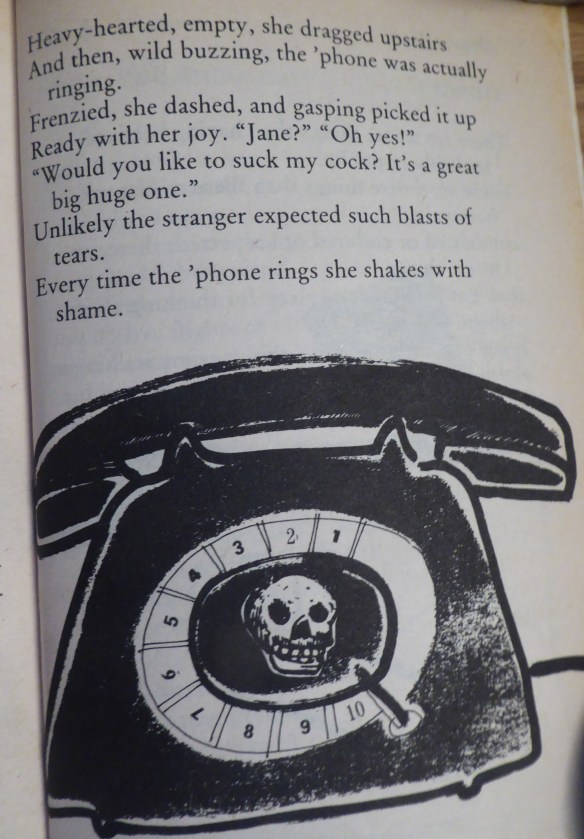
But there is another one from Jenny Joseph in the Cope collection, and I think it confirms what a feisty writer she was beyond the poem for which she will be most remembered:

P1020004

P1020005