Top Fifty 8: The Byrds – Ballad of Easy Rider, 1969

[Originally posted June 2011]

17

Like many, I first knew of The Byrds in the mid 60s through the singles Mr. Tambourine Man and Turn! Turn! Turn!. I don’t believe I followed their music until hearing the beautiful Dolphins Smile on the CBS The Rock Machine Turns You On album, and then Gunga Din from the later CBS Fill Your Head With Rock album, influential compilations I have written about before.

Equally unsurprising is how it was the film Easy Rider that introduced me to the song and album of the same name Ballad of Easy Rider, not ‘unsurprising’ because of the obvious echoing, but because that film too was so influential on my teenage years and that revolutionary sense of yearning for some idealistic freedom and believing this was repressed by a brutal establishment. The film exploited that youthful obsession with a stunning soundtrack, a road-movie narrative that took in the explosive contrast between the communal joys and perils of such a search, iconoclastic acting from a spaced-out Hopper and satirical Nicholson, and the redneck ending of the fireballed chopper flying through the air to ignite a generation’s angst and anger against the hillbilly hicks who represented that repressive establishment in its dumbest, most ruthless form.

The story goes that Dylan wrote the following napkin lines ‘The river flows, it flows to the sea/Wherever that river goes, that’s where I want to be/Flow, river, flow’ and this was given to Roger McGuinn to turn into a song. Whilst received, its a repeated enough tale to be taken as true and I don’t know any more than what I have read so won’t pursue. That McGuinn turned this into a beautiful if simple hippie anthem is enough for me, and it is a singalongsong I love to sing as I did today in the car when reminding myself that this album has to be in my top fifty, partly because it’s The Byrds and a prime example of their ‘west coast’ sound, but also because three songs from the album have always featured on any favourites’ tapes of harmonious music I compiled before moving on to cds, where they still appear.

The three songs are Ballad of Easy Rider, Jesus Is Just Alright and Gunga Din, the latter a Gene Parsons’ composition with his lead vocal. And what is surprising is how these three songs are probably the only ones I really know and yet they represent the whole album for me and it’s special place in my notional top fifty. Listening today I was reminded how superb the whole album is, with the Dylan cover It’s All Over Now, Baby Blue, for example, and the Guthrie cover Deporte [Plane Wreck at Los Gatos] as well.

And now I’m going to have to go and watch the film. It still gets to me, after all these years, whatever its simplicities and manipulations. But the title track endures and it’s amazing how that naivety in the lyrics doesn’t date like the film nor other nostalgic dreams. Strength of a good song, and music in general.

 

Mr Fiction

camp david

Mr Fiction
is speaking

There is a
wolf at the door

he claims
growling

It is making
fake news

gnawing at that door
we know

making a crack
we hope

It’s in his
imagination

he imagines
he defends

his mental
imagination

Mr Fiction
is speaking

Top Fifty 7: James Taylor – Sweet Baby James, 1970

[Originally posted April 2012]

14

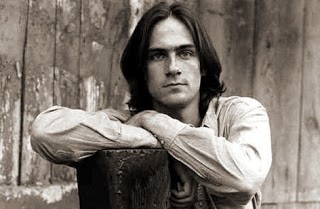
James Taylor

Two interesting factors bear on this posting – firstly, it is my 26th in this selection of a top fifty which is hardly random yet can never be complete as it is impossible to definitively make such a selection, but I’m half-way through the effort and delighted to be arriving at this wonderful choice; and secondly, when my youngest daughter visited recently and I was playing a live recording of early Taylor she complained that it reminded her of Sundays when she lived here and I was working as a teacher: hopefully not entirely hating all Sundays at home, but somehow, perhaps, equating listening to Taylor being played with my probably marking and not being attentive enough – it will always be a regret as a family man but a consequence of teaching – whilst also her having a natural disinclination for Taylor’s softrock material and often laconic singing style.

As a huge fan – clearly to this day – my continual playing in the house always soothed and pleased me! Sweet Baby James, Taylor’s second solo album [his first James Taylor was recorded and produced by Apple Records, with JT the first non-British artist signed to the label] represents everything that is special about him as a singer/songwriter: superb vocal and phrasing, distinctive finger-picking guitar style [he trained on the cello], and his songcraft. Songs like Sweet Baby James, Sunny Skies, Country Road, the clever cover of Oh Susannah, and the hit Fire and Rain are recordings that resonate as folk classics today as much as they were fresh and stand-out when first heard. Some of the brilliant musicians involved in the recording of these songs are: pianist and gifted contemporary songwriter Carol King; guitarist and close friend Danny Kortchmar; the great long-haired and long-bearded bassist Leland Sklar, and Randy Meisner.

15

The folk road is what the acoustic guitarist mostly treads, but Taylor is in my view also a great blues/R&B singer, revealed in the other great track from this album, Steamroller. Performed and sung live, Taylor plays a mean electric guitar, but his vocal is what excels as it exploits his full range and revels in the blues inflections on great lines like churning urn of burning funk. In early live performances of this Taylor mocks the heavy machinery of the lyrical allusions, but it seems today an unnecessary self-effacement because it can be such a stonking live number [and Taylor’s soulful singing range can be heard on his fine version of Marvin Gaye’s How Sweet It Is (To Be Loved By You)].

Although that unique vocal is just showing the occasional signs of frailty on the most recent live examples, I do feel Taylor’s voice has matured over the many years of his career where so many other singers can lose theirs. When he is singing any of the tracks from this great album, there is always the most remarkable triggering of memory of their time – and that applies to millions of fans and listeners – both in the connection those dominant songs have to that time and in the seamless vocal transition across the years of this significant musician. Long live Sundays and all others whenever and wherever he is played [with the caveat that not when my daughter is around….].

16

Poetry Reviewed 2017

Poetry collections I have reviewed in 2017:

Ian Seed – Italian Lessons, Like This Press

Nikki Dudley – Hope Alt Delete, Knives Forks and Spoons Press

Jim Burns – Confessions of an Old Believer, Redbeck Press

Okla Elliott – The Cartographer’s Ink, NYQ Books

Luke Kennard – Cain, Penned in the Margins

David Baker – Scavenger Loop, W.W. Norton & Company

Rupert M Loydell – Dear Mary, Shearsman Books

Lemn Sissay – Gold From the Stone, Canongate Books

Adrian Mitchell – Ride the Nightmare, Jonathan Cape Ltd

Carrie Etter – Scar, Shearsman Books

Jim Burns – Solid Flesh for Food 1, concretemeatpress

Daniel Y. Harris and Rupert M. Loydell – The Co-ordinates of Doubt, Knives Forks and Spoons Press

Ruth Valentine – The Grenfell Alphabet, self-published

Ted Hughes – A Solstice, The Sceptre Press

Peter Reading – Water and Waste, Outposts Publications

Roger McGough – various ‘early’ collections, mainly Cape

James Davies – Stack, Carcanet

Rupert M Loydell – Talking Shadows, Red Ceilings Press

Click on a book title to read review. I think the poetry collections actually published in 2017 just shade the balance, but a number of the reviews are of older books, some significantly so.