‘Love Letter to an Imaginary Girlfriend’ by Kenny Knight – Shearsman Books

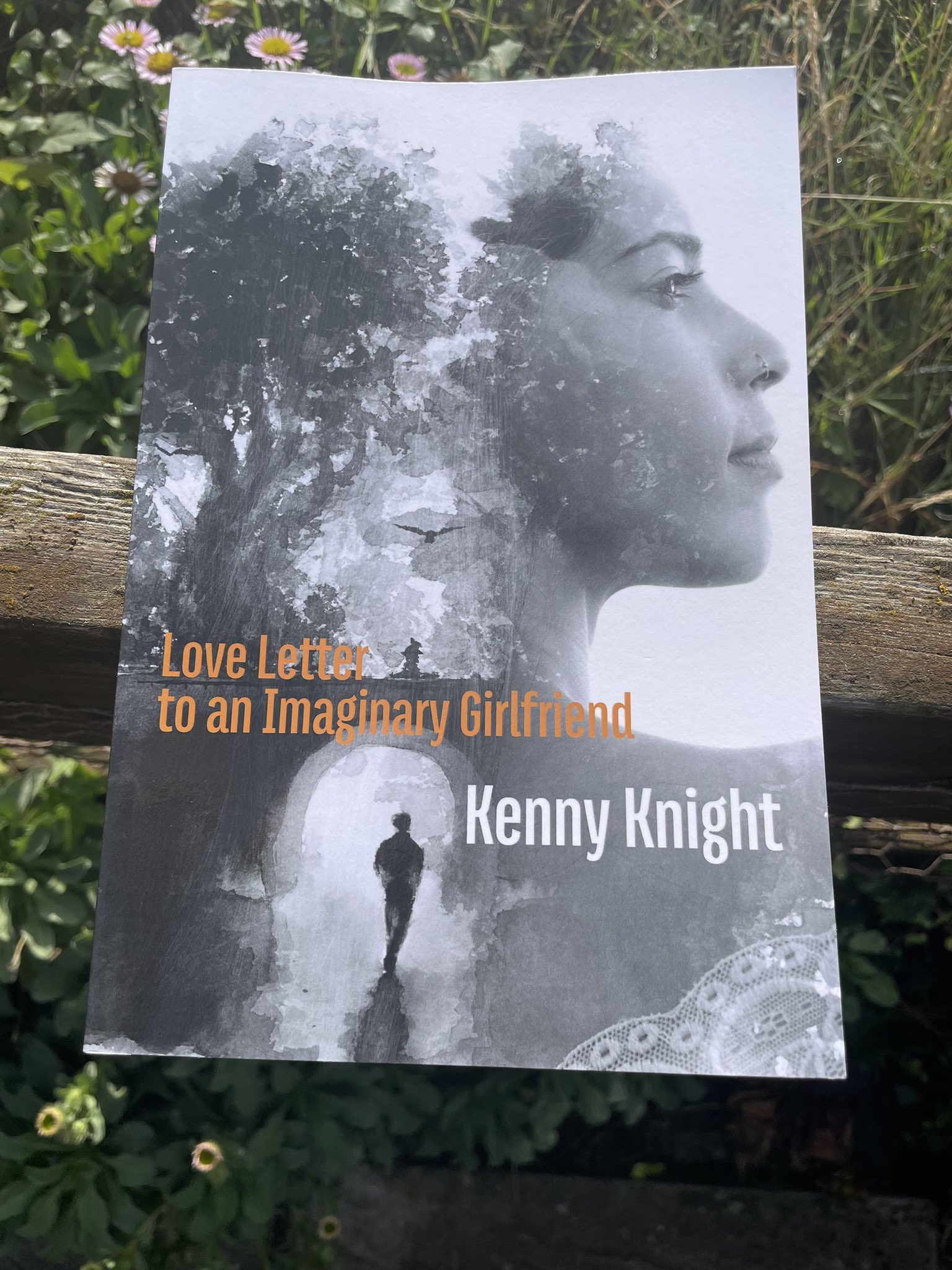
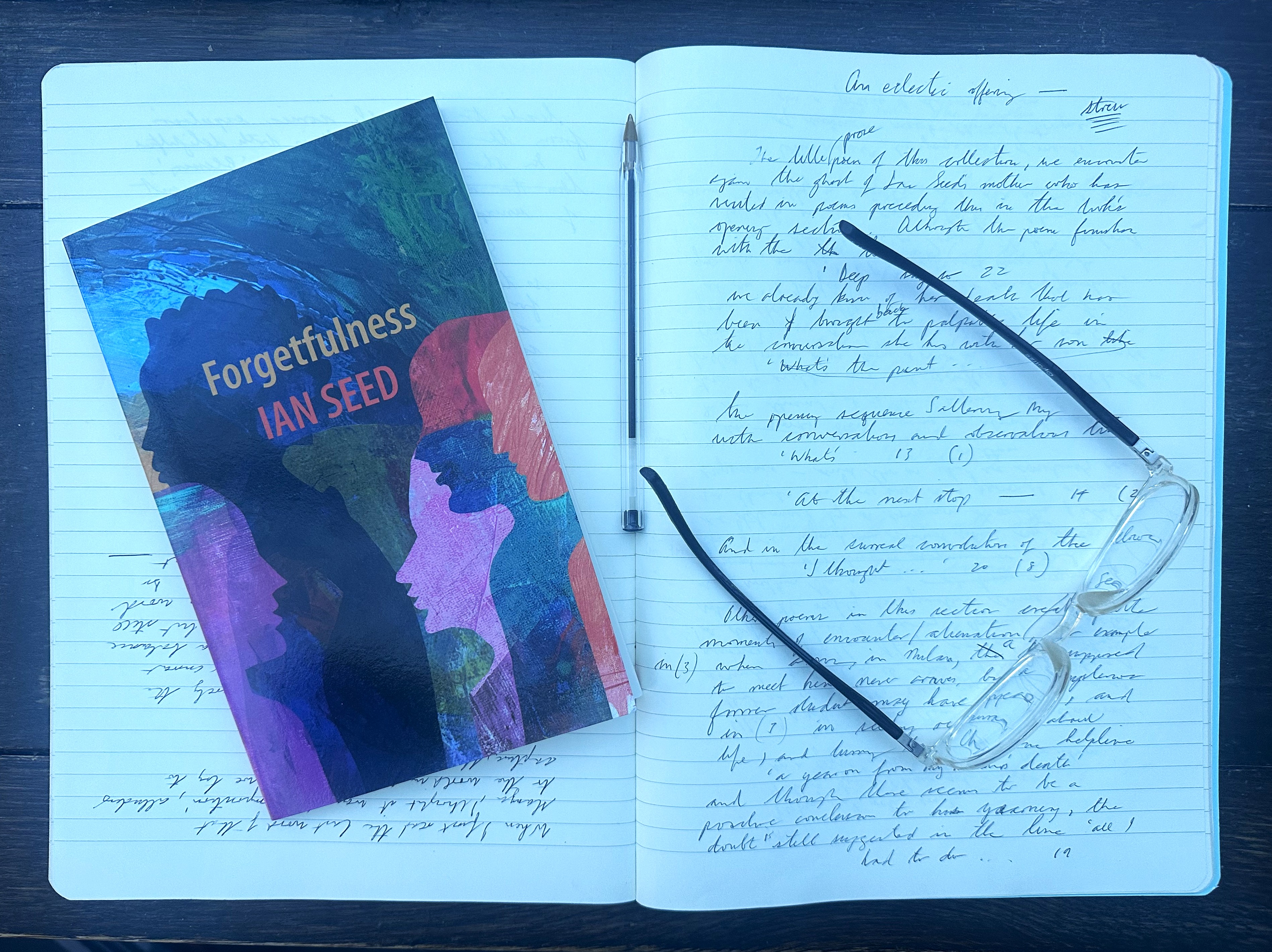
I eagerly consumed Love Letter to an Imaginary Girlfriend by Plymouth poet Kenny Knight last week and it has been one of the more enjoyable of my recent readings. There is an accessibility that I like – a storytelling that riffs its way through obvious personal nostalgia with literal references (e.g. namechecks of music, people, places) and then the rollout of delightful surreal tangents and other poetic explorations.

I haven’t read Knight’s work before, but with this Shearsman Books collection one quickly becomes familiar with that narrative style – the narrow, linear move through content with its repetitions and asides – and also the sense of who he is: as well as for me, the constant touchstones of shared experience because we are the same age (Knight 73, me 70) with his many references to the music I mentioned just now and so many names, places and historical events.

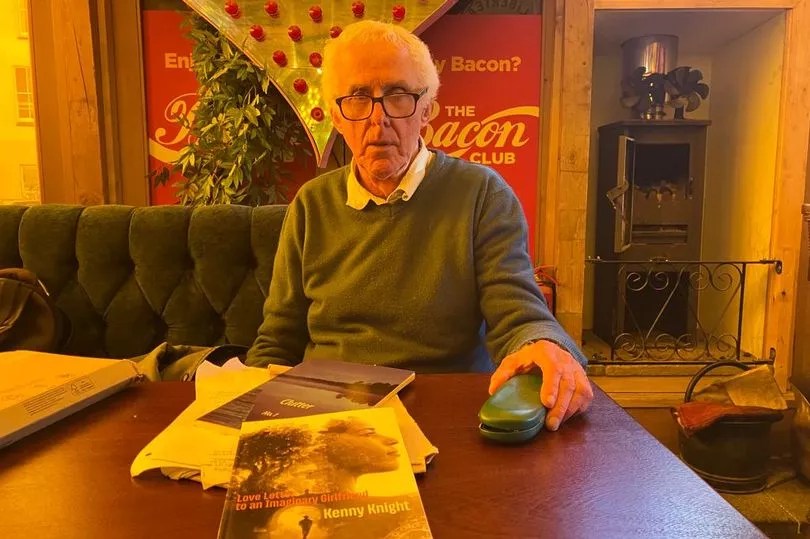
(Image: William Telford)

There is in fact a glossary for this collection detailing ‘Plymouth and its environs’, ‘cultural references’ and musicians/bands. It’s easy for someone my age to immediately anchor onto a reference of Country Joe and the Fish and therefore that era, but I found a perhaps more personal shared liking with the mention of Mike Cooley and Patterson Hood from a more contemporary Drive-By Truckers (but why no Jason Isbell, Kenny?). And I’m with him on Alice in Chains. To be playfully pedantic, I’ll note that he fails to put The 13th Floor Elevators in his glossary which does appear in the poem On Reaching a Hundred.

The wonderful long poem Dicing with Room Numbers makes continuous reference to a range of music/musicians like Chuck Prophet, Bill Callahan, Buddy Holly, Ornette Coleman and so on before branching out to TV, poets and Amazon (as in the commercial conglomerate outlet) links. It ends with,

‘I spin the roulette wheel
with my lucky left hand
which takes me to a talk
on the Plymouth Poetry Mafia
the roulette wheel is still spinning
tell me if it stops on Geoffrey Hill
or Eric Dolphy.’

and this is a good example of that riffing through memories, realities, imagination.

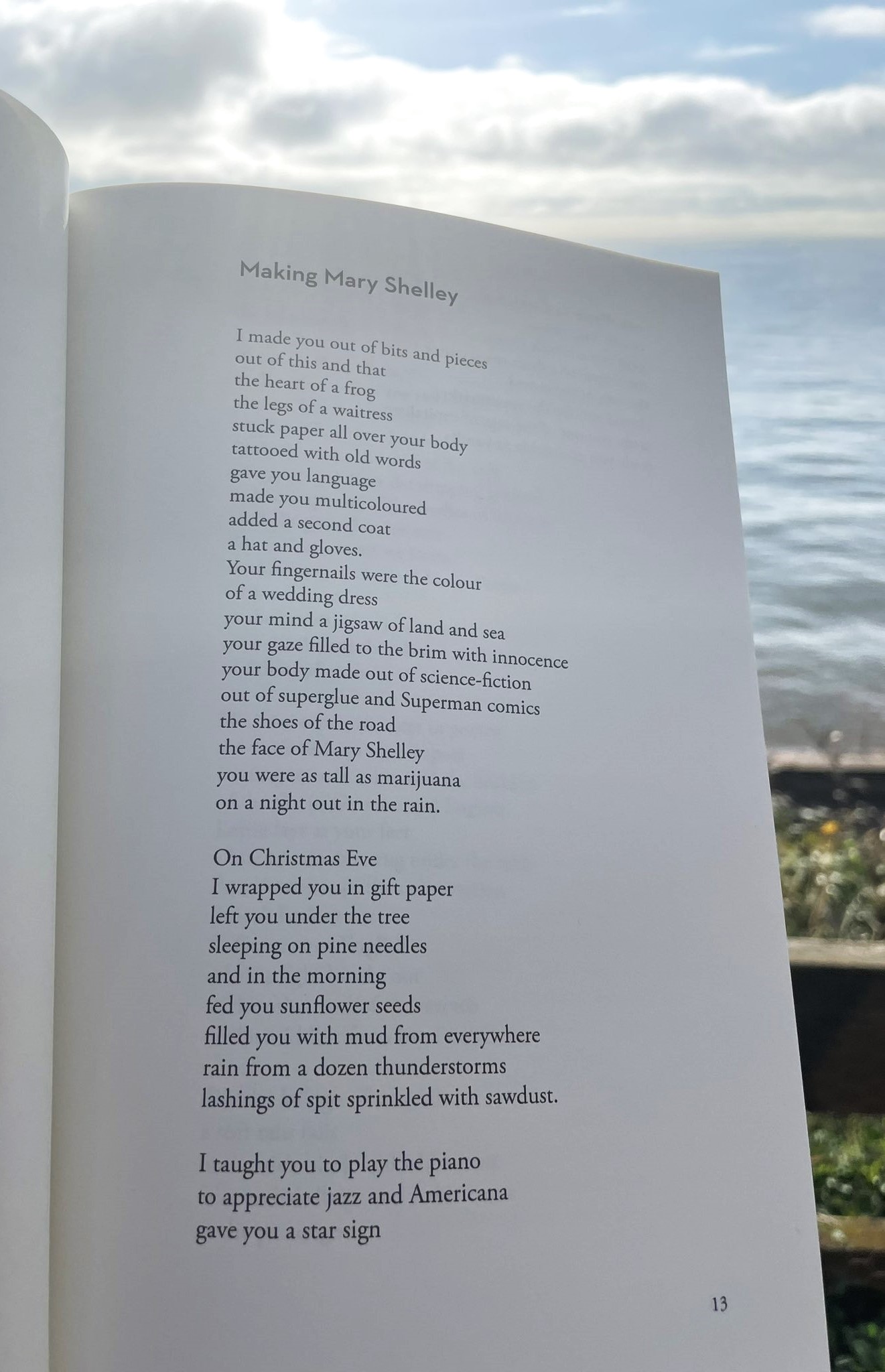
I read this collection last week when away from home, at Dawlish and nearer to Plymouth than from where I reside here in East Devon, and living as I do near the seaside/coast is another shared experience with Knight. In the midst of my reading, I did tweet his poem Making Mary Shelley as an example of my early appreciation/celebration and referred then to the ‘incantatory narrative’ which is a different take on ‘riffing’! Seeming apt, I took the snaps of this poem outside with the sea as backdrop,

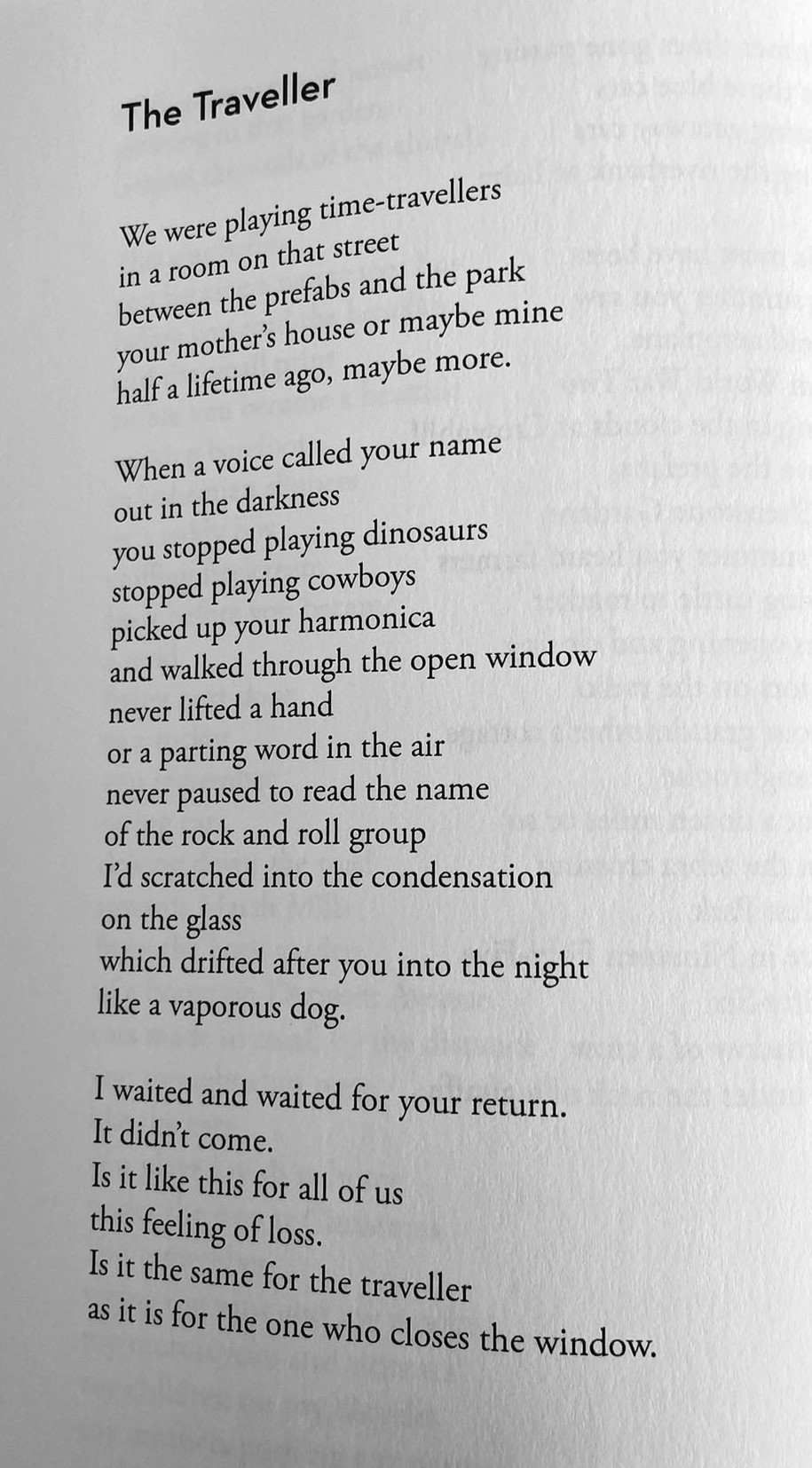
Continuing with my full engagement, I also later tweeted his poem The Traveller, referring to finding it emotive. Like so many of Knight’s poems in this collection, he is nostalgic and continually reflective. References to childhood dominate much of the content, and this is an obvious element of my personally feeling ‘a sense of who he is’. In the poem, literal and figurative storytelling paints a plaintive picture and it resonates with that ‘feeling of loss’,

The autobiographic in these poems matters, to me at least. It’s a fine line, isn’t it, the ‘I’ in poetry informing or engaging or alienating the reader? Too much and there is a self-indulgence, obviously. I think Knight presents the perfect balance because there is in this collection its seamless thread of the apparently real and the delightfully imaginative refraction of this.

I’ll conclude on my own self-indulgence, which moving beyond it, reflects the palpable engagement I have had with Kenny Knight’s poetic storytelling. I researched online Knight as poet, and in addition to discovering other work of his I’ll want to read, there was an article about him in Plymouth Live from 4th December, 2023.

With a dramatic headline and sub-headline – ‘Plymouth man laughs at pain after shattering diagnosis / Kenny Knight lost the use of his eye but it didn’t stop him going on to achieve great things as a writer’ – we are informed of his having surgery on his left eye in the mid-80s which led to loss of sight in that eye. There is more detail on this which I won’t pursue here, but also the following observation which proudly describes Knight as,

‘one of the city’s most respected – and even somewhat famous – writers, with three collections to his name, work in numerous publications, and appearances at literary and academic events.’

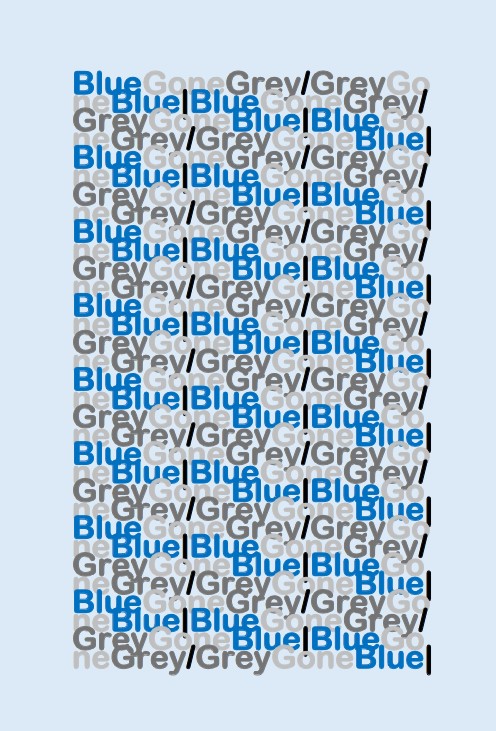
When later reading the poem Blue Gone Grey, this seemed to me a direct reference to his impaired sight and I was especially moved by that autobiographical ‘knowledge’ as context: a further depth to a reading that would otherwise have still impacted. I do think the knowing adds layers where the poem is witty (‘I could see Blind Lemon Jefferson’) and suggestive (‘four blue eyes gone to cloud’),

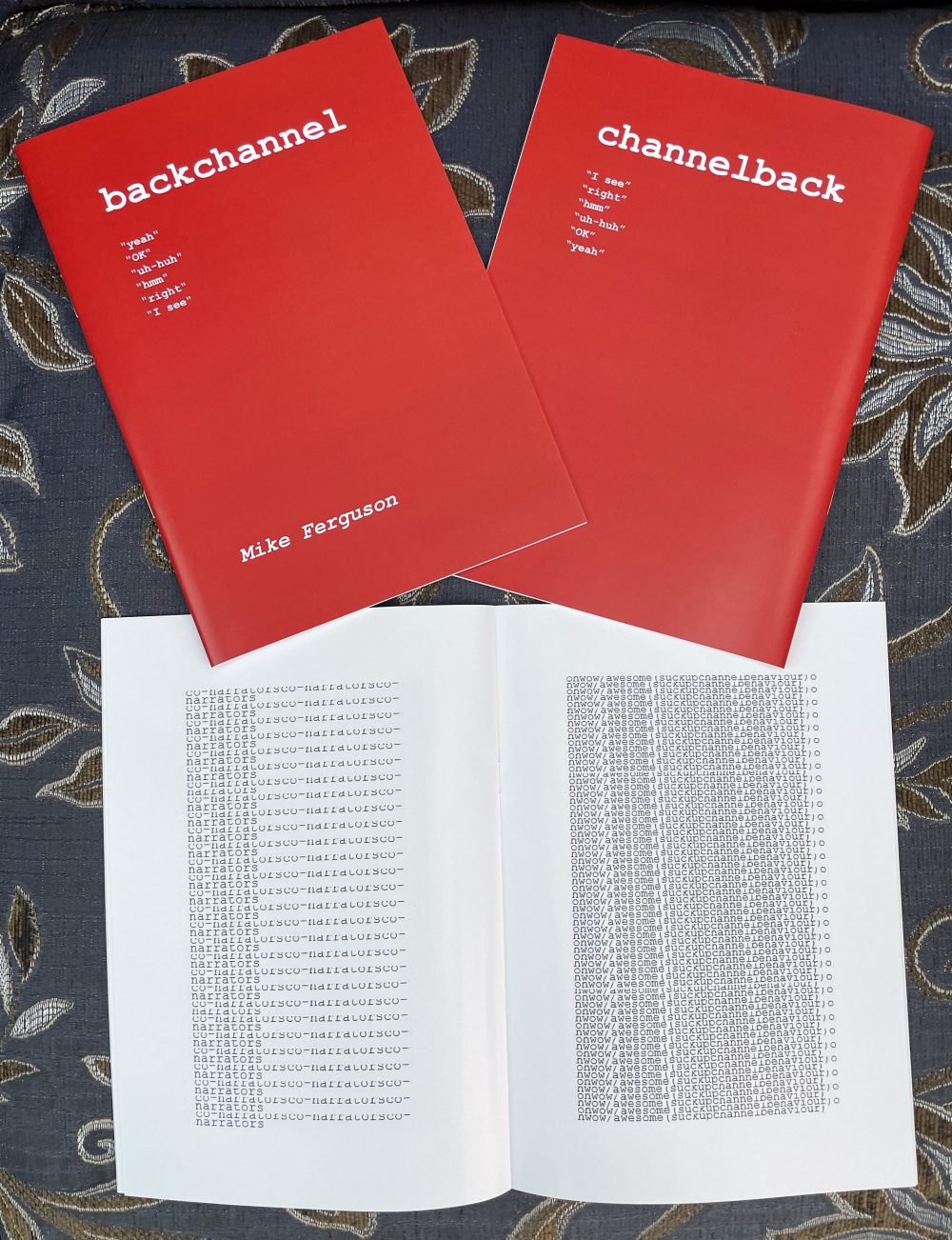
My following 2 from a set of 5 generative TextArt poems was prompted by this and I offer these here as more expression of my genuinely deep encounter with Kenny Knight as person, poet and writer of this fine collection,

In inverting his title line to include ‘Grey Gone Blue’ I am stressing how out of whatever difficulty (‘vapour’) Knight may experience, he elevates this to the natural and beautiful blue of his distinctive poetic voice.

Teachers

Teachers who can and do
Teachers who survived
Teachers who look beyond your roots
Teachers who see inside
Teachers who teach from the hip
Teachers who annotate all their lives
Teachers who have the stare
Teachers who care
Teachers who set classrooms on fire
Teachers who understand knowledge is the inferior
Teachers who busk lessons, beautifully
Teachers who shouldn’t be there
Teachers who definitely detain
Teachers who return the ball rounder
Teachers who laugh learning
Teachers who have their own children
Teachers who ssshhh too much
Teachers who taught whole families
Teachers who earn a nickname
Teachers who never gave an assembly
Teachers who stay above on the same plain
Teachers who preference metaphor
Teachers who keep it a puzzle
Teachers who are remembered

Crushed Stetson

Doorways are portals to dreams, but when they close
cut like a guillotine. Red flows, and lust is layered on
the floor as a metaphor – and this cherry ink too
chastises or caresses. There is too much love of these
imaginings, how the combing of wet hair is an
ablution for the ridding of sins, or grooming for an
illicit affair. Someone is walking and talking but they are
really the litotes in a semantic field of verbs, now as
past participles of secret authorial meanings rather than
words. There are times when we need to see beyond that
single sketched line of the hill, see the other landscapes
that hide within the fog and fear, but eyes are for opening
not drawing on. In a room where someone is preaching
better lessons are taught and learnt when chanced upon.

These initial posting are a benchmark for the types of sharing I will be doing on this new blog, and I have presented these four before putting it out there. Putting it out there to see if I can better my increasingly regular Facebook ducks [you will find threads throughout postings….]

You shouldn’t have to explain a poem but this one could be difficult without some context [and that’s a concern to have to admit]. Briefly, it was written in response to examining GCSE English Literature exam responses. Before I continue, I must stress that as an examiner I am every year essentially blown away with the overall high quality of student responses: informed, empathetic, articulate. Teachers have to take considerable credit for this.

However, there is still a vestige of the past the intrudes on some student answers – and this can be seen in whole class or even whole school responses – and it is where the Literacy Strategy and in particular its word level obsession still insinuates its control. It is when the language of the text is broken down constantly into linguistic references, as if this naming explains the nuances of an author’s writing style and intentions. It doesn’t.

As frustrating as I can find this as an examiner, let alone a reader, I always also sense the teacher’s panic in giving students such an overtly critical vocabulary, as if the correctness of the terms will impress and earn marks, marks needed to get grades to meet targets. Of course, some teachers will believe in the primacy of such analysis – sadly – but I think many feel the weight of that Strategy still with us, as if it did make sense. It didn’t.

You also get the schools who have picked up a waft of an idea and instill it in GCSE students like an absolute. So in the poem there is reference to the notion that at the end of An Inspector Calls the curtain comes down like a guillotine and this relates, politically, to the French Revolution. As for the multitude of messages in Slim combing his hair….

But then his self-barbering won’t be relevant in the future.