Elk Horn – Danmark På Prærien

wmill1 - Copy

Velkommen to
flaeskesteg
rullepolse
skinke,
to a prairie’s past
pickled in a waft
of windmill sails, to
kringle and
dansk lagkage,
to Grandparents’ home
still on 173, to
Lutherans and
licorice, to
VikingHjem and
Andersen’s tales,
to cherry bombs
and blasted chicken heads,
to
prairie
grass
waves,
to
-sen
after
-sen
after
-sen
to Carlson, my mother
Aasta May, to
smørrebrød
aeblskiver
medisterpolse,
to Exodus and
Grandpa’s Elim
Children’s Home, to
flora Danica and
blue fluted,
to my one-time højskole,
to rock fights and
burning a farm down –
nearly – to
Grandma’s kyllingesteg,
to
Alma
Emery and
Glenn, to
Aasta Schack and Axel
and all of us,
to 98.7% English only [and
Danish declining],
to 76.7% who drove alone, to
Grandpa’s slow smooth safe drive
into town, to a
Blended Service of the Eucharist
and easy-to-follow
old-songs-sung-in-an-upbeat style,
to Snagajob at
Walnut
Atlantic
Kirkman
Avoca
Exira
Harlan
Shelby
all only
10-15 miles from Elk Horn
where there are no offers, to
empty bourbon bottles
in the barn, to
no school on Friday so
Spartan fans can cheer
girls’ basketball, to
Danes and
Lady Danes who
still drift across the years
in EHS
and lessons learned
in the colours
of change, to pickled
Red Cabbage and
Red Beets in jars,
to remembering
and now.

wmill3 - Copy


Top Fifty 20: Manfred Mann Chapter III – s/t, 1969

[Originally posted December 2011]
55

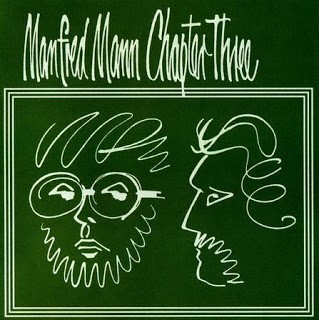
I could quite easily get lost in the Vertigo label’s psychedelic swirl and spin out a large number of its acts for my Top Fifty. But one that definitely earns its place there rather than from some dizzily spun projection is Manfred Mann Chapter III and the band’s eponymous album released in 1969.

Formed by Mann and long-time collaborator Mike Hugg, this is a wormhole hyperdrive away from the popworld of Manfred Mann’s previous music, and it transported me up and beyond within its cosmic, jazz-infused launch at my tender age of 15. I’d been listening to Archie Shepp, Ornette Colman, Charles Lloyd and other ‘modern’ jazz at the time, and it’s the saxophone solos that appealed first in listening to this album. Mann’s instrumental Konekuf is a big band number that starts with a slow rising melody akin to Strauss’ Thus Spoke Zarathustra but it breaks into a sax and brass cacophonous free-for-all that I thought then – and still do – was brilliant in its wild and angry squeals and screaming. Saxophonist Bernie Living was a core member of the band, but additional sax players were Clive Stevens, Carl Griffiths and Dave Coxhill, so I’m not sure which of those first three [Coxhill playing baritone] is responsible for the solo on this amazing track.

Opener Travelling Lady, which began life as a Hugg popsong in the mid sixties, displays the quieter and more melodic aspects of the album, but this too breaks into a freeform jazz saxophone display. Snakeskin Garter, as far as I can recall, was also used in an advertisement for some men’s cologne. This song, as with most of the others, has Hugg on whispery-gruff vocals and this provides a rather sombre, though for me totally apt tone to all of the tracks.

I got this album when I was in the fifth year of my secondary modern school on a large sprawling council estate. I’ve written before about my positive experience of attending this school, and also of having a track from this album, Mister Your’re A Better Man Than I [composed initially for the Yardbirds in 62/63], played in our house assembly, done so by the rather formal but nonetheless niceguy Housemaster who then sermonised on its lyrics which were to do with human inequality and therefore ‘meaningful’ for an assembly. I was proud of introducing that song to my more popster peers.

Another school experience also involved this album. Although a secondary modern, the school still harboured pretentions based on grammar and public schools so it had a house system: six different house names accommodated within three separate but replica round buildings, each single building split in half. Another aspect of the architectural and structural aping of such a traditional system was that all students in the fifth year had their own separate common room within each of the six houses. I belonged to a small group of incipient hippies getting into underground music and we used to bring our albums into our common room and play them on the record player there. This had the effect of driving most of the others away, especially when listening to an album like Manfred Mann Chapter III [or a Black Sabbath or similar] where we sat in our corner being introspective and cool and earnest and headbanging.

There was a volume two of this band released in 1970, and other live and demo additions, but the band could not be sustained because of its size and the wilder jazz of its musical ethos, and so Manfred Mann Chapter III disbanded and became the Earth Band in 1971.

Whenever I fancy a self-inflicted musical mindmess I play Konekuf very loud. To consolidate that mental tribulation you could play it just before or after Do Wah Diddy Diddy and experience what happened to the Manfred Mann musical timewarp continuum!

NB: I discovered and wrote this next in February 2012 precisely for its reflection on the song Konekuf, so I will add it here :
56

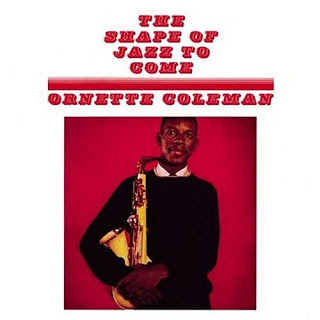
I’m not surprised that this opening track on Coleman’s iconic album is superb: I’m surprised because I have heard for the first time the melodic line that forms the saxophone solo in the Manfred Mann Chapter III track Konekuf. I had never made the connection, loving the MM cut and not really knowing Lonely Woman. So is it a simple rip-off? Homage? I couldn’t find any references and/or explanations online, but I did get another surprise, which may or may not be accurate, when I read that Konekuf spelt backwards was Mann’s caustic comment on racial attitudes and policies at the time – and for those of you who don’t get it because of your age, it alludes to the Conservative MP and racist Enoch Powell and, presumably, his infamous rivers of blood tirade.

Incredible how I will now listen to a song I have known and loved for over 40 years with an entirely new set of markers. More shock than surprise really.

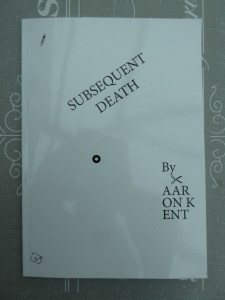
Subsequent Death by Aaron Kent – zimZalla Press

P1020385

Death is in reflective but also creative mood in this text, recounting the taking of eight separate people to the ‘afterlife’, though as a euphemism it should be the afterdeath in the context of these candid and often self-righteously angry descriptions, as with the first about a Father.

Death deals in cynicism too [!], as with the Priest’s taking where being devout and devoted to themselves are playfully compared. I like the dismissive scepticism in logic as well [not formatted as in the text]:

But the Priest: He spent his whole life in support of death, so why won’t he stop squirming?

The Captain, the Mother, the Brother, the Artist, the Soldier, and the Doctor, the antithesis of me, also all get their comeuppances, figurative and literal.

It is interesting, as a quick observation on the kind of messages Death delivers, that with the Artist there is a hint of the philosopher in Death’s mediation/meditation on this taking:

I see the glory of glazed eyes in all of the
lost artists who blame nobody but themselves

Death can be lyrical,

There are lenses for every death.

Some cast rose light
and give the deceased the glow they never could have held
when sleeping with a beating heart.

Death can be prosaic,

I know this isn’t about me, but I’m a player at the table. Well, more like the ace of spades in a game of poker, or the dealer in a game of blackjack.

[both from ‘Two. Priest’]

There really is so much more to read in the nuances and caustic declaratives across these eight decompositions.

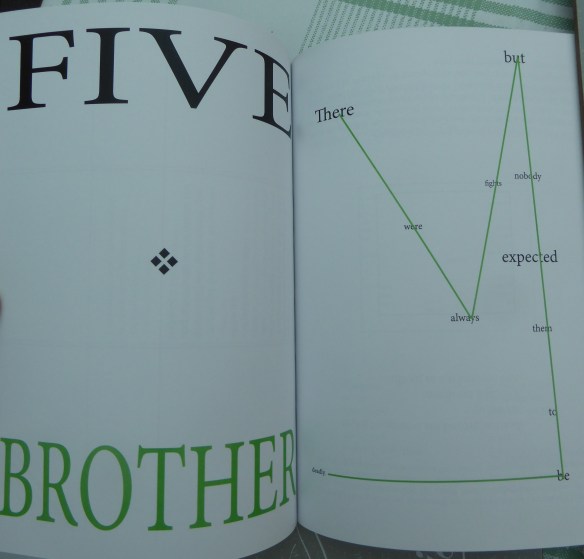
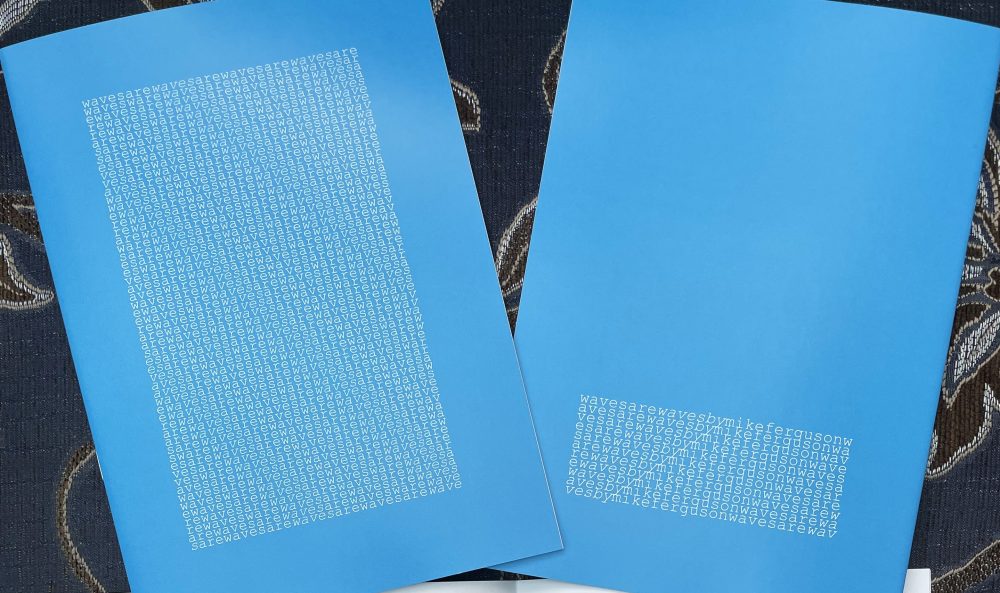
Another element I commend to readers is the playfulness of the poems’ formatting. This is a text rich in exploring the impact/effect/highlighting/obfuscation of presentation, and at this highly engaging in-its-own-right aspect, the book is a thrill.

There is reading across pages, whole page text, text split by red lines, repetitions/echoes/continuations/compilations, text in and outside of grids, and sdrawkcab text.

Another excellent production from zimZalla – get it here.

P1020386


Bird on the Wire by Leonard Cohen – Literary Lyrics

Like a bird on the wire,
Like a drunk in a midnight choir
I have tried in my way to be free.
Like a worm on a hook,
Like a knight from some old fashioned book
I have saved all my ribbons for thee.
If I, if I have been unkind,
I hope that you can just let it go by.
If I, if I have been untrue
I hope you know it was never to you.
Like a baby, stillborn,
Like a beast with his horn
I have torn everyone who reached out for me.
But I swear by this song
And by all that I have done wrong
I will make it all up to thee.
I saw a beggar leaning on his wooden crutch,
He said to me, “You must not ask for so much.”
And a pretty woman leaning in her darkened door,
She cried to me, “Hey, why not ask for more?”
Oh like a bird on the wire,
Like a drunk in a midnight choir
I have tried in my way to be free.

Songwriters: Leonard Cohen
Bird on a Wire lyrics © Sony/ATV Music Publishing LLC

P1020375 - Copy


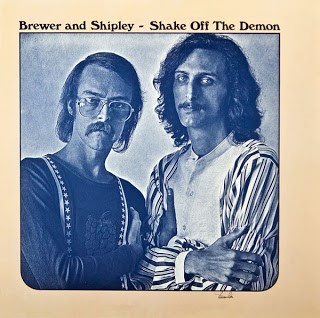
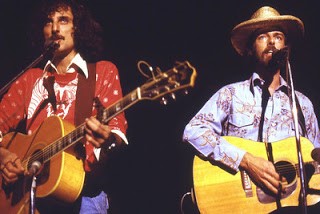
Top Fifty 19: Brewer and Shipley – Shake off the Demon, 1972

[Originally posted December 2011]

53

Another selection from the ‘having grown up with this album’ core of my Top Fifty. This is an essentially acoustic folk [occasional country rock] album by duo Mike Brewer and Tom Shipley. All songs are self-penned, apart from Jackson Browne’s Rock Me On The Water. The opening title track off this fourth album release is one of those country rock staples from similar artists at the time, and it has a guest electric and slide guitar contribution from John Cippollina. The west coast harmonies kick in almost immediately and that was the first appeal. The lyrics also tapped into my earnest teenage preoccupations of the time, here with There’s a man in a uniform/Says he wants to teach you how to kill and the implicitly critical, anti-war stance in this struck its vibrant chord.

Second track is the sublime Merciful Love, with acoustic guitar, piano and sweet harmonies. Third Message From The Mission [Hold On] rides further on the crest of exquisite harmonising – oh so pretty I admit – and the organ of Mark Naftalin supports these as they roll out to the end. Fourth One By One is more of the soothing same, and fifth When Everybody Comes Home, closing side two of the vinyl, is another countrified, banjo-twanged folk harmony where a simple but pretty melodic line gets repeated.

Sixth track and side two opener Working On The Well is an electric and upbeat number creating new pace. Seventh is Browne’s beautiful Rock Me On The Water, and this is a gorgeous version with Brewer and Shipley’s tight, distinctive harmonies – and strangely perhaps, made interesting too with Jose “Chepita” Areas’ congas/timbales. Eighth Natural Child features some effective acoustic guitar playing from the duo, and is augmented by the electric violin of David La Flamme from It’s A Beautiful Day – the track has a worksong repetition to it that is quite funky, includes a false end, then returns with more superb violin to provide a longish instrumental close. Penultimate Back To The Farm is is a bucolic call to pastoral arms, its hippie sensibilities set in the simplicity of Get to get ’em back down to the farm/The simple life it just might/Do a whole lot of good/And it can’t do no harm. The album ends on Sweet Love and continues the anthem with its paean to the power of love, Talk about love, sweet sweet love, sweet love, sweet sweet love. Amen.

54

Wild Goose Chase?

In the wake of the Cambridge Analytica and Facebook scandal about the secret as well as nefarious sharing of personal and private information/details – this augmented by yesterday’s MSE’s Money Tips newsletter suggesting that we all inspect our Facebook details, and the more general advice here and there that we all just delete our Facebook accounts – I decided to have a check online about what information comes up when I type my name into Google Search [accepting the probable irony of that action].

Yes, that is the reason for this self-search.

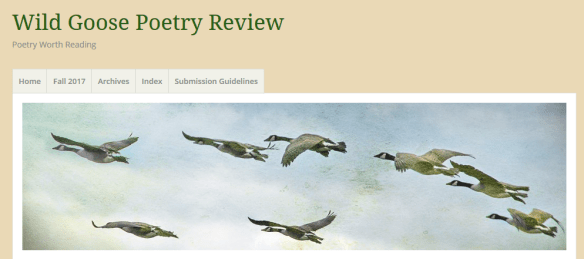
I had a number of surprises. The first was that I had two poems published in Wild Goose Poetry Review in the Summer of 2017 here. I do of course remember submitting these, but I do not recall, and can find no record of, being contacted about the poems having been accepted for publication – and I am quite good at keeping email records of correspondence. Not that this is an issue: I was delighted to see these, even if over a year late.

wild goose

The other two [did I not state there were just the three surprises?] were less welcome but by no means problematic, or worse, dangerous. The first was a reference to my having co-authored a Poetry Anthology for a New Century Readers series, which I haven’t – though I did have that momentary if ridiculous wonder if this is something else I have forgotten of late, or if my teachings ideas had been appropriated by someone else. I think I might have even accepted this book’s existence regardless of my inability to remember being in any way involved until I read that its purpose was to prepare students for Key Stage 3 English SATs, something I would not have done as a publishing venture under any circumstances. I taught Key Stage 3 English and SATs preparation, because I had to, and very often challenged the outrageously stupid marks regularly awarded [or not] to students, because I had to. But I never wrote a text for these. And I never ever marked a SATs examination. This was the Devil’s work.

MFpoetryanth

synopsis2

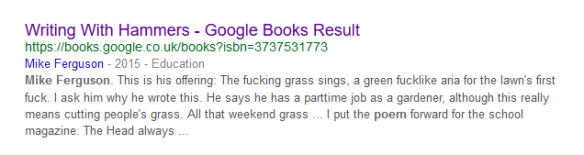
The second was a reference to my eBook Writing with Hammers, a satirical novel about my teaching experiences of over 30 years. I wasn’t surprised to see a reference to this, as it is available online, free here, but because out of all the chapters and pages there are, and even in this google ‘selection’ of pages to view, the following piece of narrative is the one that gets quoted in the search paragraph,

WritWHammers

Other than this, I didn’t find anything else of concern, mild or major, and I am yet to decide if that is in any way a disappointment.


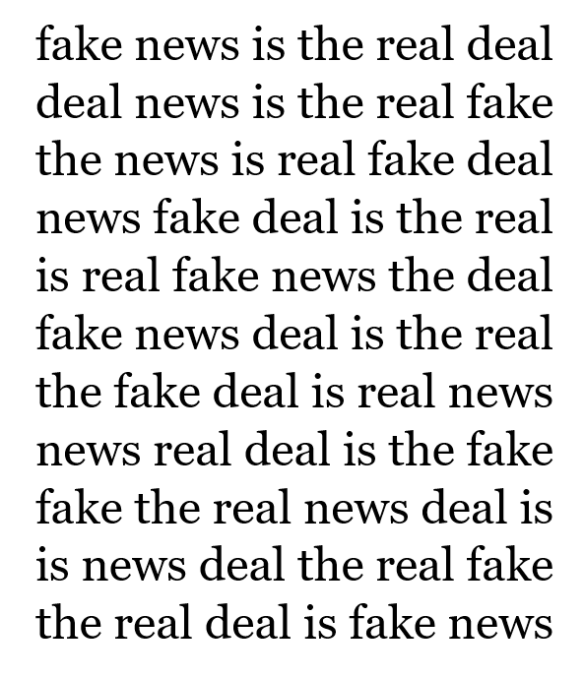
Do Not Die at Poetry WTF?!

poetrywtf1

Thank you to Maartens at Poetry WTF?! for posting Do Not Die here today.

I am particularly pleased as this is from my complete found poetry sequence American Finds based on the Great American Novel.

It isn’t always easy to place work like this. Poetry WTF?! is a welcoming forum for ‘experimental’ work [as I have said before, for want of a better word] and I commend its variety to you across these stated and implicitly other arenas:

poetrywtf2

Other poems from American Finds can be found on this site here, some of which will take you to their postings elsewhere.