Thanks to Jump for publishing Seed Store here today.
Remember, seeds often sprout into metaphor…
[Originally posted April 2012]
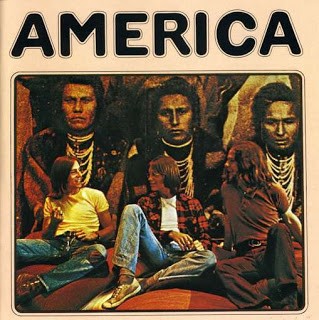
America’s eponymous debut album seemed curious in being launched on the back of their seminal hit single A Horse With No Name and yet this didn’t appear on it. The reality is that this isn’t the exact chronology of that release where it came out initially in 1971 to apparently only moderate success, but after recording some additional material, including the then Desert Song – latter renamed AHWNN after going down well in live performance – it was re-released in 1972 with the song included and went to number 1 in the United States.
That didn’t make any difference to me. I already had the first release as I bought it soon after radio play of A Horse… here in England, where the three main band members lived, but obviously before the re-release. It became an instant favourite and a song filling then and full now of poignant memories encompassing falling in love – I probably should just leave it there as a finite romantic observation – but also all of the other paraphernalia attached to growing up in the early 70s.
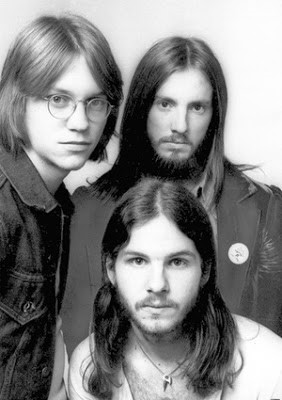
The three core members of Gerry Beckley, Dewey Bunnell and Dan Peek were living at an American Air Force base in West Ruislip. London – attending London Central High School – and I felt I had an affinity with them, also an American living in England, though this was on my own having initially resided with my family in Suffolk where my father, a civilian, worked for the military, and I too attended an English school, a secondary modern. But the comparisons begin to stretch even further from there: I listened to great music; America made it. Alas, our allotted placements on the musical map.
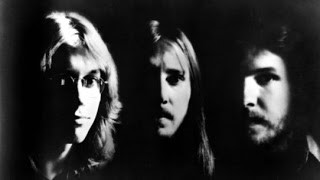
America’s map was plotted on the geography of west coast harmony a la Crosby, Stills and Nash, but it is a definable enough terrain. Beckley and Bunnell have distinctive vocals, and indeed continued as the band after Dan Peek left in 1977 [and he passed away recently in 2011], and their songwriting and acoustic guitar playing are idiosyncratic within this expansive genre.
That characteristic acoustic guitar sound is immediately made on opener Riverside – dual rhythm and solo lead – and the tight harmonies also begin. Second Sandman introduces more electric guitar in a fuzzed lead and heavy base, but it is the acoustic guitar lead that again dominates until the ending electrification joins in. Both are beautifully sung, and Sandman, a Bunnell composition, engages in mildly esoteric storytelling – popular at the time – with the ‘surprise’ question Oh, I almost forgot to ask/Did you hear of my enlistment? before a closing repeat of the chorus,
Cause I understand
You’ve been running from the man
That goes by the name of the Sandman
He flies the sky
Like an eagle in the eye of a hurricane that’s abandoned
so the mystery deepens, if we really care beyond the beauty of the melody. Third Three Roses is my favourite, and once more it is the acoustic strumming that signals their sound, Peek providing a memorable bass line. There are congas and other percussion, but no drums. Fourth Children introduces pedal steel, and the luxurious harmonies are the most notably west coast, with the lyrics as naff as the time would demand: Come on children get your heads back together as well as And you know we can make it because you know we’re alive. Far out. A Horse With No Name is the fifth track on the re-release, and as I have a cd copy I feel I can comment: it is again the simplest of acoustic strumming, and a melody line that is almost monosyllabic over a driving beat up to the memorable chorus. What carries it there, of course, are the obtuse but mesmerising lyrics, the la la, la la la la harmonising providing a hiatus for reflection on what has been intoned by the ungrammatical storytelling, there ain’t no one for to give you no pain: fuck double negatives if it scans. The transformation of the desert to sea, the significance of nine days, the release of the horse, the exhausted naming that ends up observing things, and humans that are loveless – it is a wondrous landscape of meaningless words creating meaning if we just listen and absorb.
There follows more acoustic-driven harmony and peacefulness. It is pretty, but pretty gorgeous at that. Penultimate track Donkey’s Jaw is almost wholly instrumental until children are again invoked in closing lyrics – does it take the children to make a better land? – and we all nod sagely and compassionately in concord, hoping that ours will fulfil the dream – it didn’t, nor us more importantly, but we know that only so well by now – and the album ends on the Pigeon Song which I have always liked and sung aloud for the sinister nonsense of its hillbilly nihilism,
Well I had me a pigeon
By the name of Fred
But I done shot him
In the head
Had me a railroad
Down on the ridge
But I done blowed up
The bridge
Had me a dog
He was my best friend
But to him
I done put an end
Had me a farm
Sittin’ pretty on the hill
But if you look
It ain’t there still
I don’t know why I done it
Honest it ain’t like me
But I ain’t sad now I done it
‘Cause a baby boy has got to be free
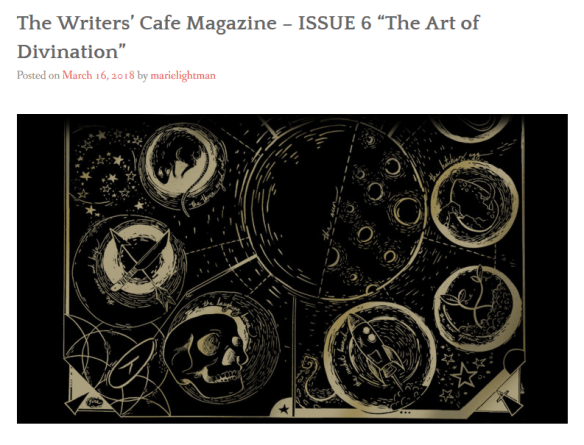
Very pleased to have my poem Plum Tree Rain in this issue – thanks to Marie.
My poem is about examining, as in marking exam papers, among other things…
Do read the other poems, and scroll through to find mine. It is an engaging theme.

Speaking of elusive, I don’t fully understand Twitter, but one aspect that eludes me completely is how tweets you have seen maybe half an hour ago have suddenly completely disappeared when you go back to find them.
You scroll down and through for what seems like forever, and cannot find again. In that scrolling, you keep coming across other tweets you recall seeing with the one you are searching for, but these are now punctuated by millions of others.
I have gone in and selected whatever options seem to secure some semblance of sanity in desiring a chronological feed, but that fails.
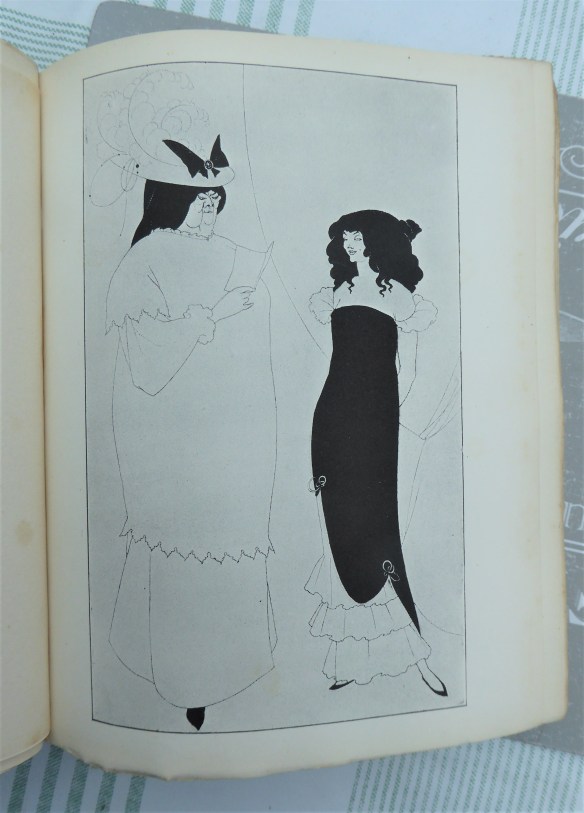
This is a lead in to the fact that this morning I was prompted to this piece on Aubrey Beardsley and I wanted to acknowledge the tweet that did this, but, as you now know, I cannot find.
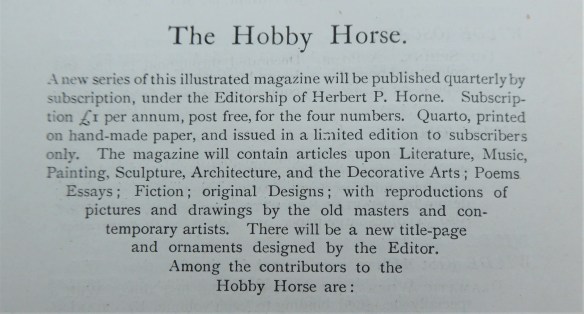
I was also prompted by the reference in the article to the yellow book/Yellow Book to find my original copy of the latter and look at the Beardsley prints in it, none as ‘provocative’ as those referenced in the article. The following pictures are simply provided to illustrate treasures from this book, one I acquired around 45 years ago from an auction in Aldebugh,

Further pictures are for extra interest. At the end of the book’s articles and illustrations are adverts from publishing houses and these are interesting in themselves, especially as a reflection of their time, but there is a self-indulgence in this as I also have a book published by Cambridge University Press,
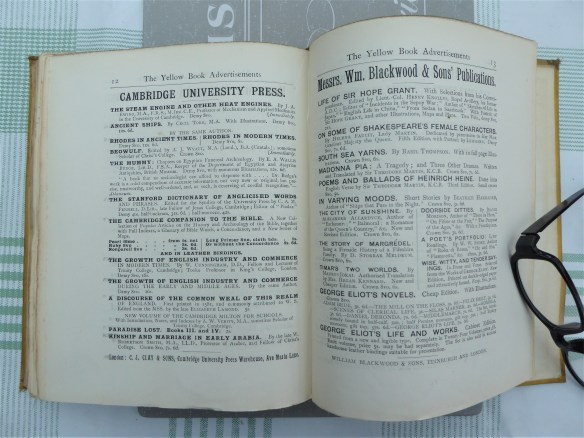
I liked the moral tone of this advertisement,

This amused in its ‘concrete’ presentation,
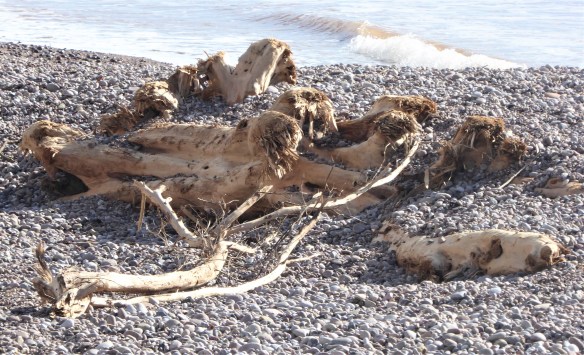
Carved from the sea’s storm and beached
like sleep and waking. They are two of
thirty three and feather-footed even in this
burnish of gold; how the tusks of one point
to its O of a stomach filled with seal skin
and attachments – pinniped as Latin for fin
footed, not family, yet here they are together.
The rest are corpses and driftwood, remind
us of how wooden hardened hearts are to
one another. It either is or is what we want
to see, like how to place ourselves in this
clade of carnivores when we walk by with
our arms in arms and smiling, a nod to extant
families, and loudly applauding our humanity.
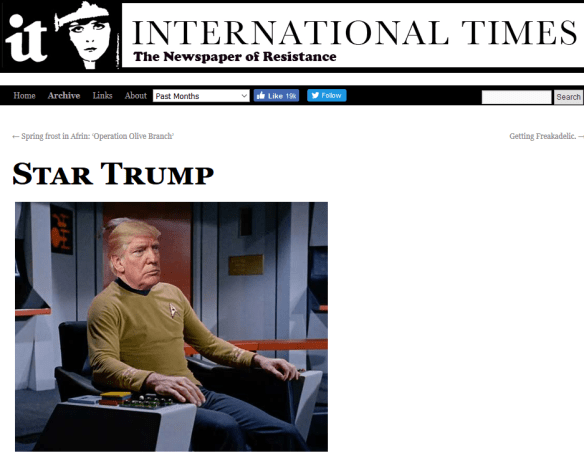
Thanks to International Times for my poem ‘Star Trump’ here today.
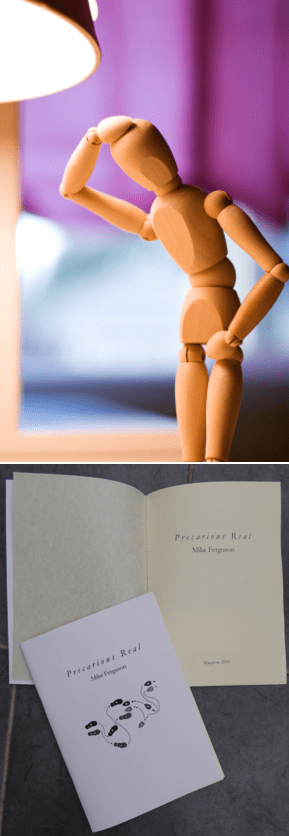
Not 100% certain, but this one thinks you can still get Precarious Real at Maquette Press here.

Thank you to ‘Jump’ for my poem Ghost Birch here today.
[Originally posted April 2012, and linked to the preceding post]
At the beginning of the 90s I’d been teaching for ten years and these were good professional times: independent, creative, fulfilling. I wasn’t financially comfortable, and there had been struggles in the previous decade, but I was three years into a mortgage [a principle shattered as I readily grabbed at Thatcher’s legacy of offering the cheap chance to buy a council house, mine having been rented as teacher accommodation] and there was plenty of 60s/70s music to keep me fully entertained as I’d moved up from the Amstrad stereo [though it did have that thundering volume boost button] to a Toshiba system – I think the Kenwood was later, and I now have Cambridge: these listening stepping-stones a critical aspect of the aural journey.
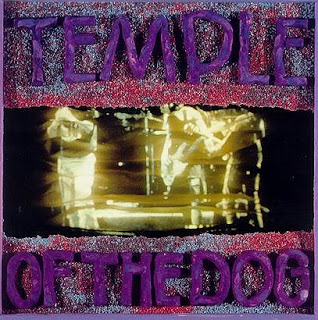
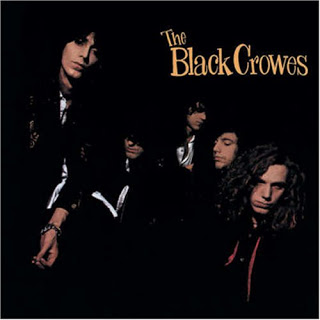
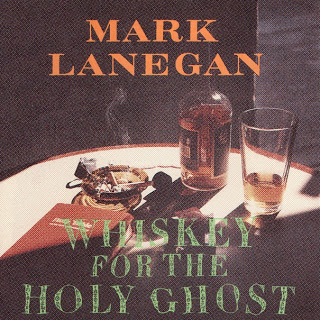
So this was neither exceptional nor terrible in the life and times of a 36 approaching 40 year old English teacher and father of two whose loves were family, teaching [at that time], writing and music, but with regard to the latter where I’d primarily mainlined on nostalgia, bands like Temple of the Dog, Pearl Jam, Brad, Alice in Chains and, to a lesser extent in terms of familiarity at the time, Soundgarden, all kick-started that new decade with their heavy albeit newly-named grunge sound, and it is clearly the quality of this music coupled with a rather amorphous other emotive reality that turbo-charged this launch. In my previous posting on Brad I also mentioned The Black Crowes who brought out the classic rock revival of Shake Your Money Maker in 1990, therefore joining this rejuvenating mix, and there were other bands like Stone Temple Pilots and Screaming Trees filling and exploding my 80s void. Students at the time were making me cassette tapes of these new bands – it’s how I first heard Temple of the Dog – and a close friend was also regularly introducing me to these contemporary musical riches: pulling one from the abundant offerings would be Mark Lanegan’s 1994 solo album Whiskey for the Holy Ghost.
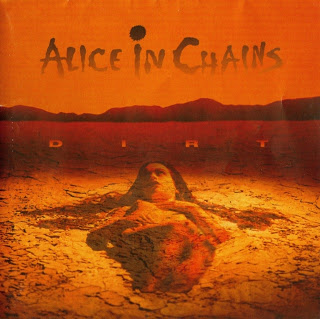
All of these bands had great rock/grunge vocalists and that did much to attract and appeal. The centrality of the guitar with wah-wah and/or fuzzed and/or extended solo also returned to detox the 80s’ contamination. Highlights from some of the bands mentioned would be all of Pearl Jam’s Ten [already a nailed-to-the-wall Top Fifty], Temple of the Dog’s Hunger Strike with Eddie Vedder taking over the lead vocal from also excellent and accompanying Chris Cornell, and consummate grunge anthem Rooster from Alice in Chain’s monster album Dirt. Brad’s generally softer sound, reviewed as such yesterday, earned its distinct placing but was also carried on the back of the overall sense of musical renewal linked to the palpable if inexplicably generated feelings I had at the time.
[Originally posted April 2012]
Brad, a band formed in 1992 and including the core members of Shawn Smith, Stone Gossard and Regan Hagar, has just released their latest album United We Stand, only the fifth over their twenty years of playing together. A band often described as a Stone Gossard [Pearl Jam] side project, this is a typical PR but erroneous tag.
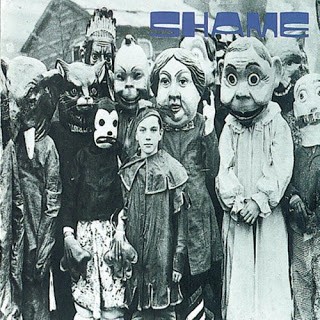
Their first album Shame earns its place in my Top Fifty because of its musical timing and triggering of significant memory. Brad in the early 90s – along with The Black Crowes [straight rock], Temple of the Dog, Alice in Chains and Pearl Jam [grunge] – ignited my full engagement with contemporary music because it revisited and reinvigorated the 60/70s rock sound with which I had grown up and which the 80s had by and large replaced with synth-pop, fake drumming and glam/new romantic tweakings [I admit I should/could have taken more note of punk].
Whilst Gossard provides crisp guitar throughout, it is Smith’s distinctive vocals that make this album memorable for me – all four band members contributing to songwriting duties. And though I have characterised this as a resurgent rock band, opening track Buttercup is actually a rather slow ballad and establishes the sound that makes this such a fine album, Smith’s fragile vocal dominating the plaintive core and Goddard’s guitar striking out rising chords. Second track My Fingers is much more psychedelic with echoing, slightly fuzzed vocal and swirling guitar around a grunge drum and bass beat.
Third Nadine returns to the more melancholic tone of the first, Smith by now establishing his signature slight snarl and cracked high tenor, and the song’s rather sudden, lightly shambolic ending reflects the rawness of the album’s recordings completed over only 20 days and often emerging, apparently, from studio jam sessions. Fourth Screen continues the hypnotic lament and Goddard adds a softly toned guitar solo and then empathetic wails to close.
20th Century is a funky fifth, rolled out across its repeated grooves, simply but effectively. Next Good News, like Screen, is a Smith-penned number and continues the propensity for these slower songs with carefully structured melodies to foreground Smith’s singing, here pushing to a falsetto chorus. Seventh Raise Love is a pulsating grunge-come-softrock anthem with surges of Goddard feedbacked lead. Eighth Bad For The Soul is a funked-up tease of a song – no doubt a snippet from one of those jams – but it sets us up neatly for the penultimate Down which is a classic [but incipient here] grunge dirge, the voice distorted with other percussive sound effects until piano, organ and a cleaned vocal emerge – then it segues into and finishes on a grotesque, brutish narrative that is the unnerving, fleeting track eleven We.
It isn’t an album in and of its time as brilliantly dominant as Pearl Jam’s Ten for example – not by a long way to be candid – and I’m not sure I have been able to characterise its particular strengths through the track descriptions above, so it may be one of the few in this category that really does hold its place by the skin of its clinging teeth, a bite that still draws blood from a mood and effect it created then for all kinds of reasons beyond the aural and which therefore bleeds whenever I play again.
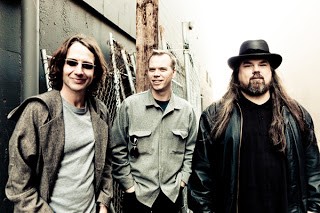
Recent Brad

