Finding Leon and Chris

fk1

Writing poetry is writing a diary, and thereafter a prompt to memories. So too is the poetry of others, in this case my students’ writing. I have been reading through poetry anthologies I compiled over years of their excellent writing, and whilst I confess I so often have forgotten names and faces – names, embarrassingly, when I meet some today, though not always – yet when I come across the names at the ends of their poems in these collections I by and large recall them immediately. It is wonderful. I am reminded too of the various journeys we took to get to their poems. What a privilege.

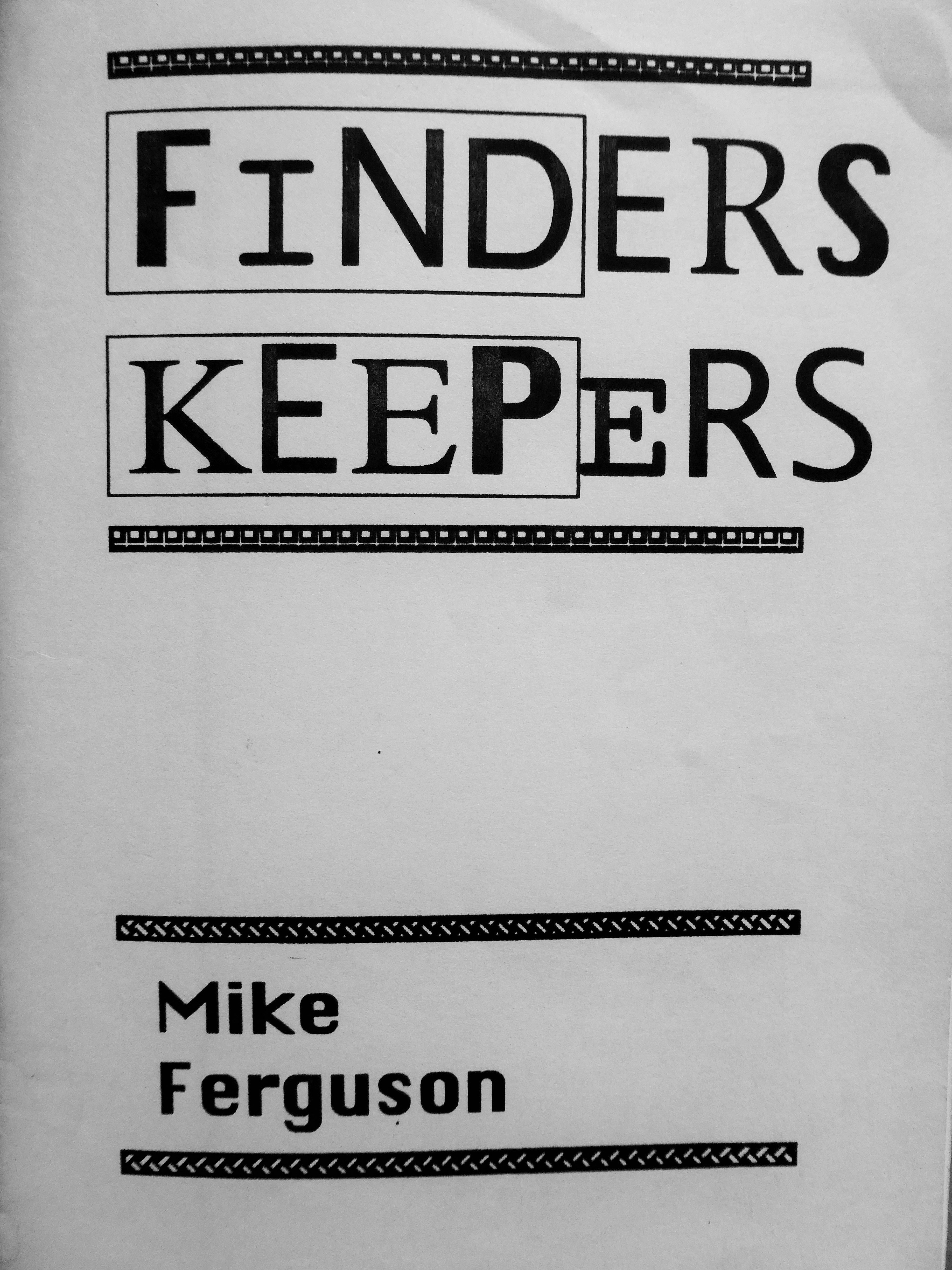
The previous posting from my 1992 pamphlet Finders Keepers didn’t prompt such a recall, but the poem I am posting here now from this does: the idea sourced, as it states, from a GCSE Oral Standardisation video tape which is a genuine hoot, and I will never forget the animated if obtuse trajectory these two lads took in discussing their response to Ted Hughes’ Hawk Roosting, a poem then in one of the GCSE Poetry Anthologies.

As the moderator for this particular Exam Board’s Speaking and Listening standardisation process for many years, I had the great pleasure of visiting with teachers from affiliated schools throughout Somerset as well as one on the Isle of Wight. It was a time of tremendous personal, professional development – meeting and working with fellow colleagues collectively at regional meetings and then in visits to their schools – as well as being in the wider context of the teaching profession, and in this case English teachers, feeling informed by the process because we generated the material with the Exam Boards. The national in-service element of this, along with annual trial marking with regional meetings for coursework assessment, provided a professional platform light-years beyond the minimalist online training currently given to examiners.

But to the poem [click on image to enlarge for easier reading]:

fk2fk3

Madame Rosebud

In 1992 I produced a booklet of found poems called Finders Keepers, and among the many initial sources, I used the Writing ‘stimulus’ idea in the left-hand image below. I can’t remember exactly that source’s origins, possibly Ridout? Certainly something similar, and though it would be a 50s/60s production, isn’t it still appalling?! And this the ‘golden age’ of education often pontificated by the Tories and also similar!

I post here to share the found poem I wrote in response – ironically of course – but also because my writing partners and I are looking to possibly produce a new resource of images linked to Writing ideas, both to help prepare students for the GCSE English ‘creative’ writing component, which will probably have an image as stimulus, but also at KS3 to encourage creative writing more widely. We shall see.

Word of mild warning: I did try to track down the source by typing into a search engine a variety of elements from the given task, and the prevalent response is references to the contemporary Madam Rosebud, a quite often naked burlesque performer!

P1000168

Writing Ideas – Lightness/Darkness Poem – National Poetry Day

lightness that sheds
darkness walking behind
lightness not needing to believe
darkness on its First Day
lightness’ gravity sleeping
darkness in loneliness
lightness faintly
darkness waiting around that corner
lightness whispering
darkness in its own absence
lightness lifting
darkness on the edge
lightness leaving it all to fall
darkness hiding inside
lightness breathing across the sky
darkness erupting from inside
lightness breezing
darkness encroaching
lightness without withal
darkness with everywhere to bide
lightness in its own place of light
darkness in Dante’s lie
lightness palmed by a cloud
darkness’ nightmare smile
lightness nuancing in colourimetry
darkness at 0,0,0
lightness luminously
darkness literally
lightness ending brightly

[lightness darkness poem]

Writing Ideas – My Light-Hearted Poem – National Poetry Day

my light-hearted poem misses a beet
my light-kidneyed poem always prefers its steak
my light-eared poem hears a feather’s fall
my light-spleened poem vents abominably
my light-necked poem sticks out its albatross
my light-sinewed poem tends on itself
my light-legged poem moon-walks a stride
my light-livered poem takes the bacon
my light-eyeballed poem peeps over its horizon
my light-arteryed poem spreads the load
my light-elbowed poem bends at the second syllable
my light-blooded poem reds its lines
my light-footed poem tiptoes on rhymes
my light-brained poem thinks it’s a sonnet
my light-handed poem pets/pats/palpates semantics
my light-larynxed poem sings its own falsetto
my light-fingered poem caresses when it possesses
my light-stomached poem digests metaphor
my light-headed poem drinks itself to a muse

[if using to link with my poetry writing idea, you can open and print here: My Light-Hearted Poem]

Writing Ideas – Printable Worksheets – National Poetry Day, 8.10.15

Still learning how to use WordPress – though perhaps this should have been obvious – so after the ‘success’ of the previous test posting, I am now making the Poetry Writing ideas for Thursday’s NPD Light theme available to open as PDF files and print.

I hope this is useful for those who want to use:

My Light-Hearted Poem sheet

Lightness Darkness Poem sheet

Subordinate Clause Poem sheet

[Original post with full explanation for approach posted here]

Writing Ideas – As Light As a Feather

An experiment:

I will be posting full versions of Light poems I have written for National Poetry Day, this coming Thursday, and which link to the poetry writing ideas I have already posted.

I think I can post a pdf version of one of the poems I have just completed, and it will appear as a file name and if you click it will open up the file for reading and/or printing.

Let’s see!

As Light as a Feather

Writing Ideas – National Poetry Day, 8.10.15

P1000145 (2)

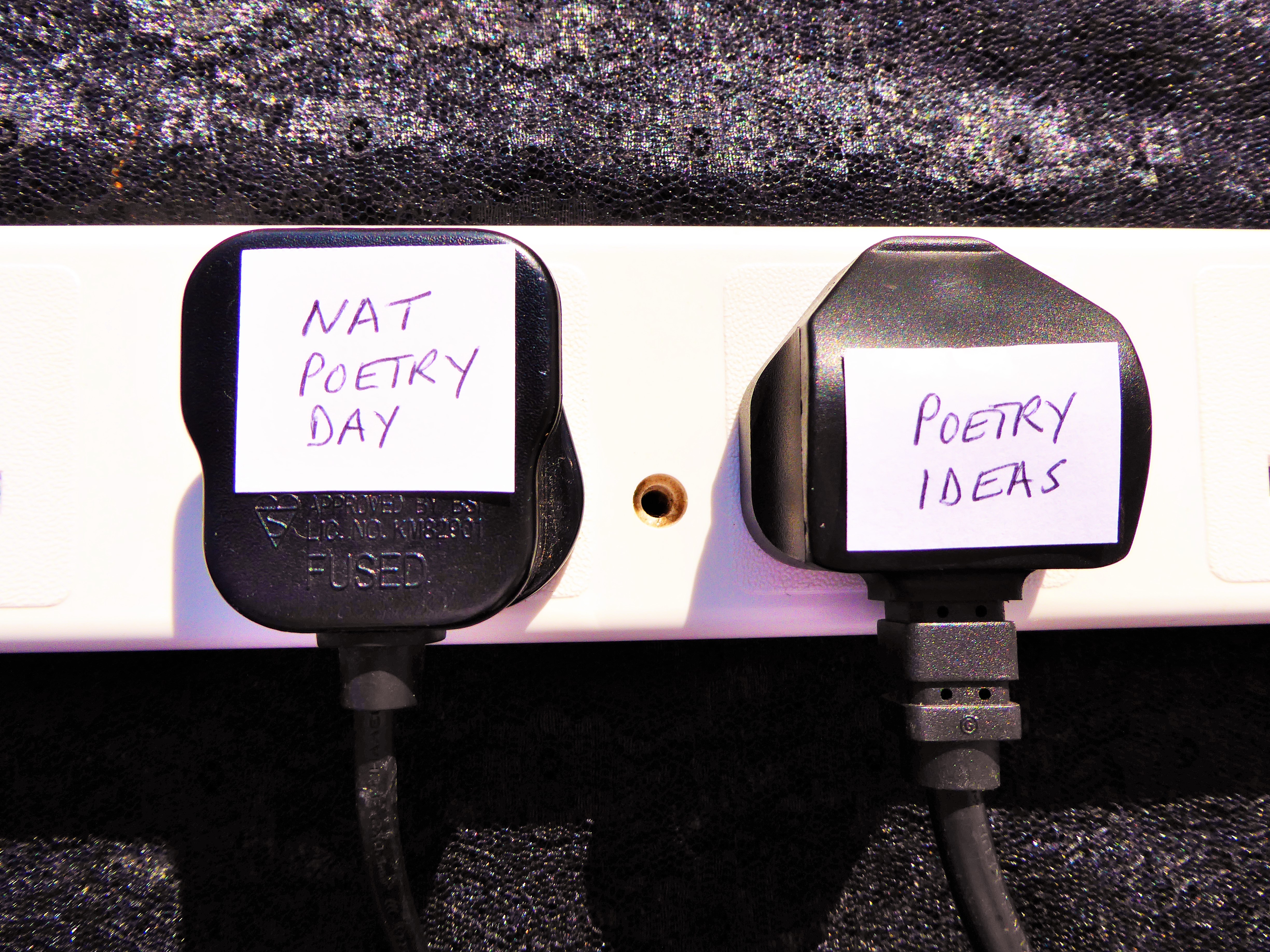
I’ll start by reassuring readers that the creative writing ideas I am presenting in this posting are not as literal as the image above [!] but I am plugging two things: National Poetry Day on 8th October, and three poetry writing ideas for that day and its theme of Light.

These writing ideas are

1.  My Light-Hearted Poem
2.  Lightness/Darkness Poem
3.  Subordinate Clause Light poem, Not

I don’t have the capacity for/knowledge of how to provide the three ideas as separate downloadable resources, so they will need to be cut and pasted from this posting into a word document for copying. In each case they fit on two sides of A4.

I hope there is sufficient detail in each to act as a helpful teacher guide, and they can be used with students in their entirety, or edited to suit particular classes.

Whilst self-explanatory, I will just add these additional notes before presenting the resources:

My Light-Hearted Poem

This is a List Poem and the model provided has plenty of ideas for students to use, but it can be developed. The one warning is to be weary of suggestions for obvious, if inappropriate, body parts!

Lightness/Darkness Poem

All of my ideas are aimed at mixed-ability groupings and should be applicable to a wide age range, but Model 1 of this idea might be more ‘appropriate’ for older students: it is challenging students to consider more complex ideas, and even explore areas that could be emotively difficult. But they don’t have to be, and this caveat doesn’t have to apply: you will know your classes best and the relationship you have with your students.

Model 2 of this idea is ostensibly much more applicable to a younger audience, and indeed the suggestions are intentionally a little twee at times!

Whilst the purpose is to support and encourage students to write creatively, and thus metaphorically – and even elliptically – for those students who simply cannot make this conceptual leap, structures like this can provide a framework for more literal writing which is still valuable as writing on this theme.

Subordinate Clause Light Poem, Not

Any teacher using this to teach a grammatical construct is missing the point!

This is probably the most challenging in terms of there not being definite structures to follow and gets as near to that dangerous, caricatured [but it still happens] approach of: here is your stimulus, now write a poem.

I haven’t provided an exemplar for a stream of consciousness poem and suggest as a teacher, you do this. Perhaps take that huge creative leap of modelling it spontaneously?!

Model 1 is precise in being a concrete [shape] poem. The problem is if using, you have pretty much removed the ability for students to do the same, but again, for students who genuinely struggle to be independent, if they simply copy aspects of this with some degree of personal variation it can prove an achievement, with the apt and purposeful chance to illustrate it.

[NB In the original, the line falls and falls and falls move across the page but this stupid posting template will not retain the transported in poem as it is typed, and will not retain spacings of words I do once in this template. Frustrating.]

Model 2 rears the ugly head of rhyming – generally something I discourage – but students love to rhyme and this encourages them to avoid literal lines in doing so.

[Link to Forward Arts Foundation page with further ideas here]

National Poetry Day, 8th October, 2015.

Light

1. My Light-Hearted Poem

Poetry can be serious, but it should be fun as well.

The expression light-hearted is a common one, meaning funny and humorous. Not necessarily hilarious, or fall-down-guffawing: just bringing a smile. In this case, the word light is keeping the humour in pleasant control. Light poems written using this idea are for fun, and meanings do not have to make serious sense!

There is a model below you can use to help get you started. Some lines are complete and some are starters to be finished. Most of the template lines are left for you to make entirely your own. And of course you could/should add your own other light-ideas [in this case, related to the body – internal like the heart, or external like a foot].

Once you have completed all of the light-[body references] you want to use, think about a key feature of each. But remember, these body-ideas are qualified by the word light.

For example, the light-toenailed poem polishes in pink [connotations of feathers and parties and other stereotypical ideas you might want to discuss!] rather than a colour like black with its stereotypical ‘dark’ connotations.

Following this example, how might a light-eared poem listen lightly? Maybe it only hears pretty sounds, like the sound of birds singing – but that isn’t a very poetic line. So take the idea and transform it: my light-eared poem listens with its wings. What it doesn’t do is eavesdrop, for example, which is rude and intrusive…..

Do your research: a spleen is an abdominal organ, thus an internal part of the body, but it also has the meaning of being bad tempered – to vent one’s spleen, like have an angry go at someone – so think carefully about how you would turn this into a ‘light-hearted’ spleen.

But not all lines need to do things obviously lightly because there are no rules, thus the ‘joke’ of the completed line my light-eyebrowed poem raises!

Model

my light-elbowed poem….
my light-livered poem….
my light-eyebrowed poem that raises
my light-spleened poem….
my light-eared poem listens….
my light-toenailed poem polishing in pink
my light-kneed poem….
my light-eyeballed poem….
my light-brained poem….
my light-sinewed poem….
my light-heeled poem….
my light-headed poem….
my light-hearted poem….

National Poetry Day, 8th October, 2015.

Light

2.  Lightness/Darkness Poem

The word light generally has positive connotations: brightness, openness, undemanding, easy, clear and so on. In the yin yang of the world in which we live, and language too, there will usually be opposites, so the opposing word to light is dark and it generally has negative connotations: concealed, hidden, dangerous, scary, difficult and so on.

Therefore in writing a Light poem it might also be a natural urge to counter this with references to the opposite word Dark, and such contrasts can be useful prompts to generate ideas as well as proving interesting in the ‘battle’ they have with one another.

This idea isn’t, therefore, taking the theme of ‘light’ to necessarily mean happy or humorous – although this isn’t being banned! But it does allow you to write, if you wish, about more serious and challenging ideas, but remember to keep them ‘poetic’ – in other words, you do not have to be literal, and can suggest rather than tell/explain. Model 1 is a good example of this where ideas are suggestive, for example

lightness that sheds                     based on the phrase shed a light on something, like an idea
darkness walking behind           picking up on the sinister idea of being followed at night

Model 1

lightness that sheds
darkness walking behind
lightness like gravity sleeping
darkness in loneliness
lightness fainting
darkness waiting around that corner
lightness whispering
darkness in its own absence

Model 2 uses the contrast of light and dark but does so more ‘lightly’ [!] and is more playful overall.

Word of warning: there is an example of rhyming in the two lines that end respectively soul and goal. Rhyming can be effective, but should be used sparingly, often as a surprise rhyming couplet in a poem. The danger of using too much rhyme is you tend to search for rhyming words precisely for their sound rather than words for their meaning.

Another word of warning: the writer obviously got carried away with the football theme and revealed personal details. That’s fine, but be prepared for others to laugh at you!

And you could upset cabbage lovers……

Model 2

the lightness in dad’s huge hug
the darkness of homework’s call
the lightness dreaming sea rolls up the beach
the darkness in the roots of cabbage
the lightness of Christmas No 1
the darkness of Simon Cowell’s Christmas No 1
the lightness marshmallowing my soul
the darkness missing that goal
the lightness refereeing its own win
the darkness when Ipswich FC fails

National Poetry Day, 8th October, 2015.

Light

3.  Subordinate Clause Light Poem, Not….

All of the bulleted phrases below – called idioms – are familiar ones that contain the word light. Using these as starter ideas for your poems, you will hopefully be able to let them light up your path to interesting writing.

There are two model poems provided at the end which may also help to get you started, but one of the best ways to use these opening prompts is to respond to them with stream of consciousness writing: writing that you start without thinking about – once you put pen to paper; you may have done some preparation – and keep writing whatever ideas come into your head until you are too exhausted to continue!

So, these Light poems are more to do with being prompted by the idiom than the theme of light itself: but it is all about writing creatively.

To get started: take one of the lines below and make notes about detail linked to it, for example, with Faster than the speed of light, this poem…., your poem will race around the page [perhaps literally in effect like the model poem As light as a feather]. But before you write this, make a list of words – usefully verbs – to do with speed. Once you have these, write at lightning speed using all of your words in a stream of consciousness race against the increasing pain in your hand, and maybe head!

For At the traffic lights, his poem…, you could produce a template that keeps using the words stop, pause, start and/or the colours red, amber, green and/or play around with versions of these like halt, idle, ignite….and see where repeating these with descriptions takes you.

Running a red light, the escaping poem….could create the cartoonish poetic mayhem caused!

• Faster than the speed of light, this poem….
• In the cold light of day, a poem….
• If you light my fire, this poem….
• At the traffic lights, his poem…
• By the light of the silvery moon, the poem….
• In a positive light, my poem….
• Like a light at the end of a tunnel, poems….
• Running a red light, the escaping poem….
• Tripping the light fantastic, the poem….
• Beginning to see the light, my poem….
• Getting the green light, our poem….
• As light as a feather, every poem….

Model Poems

1.

As light as a feather,

every poem

falls
and
falls
and

falls

d        r        i         f         t         i         n         g

across           the           sky

before
each
lands
on
the
ground
in
one
pile

This next idea does encourage rhyme, but if you follow, make the ideas using the rhyming words as poetic/creative as possible [they do not need to make literal sense but should make grammatical sense!]

2.

By the light of a silvery moon,
the poem scoops up ideas like a [      ]
lays carpets of words in every [      ]

and so on: go on!
Nicky Morgan’s Panacea for Encouraging Reading in Schools

dickens[Above image of a young Charles Dickens used in today’s BBC News Education report]

Nicky Morgan’s urgings today that major publishers cut the price of ‘classic’ novels to encourage reading in schools and, presumably, at home is surely no more than a soundbite.

As Education Secretary, though bland and meaningless in terms of her impact and effectiveness since holding this office, one assumes there is some element of genuine truth in her wanting to improve reading among the country’s young, and beyond. But extolling the virtues of ‘classic’ novels as a catalyst for this is, well, dumb.

Does simplistic sound better for anyone balking at that previous adjective? Perhaps you’d be right, but I have little time for this kind of politicking.

I’ll keep this straightforward: for years Wordsworth Editions Classics series has been competitively priced on the open market – currently at £1.99 – but I remember when these were available not so long ago at £1, and I think it is easily possible to buy in bulk, as schools would, at a significant discount on that current price. The point is, compared with most other contemporary fictions, as well as ‘young person/teenage’ fiction out there, I don’t see much point in making a clarion call about this area of the literary market.

Unless you are after that soundbite. And if you can get a comedian, who has his own book to hawk, to provide a celebrity endorsement.

And the ‘classics’ as catalyst? This is a tricky one to start unpicking critically because in doing so it is easy for other dumb people to characterise any reservation as a ‘progressive’ distaste for heritage and culture and – you know what’s coming – demanding high standards. I see my reservations about the classics as obvious ones, especially in engaging and encouraging further reading primarily in the young: relevance, language, length.

I am not, let’s be clear, banning the ‘classic’ novel from its role in engendering a desire to read – that is something Morgan’s predecessor Gove did. But in deciding a national policy, politicians need to step considerably outside their own narrow experiences. For example, Morgan states ‘Our ambition is that every secondary school should have sets of a wide range of classics so that whole classes can enjoy them together – books I loved as a teenager by authors like Jane Austen, Charles Dickens or Emily Bronte’ – such a personal interest doesn’t equate to the realities of the classroom experience, nor more importantly, approaches to encouraging reading for all based on years of educational research, for example individualised programmes [though I have always been somewhat old-fashioned in enjoying reading the class novel].

This isn’t the place to unravel that debate. However, it is a key point because it continues to highlight Morgan’s soundbite approach to curriculum development – and funding – rather than a professional and informed one. Indeed, encouraging reading of a class novel, whether classic or contemporary, doesn’t fit into years of a target culture and preparing for its testing regime: not least KS2 and KS3 Reading tests which have little if anything to do with reading widely for pleasure [surely the fundamental urge behind Morgan’s idea?].

I could go on unpicking the problems with this, not least querying how an emphasis on reading classic novels can be fostered for reading at home. However, I will make clear here that I am a huge fan of classic novels [sounds daft expressed like this….] and sharing/teaching these in the classroom. But this isn’t the panacea Morgan soundbites.

Yes, I have created a new verb.

The other key point is, why isn’t Morgan urging publishers to make ALL fiction, especially contemporary ‘young person/teenage’ novels, more cheaply available to schools? Would that be interfering with the market economy too centrally? Well, even I would say yes to this!

The way to achieve this is for the government to heavily subsidise such published materials for schools. That’s an actual funding policy to underpin and support a genuine curriculum plan for encouraging reading. It does matter that ‘classic’ literature isn’t the impetus for engaging young readers: we need fiction that reflects the lives they live, in the language they speak, in accessible amounts [that doesn’t mean ‘short’]. Such fiction does also need to introduce the young to contemporary lives they do not live/know/understand so that they learn; to use a language that will challenge and inspire and elevate, and in any amount but in a curriculum that values and validates whatever time is needed to read for the sheer pleasure of it.

And this is only scratching the surface of the argument. We need to reopen all the public libraries that have been closed by this Government. Every state school needs a dedicated fulsome library and a dedicated professional librarian. Every state school needs to support reading lessons free from testing and measuring of any kind. Every state school needs to have visiting writers to introduce their writing and to read it and to develop workshops for students to write themselves.

Does this sound complex and demanding? I do concede it would be a lot easier to simply suggest we get publishers to drop the cost of no-copyright-fees-needed ‘classic’ literature for schools and a Bob’s-your-uncle soundbite policy to promote this.