Sir Toby Belch

[The following chapter is one that didn’t make the final edit for my novel Writing with Hammers. I am posting here because I am still fond of it, for a number of reasons: [1] It is based on a real event – this chapter recounts my school’s first ever Ofsted Inspection and the man who inspected English was about as ludicrous as the caricature presented here. I did in fact have to make a formal complaint half-way through the process because he was ignoring/forgetting details he was given, and in the end the lead Inspector asked that the school did not pursue the matter further as his birthday was imminent and he would also be retiring from Inspections! As my Department had received a reasonable seal of approval, it was decided to let this one go. It never did for me, thus the chapter; [2] This was an early example of using satire – perhaps elements of the absurd – to try and capture the incredulous reality of what actually happened/happens in schools. I have found it difficult to stand back far enough from this to judge if that satiric ruse ever fully worked, and therefore I have not included it in the published novel. Difficult to believe, this wasn’t the worst experience I had at the hands of those who thought they knew better…..]

When the school is Inspected, my department gets dealt the crap hand – not that there’s ever going to be a ‘happy’ deck from which to deal when it comes to these stomach-churning visits. Teachers probably work themselves up into unnecessary frenzies, but the general approach of a fault-finding scrutiny hardly puts us into a party mood.

Our Inspection team is fairly stereotypical: a residential home for the elderly has been picked at random and the occupants trained for the job within a couple of weeks of their selection. The teachers get to meet them all at a pre-Inspection buffet held in the school canteen, a ruse to appease the fear and anxiety we are all feeling. Cheese on sticks and sausage rolls don’t quite do the trick, but I am personally a little comforted to meet my Inspector, a seemingly affable, roly-poly bear of a man who exchanges chit-chat with the ease of a travelling salesman (and for all I know, this may well be his main profession).

He introduces himself as Sir Toby Belch and I am surprised but in no way impressed to hear that he has a royal seal of approval for his Inspection work. He is quite pedantic and cheesily theatrical in his speech, but I put this down to attempts to impress. His rotund bonhomie soothes away my concerns and I decide that there is little to fear in his impending visit.

Some weeks later, and I’m less convinced that I should be quite so relaxed, but I recognise there isn’t much I can do about classroom observations other than have myself and the team prepare thoroughly. However, I know that he and I will have regular one-to-one meetings in my office. Not entirely certain that Sir Toby will be a complete push-over, I decide to secretly record these since the canteen tête-à-tête. I’ve heard all kinds of horror stories about misinformation and misrepresentation coming out of the Inspection of other schools, and I am going to do everything I can to avoid this nightmare. I decide to bug my office by putting a tape recorder in it, concealed in a box just underneath my desk.

During the week of the Inspection I record every conversation and debriefing session we have. Sir Toby and I meet each morning before lessons begin as well as occasionally in my non-contact periods. It is a disturbing experience. I soon work out that there has been a big mistake in Sir Toby being let out of the residential home and imagine that whilst there he is normally restrained in a straightjacket. And a gag. I begin to think that his thespian’s prattle at our first meeting was probably restrained by Prozac or some other tranquilliser he subsequently stopped taking.

Halfway through the week I decide to make a formal complaint to the lead Inspector and the Head. I can’t have this mad man making judgements about my department. I grab the Head in the staffroom at breaktime on Wednesday.

“You’ve got to do something about Sir Toby,” I nearly scream. “The guy is a complete fruitcake and can’t be allowed to continue with his Inspection. I want him reported.”

The Head, already at the edge of a precipice by having to oversee every aspect of the Inspection so far, looks at me like I’ve asked for a million pounds.

“What are you ranting about?” he asks, trying to remove my grip from his arm. “This is so typical and I wondered when you’d start to complain about some aspect of this Inspection. But to actually get rid of Sir Toby! Well, that’s more outrageous than anything I could have imagined.” He tries to move away but I still have his arm in my hand and give it a squeeze that makes him exhale a tiny squeal.

“Come with me,” I demand, pulling him after me like an errant child. I drag him all the way to my office with passing students gawking at us in disbelief. When we get there, I sit the Head down on one of the chairs and finally let go of his arm which he immediately begins to rub.

“I’ll have you for physical assault,” he moans. “You’re the only fruitcake I know in this school at the moment.”

I grab the tape recorder and slam it on my desk. I also pull out some sheets of paper from a file on my desk.

“After you’ve listened to this,” I say, pointing at the tape player, “you can make your final decision on who is and isn’t insane around here. I’ve been taping all of the conversations this Sir Prat and I have been having, and I think you’re in for a shock. And just in case you can’t believe what you do hear, I want you to read those sheets of paper, because I’ve transcribed these tapes just in case anyone wants to claim they can’t hear things properly or don’t want to believe it.”

I give the Head the following transcript and play the recording of one of our absurd exchanges:

Meeting – Wednesday 13th March, 12.15-1.15.

(Sir Toby Belch meets me in my office)

Mike

Hello Sir Toby

Belch

Why, how now, my bawcock! how doest thou, chuck?

Mike

Yes, well, I’m fine Sir Toby. I see you’re in Shakespearean mode again. I don’t suppose there’s a chance of a more normal conversation this morning? (There is a long pause) I’ll take it that’s a ‘no’ then. I also wondered if you had seen Smith’s lesson as we arranged?

Belch

He’s as tall a man as any’s in Illyria

Mike

Yes he is, but I don’t see – look, I really just need to know if you saw the actual lesson we talked about?

Belch

Pourquoi, my dear knight?

Mike

Well, because you were adamant that you needed to see some ICT use in lessons and you claimed you hadn’t seen this in the other ICT type lessons I’d arranged for you to observe.

Belch

Wherefore are these things hid? Wherefore have these gifts a curtain before ‘em?

Mike

There’s nothing hidden about the ICT work Sir Toby. The lessons I’ve arranged for you to see use computers as a part of the whole lesson. We don’t teach ICT – it’s an aspect of the work we do and that’s what you wanted to see. I have to say, I think I have every right to be annoyed if you missed this again.

Belch

What dost thou mean? Is it a world to hide virtues in?

Mike

Would you please stop talking like that! As I’ve said, there’s nothing ‘hidden’ and, yes, we’re actually proud of what we do with ICT in English. Why do you assume we wouldn’t be open about this?

Belch

A false conclusion: I hate it as an unfilled can.

Mike

Hang on, hang on Sir Toby. This is getting bloody ridiculous! If this session carries on like this I’m going to have to take this matter further and complain about these silly conversations we keep having.

Belch

It comes to pass oft that a terrible oath, with a swaggering accent sharply twanged off, gives manhood more approbation than ever proof itself would have earned him.

Mike

Look Sir Toby, I don’t know what you’re trying to do – push me as far as you can to test me or something – but this has got to stop. I’m doing everything I can to organise things properly for you and you seem to be doing everything you can to make a mess of it. We’re all trying to take this Inspection seriously, you know.

Belch

Thou’rt a scholar; let us therefore eat and drink

(At this point Sir Toby gets up from his seat and turns towards the door. It is obvious that he wants to go to lunch because this has been his main concern at about this same time for the past two days)

Mike

Sir Toby, I really don’t think you’re listening to me! You just seem to want to get out of here as quickly as possible and have another bloody school dinner.

Belch

Thou’rt I’ the right. Go, sir, rub your chain with crumbs

Mike

Look, the last thing I want to do now is go to lunch with you.

Belch

Taste your legs, sir; put them to motion.

Mike

I’m staying here until we sort this out. This is just crazy behaviour by someone in your position.

(At this point, Sir Toby is half-way out of the door, beckoning me to accompany him, and he clearly intends to leave with or without me)

Belch

These clothes are good enough to drink in; and so be these boots too: an they be not, let them hang themselves in their own straps.

(With this, Sir Toby leaves the office, and the meeting we are having finishes)

I turn the tape off and look at the Head who is still rubbing his arm in nervous, spasmodic movements. He flicks through the pages of the transcript again, but I can tell he isn’t actually reading anything. After some minutes of this genuinely stunned but annoying procrastination, I interrupt the silence.

“We either take this to the lead Inspector,” I tell him bluntly, “or I’m going to send this stuff to the local or maybe even a national newspaper.”

It’s the next day when we have an official meeting with the lead Inspector, Mrs Morey, a rather large and malodorous woman, who fills the room with her considerable presence. I play the tape and let her read the transcripts. It is a long meeting and there are many knowing nods and looks of stern concern. Eventually, Mrs Morey speaks, looking directly at me.

“This is obviously totally unacceptable behaviour and I can assure you that I will not allow this to ever happen again.”

I’m immediately put on my guard by this response, even before she gives a knowing glance to the Head. I’m not in the least bit concerned about what happens in the future, not that I’d wish this experience on anyone else, but I want something done now about what’s happened to me and my team.

“I would like you to consider,” she continues, now looking at me again, “that Sir Toby has given very good service in the past and this does seem to be an aberration, as upsetting as I’m sure it has been for you. I’d like you to know that this Friday is his birthday and he will be 87 years old!” she tells me smiling and with the kind of jolly encouragement you’d expect from someone arranging a collection for a birthday gift. “This is, in fact, Sir Toby’s final Inspection and I’m sure you’d agree that it would be a terrible thing to blot his record with what I think is just some rather silly behaviour. After this he will no longer be involved directly in Inspections, apart from an advisory capacity, and I’m more than happy to make a report of your complaint to put on file for future reference.”

What amazes the most is that the Head readily endorses this whitewash. I suspect a part of this is his petty way of getting back at me for hurting his arm. I also sense that I have met a brick wall, as immovable as Mrs Morey and taller than I can climb alone, and very quickly give in to their conspiratorial urgings just to get away from the cynicism and increasing stink of the office.

Ironically, although by no means undeservedly, the department gets a glowing report from Sir Toby at the end of all of this nonsense. I do not learn anything I don’t already know and Sir Toby doesn’t criticise any of those areas that need improving. I still contemplate making an official complaint to someone outside of the school but the Head’s view is that I shouldn’t ‘rock the boat’ as we have all come through the process relatively well.

I have no idea what Sir Toby goes on to do after this unbelievable example of his work with us. I half expect him to become Education Secretary, and whilst he hasn’t yet achieved this, I would think that a man of his age and attributes still stands a very good chance.

SCREWS LOOSE IN THE ENGLISH DEPARTMENT

SCREWS LOOSE IN THE ENGLISH DEPARTMENT
THE ENGLISH DEPARTMENT IN LOOSE SCREWS
LOOSE ENGLISH IN THE SCREWS DEPARTMENT
IN THE DEPARTMENT ENGLISH SCREWS LOOSE
DEPARTMENT LOOSE IN THE ENGLISH SCREWS
IN THE ENGLISH SCREWS LOOSE DEPARTMENT
LOOSE DEPARTMENT SCREWS IN THE ENGLISH
SCREWS ENGLISH IN THE LOOSE DEPARTMENT
THE IN DEPARTMENT SCREWS LOOSE ENGLISH
SCREWS IN THE LOOSE ENGLISH DEPARTMENT
IN THE LOOSE ENGLISH SCREWS DEPARTMENT
THE DEPARTMENT SCREWS IN LOOSE ENGLISH
IN THE ENGLISH LOOSE SCREWS DEPARTMENT
ENGLISH IN THE DEPARTMENT SCREWS LOOSE
THE ENGLISH SCREWS IN LOOSE DEPARTMENT
IN THE LOOSE DEPARTMENT SCREWS ENGLISH
ENGLISH DEPARTMENT IN THE LOOSE SCREWS
LOOSE ENGLISH IN THE DEPARTMENT SCREWS
IN THE SCREWS LOOSE ENGLISH DEPARTMENT
LOOSE DEPARTMENT IN THE ENGLISH SCREWS
THE LOOSE DEPARTMENT SCREWS IN ENGLISH
IN THE LOOSE DEPARTMENT ENGLISH SCREWS
LOOSE SCREWS IN THE ENGLISH DEPARTMENT

Writing with Hammers – ebook publication

cover 2

Lest anyone who reads this blog think the diatribes have no creative edge, I have recently published my novel Writing with Hammers as an ebook. Written in my latter years of teaching but also since leaving the job, this doesn’t just rail against the treatment of English and teachers by extraneous forces, it also attempts to capture the life of working in a school through the presentation of students and teaching colleagues: always real people, usually honestly presented, occasionally exaggerated, often satirised, but never named, and never criticised for who they are/were. Apart from one.

The novel has been previously blogged though is now removed from this access. It has since that blogging been heavily edited: chapters removed – especially any that were more of a blunt instrument than the metaphor of the title; new chapters added, and whilst some detail is dated it has been retained when it reflects importantly its time, or again if it doesn’t, has been edited out.

It should be evident that I have self-published this, but I mention anyway to be clear. I have had a very few agents and publishers interested when I tried for publishing in the early days of its initial completion, but never enough to be taken beyond that tentative liking.

Enough now. If you are interested, there are more details about the book itself, and also how to acquire by going here.

Letting Lose on the Lackey

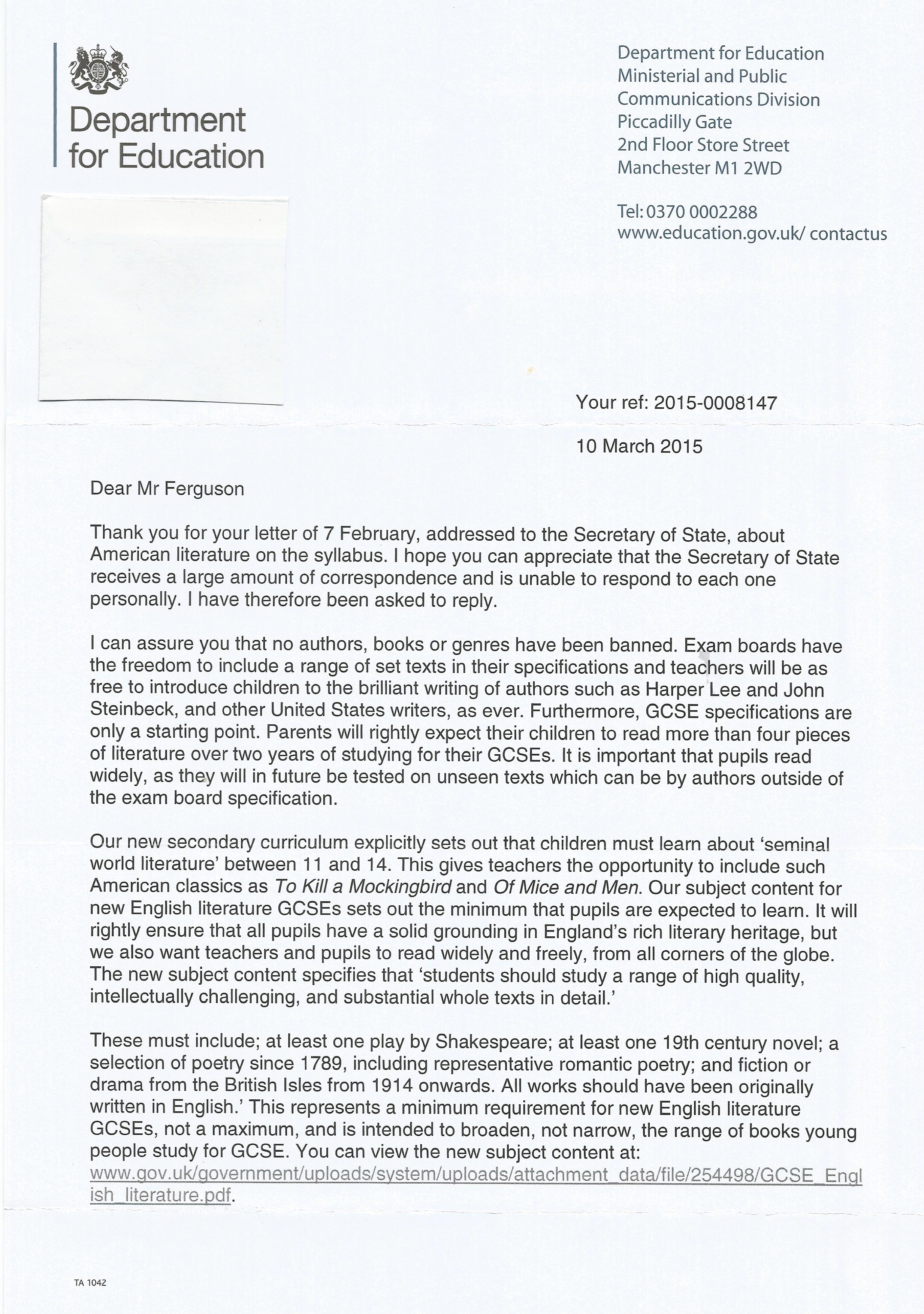
The following letter is my response to the one I received and posted on this site yesterday from a representative of Nicky Morgan. He works as a civil servant in the Ministerial And [sic] Public Communication Division, which sounds like a euphemism for a Ministry of Misinformation. The letter certainly fulfilled that cynical purpose.

I recognise my response could be called naive and a rant. I would reject both claims. I know only too well my response is likely to be ignored completely: this will be the following stage on from the letter itself which ‘responded’ but studiously ignored specific points made – they will simply cease any more ‘communication’. I don’t believe it is a rant, though it is impassioned, but I would like to think there is a coherence to my argument, as well as truth. I have had 20+ years of such experience directly with Education Secretaries, their civil servant lapdogs, other politicians and other leaders of various government institutions: responses which deflected from any direct answering/dealing with queries, or just ignored.  But I can’t quite stop myself from fighting against the barbarians. At times I know there is a risk that can be a pedantic cause, but in this case it is challenging Gove’s original and significant untruth about the situation as well as the subsequent mere parroting of that deception.

As a final preamble, I watched last night’s episode of The Good Wife where Alicia Florrick is being tutored in the art of politicking as she runs for State’s Attorney. In one scene she is being rehearsed to deal with with probable tough questions from an imminent interview with a TV legal commentator Frank Prady. A sample question is put to her and she begins answering before being stopped immediately by her professional coach. I can’t remember his exact words, but he explains that she should never actually answer a question. All questions should instead be ignored and she should alternatively persist with whatever ‘party’ line she has been given. I know this is hardly apocalyptic, and we see similar blatant evasion every day from our real politicians, but it struck a chord with me last night in the way it completely characterised the letter I had received: not a single specific query of mine addressed, but instead the total disconnection in the unfolding of and persistence with the ‘party’ line.

My letter:

Thank you for your letter of the 10th March in reply to mine to Nicky Morgan of the 7th February. Whilst I have to accept your explanation that the Secretary of State was too busy to reply herself, I do wonder if she would actually fully support the ignorance and affront of your response sent on her behalf.

My first point is to state how astonished I am by your complete regurgitation of the narrative that ‘no authors, books or genres have been banned’ which I had taken such care to unpick and challenge. You ignored completely my analysis of the effective banning of – let me be precise again – American authors from being studied and examined at GCSE, hardly a nuance of interpretation and one I think deserved a direct addressing. In every other respect your letter simply repeats all those previous dodges and defenses that Michael Gove had presented himself, and which I was querying.

I will re-present my precise query to Nicky Morgan in the hope she will respond herself. In support of this I will be drawing to her attention, and to others more widely, your personal assertion ‘Parents will rightly expect their children to read more than four pieces of literature over two years of studying for their GCSEs’. This is a preposterous observation. It exemplifies the most staggering lack of understanding of facts, let alone the realities of at least the last two decades of such similar study. This daft obfuscation is compounded – though it would seem impossible – by the comment ‘as they will in future be tested on unseen texts which can be by authors outside the exam board specification’ which does not in any way relate to the study and examination of American prose and drama authors which is, of course, the specific detail of my query.

I need to unpick things again for you, though I am really doing so for Nicky Morgan and those others. Firstly, from which deep pocket of not-knowing do you pull the comment on perceived parent expectations? As an English teacher of 30 years and a GCSE English Literature senior examiner of 28 years I know of no clamor from parents about a need for students to study more than four texts for their GCSE examination [one of these including a significant number of poems]. In addition I am unaware of any similar clamor about this number from Government sources over that time, from HMI, from Ofsted, from Ofqual, from school governors, from business, from professional education bodies and so on. As these four texts/areas of study have been the status quo for such a long time, from where have you extrapolated your assertion to use as such a key plank of defense [a defense which is again NOT addressing my key query about the effective banning of American authors]?

To put this in a wider context, that throwaway comment of yours that ‘Parents will rightly expect….GCSEs’ is absurd. In their study of both GCSE English Language and Literature, students will encounter, engage with and study a significantly wider range of texts, and not just literary as that range will necessarily embrace a huge spectrum of non-literary texts. The even wider context is that the two years of GCSE study will include all of the students’ other subjects and content, including countless texts! This is such an obvious point it seems silly to mention, but your assertion has mischievously ignored that context. Or you really are hopelessly unaware.

Secondly, and quickly, the study of four texts/areas for the purpose of being examined on these requires far more than reading, and yet that is the word you use: ‘…read more than’. The teaching of a text for study and examination is a detailed and highly structured preparation that includes far more than reading: there is analysis, exploration, revisiting, stepped written work on themes, characters, meanings and much more, plus the actual exam practice of writing for an examination, all of which is, quite rightly, time-consuming. Failing to acknowledge that significantly wider context – just for English Literature – is, as I have said, mischievous. And I am being polite.

Thirdly, you make another meaningless observation. You refer to ‘…as they will in future be tested on unseen texts which can be by authors outside of the exam board specification’. This is meaningless because it has no bearing on my precise argument that American authors have effectively been banned. The unseen texts refers to the unseen poetry text/s [one for AQA and OCR; two for Pearson] that will be set in the examination for the response to the study of poetry. The phrase ‘in the future’ is a further irrelevance because that is the situation now and has been the status quo for some time, so yet again your not-knowing is staggering and also therefore insulting when presented as an explanation.

It then becomes an absolute certainty that you are utterly out of your depth when you suggest that books such as To Kill a Mockingbird and Of Mice and Men can be studied by 11-14 year olds as the ‘seminal world literature’ they should be accessing at this age. Would this, by following the logic of your previous judgments, also include The Crucible? I ask because these long-standing, traditional GCSE texts have been chosen precisely for that age range considering their themes, language, content and other factors and I am intrigued as to how you would suddenly judge them as now equally appropriate for a significantly younger age and level of maturity.

In conclusion, it is shamefully evident that you have ignored my precise query to Nicky Morgan and instead read through the English Literature subject content and assessment objectives document for teaching from 2015 and simply and sheepishly lifted in chronological order statements from that to offer as a formulaic, ‘hymn-book’ response. This is exactly the same cut-and-paste regurgitation my MP Hugo Swire undertook when he too could not find an actual answer to my specific query. The final insult in your letter was to refer me to that very document. I trust it is clear that I know it thoroughly. It is as clear as your complete lack of knowing and understanding what it actually means.

Nicky Morgan’s Minion

The letter below is what I received today in response to my letter to Nicky Morgan – posted on this site a few weeks ago – about the effective banning of American authors from GCSE English Literature being taught from September 2015.

I am not surprised it isn’t from Nicky Morgan but is instead sent by one of her lackeys. I am also not in the least surprised – though obviously both disappointed and incensed – to receive this complete regurgitation of the entire narrative I had so carefully unpicked and challenged. This isn’t disagreement with my argument: it is completely ignoring that argument. It is thus – and I think this is beyond a simple matter of opinion – risible, insulting, patronising and despicable. My more trenchant argument and response will be in the letter I write in return, probably not today for obvious reasons, and posted here when finished.

nm minion again

Challenging Lemov

1. Less is more: government initiatives should be limited to one side of A4
2. Targets are for archers, not teachers: adorn your classroom with who you are
3. League tables struggle to measure the sensitive inside leg
4. You can lead a horse to a test but that won’t make it think for itself
5. Teaching is like riding a bike: when you fall off it hurts
6. Ofsted is awful: sound and symmetry and sense
7. If they’re laughing they’re learning
8. Don’t wear a tie just to look like a teacher
9. A full house beats a flush and metaphor beats the literal, hands down
10. Praise everything said that is serious and genuine
11. The best objective is that which discovers itself by accident
12. Only one of the Gospels reports seeing a four-part lesson plan
13. The ‘wrong’ answer often reveals how learning works wonderfully
14. If a sonnet has 14 lines, is this a poem? Discuss, but there is no answer

Writing Workshops – Interviews [digital resources]

I had the great pleasure of being involved in a few of the interviews that make up a huge digital resource underpinning the whole English ‘package’ being offered by Cambridge University Press [see previous posting]. This ranges across interviews with authors, performers, and academics (for A-level) to dramatic presentations of play excerpts, with exploration, and poems.

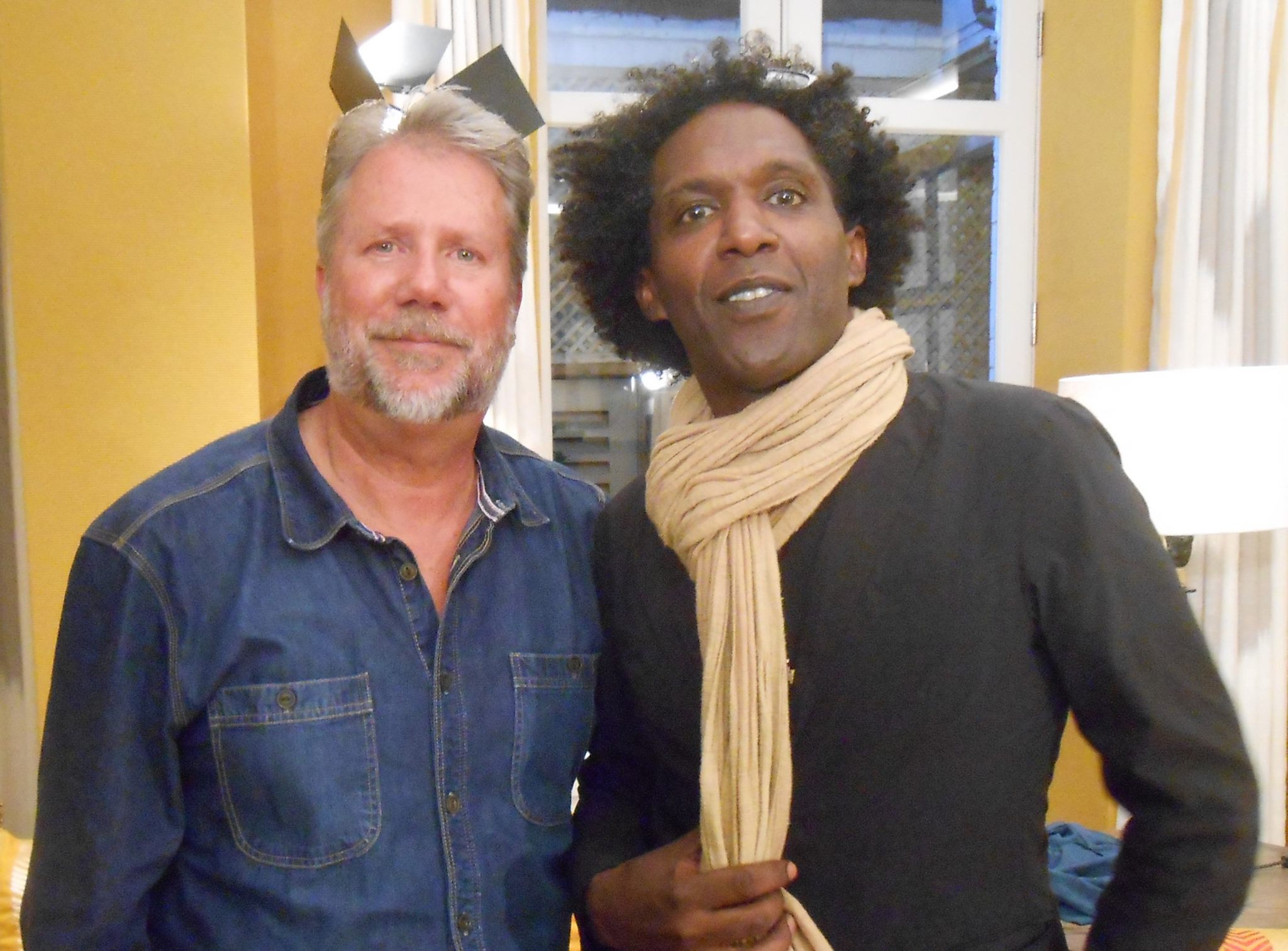
10443237_10155002852388125_1230493295414555266_oOne of those interviews was with Lemn Sissay, MBE, the brilliant poet, performer, writer, broadcaster, and social commentator. Lemn made a writer’s visit to my school many years ago and I have always regarded him as someone who lives to write and be creative as well as enthusing others to do so. Lemn contributed excellent poems to my previous book Poems in Your Pocket by Longman, and he makes a number of short commentaries for the Writing Workshops units where I believe his honesty and enthusiasm, as brief as digital clips need to be, will provide genuine stimulus, as well as grounding in real experience,  for students.

10708643_10155077414908125_5554473487124241176_o

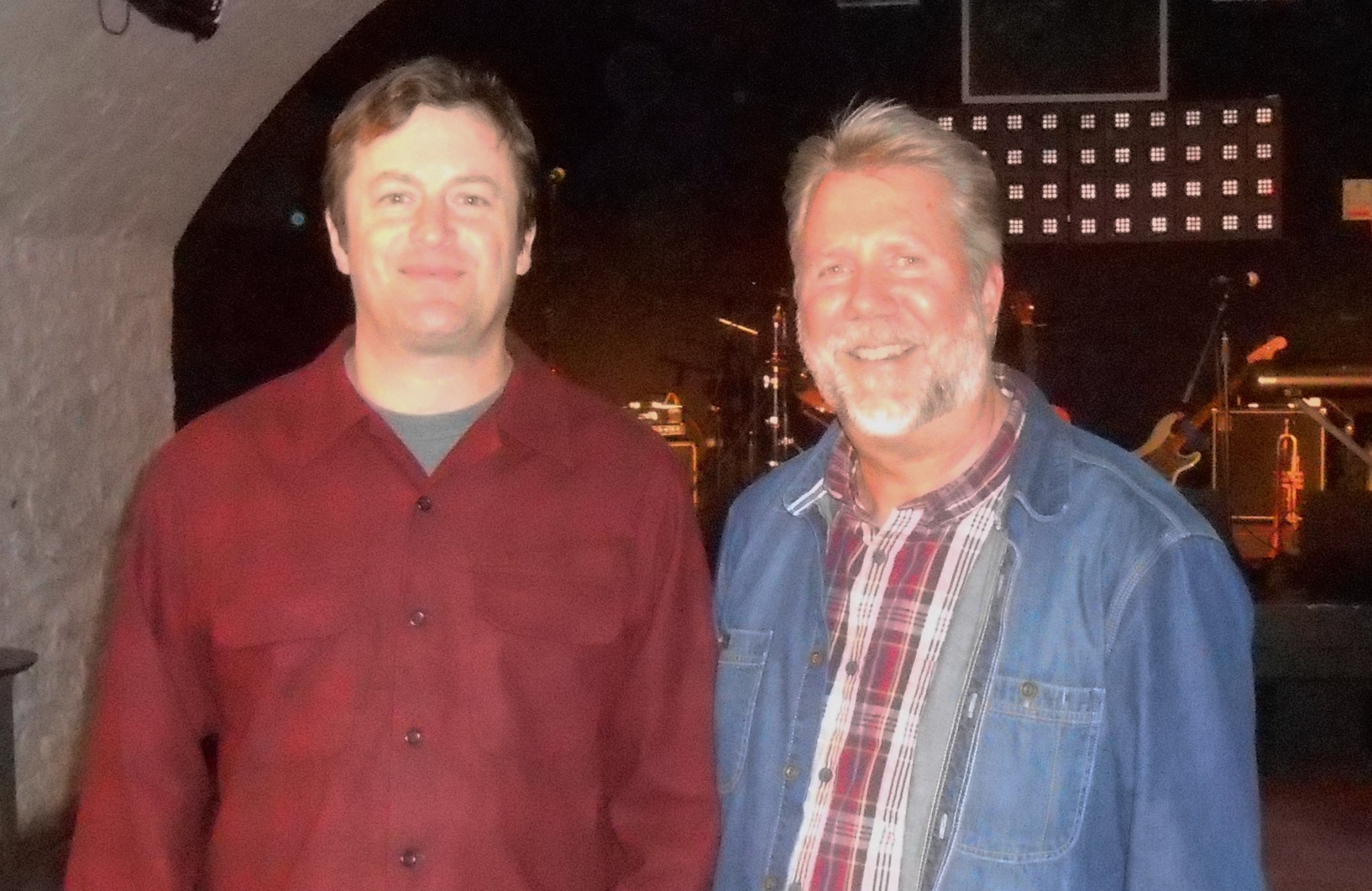
Another was with the American author and musician Willy Vlautin whose debut novel The Motel Life was recently made into a film, and whose band The Delines produced, for me, the album of 2014: Colfax, his spoken narratives getting further expression through music.

There is a Writing Workshop about dialogue – Pete Can’t Speak. But You Can – which uses an extract from Vlautin’s award-winning and third novel Lean on Pete. As a huge fan of American writers John Steinbeck and Raymond Carver, the tradition of presenting the simplicity and yet potency of realistic dialogue is continued in his own work, with Lean on Pete providing memorable examples. Willy’s interview about this and other aspects of his life and writing is brilliant and I thank him for his honest enthusiasm in giving it.

My WW writing partner Martin Phillips has been at the forefront of producing all of the digital material used across the entire ‘package’ I have been referring to and it is a treasure trove of insight, examination, exploration and engagement covering all aspects of the study of English at both GCSE and A level.

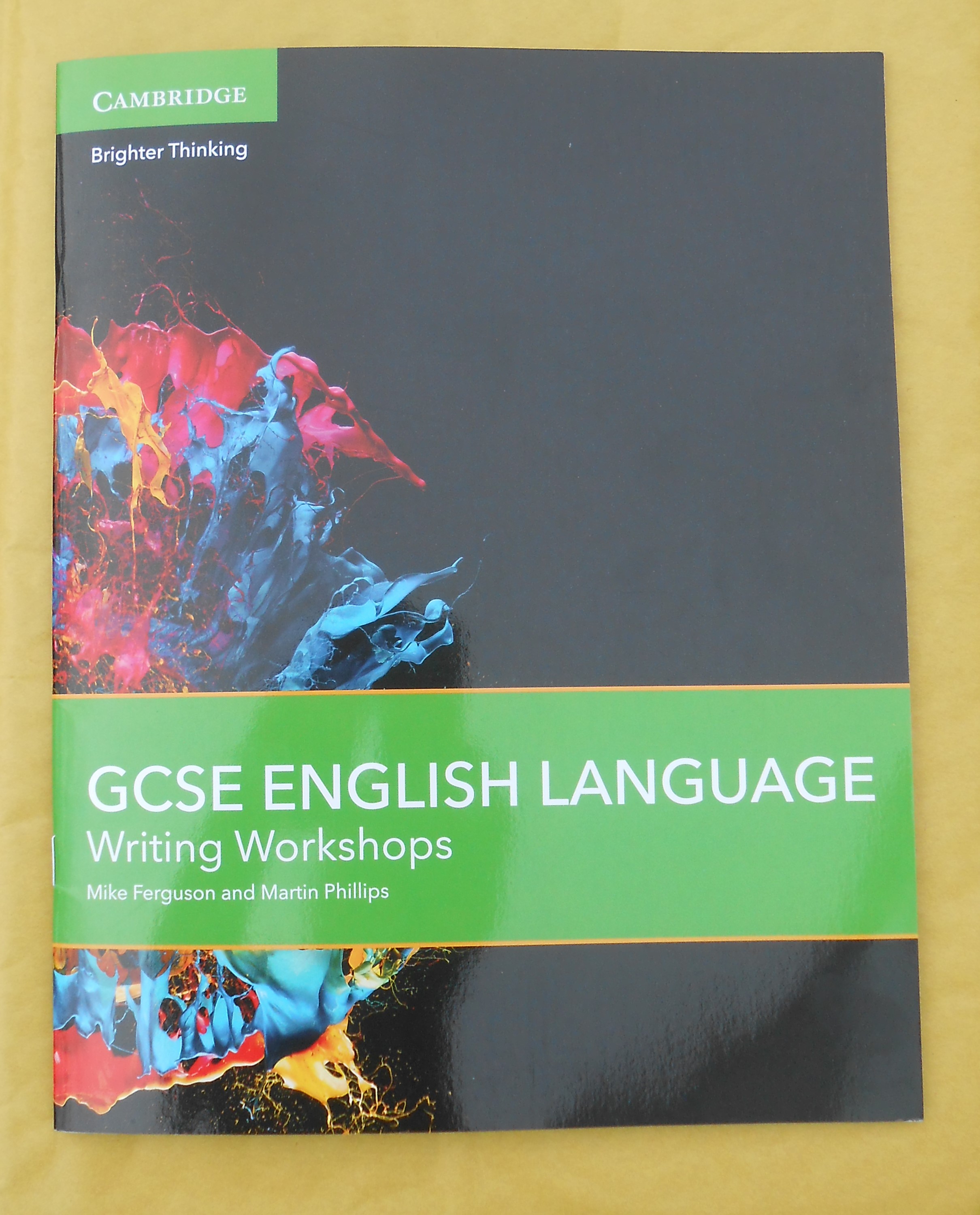
Writing Workshops – Cambridge University Press

DSCN1865 (2)

Just published, this is a stand-alone book or it can be purchased/used within the expansive GCSE English ‘package’ being offered by CUP for the AQA syllabus to be taught from September 2015.

This book, however, written by myself and Martin Phillips, is not tied to any particular examination board and focuses exclusively on Writing, treating students as writers and underpinned by the ethos that a priority regard for writing skills and experience above assessment objectives is the best preparation for the inevitable requirement that students will have two writing tasks in their final GCSE examination – whichever awarding body sets this.

The workshops aren’t intended to appear particularly innovative in such a text book – apart from excluding the clutter of constant references to AOs and similar – but instead offer straightfoward, tried and tested classroom activities that engage and encourage students as much as is possible in the writing process. That said, we think the stimulus and ideas provided also offer new and appealing material at this level.

Whether bought as a stand-alone or part of the larger ‘package’, there is considerable online digital and other supporting materials specifically for this text, as well as a dedicated, and detailed, teacher’s resource which I have written and will be available free online from, hopefully, April.

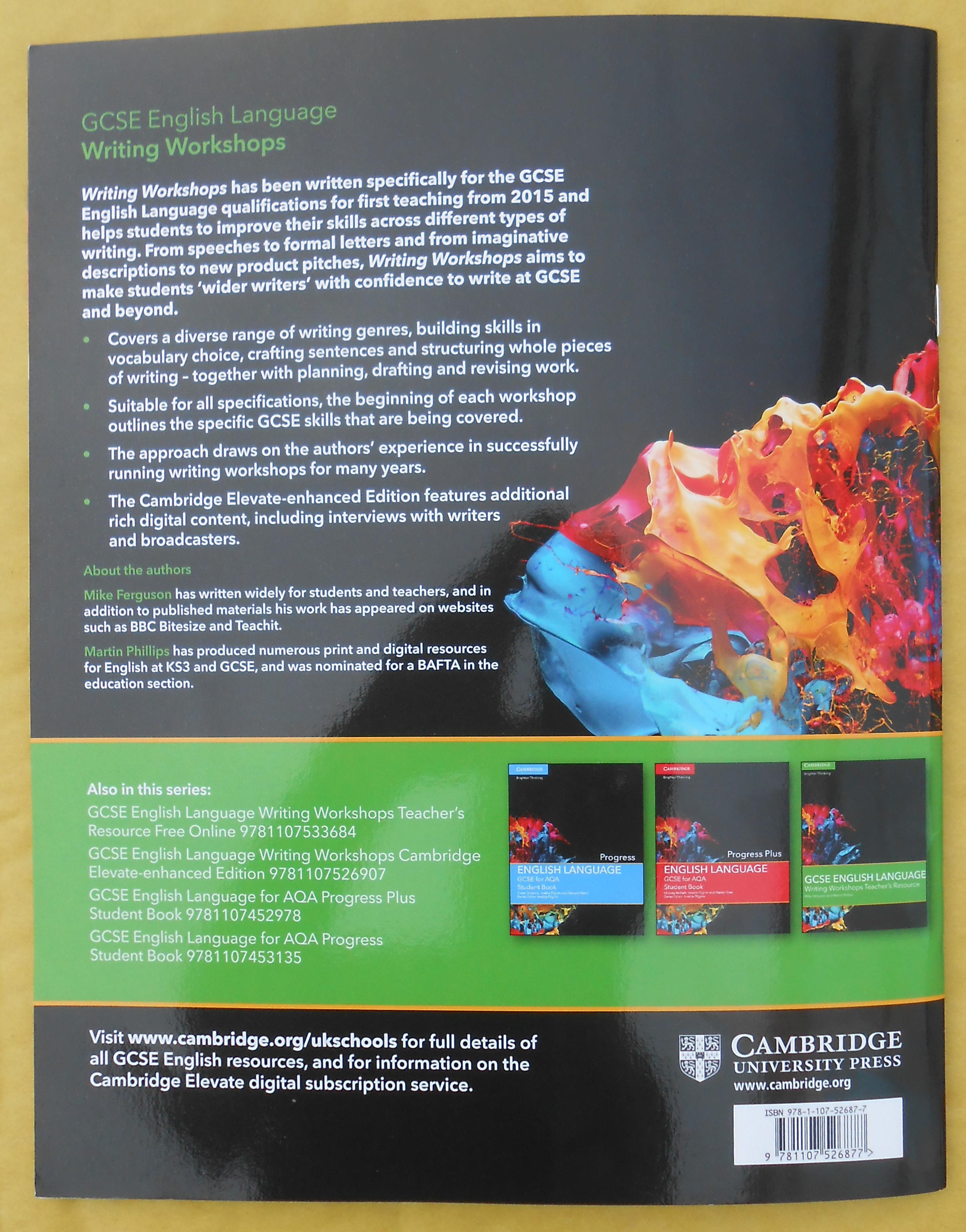
DSCN1867 (2)

Those ‘specific GCSE skills’ are actually writing skills, but of course the latter informs the former: our ethos. Each workshop begins with – and the language is chosen purposefully – a ‘writing improvement focus’.

Not a Parallel Universe

RBS announces today a loss of £3.5bn [that’s BILLION] for 2014 which is a failure, and yet it will be paying out bonuses to staff from a pool of £421m [that’s MILLION].

A school doesn’t meet its targets [that’s OBTUSE NUMERICAL BENCHMARKS] so is put in special measures which is deemed a failure, and staff, mostly teachers, get blamed and undermined and upset and depressed and maybe leave the job or get sacked in forward-thinking Academies [that’s JUST HOW IT IS].

Apparently you have to pay bonuses to bankers to keep them in the job, however poorly they do.

Apparently you can crap all over teachers and they will come back for more [if they  survive] because they care.