4 is standard
5 is strong
5 is good
4 is wrong
DfE introduces two-tier GCSE pass rate – ‘standard’ and ‘strong’
Reply

4 is standard
5 is strong
5 is good
4 is wrong
[for a friend – Drama teacher – when he left the job]
I’m off, I’m leaving, it is time for goodbye
My powder’s depleted; my bull’s pizzle dry.
But I won’t go down without a final fighting
In each following Teacher-Shakespeare flyting:
To Peter Principle school senior managers
I do hope we become much better strangers;
To those who shape teaching by a crass Politic
Thou art as Gove-like as a mis-shapen dick;
To teachers who Inspect so can’t give a fuck
You wear our blood like a vile standing-tuck;
To those who set targets to snare and enmesh
May flabby ideals rot in your huge hills of flesh.
I’m off, I’m leaving, I enjoyed this last quip –
Tot ziens, Tschau, Tot wederum, Toddlepip.
I have been one acquainted with the night.
I have walked out in rain – and back in rain.
I have outwalked the furthest city light.
I have looked down the saddest city lane.
I have passed by the watchman on his beat
And dropped my eyes, unwilling to explain.
I have stood still and stopped the sound of feet
When far away an interrupted cry
Came over houses from another street,
But not to call me back or say good-by;
And further still at an unearthly height,
One luminary clock against the sky
Proclaimed the time was neither wrong nor right.
I have been one acquainted with the night.
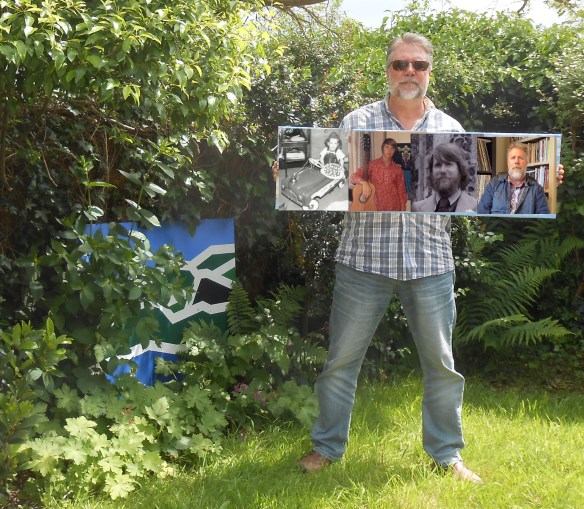
[Westminster, London, 22nd March, 2017]
Here is the News and here are the
realities: on the BBC, reporters
refer to catastrophic injuries while
cataclysmic scrolls along the screen –
language perhaps at its most sadly
tautologous, but already gone astray
[CNN reporting the former accurately
thousands of miles away, then explores
terrorist threats as a certain surmise]
and the news isn’t fake but dubious.
What do we really know? Excusing
the profundity of that question,
we know people have been hurt and
some have died. We know these did not
make it across that everyday bridge.
We know no one needs to ask how
eyewitnesses feel, but they will.
We know there will be no intentional
lies, but await characters from signals
beyond reasoning, and then poetries
too risk footholds their finite words try
when walking carefully side-by-side.
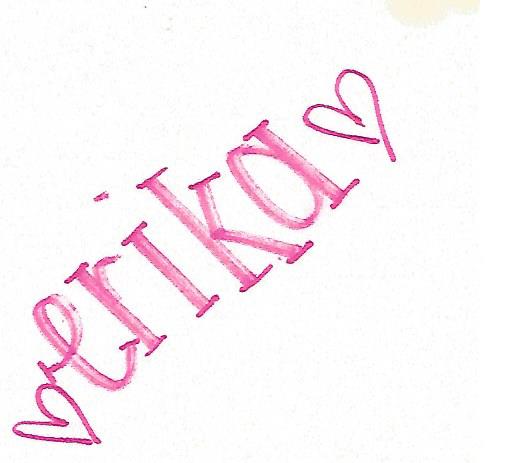
If you happen upon
and open the notepad
I took on holiday to
write plans and poetry –
coming across that napkin
with her name –
do not imagine it is more
than a simple thing,
seeming exotic
or suggestive because
you didn’t expect, like
bloc steno or
bloc de éspiral, even
spiraalnotablok, because
these too are only words
for the everyday and plain.
Look closely in the
corner and note its
imprint of a coffee stain
when I had perhaps
spilt from my breakfast cup
or even wiped to clean.
The hearts? Lipstick?
Imagine her late at night
a pile of these and
signing with red felt,
hoping a tissue of such
tenderness will prompt a tip.
The opportunity
to be poetry,
to be considered
a dialogue
within diversity
within languages
within communities,
heard as the
recital of arts
and the other
traditions of teaching.
Source: UNESCO

The time will come
when, with elation,
you will greet yourself arriving
at your own door, in your own mirror,
and each will smile at the other’s welcome,
And say, sit here. Eat.
You will love again the stranger who was yourself.
Give wine. Give bread. Give back your heart
to itself, to the stranger who has loved you
all your life, whom you ignored
for another, who knows you by heart.
Take down the love letters from the bookshelf,
the photographs, the desperate notes,
peel your own image from the mirror.
Sit. Feast on your life.
I have complained for years at the overuse and the misuse and the abuse of the list of/magic 3, which is essentially a rhetorical device used in formal speech, exemplified both in famous literary examples like those from Shakespeare, and in famous speeches like one from Ronald Reagan [well, he didn’t write it]. And we could imagine, for further elucidation, a worst-case scenario if, for example, Donald Trump decided to write his own approximation:
Believe me it’s really tremendously bad; believe me it’s so wrong and sick; believe me it’s so not true and unfair….
Yet that would in some respects be following a ‘correct’ patterning…
My opening sentence flirts with the notion of using the list of 3, and is acceptable as a near thing, but one of my pet complaints has been when teachers instruct their students that using three adjectives in a sentence constitutes the use of such. It doesn’t. And I have seen many of these overwrought sentences produced in examination responses and other student writing.
I addressed this in a couple of units in my co-authored book Writing Workshops, cautioning against the erroneous adjectival approach, but also exploring its correct, rhetorical use in speech and formal writing. This latter wasn’t purely to advise how students might use in their own writing, though there are occasions when they should think about applying – for the right impact and effect – but also in recognising and being able to analyse its use elsewhere, both historically and presently.
As ever, I am often prompted by contemporary events to write these blog-asides, and today it was Theresa May’s bungled attempt at the use of the list of 3 in her speech to the Conservative Spring Forum, speaking about Nicola Sturgeon’s proposed new independence referendum. May pulled this threesome out of the trite speaker’s bag, stating Scottish independence
…would be bad for Scotland, bad for the United Kingdom, and bad for us all.
So, what’s wrong with it? It has the intended rhythmic cadence for some impact, and it repeats and thus focuses on its intended criticism through use of the word bad, but the third segment is utterly meaningless, surely? Who else is the ‘us all’ of the sentence? Does she mean the whole world? Does she mean other galaxies?
It is the use of the list of 3 for the sake of it. Not for meaning. It is superfluous.
I know. This is hopelessly pedantic in so many ways. But it is now out of my system, out of my anger, and now out of my need – until the next time.

