Farewell ELL4 Text Transformation

P1000529

When a stolen bike is of more significance than the recent discovery of warts on your penis, the world of worry is terribly askew – or you have entered the world of Ian Seed whose collection of prose poems Makers of Empty Dreams present his distinctive narratives of mystery and uncertainty, as with opening piece City as part of a sequence about living in Milan, once with a bicycle and now a penile ailment. And if the world of A Level English Text Transformation was to continue its creative orbit, this contemporary text would be an excellent stimulus to imagining further scenarios – and I don’t mean ‘answers’ – for students to create, probably steered to mysteries other than those connected to genitalia.

Never one to refuse a ruse, the penile warts above are my way of rueing the other demise, this, as far as I can make out, the last year for the setting and assessment of AQA’s A Level English Language and Literature ELL4 Text Transformation coursework element. I became involved in teaching this unit reasonably early in the syllabus’s existence, and in my latter years in the job, when I was less and less able to celebrate creativity in the classroom, this was a last vestige of vibrant and exciting possibilities for student writing.

Before celebrating this further here, I would also like to mention the work of my GCSE students where for their Original Writing English Language coursework [it wasn’t even called ‘Creative Writing’, allowing for more transactional options, sadly in many respects] they wrote poetry based on my presentation of ‘Copycat’ poems, poetic models to offer structures for emulating whilst encouraging the most imaginative of content: my mantra of the time being ‘it must make grammatical sense, but it doesn’t need to make literal sense’. Over the years, these were consistently brilliant.

Looking on the AQA website yesterday it seems that the specification in which TT was a significant feature no longer exists for new teaching. The replacement specs are heavily constrained by the reduction [absence?] of coursework options, and terminal examinations cannot allow for a genuine writing process to be undertaken. This also prevents the kind of exploration that went into the selecting of texts for transforming, and then the writing of a chosen transformation. I admit I haven’t scrutinised the options that closely, nor across other Awarding Bodies, and I do know there is a Creative Writing A-Level in existence, but I think that is under imminent threat. I would be delighted to be corrected about any of this.

In the early days of the Eng Lang/Lit syllabus, there was a freedom to select a ‘literary’ work to then transform into another genre, trusting students and teachers to make informed and sensible choices. A number of the transformations I will be mentioning come from these freer days. This eventually changed – for whatever reasons: some silly school choices I’m sure, but also external forces to increasingly dictate a supposed cannon – and students then had to select from the defined list of authors as well as produce two transformations. It is important to mention that there was always an accompanying critical commentary where students analysed their choices and writing experience.

Looking at the list of authors yesterday [and I did teach to most of these in my final years] I was pleased to see the actual addition of two authors I had requested, but which hadn’t appeared on the list when I taught: Charles Bukowski and Raymond Chandler. I suppose others may have requested these, but I’m not sure this is the case. I’m proud to see them there, even in the final year of offering.

Bukowski and Chandler always provided colourful/engaging/disturbing characters and tales in their poetic narratives, as does Matthew Sweeney who I also used as a stimulus for students to possibly select as a prime source. Their stories, so often with open-ended trajectories for a reader’s imagination, are like those of Ian Seed, and many other writers, thus my mention of him at the beginning of this piece. Whilst not to be used in the same way as ‘copycat’ poems, where structures and patterns are rightly recycled, the narratives were rich sources of inspirations for transforming, and poetry worked especially well as most students were and are more comfortable writing narratives or dialogue [and monologue], thus the genre transformation element of the task was fulfilled. That said, over the years, many of my students wrote superb poetry transformations from prose, and many of these using experimental writing like found, concrete, cut-ups and humuments. It was such a brilliantly radical and adventurous time.

Over the latter years of my English teaching, the testing and measuring and judgemental culture in schools meant there was less time to be creative. Metaphor seemed to even disappear from the curriculum. Pragmatism and philistinism began to replace freedoms, and I don’t really need to stress this any further. In that context, Text Transformation, even in its more prescriptive format, was an oasis of creative joy. I am sorry to see it go as I have and will forever keep the fondest memories of it, exemplified by the very small selection of transformations I am going to close with here. I have read hundreds so cannot possible account for them all, nor should I try. I don’t believe I ever read a ‘bad’ transformation [maybe a very occasional lazy one!], but I certainly read mainly amazing and outstanding pieces from those students who didn’t normally write creatively, to those who did, and to those I know continue doing so now. How bloody privileged is this to have been involved in!

In no particular order:

  • Chaucer’s Tale of the Wife of Bath: into a contemporary political satire
  • Thoreau’s Walden: into Walt Whitman-esque poetry
  • Ian McEwan’s The Cement Garden: into poetry
  • Shakespeare and Raymond Chandler: characters from Romeo and Juliet writing blank verse ‘problems’ to agony Aunt Philip Marlowe [The Big Sleep] for advisory responses
  • Ben Elton’s High Society: into investigative journalism
  • Kingsley Amis’ A Clockwork Orange: into anthropological study report
  • Oscar Wilde’s The Happy Prince and Other Tales [selection of 4]: into Shakespearean sonnets
  • Heller’s Catch 22 and Pullman’s Dark Materials: into monologues
  • Donna Tartt’s The Secret History: into poetry
  • Robert Frost’s The Star Splitter: into a short story
  • Bukowski poems: into narrative [later made into an actual film]
  • New Testament [Matthew] The Last Supper: into film noir script
  • Pauline Réage’s The Story of O: into monologue [!]
  • Martin Stannard’s Coral: into monologues

Having written these [because I have physical copies here at home] I am reminded of what an absolute snapshot they are, and the fact that there are so many others I simply cannot recall in the full detail needed to use as examples.

Without mentioning specifics, some of these students received responses from the authors of the transformed sources [living, yes…] which were stunning additions to critical commentaries, and in all cases were effusive in their praise. Again, how brilliant!

DfE Drafters Dodge 3rd May Logic

The numbnut scribes at the DfE whose job is to explain away the professional and/or public rejection of that Department’s equally numbnut ‘educational’ implementations have failed yet again to grasp the argument [but then they wouldn’t would they – drafters simply compose deflections: they are not a part of the policy-making*].

The May 3rd parental boycott of SATs with the provision of alternative ‘outdoor learning events’ [read more here] is such a positive action and argument against the nonsense of these tests, that action growing in response to the widespread criticism of the tests by people in the know [teachers and educationalists] as well as a sensitised response to this government’s general ineptitude when it comes to educational matters.

As ever, the DfE drafters’ dodges and deflections have an uncanny paradoxical knack whereby in seeking to defend against criticism they actually exemplify the very problem, this latest on the proposed boycott using that one word which sums up a key error in government thinking about teaching and learning: to manage it –

A Department for Education spokesperson said: “We are clear that tests should not be a cause of stress for pupils – they help us ensure schools are performing well, and we know the best schools manage them successfully.”

You cannot, in fact, successfully manage a flawed testing regime. The teachers at school now and for past decades deal with and make the best they can of bad and even dangerous policies, but this isn’t really the kind of ‘management’ being implied by the statement. Indeed, the parental boycott is the type of necessary response which stops that institutional, professional altruism that puts student welfare above what should be immediate protest and resistance. Teachers have coped by rasping the barbs from government decision-making for too long.

* [not that the policy-makers themselves have a clue….].

Don’t Read a Friggin’ Dictionary!

Advertere

Or actually I should be condoning and reinforcing, not being a fan of independent education, nor the inequalities it contributes to an already fractious system.

Following an omnibus [relevance of pompous term shortly…] into Sidmouth this morning, I was observing its Back of Bus Advertising for Queens College, Taunton, and that ad being on a mobile signage it rightly relied on image over text.

The image was of a cherubic young boy/lad, with slightly ruffled hair [oh to be a Boris in the future…], reading a book: an activity one would normally recognise as a positive educational endeavour.

However, this little snot was reading an Oxford Dictionary! Now, as someone who actually compiled his own personal dictionary – but in my late teenage years and as an aspirant writer – I am not averse to recommending the learning of words. As an English teacher as well, I obviously encouraged the use and exploration of a dictionary for general and also specific learning and writing situations. But as an image and advertisement for the activity of reading as well as, presumably, a ‘good’ [expensive!] education?

How dreadful. How apt, perhaps. If wanting to transmit a sense of tradition and formality, why not Shakespeare? Dickens? A generic book of Poetry?

But as I said, maybe I should applaud the silly pomposity of the idea.

Willy Vlautin – Literary Songsmith

I am a stalwart fan of Willy Vlautin, especially as a writer of four important novels, but also as a songwriter where his narrative style and thematic preoccupations have a further outlet. I have posted reviews on this blog of those four novels – this page indicates all my relevant posts – and more recently I re-posted a review of his latest album with his band Richmond Fontaine. This too is a review of another album Colfax with his more recently formed band [relatively speaking] The Delines, but it tends to deal with the narratives more than the music, as brilliantly evocative and empathetic as that music is, and continues to be.

Originally posted October, 2014:

delines1 - Copy

Telling Tales

Two of the latter songs on this album by Willy Vlautin and his band The Delines sum up its central theme of people with a desperate, or even knowingly empty hope for a better life. Whilst the stories of each of these two is told by a separate female persona, every female persona across all of the 11 tracks is linked by their shared sense of ennui, a collective everyperson of accepting despondency – made beautifully plaintive by the haunting music through which Vlautin carries these tales and the sweetly lamenting voice of Amy Boone who sings their narratives.

Seventh track State Line exemplifies the brisk musical vignette in every song, and here the stark message is presented in the line my whole life can be seen in one scene. That scene is relayed as the time when she was a young girl of 15 and left home having stolen her folks’ car and made it as far as the state line, this a metaphor for the boundary which prevents all of us from moving away and beyond whatever it is that stifles and diminishes our lives. The narrative is reflected through her life now as a 44 year old woman who never made it away and beyond in all those years since that teenage attempt, where she feels everyone else is blurring by in their better lives, unable to grasp [as all these vignettes tell us] that no one actually escapes – it just seems so because one has to believe it is possible. The most despairing line in this song is how the teenage attempt was prompted by the realisation that she should leave with the certainty of a life doomed to drown in that house or to drown in the world. And we know the outcome as the song closes on the repeated line stuck on the state line.

Eighth track Flight 31 presents a different but equally transient mode of transport and fruitless means of escape. The persona here imagines how her travel to a lover’s arms in a different city embraces an effective break because it won’t be long now…probably over Toronto….it won’t be long now….I’ve been drowning for years now, I’ll just drown in your arms and the hope for change and something better is anchored by the more obvious connotation of ‘drowning’ when first sung rather than the romanticism of the second reference.

The slow meditative musical backdrops for these two songs have been played at this empathetic pace from the start. Album opener Calling In begins with slow strummed guitar then slower pedal steel painting the backdrop wistfully when our first persona of the many begins her story, this time about a couple who decide to stay at home from work by calling in sick to stay in bed and watch the day fade, trying to escape the ordinariness of their lives and as slaves to precarious, unrewarding occupations. The music has a long slow pan again, as if the despair/resignation has nowhere to go, and then the declaration, so full of that empty hope, gets posited with darkness ain’t such a hard road, let’s never go back, a repeated line, any tentative conviction there is lost in the repetition of the musical surround.

The semi-title and second track Colfax Avenue is told by a wife who gets a call at home about her hurt brother and then tells how she goes out in search of him, leaving husband and kids at home – the familial tie of siblings made stronger by his apparent vulnerability. She searches the alleys, the liquor stores and the bars they still let him into after he returned from being in the army where she can only guess helplessly at what happened to him – in the army what do they do? – and now she can only worry that nights can be so long and it’s so cold outside, he’s just a kid and he’s seen too much, he’s just a kid. This narrative is so Carveresque in the nothingness of where the story goes: there is no ending, it just is. There is no resolution.

Third track The Oil Rigs at Night has an opening line Golden lights on the oil rigs at night that paints a seemingly poetic picture, drawing our female persona this time to something meaningful that seems to shimmer there. However, we learn that her husband works on those rigs – 23 more days he’ll be away – and she contemplates leaving home before he returns, her connection to him now just an endurance having been childhood friends, but any spark blew out if it ever did exist, the scenario of where she might go and end up as an even emptier reality offering the simple – though dark – solace of difference, but the line at least I won’t be cursed adds bleak layers to that familiar pang of feeling trapped by ordinary life.

The fifth and my favourite track I Won’t Slip Up is yet again a tale of leaving, no matter how fleeting or far: the escape is all that matters. Here we have another younger female protagonist, not yet fully buried in her life and trying to tell herself – and those probably too knowing to listen and believe – that she has her hopes and ambitions in perspective and therefore control: It’s Friday night and I just can’t stay at home and I know your shift starts at midnight…so come on, come on…hey Ray, could you give me a ride into town….I won’t slip up, I won’t slip up….. She wants to momentarily escape as far as Lombard Street….have a couple of drinks…. I get so tired of people worrying about me. It is a clichéd but all the more real for this tale of a mom who lectures her and a boss who out of daily and endemic mistrust checks up on her work [checks the till]: her life is constantly and diminishingly monitored/measured by others. The repetition of the promise I won’t slip up is so achingly doomed, the melancholic organ and pedal steel fading out empathetically with that hopelessness. The pathos is so painful, truly painful. It is a beautiful tune, that organ tone somehow so apt, and it is this balancing act of the music and the stories – the sweetness and the pain – that makes this album so paradoxically uplifting. I think it is so because there is an honesty in the observation, and because of that there is hope in the listening. At least someone understands and someone is telling the stories for others to engage with and hear.

Sparky Communication

Transactional Writing – Making the Meaning Clear

I’m sure it is clear to any readers of this blog that I am opposed to English SPaG SATs as they are not usefully connected to the teaching and learning of writing.

However, I am no slouch when it comes to criticising poor writing, and as English teachers we obviously have a responsibility to help all of our students become effective communicators in all linguistic modes.

So here is a task for year 9 English and beyond, probably a GCSE transactional writing challenge.

When I rang the customer service number today of the company that emailed me the piece that follows, I pointed out their communication was poorly written and indeed intimidating as it was telling me my electricity meters needed to be physically removed from my house as I was switching supplier. You’ll imagine the conversation that followed when the person I was speaking to claimed they had personally written it, especially as they claimed its meaning was clear.

The task is to present the ‘communication’ as it is, with the instruction for students to discuss and then re-write so it is clear and meaningful. Areas of particular note for clarification are:

• the supply that is monitored by the meters is being ‘taken back’, rather than the meters themselves
• the expression ‘take back’ needs amending and improving
• the missing word in the paragraph beginning ‘Please be advised…’ needs to be extrapolated from the intended sense and inserted, with appropriate follow-on
• the paragraph beginning ‘Once you meter…’ needs an entire correction so that it is accurate and meaningful

Task 1 resource:

Dear                             ,

We hope you are well.

We have been advised by your new supplier that they wish for us to take back the meters at your property that you switched to them, the meter they will be sending back has the MPAN 22xxx19111xxx with the meter serial number 67xxxx8.

Please be advised that there are two meters at your property and some companies are unable to support just one of these meters on their and therefore they need to supply both the meters at your property.

Once you meter that you switch is back with us you are more than welcome to stay with, you are also more than welcome to switch again with both meters.

If you have any further questions or queries please do not hesitate to contact us.

Kind Regards

Customer Service Team

As an extension activity, and to provide a more comic look at transactional/formal writing, the following email, again received today from the supplier I am meant to be switching to [or thought I had as indicated so on the 8th April], can be explored as an example of entirely euphemistic, but perhaps equally meaningless writing. The task would be to write a similar customer service email that reassures a client without offering a single concrete piece of detail.

Task 2 resource

Hello                    ,

Just to keep you updated on your switch, everything is still under review but moving in the right direction and will all fall into place within the next couple of weeks!

Kind Regards

The Energy Team

Teaching Tautology

newson

As this government’s proposals for Education continue to unravel into thin threads of meaninglessness [metaphor] there is the paradox that one of its latest ideas [ironic comment] may in its nonsense prove correct, if unnecessary [just a mess].

One of these areas of ridiculousness has of course been the insistence on proceeding with SPaG SATs, though it has had to abandon those for Key Stage 1 after they were posted online. The SPaG tests are ridiculous because they are built on foundations of jelly, and the arguments for seeing it as this have been presented on this site and beyond with informed conviction. I will, however, add one further observation to present my objection to their reliance on discrete areas of language study: at my secondary modern school in the late sixties, my English teacher made us work through clause analysis [using a popular book of the time The Art of English] which primarily meant copying out the rules and examples neatly onto loose-leaf lined and hole-punched A5 sheets of paper and forever being none the wiser as to their actual significance apart from their permanence in fountain pen ink on the pages I still have, somewhere.

Yet in a paradoxical suggestion of agreement with one aspect of these lessons – and an apt expression of this as you will see shortly – we also learned about figures of speech, once again writing these out as copied definitions with examples. Terms like metaphor, paradox, litotes and tautology have been a part of my constant vocabulary as a writer since that time, or certainly since I began to write thoughtfully and meaningfully about what mattered to me, though never ever knowingly using a particular kind of clause for a premeditated purpose and effect.

All of this to laughingly labour [alliteration] how the latest government proposal announced today provides the perfect definition for the following:

tautology
tɔːˈtɒlədʒi
noun
a statement that is true by necessity or by virtue of its logical form, e.g. local councils are going to be allowed to set up their own academy chains of schools

Cambridge University Press – Writing Workshops

There is further information in the current CUP English subject catalogue about my book, Writing Workshops, written with fellow author Martin Phillips, which is being enthusiastically received by those who have used it in their classroom teaching.

An important reminder to attach to a couple of images I want to share here is the fact that our book is not attached to any specific Awarding Body syllabi – it is applicable across all of the the examination board syllabuses offering GCSE English Language:

Screenshot 2016-04-25 15.51.42

I want to also promote the accompanying digital content for our book, not least my interview with the engaging Willy Vlautin which links to the workshop I have written about composing dialogue and uses an extract from his novel Lean on Pete as stimulus. I was delighted to read in Sunday’s Observer that this superb story and book is going to be made into a film:

Screenshot 2016-04-25 15.51.59

My final promotion is for the free Teacher’s Resource that is available to use with Writing Workshops. I wrote this to provide as much supporting, practical advice and ideas as I could, as well as convey a continuing sense of the ethos both Martin and I used with genuine conviction to underpin the classroom ideas,

Screenshot 2016-04-25 15.57.52


Nebraska 9 – Aunt Alma

Originally posted March, 2014:

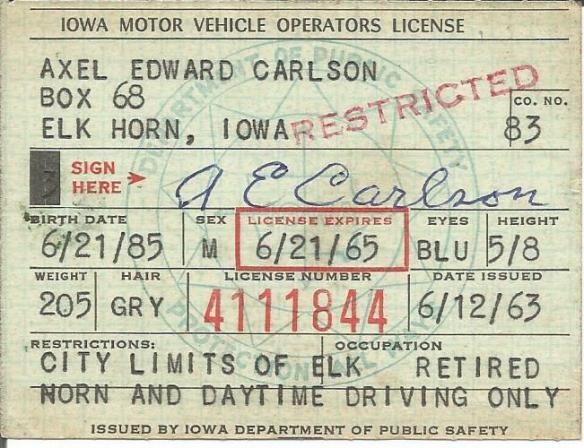
This poem about my Aunt Alma, born in Elk Horn, Iowa, and who lived most of her life in Omaha, is also about Nebraska: there is the obvious namecheck, but the references to the heat and humidity are so much about that midwestern State, and then references to decals, flashlights, neon and the Interstate place it firmly in America too.

It is a poem that I wrote some time ago, one of the earliest that I had crafted so carefully and perhaps represents a change in my style from youthful randomness. It was written here in England – like so many I was reading Gunn and Hughes at the time [I’m not making comparisons, just obvious influences!] – and reflects a little the two voices I have in my writing. I know it signals its ruse too much and too often, and it is metaphor/simile heavy in the way aping better writers will promote. But it is of its time and whenever I read, I recall with affection the influential person it describes.

Aunt a la Recherche

The filter wears a crimson kiss;
mug-brims too sport
lipstick crescents with coffee stains.
She is tattooing things with codes,
a few decals announcing her like billboards.

From sentences sanded through larynx bobs
her phrases growl out to press into my ears –
nostalgia as condensed as humidity recalling
summer heat, sweat,
days spent listening to her deep speech.

The words are flashlights, beacons from inland.
Nebraska plains span in her open eyes,
stretch behind into memories.
Perfume and smoke are
morse-smells tapping messages –

[car fumes along the Interstate creep back from nowhere].
Downtown neons flash across her smile
and she coughs: thunder roars from lightning;
hail strips leaves, roof shingles, dreams.
Rain falls all day here.

Cigarette butts, used tissue, empty glass – through these
she leaves a refuse. Clearing up,
I pocket the ash burnt off a long story.
The room is a limbo just then,
a tableau hung in the now silent air.

NB if you came to this via Twitter I apologise, sort of, for the naughtiness of that twitter title, but few seem to visit my Nebraska posts, and I was nudging….

Nebraska 8 – Ted Kooser, ‘So This Is Nebraska’

Originally posted February, 2014:

gravel - Copy

Having decided to take on the theme of Nebraska and run with this, initially because of the often comic references to it, especially in film and song, as a rather remote nothingness, I have increasingly reflected on the State, and especially Omaha, as the place of my birth and therefore significant in defining that part of me which remains inherently and often surprisingly American, not surprising because of any resistance – far from it – but because I have lived most of my life here in England.

In then researching other reflections on the State and its largest city, as well as different areas where my family and I have lived, I came across the fine American poet Ted Kooser  (born in Iowa) and someone who writes about Nebraska with great affection but also visual and emotional clarity. I should also stress what a fine poet he is in general, tagged the ‘Poet Laureate of the United States’, and whose collection Flying at Night I am currently reading and from which I will at some stage post a non-Nebraskan poem. But for now, here is one aptly titled

So This Is Nebraska

The gravel road rides with a slow gallop
over the fields, the telephone lines
streaming behind, its billow of dust
full of the sparks of the redwing blackbirds.

On either side, those dear old ladies,
the loosening barns, their little windows
dulled by cataracts of hay and cobwebs
hide broken tractors under their skirts.

So this is Nebraska. A Sunday
afternoon; July. Driving along
with your hand out squeezing the air,
a meadowlark waiting at every post.

Behind a shelterbelt of cedars,
top-deep in hollyhocks, pollen and bees,
a pickup kicks its fenders off
and settles back to read the clouds.

You feel like that; you feel like letting
your tires go flat, like letting the mice
build a nest in your muffler, like being
no more than a truck in weeds,

clucking with chickens or sticky with honey
or holding a skinny old man in your lap
while he watches the road, waiting
for someone to wave to. You feel like

waving. You feel like stopping the car
and dancing around on the road. You wave
instead and leave your hand out gliding
larklike over the wheat, over the houses.

Nerve Damage – Analogue Flashback Books

Buzzing

P1000517

It isn’t new but still a good idea, an anthology with an eclectic mix of writers responding to a single stimulus, here the image The Poet by Joel-Peter Witkin, 2005,

poet

The impetus for this is explained in a note from Rupert Loydell,

P1000519

I am pleased to have a poem in this collection and it is as entertaining for a fellow writer as it will be for an objective reader to encounter the range of responses to that singular source. Apart from the mention of spoon/s nine times [we’ll call it ten now, rounding it up] the ekphrastic poems see and describe with considerable differences.

Naturally, poets writing about The Poet reflect on the nature of this appellation. Paul Sutton leads off the collection with The Failed Poet, the persona whose wife, like departed readers, ruminates

‘…….God, is he still working?
No one reads his stuff, or cares.’

But the poet has his integrity because he can still assert his intentions as a writer, still trying,

‘…..If you look
hard unto any object, the atoms
sometimes wave.’

In Carrie Etter’s She, the literal ‘They are fierce spoons they are nailed into her head’ is absorbed by the other reality ‘Inchoate is she, is the long walk home’, gender not an issue but the one certain variable.

For Peter Finch in Poetry is Over, dissolution within the artistic urge to continue trying is referenced through the analogy of musicians who revamp their oeuvre, ‘musicians from the seventies’ like Joni Mitchell and Van Morrison ‘adding orchestras taking away the edges smoothing on mature value’ but ‘it never makes enough in the welter of expanded vision’.

Martin Stannard frames his response in framed deconstructions of the apparent shallowness and/or loss of identity, a recognition made empty in the artifice of its self-referencing, ‘”It’s not like you’re, like, in the real world, is it?”’

Physical features feature throughout all the poems, either as the visual metaphors in the stimulus image or what they represent, as in H.L. Hix’s title poem Nerve Damage where they are comically drawn, as of ears ‘Bigger by a barefoot crick crossin. People notice. That one ear’s biggerin Maude’s back yard’ before we are reminded that how we look is irrelevant in the bigger picture, ‘There’s a poetry to this footage of refugees receiving instruction in the language of border patrol.’

Ian Seed opens the door to uncertainty in another one of his wonderful vignettes, here about students, the visiting poet from India, a dead father, and the back door that needs its lock repaired.

For Alan Halsey the conclusion is ‘I didn’t believe a word of it’ when another narrative interprets our poet’s life, and David H.W. Grubb would have us believe his name was Spike,

‘The last time I spoke to Spike
he had his head down a long poem’

but that is another unique unravelling, a bit like Spike when composing

‘digging up unique words
as luminescent as BONGO.’

It is also The Luminous Poet for A.C. Evans where

‘…..crazy showgirls just blew my mind
Took me apart in a smash and grab, hit and run
I tell you, officer, there’s something weird in that junkyard’

or as the poet tells us himself in Rupert M. Loydell’s Rictus,

‘All my poems now are
dense scribbles between
morning and shadow.’

This damage done to the notion we can fix and agree on what we all receive and then describe, the nervous energy of the poets’ panoply is a lively buzz.

P1000518

Can be purchased here:

UK: £5.00 per copy, cheques payable to ‘R.M. Loydell’
USA: $10 bill per copy, to include postage
Or I can sort out Paypal for anyone.

Rupert Loydell

4B Tremayne Close, Devoran, Cornwall TR3 6QE, England