Nicky Morgan’s Panacea for Encouraging Reading in Schools

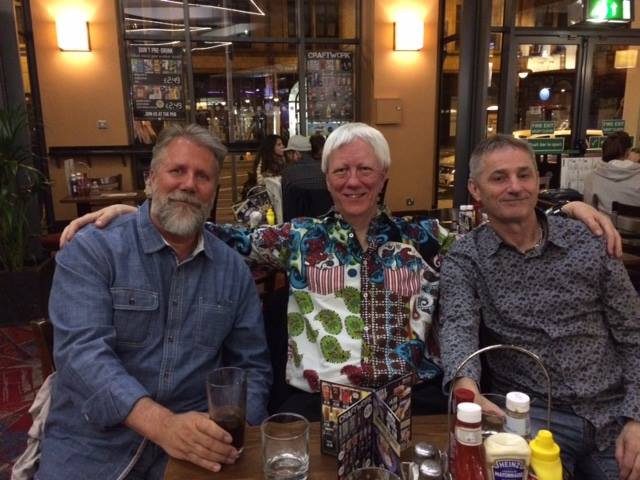
dickens[Above image of a young Charles Dickens used in today’s BBC News Education report]

Nicky Morgan’s urgings today that major publishers cut the price of ‘classic’ novels to encourage reading in schools and, presumably, at home is surely no more than a soundbite.

As Education Secretary, though bland and meaningless in terms of her impact and effectiveness since holding this office, one assumes there is some element of genuine truth in her wanting to improve reading among the country’s young, and beyond. But extolling the virtues of ‘classic’ novels as a catalyst for this is, well, dumb.

Does simplistic sound better for anyone balking at that previous adjective? Perhaps you’d be right, but I have little time for this kind of politicking.

I’ll keep this straightforward: for years Wordsworth Editions Classics series has been competitively priced on the open market – currently at £1.99 – but I remember when these were available not so long ago at £1, and I think it is easily possible to buy in bulk, as schools would, at a significant discount on that current price. The point is, compared with most other contemporary fictions, as well as ‘young person/teenage’ fiction out there, I don’t see much point in making a clarion call about this area of the literary market.

Unless you are after that soundbite. And if you can get a comedian, who has his own book to hawk, to provide a celebrity endorsement.

And the ‘classics’ as catalyst? This is a tricky one to start unpicking critically because in doing so it is easy for other dumb people to characterise any reservation as a ‘progressive’ distaste for heritage and culture and – you know what’s coming – demanding high standards. I see my reservations about the classics as obvious ones, especially in engaging and encouraging further reading primarily in the young: relevance, language, length.

I am not, let’s be clear, banning the ‘classic’ novel from its role in engendering a desire to read – that is something Morgan’s predecessor Gove did. But in deciding a national policy, politicians need to step considerably outside their own narrow experiences. For example, Morgan states ‘Our ambition is that every secondary school should have sets of a wide range of classics so that whole classes can enjoy them together – books I loved as a teenager by authors like Jane Austen, Charles Dickens or Emily Bronte’ – such a personal interest doesn’t equate to the realities of the classroom experience, nor more importantly, approaches to encouraging reading for all based on years of educational research, for example individualised programmes [though I have always been somewhat old-fashioned in enjoying reading the class novel].

This isn’t the place to unravel that debate. However, it is a key point because it continues to highlight Morgan’s soundbite approach to curriculum development – and funding – rather than a professional and informed one. Indeed, encouraging reading of a class novel, whether classic or contemporary, doesn’t fit into years of a target culture and preparing for its testing regime: not least KS2 and KS3 Reading tests which have little if anything to do with reading widely for pleasure [surely the fundamental urge behind Morgan’s idea?].

I could go on unpicking the problems with this, not least querying how an emphasis on reading classic novels can be fostered for reading at home. However, I will make clear here that I am a huge fan of classic novels [sounds daft expressed like this….] and sharing/teaching these in the classroom. But this isn’t the panacea Morgan soundbites.

Yes, I have created a new verb.

The other key point is, why isn’t Morgan urging publishers to make ALL fiction, especially contemporary ‘young person/teenage’ novels, more cheaply available to schools? Would that be interfering with the market economy too centrally? Well, even I would say yes to this!

The way to achieve this is for the government to heavily subsidise such published materials for schools. That’s an actual funding policy to underpin and support a genuine curriculum plan for encouraging reading. It does matter that ‘classic’ literature isn’t the impetus for engaging young readers: we need fiction that reflects the lives they live, in the language they speak, in accessible amounts [that doesn’t mean ‘short’]. Such fiction does also need to introduce the young to contemporary lives they do not live/know/understand so that they learn; to use a language that will challenge and inspire and elevate, and in any amount but in a curriculum that values and validates whatever time is needed to read for the sheer pleasure of it.

And this is only scratching the surface of the argument. We need to reopen all the public libraries that have been closed by this Government. Every state school needs a dedicated fulsome library and a dedicated professional librarian. Every state school needs to support reading lessons free from testing and measuring of any kind. Every state school needs to have visiting writers to introduce their writing and to read it and to develop workshops for students to write themselves.

Does this sound complex and demanding? I do concede it would be a lot easier to simply suggest we get publishers to drop the cost of no-copyright-fees-needed ‘classic’ literature for schools and a Bob’s-your-uncle soundbite policy to promote this.
Curtain Pole

The curtain pole has been leaning downwards at the right hand
end for over a year, ready to fall, and there is a bend in the middle
where the two halves are joined. Tonight I have finally made the
repair and it is secured back and totally straight, as far as the eye can
tell. There are loads of things in this house that are broken or just
getting worse with the wear of time. I have been working at other
fixings or decorations for so many weeks but seem to be getting
nowhere, and I am worn out too with what fading skills I bring to
each chore and the increasing ache and pain of trying to match the
level of care from so many years ago. I seem to be losing all of my
patience and I have lost the certainty that I can make things better.
No doubt I will go back and admire the curtain pole as some kind
of hope, wish that its horizontal perfection can be a simple template
for more complex work, and resign myself to the bigger jobs to bear.

Writing Workshops – Author Profile

DSCN1865 (2)

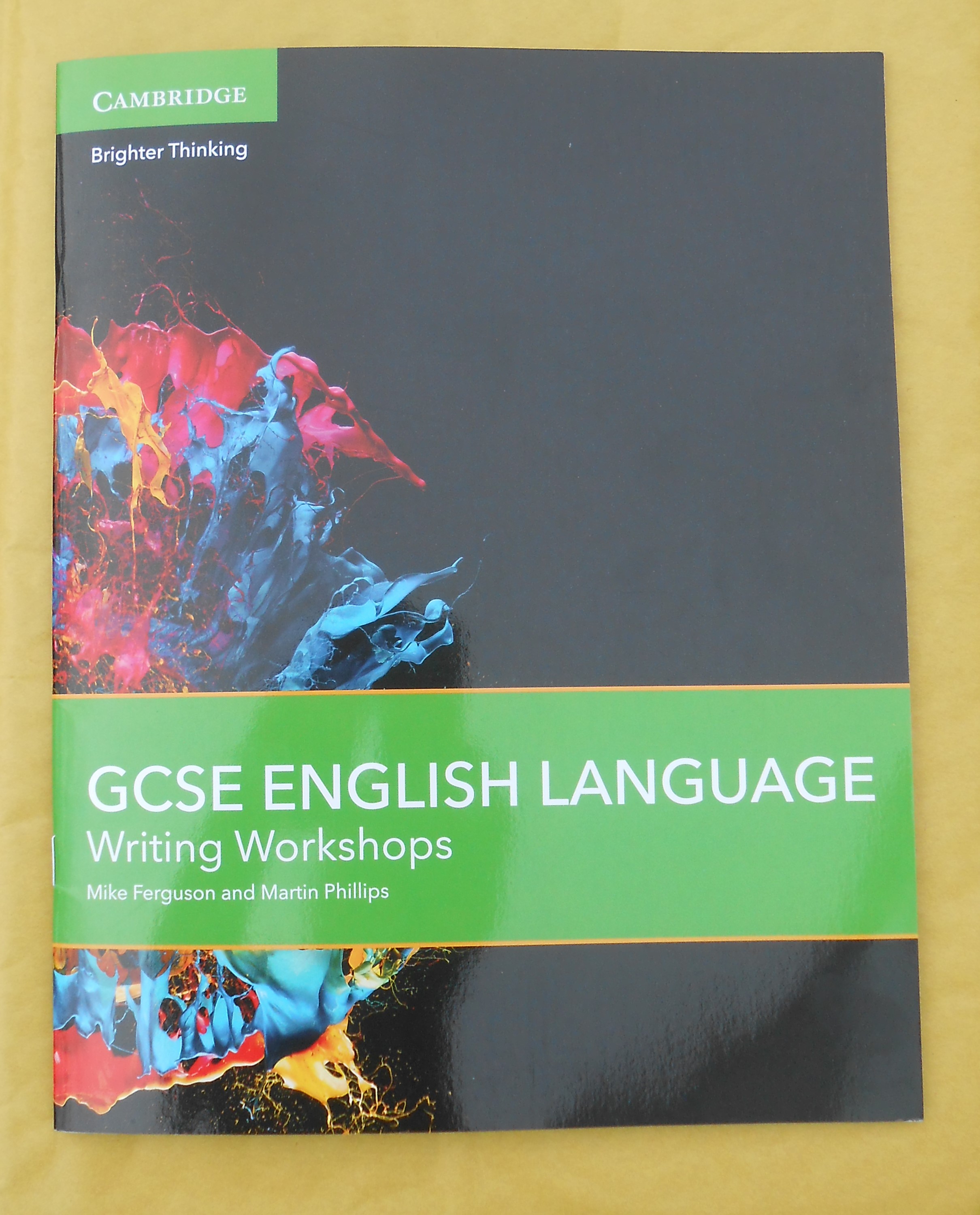
Cambridge University Press has put author profiles on the educational site for its new English GCSE resources, including the Writing Workshops, and you can check it out here or, if interested, read below – I had forgotten information had been requested, and it is interesting to read what was said and judge if you still agree! Well, I do, and I am still very proud of the resource written with Martin Phillips:

Author Spotlight

Mike Ferguson – Writing Workshops

1. Could you tell us a little about your background?

I taught English for 30 years in an 11-18 comprehensive; 18 years as Head of Department. I write regularly: have had poetry published in a wide variety of journals [book and on-line] as well as anthologies and one collection; educational textbooks, especially focusing on poetry and creative writing, and blogging, both about music and English as a subject [though separately!]

2. What do you enjoy most about working in education?

I am retired from teaching, but always loved the engagement with students and colleagues. As an English teacher my greatest privilege was to work with students of all abilities and encourage them as writers, especially creatively, and to experience their joy in discovering a talent for being imaginative as well as expressive. Some of the best writing I have ever read – and I mean ever – has been that from my students over those 30 years.

My work now in education, whether writing about English for textbooks or blogging, reflects my continuing desire to share experience and support both teachers and students to engage fully in this subject, especially in developing an enthusiasm for and expertise in writing widely.

3. What inspired you most as a student?

The humanity, kindness and support from teachers at my secondary modern school in Ipswich: a Head teacher who encouraged my political and other radicalism, as naïve as it was at the time; an RE teacher who allowed me to explore issues and express opinions without ever correcting or belittling; a Physics teacher who always complimented my effort and illustrations in exercise books whilst I was clearly out of my depth with knowledge and understanding, and an English teacher who praised and encouraged my early poetry writing [a la Ginsberg] despite the fact it was naïve and pretentious. Their encouragement and care was forever a model to which I aspired as a teacher.

4. What advice would you give to teachers at this time of significant educational change?

English teachers need to be writers and readers themselves, especially the former.

If we are entering a period with less testing and targeting as the core culture in which we work – which seems possible – English teachers should, in my opinion, celebrate the creativity in our subject as much as possible. The whole school curriculum has over the years become increasingly literal and in English we need to celebrate metaphor and all that is slippery and elusive, especially when it comes to monitoring!

5. What’s your favourite book and why?

This is that question which cannot be answered finitely! However, I would single out Ray Carver and his short stories as a favourite in being so memorable to read, but also in guiding me as a writer: keeping it simple. I know I very often do the complete opposite, but what I hope my best writing achieves is to be honest and straightforward. Unless I need to be outrageous.

6. How do our new English GCSE for AQA resources support teachers and students?

With fellow author Martin Phillips, we wrote the ‘Writing Workshops’ to adhere passionately to an ethos where we treat students as writers to help them improve as writers. The new GCSE terminal exam for Writing is a reality that I would never characterise as ‘easy’ [especially its totality as an end-of-course exam] but it is straightforward and if we have encouraged students to write as writers – more meaningful than it sounds – over the two years of the GCSE study, and to engage with and respond to extended ‘real’ writing tasks rather than endless exercises, then they will be as prepared as possible for that exam. We also hope they will have enjoyed the writing process of getting there.

I think the digital resources that accompany our text and many others in this significant new collection of resources to teach English Language and Literature from 2015 is genuinely exciting in its breadth and focus. From a Writing perspective, well-known and full-time writers talking about their craft directly to students has to be a goldmine of engagement and illumination.

7. Cambridge University Press has set up a Brighter Thinking Forum to engage students and teachers in what we do and to give something back to them as well. It also represents a mission statement for our new publishing. What does ‘brighter thinking’ mean to you?

Keeping my focus on writing, ‘Brighter Thinking’ in this context is about exploring and engaging and being imaginative. It is also about being creative, and it is about being prepared to take risks. There are rules and conventions and one needs to know these as well as when and how to use them, especially where such a norm is the best method to apply. However, ‘Brighter Thinking’ should be about having had the practice to explore alternatives and the confidence to brightly step outside the box in using these to make a real impact.

The Skriker – Caryl Churchill, the Royal Exchange Manchester, July 2015

P1000019

Working in Manchester in July, I was fortunate enough to get tickets for and see Caryl Churchill’s The Skriker at the Royal Exchange Theatre with Maxine Peake in the starring role.

It is a linguistically virtuoso play and that was a key attraction for me, as well as the staging and naturally Peake’s performance which had received rave reviews. Having seen it for myself, these were abundantly deserved, not that they were ever in question.

The language bombardment is thrilling as well as beyond absorption. The Skriker’s opening soliloquy, for example, challenges Lucky’s famous speech in Waiting for Godot for its relentless pace and volume of words, but the playfulness is unique in my experience. And although one gets attuned to the punning and repetitions in the Skriker’s mesmerising dramatic idiolect, that doesn’t mean one is always following the meanings, though the idea of semantic sense as a given would be to miss the point of only picking up on sound and impression and suggestion and meaninglessness: how does one make sense of the world we live in?

I’ll highlight a few examples of the wordy playfulness to give an aural flavour:

scissors seizure seize your sizzle
snap crackle poppet
changeling changing chainsaw massacre massive
Dollop gollop fullup
ointment disappointment

and including the grammatically ramshackle yet working lines like

Roast cats alive alive oh dear what can the matterhorn piping down the valley wild horses wouldn’t drag me

and this is just the tip of a whole other world iceberg.

The most dramatic point in the play is about halfway through and it is the sheer imagination and presentation of the moment that matters. I have no idea how gloriously this has been done before and elsewhere, but at the Royal Exchange, it was truly stunning. Whilst there are notes from Churchill to set the scene, its realisation is completely open to interpretation. The action is a feast in the underworld populated by an array of ‘lavishly dressed people and creatures’ and the Skriker as a fairy queen.

In this production I was so privileged to see, the stage was transformed into the most colourful and loud and grotesque and noisy and busy episode. In addition to those ‘people and creatures’ the stage was also invaded/filled with a chorus of singers and the sound of the whole was breathtakingly beautiful in its orchestration and volume.

This scene was, as they say, worth the admission price alone. It and the whole play lickety split me in two with the stink bombastic of its linguistic and dramatic prowess.

Give You That

al shirtBig Al is 60.

I know Big Al is 60s.

What do you mean Big Al is 60s?

You said Big Al is 60s. I know he is.

No I didn’t. I said Big Al is 60. What do you mean he’s 60s?

The shirts.

What do you mean the fucking shirts?

I didn’t say fucking shirts. I said shirts.

Don’t be so fucking pedantic.

His shirts are 60s.

I know his shirts are 60s.

So do I. So why did you tell me he’s 60s?

I didn’t you knob. I said he’s 60.

What? 60?

Yes, fucking 60!

You mean 60 years old?

Apocalypse Now!

That would explain the shirts.

I’ll give you that.

Where does he get them, by the way?

Fuck knows.

I thinks it’s America.

What? From Burt Reynolds?

I don’t think Burt Reynolds sells 60s shirts.

But he sure wears them.

Only in ‘Boogie Nights’.

But that’s set in the 70s and 80s.

OK, and other films. Like ‘Shark!’

Did he wear 60s shirts in that?

Well it was made in the 60s.

But they’re films.

So?

So, that doesn’t mean that’s what he wears in real life.

Big Al does.

But that doesn’t mean he gets them from Burt Reynolds.

I’ll give you that.

Kev and I pause from our usual to and fro and reflect on where we have arrived. It would appear to be at some coalescence of agreement on the fact Big Al is 60 years old and wears 60s shirts. Whether those shirts come directly from Burt Reynolds would appear to be a fanciful idea, but you never know – Big Al has some esoteric suppliers for his shirts.

Do you think they’re 50s shirts?

Unlikely.

Why unlikely?

Don’t think there was that much colour in those days.

What the fuck do you mean not that much colour? Colour is colour. It isn’t defined by a period in time.

I know colour is colour. What I mean is that much colour wasn’t fashionable in those times.

Have you ever seen 50s pop art?

What do you mean have I ever seen 50s pop art?

Forget it. I think you’re right that it wasn’t fashionable. Are we talking hippy colour?

You think Big Al is a hippy?

That’s not what I’m saying.

So what do you mean by hippy colour?

Is that what you mean by 60s?

Hippies were in the 70s.

‘Woodstock’ was in the late 60s.

I’ll give you that.

Do you think you have to take drugs to wear shirts like Big Al?

Don’t be stupid.

Do you think wearing shirts like Big Al does is like taking drugs? All that colour?

I’ll give you that.

Kev and I pause again, this time somewhat overwhelmed by the sustained agreement that has interfered with our routine. I decide to pick up my opening thread, just to see where it unravels.

As I said. Big Al is 60. That means he remembers a better Rangers.

Rangers?

Yes, Rangers.

As in Texas?

Why the fuck Texas?

The Texas Rangers.

What has that got to do with Big Al?

Isn’t he from Texas?

No, it’s Glasgow.

Ah, I thought he had an accent.

But he lives in Wales.

Is it a Welsh accent?

No, but it isn’t Texan either.

So, it’s Glaswegian?

Och aye the noo Jimmy.

What?

That’s Glaswegian.

Like Steinbeck?

What?

Like Steinbeck speaks: ‘gang aft agley’

That’s not Steinbeck you numbnut.

Yes it is. Lennie says it.

No he fucking doesn’t.

Are you sure?

It’s from a Robert Burns’ poem.

Oh yeah. I’ll give you that. What did you mean by a better Rangers?

Rangers FC. Big Al will have known of their football in better days back in the 60s.The days of three willies.

Three willies?

Yes: Willie Henderson, Willie Johnston and Willie Mathieson.

Those pricks?

I’ll give you that.

We pause again. Kev downs a Stella and I down a Jack. All this skirmishing over Big Al is thirsty work. We normally get pasted just so we can tolerate the shirts, but tonight’s cycle of conflict and resolution demands another kind of wasted indifference. But I try to salvage one last piece of coherent observation and repeat,

Big Al is 60.

So it’s his birthday?

No, he’s 60 so he’s had his birthday. Otherwise it would be Big Al is going to be 60. That’s not what I said. I said Big Al is 60.

Big Al is 60?

Yes, that’s what I said. He’s 60.

He’s not 60s?

I didn’t say he’s not 60s. I said he’s 60.

He’s 60s and he’s 60?

No, he’s 60 and he’s 60s.

Hang on, hang on. How can he be 60s?

Am I missing something?

It’s hard to imagine, considering their colour, but yes you are.

What the fuck do you mean?

His shirts.

What about his shirts?

His shirts are 60s. Big Al isn’t 60s. Big Al is 60.

I’ll give you that.

The Hut is Gone

‘The hut is gone?’

‘The hut is gone, yes.’

‘My hut is gone?’

‘Well, it was never strictly your hut, and it definitely wasn’t your hut for the last five years, and it’s been replaced by a new purpose-built facility, so why are you being so tetchy about this? And you don’t work here anymore.’

‘I was just passing and noticed a gap.’

We stare at one another and it all starts to come flooding back, but I stop that before the explosion. It’s taken years, but I can stop it now. In this context. But I feel I need to pursue the demise a little further,

‘Did anyone save any of the posters?’

‘What posters?’

‘There was a Hendrix, a Mohammed Ali – I think – and loads of A3 photos of San Francisco, and then all those Country and Western posters – Dolly Parton, Merle Haggard and other greats – and then loads and loads of Rock pictures; oh, and there was definitely a Paul Rodgers at Portsmouth, and….well, I forget, but the ceiling – I mean the original ceiling – was covered, and I just wondered if anyone bothered to retrieve any of them?’

‘No.’

We stare some more. It is an impasse.

‘That’s French,’ I say.

‘What’s French?’ he asks.

‘An impasse.’

‘What impasse?’

‘The one we are at.’

‘I don’t understand what you are on about.’

‘Well, you wouldn’t would you? And I only really mention because that French teacher inherited my hut, didn’t he? Mr Jolly?’

‘It’s not Jolly, it’s Jones. He teaches Spanish’

‘Yes, I know. That was just a joke. I’ve heard what he’s like playing five-a-side, and it’s not friendly. But surely he will have said something about saving the posters?’

‘I really don’t know what you are on about.’

‘I guess not.’

We stare more again, but at the ground rather than each other. It’s more a gulf, or a chasm to be honest. When I look up from the ground he is miles away.

‘I’ve got to go,’ he says.

‘Just like the hut.’

‘Pardon?’ he asks.

‘There was student writing as well. I think someone wrote ‘fuck’ on the ceiling, and they might have even used the c-word. It was quite funny, as I recall. And it was wonderfully sweet of them to leave their risqué messages. I felt as if they were secure and confident about returning and writing on the ceiling like that. I think I may have used a naughty word or two in my teaching, so they felt they could add their own.’

‘Students?’ he asks, shaking.

‘They’d left school. I wouldn’t let students still at the school write on my ceiling. I’m not stupid.’

‘You let students write disgusting messages on your ceiling?’

‘They weren’t ‘disgusting’. They were fond remembrances, I’m sure. Just had some expletives in them. The original ceiling was covered by those sound-proofing tiles. It’s not as if I let them write where anyone could see. I’m not stupid.’

He looks at me with a kind of disbelief that seems incredibly rude.

‘You let students write expletives on your teaching hut ceiling?’

‘I didn’t know they were writing expletives at the time. I only noticed when they’d finished. Then I covered it all up. Messages for posterity, I thought….though it looks like that never became a reality.’

‘I am utterly astonished that you could have allowed that to happen in a school classroom,’ he stutters and shakes.

‘That’s nothing compared to what those two year 11 students did in my other hut.’

He looks at me with such panicked incredulity I know he won’t be able to ask, so I tell him,

‘They made love on my desk. Can’t remember their names, and it was on a prom night here at school and they decided that a safe and secure place for their fucking would be my classroom. I felt rather honoured by that. Thing is, they weren’t as ‘safe’ as they thought…’ I laugh a little but notice he isn’t standing on the same solid ground ‘…because to the best of my knowledge they later had a baby and I think it would have been conceived that prom night. They were still together though when I found out. I think that’s brilliant.’

His is shifting sand. He is standing opposite me, on the other side of that chasm, but the distance itself isn’t enough: his body is sinking in the shifting sands of the gradual realisation that two kinds of fucking happened in two of my huts, one bad enough as a linguistic reality, but the other infinitely worse as an actual student fornication that resulted in an actual birth which in his mind was actually outrageous and unforgivable.

‘Perhaps they’re at the school now,’ I offer.

‘Who is here now?’ His eyes are so open the whites make me think snow is coming.

‘Their child. Though I’d imagine he or she would probably have come and gone if they were ever here. And I don’t recall seeing the two of them attend as parents.’

‘You mean this happened before I was working here?’

‘Oh yes, long before your tenure. Didn’t I say that?’

He looks like he wants to hug me, but the distance is far too great. And there is still the fucking on the ceiling, so to speak.

‘Christmas is coming,’ I say, thinking a change of subject might be worth a punt.

‘I guess you’d let someone write expletives on the ceiling of the manger?’

I look at him with two of my own but unspoken questions: is he taking the piss, and does a manger have a ceiling? But I respond with,

‘If I knew the virgin birth would lead to months of festive advertisements on TV, I’d have written Fuck Christmas on the ceiling myself.’

He winces, but the sinking would appear to have stopped. If we tried, we could probably shake hands across the trenches and kick some more bantering balls in the snow. But we don’t.

‘So not one of my friends and ex-colleagues mentioned the posters and pictures on the ceiling?’

‘You’ve been gone for five years. Christmas comes back once a year, but this is the first time you have returned in those five. We’ve moved on here. The new buildings represent our investment in the future. I thought you of all people would appreciate our getting rid of temporary accommodation. People still here have jobs to do; they’ve moved on too.’

A jolly-looking Jones walks across the courtyard opposite us at that point, giving me a surprised smile and waving. I want to run over and kick him in the balls, but I’ve heard how he reacts to that kind of accidental contact in the sports hall, so there’s a good chance he would be homicidal if attacked intentionally.

‘Happy Christmas!’ he calls out.

I turn, walk away, and leave the site. The posters and pictures have gone, along with the hut. It’s time I take my memories and leave as well. Perhaps there’s a plaque still there, and a few other posters left on the last ceiling that was mine, but time does eventually erase most things that have nothing more to give than nostalgia. It’s like kicking the shit out of a colleague’s five-a-side shins: the bruising eventually fades and disappears, but even before this you’ve laid it all to rest over a beer, new faces around the table laughing and telling today’s stories.

I turn again and call out,

‘Happy Christmas,’

but no one is there. It doesn’t matter. There’s all kinds of ways to let people know you’re still around. You wait until I find that bastard Jones.

An Impression of Colour

There is no blue without yellow and without orange
– Vincent Van Gogh

The significance of colour to GCSE English Literature examiners matches the significance of a singular rote regurgitation to students that sit GCSE English Literature examinations: ‘hierarchy’. To the latter cohort, this structural reality informs the characters and themes in most texts studied, the increments within either of those areas quite probably foreshadowed by that very and other prevalent device – somehow: it will be teased out like Curley’s wife’s hair to lay flopping or dead on the page; and to the former cohort, this structural reality resides entirely in pens. Marking pens. The colour of these marking pens, to be precise.

In the hierarchy of examining and examiners there is a clear increment in proficiency and status, either to be perceived or actual, and it is colour-coded. Starting at the beginning, it is pencil and grey for assistant examiners finding their fledgling assessment feet. Once on the first rung of apparent proficiency [one has to stress apparent because another kind of flopping can actually happen at any point on the ladder] they move to the higher use of a red pen. Senior examiners, who also mark in red for their prime papers, are further up the hierarchy and thus use a green pen to monitor and mentor the AE’s reds. At a later stage, SEs use a superior purple pen to correct and alter all previous colours, righting wrongs and circling conclusively with authority. Continuing up on the refining climb, a black pen supersedes all that has made its prior errant judgements, until – in another one of those students’ favourite applications of a premier literary device: the ‘cyclical’ – the pencil and its smooth grey usurps the black and thus again all that was judged and standardised and corrected before to probably infer some deeply socialist principle of caring assessment.

Not that any of this matters to Big Al.

For Big Al, colour is a moveable feast. It is moveable by the paradox of being absolutely fixed for Big Al in that he couldn’t on the one hand give a fuck what anyone else might think about his choice of colour in the clothes he wears [or in the defined 60s era of its once prevalent fashion], but also on the other by the actual movement in the visually psychedelic momentum of the colours he wears over the defined period of Marking Review or especially on a singular day within this. Just looking at Big Al on a particularly vibrant evening, colour-wise, is like taking LSD.

Any night out eating with Big Al after an intense day’s examining in the basement emporium of the Palace Hotel in Manchester can attest to the hallucinatory impact of his sartorial selections. Sunday produced a particularly robust appreciation of Big Al’s dress sense in the lively debate engendered by the other drabber dressers with whom he socialised in that collective downtime, especially the linguistic groping for a precise semantic grab of the hue he was wearing, this too aping more students’ fashionable analysis of the writers’ craft as a semiotic jamboree of intention, where declarative verbs and past participles replace the empathetic or aural touch and feel of an author’s voice.

‘It’s peach.’

‘No, it’s apricot.’

‘Tangerine.’

‘Pumpkin.’

‘Kumquat!’ Trish shouts thinking she’s nailed it.

Kev smirks and you know what’s coming next: innuendo like an Exocet, smut at the speed of sound, a pun pummel.

‘Cum what?’ he asks in mock offense, the tone of voice as spellcheck on his own exegetic suggestiveness. ‘Don’t be so disgusting.’

‘Mango.’

‘Papaya.’

‘Squash.’

‘Persimmons.’

Kev is smirking even more now, this fruit ensemble not about to commandeer the thinking in his head,

‘It’s Queen’s Snatch,’ he declares triumphantly, no one quite sure which colour chart he is accessing.

We all stare in bemusement, though Big Al is staring back in anger, still piqued by the accusation earlier in the evening that his marking pace was like a tortoise on tranquillisers.

‘It’s not my idea! John whispered it in my ear. I’m just repeating what he said.’

John looks up hurt at the slight on his character and the blatant affront of the lie, but doesn’t bother to argue, subdued by the imperious weight of Kev’s banter and the laughter from the rest of the group.

‘It’s Sharon’s fruit,’ Tom suggests knowingly and convincingly. For a moment, there seems to be a resolution, the hiatus in word-painting seeming to be a confirmation of Tom’s decisive naming. And the fact he is just pocketing his smartphone.

‘Don’t be fucking stupid,’ I pitch in, prodded from the quintessence of my usual quietude and deference into this aberrant outburst of miserable contrariness.

‘It’s fucking yellow,’ I assert in a withering rejection of all that has preceded.

‘Yellow?’ everyone asks in a chorus of communal disbelief and bullying.

‘Yes,’ I state calmly and assured and then rising to walk over and stand behind Big Al before slowly removing his blazer from the back of the chair and raising it up for everyone to see, like a sun rising above the horizon. In that instant of glaring revelation, there is another joint response, this time in affirmation and clear regret at the orange tangent they had all taken, with a babel of murmurs ‘yes he’s right’ and ‘yes it is fucking yellow’ and ‘how could we have got that so wrong?’

Trying as ever to not appear smug in the victory of my incisive observation, I offer the group a precursor rationale for their tangential colour references.

‘You’re all still overwhelmed by what Big Al was wearing last night. You know, when we lost him for about ten minutes in our walk to the Beef and Pudding restaurant?’

By its very nomenclature, an ‘apocalypse’ cannot creep, but the slow awakening to that instant of recalling ecstasy is a joy to observe as the nodding heads of their sudden comprehension seems like a collective of Churchill dogs on amphetamines.

‘Oh yeah!’ they all shout in that moment of crystallised if colloquial clarity.

‘As you are no doubt now remembering,’ I continue, ‘we lost Big Al at that corner where the nightshift workers are revamping the Metro tracks. When I went back to look for him I saw Big Al up the line wearing a construction helmet and working a jackhammer, breaking up the concrete around the old lines. It was hard to spot him at first as he blended in with all the other guys in their Hi Vis jackets. As the foreman explained after I’d managed to convince him that Big Al was meant to be coming with us to dinner, they’d all thought he was one of the expected but late agency employees helping out that night. When he’d walked by the site in his luminescent orange suit, they simply grabbed and put him to task – all hands to the deck when labouring against the clock on a night shift.’

‘An easy mistake to make,’ Kev pitches in with another smirk on his boyish face.

‘Not really,’ Phil counters, a surprise interjection considering his hitherto contemplative quiet, but a blunt refutation as he is no doubt still ruffled by Kev’s earlier smear that Leonard Cohen was a better singer-songwriter than Bob Dylan, a red rag to the bull of Phil’s huge regard for the latter. None of us had felt entirely convinced that Phil’s impromptu singing of Cohen’s The Sisters of Mercy in an assumed copycat monotone had entirely won the argument, but I think most of us were prepared to acknowledge the moral high ground of Phil’s genuine passion over Kev’s mischievous prodding.

‘I agree Kev,’ I say, because he is right. The only leeway in defining the puissance of Big Al’s orangeness on that night – and by extrapolation, its luminous resemblance to a builder’s Hi Vis attire – is whether you think in artistic terms it is more like the relatively small and yet dominant focus of that colour in Claud Monet’s Impression Sunrise, or the actual dominance of that colour in Lord Leighton’s Flaming June. But I wasn’t about to ask Phil which of these he would choose. There wasn’t time. The night was already drawing to a close and I could no longer consume infinite flyers and instead went for the literal one.

However, before I mouthed my usual on y va I did offer one dissenting view of those builders’ handling of our colourful colleague.

‘It did seem wrong,’ I conclude, ‘that having snatched Big Al from his surprise overtime on the railroad, all the workmen shouting out how they hoped he would get safely back to Guantanamo Bay was a damn cheek. I mean, even Kev wouldn’t crack a joke out of a serious situation like that.’

Totality

You broke my heart is said, and
at that point, sacrifice and belief
step into the background to observe
a momentary lapse in the colossal
order of things where lovers
know failure is the one inevitability.
How much the journey to that
apocalypse has made the greater good
will be totaled unseen, and the most
basic of faiths is being tested by this
defeat. Such loss is as ironic as the
leaves falling from a blossoming tree;
such is the sweet aftertaste in their
bitter revisits to one long memory.