National Poetry Day Hasn’t Changed!

NPD Main Logo with copy

It is still on the 4th October, 2018, and the theme is still Change.

As teachers are winding down [if not still spun by directed time…] and looking forward to their well-earned breaks, I am going to have one more prod about National Poetry Day which will be hot on the heels that have already hit the ground running when the new term begins.

With apologies for mentioning that continuance [!], now might be the time to get some initial preparation completed for the 4th October, and I am suggesting no more than downloading the resources I have prepared for National Poetry Day 2018 which can be found here.

[NB For free resources, click ‘here’ above and download pdf copies]

Since the first posting of my writing resources, I have added one Student Sheet and, when I’ve finished my GCSE examining – I am still on the job, so to speak – I will complete more including a Teacher Notes for all of the student writing ideas.

NPD logo (2)

There is so much excellent material out there, mainly from the National Poetry Day site here, and while I fully endorse this, I do have a particular opinion about providing writing ideas for the day which are straightforward for all students as well as open to considerable individual creative potential.

What I mean is the day should be all about writing poetry rather than reading and/or studying it. I stress this is an opinion, but it is a practitioner’s viewpoint. By all means read loads of poetry – but perhaps make this the reading of the poetry written by students on the day!

I will post reminders of this nearer the day, with those additional resources.

My intention is quite simple: providing free ideas to engage and encourage students to write poems about Change.

Pathetic Fallacy

Deep into examining,
I’ve just had a break outside
hacking back two hedges and
overgrowing bamboo –
a quick correction in the heat
of this July afternoon.

Now returned, I’m marking
these last three of the day,
razor-sharp and re-tuned and
admiring the decisions
and precisions I see as the
clearest fine lines.

Top Fifty 35: The Greatest Show on Earth – Horizons, 1970

[Originally posted March 2013]

88

Clever Stuff

Released in 1970 on Harvest, this is one of my favourite albums being special in having been purchased – I wish I could remember where – entirely on the strength of the cover, and perhaps where it was spotted: in London maybe, but I really have no recollection.

It is notable for the lead singer’s gravelly vocal and a horn section tailored to emulate the success of American bands like Blood, Sweat and Tears, and Chicago. There is also a strong organ presence, as on the swirling opening to first track Sunflower Morning. The singer Colin Horton Jennings replaced original American vocalist Ozzie Lane and the band’s apparent soul leanings [I haven’t heard anything before this album].

I think in many ways that though this is seen as progressive rock, and very much the Harvest label’s attempts to pursue and promote this genre at such an apt time, it is very much pop rock – the tunes having the former sensibilities with the horn arrangements wrapped around, and Jennings’ vocal giving it the clear rock credibility. Take second track Angelina which is a fine pop tune, but at 2 minutes into the song, it breaks to the melody’s instrumental riff that itself breaks into a superb freeform trumpet solo, the thumping riff continued in the background with horns and organ in unison. Third track Skylight Man is a weird amalgam of lounge horns, then fuzz, a little organ, then angelic vocals before that B,S &T pumping horn riff kicks in. I think it is quite distinctive in both its time and since.

Fifth Day of the Lady begins with a strange musical requisite of the time, a fairground ditty [with the noise of a door closing….?] which then converts to quite a pretty folk song with guitar and mandolin runs and close vocal harmonies. Sixth Real Cool World is a wonderfully pompous horn-driven number with semi-manic laughing and great downward organ rolls around the strident horns, and then a blazing fuzz guitar solo. This song has absolutely everything melodramatic and memorable. Seventh I Fought For Love is one of the most psychedelic, beginning with sustained fuzz guitar and a powerful organ combination, and then a soft vocal is treated to some exaggerated echo effects before Jennings’ signature rasp picks up the melody. There is a thumping – literally – interlude accompanied by organ and then staccato horns [again, echoes of B,S & T], and then it ends on some beautiful vocal harmonies, again pinched off by echoing effects.

The title song is a fourteen minute rousing concoction of more horns and fuzz to start, and then organ and horns dancing together, quite funky at times. There is a different kind of musical requisite here, the drum solo which is excellent [they always were, come on], then a bass with flute segment [with the fine flute solo played by Jennings], and it arrives back to another fuzzed-out guitar solo by Garth Watt-Roy which is then joined by Mick Deacon on organ: a genuine instrumental progressive gem of that period and genre, especially as the fuzz and organ end on an Iron Butterfly  heaviness and the song returns to its funky opening theme.

The album ends on an acoustic sweetness with Again and Again, Jennings singing sweetly to start and the flute providing a tinge of folk prettiness – that is, until the song moves into another pop-rock piece of heightened action. It is very clever, and very much a shame that this is an album that doesn’t seem to have attained the same status as others of this time.

89


Philip Pullman and the Drafters

I think this order works best –

Read this first:

In a statement, the Department for Education spokeswoman responded: “We want to unlock the world of reading for pupils so that every child can not only read and write to a high standard, but can also develop a love for reading that will last until adulthood.

“That is why improving literacy is at the heart of this government’s drive to improve standards in our schools, and assessments do play an important role in making sure children are taught well.”

Now read Friday’s The Guardian article by Philip Pullman here.

Now read here about the DfE drafters [any post will do, the DfE Drafters Dodge 3rd May Logic to suffice, but I have been copious and consistent in exposing these nobodies].

Read this again [which will actually be the third time]:

In a statement, the Department for Education spokeswoman responded: “We want to unlock the world of reading for pupils so that every child can not only read and write to a high standard, but can also develop a love for reading that will last until adulthood.

“That is why improving literacy is at the heart of this government’s drive to improve standards in our schools, and assessments do play an important role in making sure children are taught well.”

There. As angry as I am?

Sung Worship

It is so welcomingly hot
this July morning, sitting outside
beneath the shade of a parasol
with the fanning cool of breeze,
reading these newspapers.

Over the road, doors
are open to New Life Church
who every Sunday worship there,
weekend learners in the
school’s assembly hall,

allowing air in and their
pretty singing out,
hymns which partly sooth the barbs
of my absolute disdain for
this benediction.

They cheer too,
whoops of winning and joy at
a challenge being played, bonding
within the psychology of
such struggle and belief

in their belonging. I thank
the summer’s sun and our brief walk
together before this shared serenade,
the two of us doing our best
with uncertainty.

Top Fifty 34: John Martyn – Solid Air, 1972

[Originally posted April 2013]

82

May You Never Forget

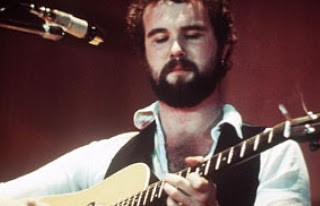
This is undoubtedly John Martyn’s most popular album, following on from Bless the Weather and including the title track which was written for Nick Drake after his sad early death. This song and album once again joins the idiosyncratic bass playing of Danny Thompson with Martyn’s acoustic guitar and equally distinctive vocal, now beginning to develop a slightly lower timbre – a nuance – but not the jazz slur of his next album; however, the sax of Tony Coe and vibes of Tristan Fry hint at the jazzier sounds to come later in John’s career.

Second Over the Hill returns us to the folk song/sound upon which John established his career and which graced so much of Bless the Weather, mandolin, autoharp and violin all played by Richard Thompson on this bright track. Next song Don’t Want to Know and seventh May You Never are two of the most beautiful and well-known songs written by Martyn, the latter probably having the most covers of any one of his works [a problematic homage in that John’s originals are so perfect].

83

I’d Rather Be the Devil provides another outing for John’s use of echoplex and other effects on his guitar and it is a dynamic piece of bluesrock with the soloing presaging so much of the brilliance we would all enjoy over the years, especially seeing Martyn playing live – listen to the exquisite echoplexed acoustic soundscapes dancing above Danny’s complex bass lines. Dreams By The Sea is another rousing rock track and these two definitely produce more overall variety on this album. The instrumental contribution of Rabbit (John Bundrick) plays a key role in the jazzier range too.  Closer The Easy Blues/Gentle Blues illustrates John’s virtuoso playing of acoustic blues, the speed matched by Danny’s dueling double bass and it is such a delightful tandem romp. Unforgettable brilliance throughout.

84


Words Matter

We have these
words:

frown
wrinkled
cold
sneer
command

so the plosive ‘c’ sound
is redundant

or superfluous

another meaningful word

as is the plethora
of negative language

[‘superfluous’ that is, being precise]

where ‘many
negative words’ would
really
very
alot
do

a different kind of superfluous language
I would prefer

to that taught by some teachers
who should know

better

the bestest word
for what
they should
know

to make this point.