
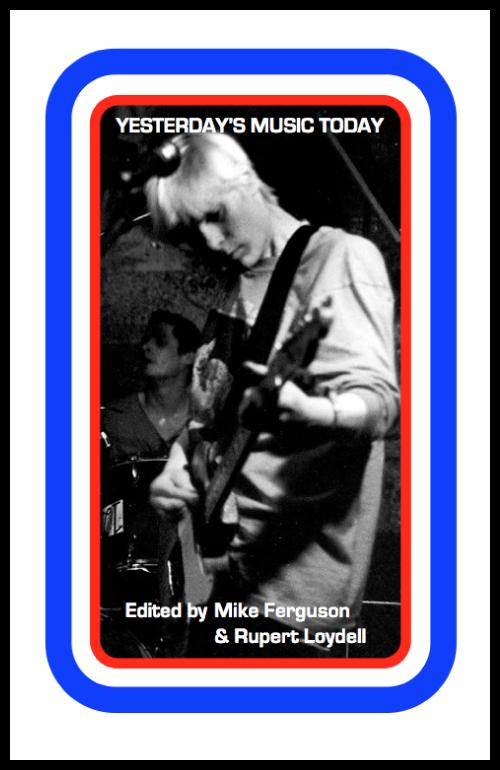
[Image by artist and photographer Nick Dormand]

[Image by artist and photographer Nick Dormand]
She drawls a slow song to the band’s easy
rhythms, a drive-by cruising down the riff’s
long melody. Red beret, Garbo-gloves up to elbows,
she introduces these boys here with a purr and they
play to her coy eulogies as if hopeful lovers.
It is a deliberate seduction, crafted like the patois that
crawls from nicotine air – a cigarillo drawn through
loose yellow-gold strands of hair – with lyrics of
licked lips after a night trip to downtown bars
becoming songs in dark alleys behind juke-box joints.
She sings the finer points of folk taking dreamy
rides through hot city streets in stolen cars,
the routes to where they’re heading mapped out in
Rickie Lee’s neon-flashed urban Americanese.
With some apologies for the title – but not much – I post this poem as it links to my previous, but also to say that it appears in Yesterday’s Music Today, an anthology of poems about music edited by Rupert Loydell and myself and still available at Knives Forks and Spoons Press here.
[Originally posted July 2013]
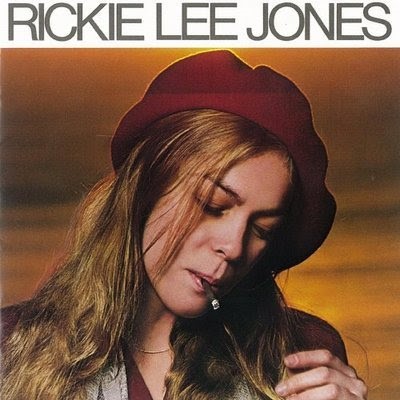
Rickie’s Wonderful Joint
Hit single Chuck E.’s In Love announced Rickie Lee Jones to the world and me in all its funky sass and beat storytelling, narratives made real by the grammar of the street, And he hang that sign on the door….He learn all of the lines. But the album also announced the folk songstress in the Joni Mitchell lineage, for example the sweet piano ballad On Saturday Afternoons in 1963. These ballads were also stunningly beautiful, Night Train as plaintively aching in this beauty as any we had heard before, the slur and harmonies in the vocals rising and rolling hypnotically, the poetry painting atmospherically,
Here she comes
I’m safe here with you
On the Night Train
Oh mama, mama.
Concrete is wheeling by
Down at the end of a lullaby
On the Night Train
Young Blood provided the strut that balances this perfect album of folk to be-bop, funk to jazz. Easy Money told one of the album’s many beatnik stories with characters living in the grooves. A song I would play again and again was the gorgeous The Last Chance Texaco, poetry and melody made beautifully poignant in the wonderful writing and singing of Rickie Lee,
A long stretch of headlights
Bends into 1-9
Tiptoe into truck stops
And sleepy diesel eyes
Volcanoes rumble in the taxi
And glow in the dark
Camels in the driver’s seat
A slow easy mark
This song has one of the most dramatic denouements, the motoring metaphors peaking in the vocal which harmonises at the end as a car that races by and away.
Side 2 of the vinyl picks up the beat with a clutch of storytellers, beginning here with Danny’s All-Star Joint – more places and people we grew to know so well – and Rickie recites her urban poetry
Your sister’s into mustard
She loves to walk the pup
She likes the pickles and the relish
She never gets enough
A Hershey milkshake
Steamin’ on a stick
For a Carte Blanche sandwich
Oh lettuce get thick…
It’s not because I’m dirty,
It’s not because I’m clean,
It’s not because I kiss the boys behind the magazine
Hey boys? How ‘bout a fight?
Cuz here comes Rickie with the girdle on tight
And if she don’t know your name
She knows what you got
From your matzo balls
To the chicken-in-the-pot
Chicken-in-the-pot
Chicken-in-the-pot
and of course we love it because Rickie is dirty, the sleaze and sass as taut as her girdle.

Then we visit Coolsville to meet Bragger and Junior Lee, just before bopping over to Weasel and the White Boy Cools to hang out with Sal, Angela, Perry and Mario. It is just so……cool.
Penultimate Company is all late night jazz and blues, so sweetly sung – just listen to how Rickie delivers the verse
I’ll see you in another life, baby
I’ll free you in my dreams
But when I reach across the galaxy
I will miss your company
and beyond, the sweeping strings unable to compete with the rising beauty of her vocals.
This brilliant album ends on After Hours [Twelve Bars Past Goodnight] and we are lullabyed to loneliness with Rickie Lee’s Laura Nyroesque lament, saying goodbye to the vivid world we have also inhabited for those two glorious sides,
And all the gang has gone home
And I’m standing on the corner
All alone

the seed
is a weed
flower too
we know
planted
to grow
but also
a sword
for those
who saw
a bloom
pushed
into soil
knowing
or not
as who
knows
and then
they will
fall upon
or should
having
been that
sure of
its slice
this way
or that
now when
their seed
will make
others cut
and bleed

Questions and Observations
At the end of reading an Ian Seed prose poetry piece you will very likely want to ask a question. Very often you will need to ask a question. At other times you are quite simply learning: that you can swat flies dead with a Russian novel, probably Crime and Punishment or Dead Souls – and probably paperbacks if they have been pulled from a rucksack – but you mustn’t use insect spray without first anticipating its trajectory and destination.
Other times at the end of reading an Ian Seed prose poetry piece you can be surprised by the sudden tenderness shown or taken in by a sense of fear that you have been told is ridiculous but gets you scared all the same. It is the crying and what happened at childhood.
The joy of an account like Tunnel.
And who would have thought that being free would cause so much anxiety?
Shining shining a light on melancholy and karma.
One question I have to ask about another train journey is should I feel bad when I smiled at that first joke about dementia – I’m sure it was a joke – especially when later on I was taken to her more painful reality?
I once had a girlfriend called Jane and she walked right past me in Ipswich when she was my girlfriend.
Is poet P. a real person and would I know her/him if they sat next to me having a haircut too this Friday?
Wir haben deinen Ring gefunden.
And how Abuse resonates beyond those borders of real and unreal, imagined and experienced: how storytelling is magical and disturbing in these talented hands.
The first two sentences of Translator is a great joke.
The German football team was dumped out of the World Cup this evening and didn’t show any of the defiance that man at the cinema did in Verboten.
Was it Peggy Mitchell?
Bad Breath is brilliant.
I am assuming the poet P. is not the Scottish poet Alan Jackson who may or may not have had a first collection Underwater Wedding.
And at the end I think distances is a good way of summing up all those uncertainties we as readers might want to reduce to knowns with our questions when we realise that they stretch out into both lament – by our being on the other side of them – but also into Ian Seed’s trademark intrigue – by our being on the other side of them.
I am a big fan and highly recommend you get it here at this excellent press.
these young people
understand the elderly
aware of their defiance
and the fragility of bone
how a skull was
once covered in thicker hair
and how vernacular
could be seen as singsong
or sassy or
the voice of stubbornness
and though they sift
through nouns and verbs and
enjambment
they also empathise
and never mention autumn
or other old allusions






[Originally posted August 2013]

Sweetest Mantra
The Isley Brothers sing on this album the sweetest of sweet soul music, Ronald Isley’s falsetto at the heart of all vocals, solo and in harmony. The title song is as beautiful as any beautiful soul sound can be, here at the smooth and soft prettiness point of that pretty spectrum – handclaps providing what funk there is, especially as it rises within the closing chorus that repeats the title. This of course has been set up by the gorgeous Prelude that begins the album, the melodrama of piano strains and crashing symbols beneath the thumping drums with Ronald’s plaintive plea for a harvest for the world, a harvest for the people, gather all together, a harvest for the children.
But if you want some funk, you’ve got it with third People of Today, oh yeah yeah. And then fourth Who Loves You Better is psychedelicised into the mix with Ernie Isley’s signature guitar sound, wah-wahing in that beautiful tone he makes his own. Suitably funked, we are returned to the loved-up caress of fifth At Your Best [You Are Love] where Ronald’s vocal and Ernie’s guitar coalesce in the height of their honeyed sensuousness. This is as perfect as such soulful sonorousness can be, before next Let Me Down Easy usurps with its deeper groove of soft resonance as Ronald sings with a melancholy that soothes in its despair, but only in the loving paradox and mantra of anticipation, if ever you were to leave me.

tonight
the
slugs
have
The
Original
and
Genuine
for
swimming
in
in
the
bottom
half
of
cut
half-
pint
milk
carton
swimming
baths
of
runner
diversions
diverting
slime
trails
into
their
pools
of
pulling
pulled
like
drunks
drawn
to
dunk
their
chewing
into
its
stout
liquid
nullifications
and
leave
my
beans
alone
Seed is a seed is a seed is a seed.
~ Gertrude Seed
 gravyfromthegazebo