My GPS Test Debilitated Me Today

I want this to be my only comment on today’s KS2 English GPS tests [questions and spellings] because I’ve banged on this door many times before but it is shut tight, locked, bolted and welded closed forever it would seem.

But I can’t promise.

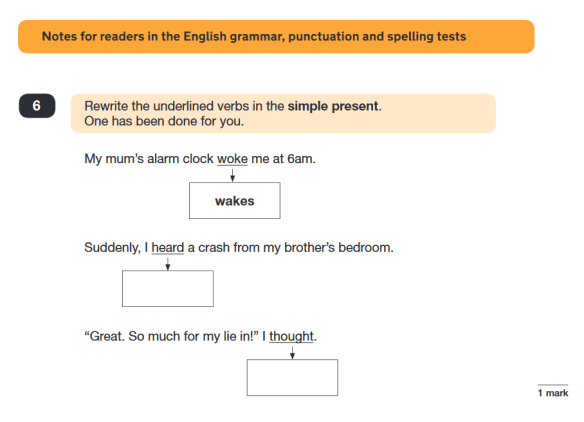
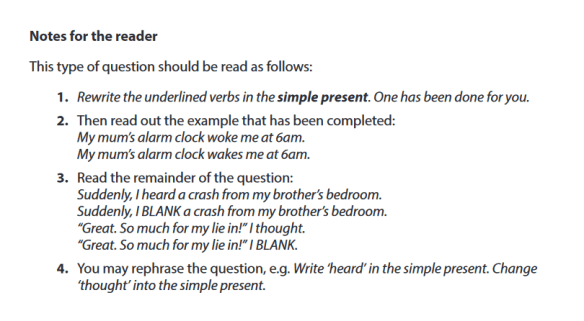
The following question isn’t from today’s tests because I haven’t seen these, but it is from this year’s Notes for readers in the English grammar, punctuation and spelling tests and so is illustrative of the types of questions asked, and I have supplied other ‘real’ examples elsewhere on this blog:
gps1

gps2

I genuinely do not understand the point of such a question. I say this in the context of such a test being linked to the teaching and learning of Writing. This example presents/asks a number of things that seem quite meaningless:

It uses the term ‘simple present’ as if this is a known term, and/or an important term, but of course the question can be answered/completed without knowing the term.

Answering these three questions won’t really tell us much, will it? It will tell us if the student can answer the question correctly or incorrectly. So what? Even in the constriction of teaching/testing tense cohesion, it would be more ‘telling’ to ask a student to write three sentences in the past or present tense.

And what is the problem with my suggestion immediate above? Simple. It can’t be assessed as a right/wrong answer in the crass simplicity of a national test with a prescribed mark scheme. Such an approach to testing has to be uniform and simplistic and finite. Just like what writing isn’t.

What would be a more interesting and engaging way of using the frame of this question to explore a student’s ability to write, and to write with variation?

How about asking students to supply alternative words to those given? Would it matter if they were past or present tense? [To a degree that is a rhetorical question as I do think tense cohesion can be an important aspect of writing, and a common problem of maintaining in students’ writing, not that I would test it like this, not that the question we are looking at is testing this – if you are following].

But for my wider point, what about encouraging:

My mum’s clock shocked me at 6am.

My mum’s clock startled me at 6am.

My mum’s clock laughed loudly at me at 6am.

You know what I mean. I’ve gone this route before. But it is an important point and idea.

Could this be tested? Not on a national basis with prescriptive mark schemes which couldn’t countenance, let alone encourage such endless variation. Writing has to be finite. It has to be right or wrong. Just like the worst writing there is.

But teachers could assess this.
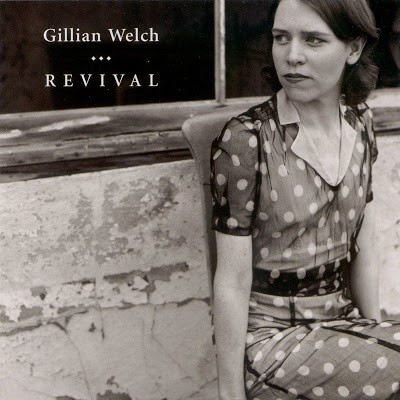
Top Fifty 26: Gillian Welch – Revival, 1996

[Originally posted May 2011]

67

This is a perfect album to bridge/connect my love for old and ‘new’ Country, or to put it another way, the traditional and americana. This album, released in 1996, certainly revived for popular appeal a more niched sound of bluegrass and Appalachian twang, the rural folk of America’s past and perhaps more modern redneck appropriations.

It isn’t difficult to find where that aural anchor grabs and holds: it’s in the taut harmonies of Gillian Welch and partner David Rawlings. There is a vocal rapport in both timing and tone that is sheer perfection, and Rawlings’ guitar work adds a stunning extra dimension in its virtuosity.

There is at times a sombre intensity to the pair’s self-penned songs which is a consequence of meditative gospel lyrics and the live solo recording of these by T-Bone Burnett. Perhaps the best way to encapsulate the overall impact is to describe the music as darkly beautiful, though it does ‘rock’ here and there.

I have seen Gillian Welch and David Rawlings twice, first in Manchester and second in Birmingham, and at that first gig they were supported by Old Crow Medicine Show – a Rawlings project – and they too brought, and still bring, good ol’ Country twang to a modern nuance of virtuoso playing and energy.

Revival has a very strong place in my Top Fifty and is supported by a subsequent body of work that continues to impress and delight.

68 - Copy


Multiple Choice Question

As Education Secretary, Michael Gove banned American novels from being studied for GCSE English Literature.

In order to mark this year’s GCSE English Literature exam, is it [select appropriate adverb to go here from the following on offer] ironic that examiners need to take and pass a patronising online security awareness quiz presented by an American?

A cruelly
B perversely
C ludicrously
D hilariously

It’s Crazy

Boris Johnson’s ‘crazy’ Brexit tag today is surely correct in the general sense rather than the specific he intended, not that we should really give him much credit for being accidentally accurate. Read more on this here.

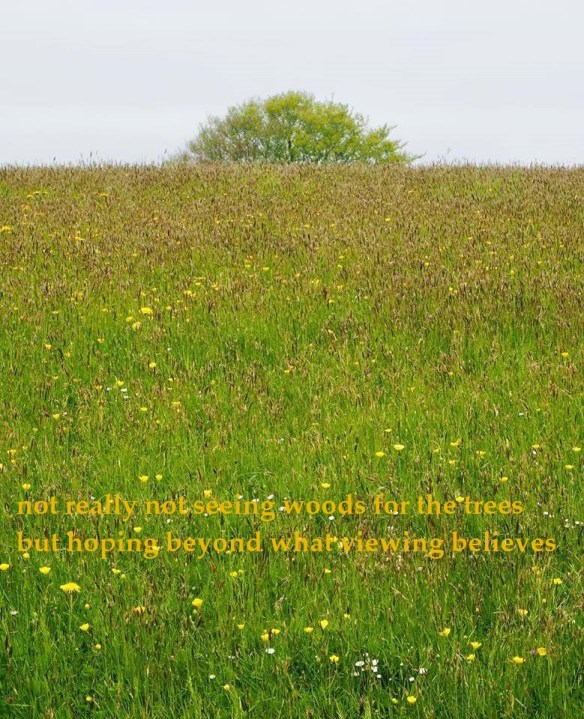
A photo with a poem I wrote yesterday and intended to share later this week seems apt to post now. The image is by artist and photographer Nick Dormand.

31945300_10156316525253544_6898884566019211264_o

Fear

This has-been, this washed-up gnarl of a tree-
something is fake news – not being ancient or
special, not travelled from thousands of years
and miles away but probably further up this
coast, the remains of some louts’ beach party
with beers and fireworks and drunken shouts of
‘Brexit!’ and those other random loud chantings.

It is the remains of this, and they wouldn’t get
that irony, imagining the creature clinging to its
side as an alien from a Ridley Scott film, not
knowing that’s his name or how such features
are metaphors for our fear and not the actual of
absorption, torching the host but missing its tight
holding on that rides the terror of their rantings.

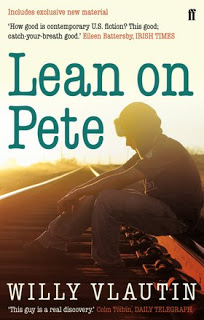
‘Lean on Pete’ – book by Willy Vlautin; film by Andrew Haigh

I’ve just read Mark Kermode’s positive, enthusing review of the film version of Lean on Pete in today’s Observer here, and it sounds like an empathetic presentation of the excellent third novel from Willy Vlautin. I look forward to seeing the film for myself, I hope soon.

I am therefore re-posting my review of the book originally written in 2011, and first placed on this blog in 2016:

lean

Third Triumph

This third novel consolidates Vlautin’s skill and significance as a contemporary writer and it also continues the stylistic American tradition of simple storytelling in terms of naturalistic dialogue and straightforward expression. The honest and believable first person narrative of 15 year old Charley Thompson provides the perfect vehicle for such simplicity, but of course whatever the techniques and personas and situations used, the depth of feeling and meaning is conveyed with an immediacy and emotive impact that is compelling.

Charley’s story is similar in many respects to the themes and contexts of Vlautin’s previous two novels: journey as escape and self-discovery; damaged lives; hardship [against the self, both physical and mental, but especially loss and death], and the kindnesses, indifferences and nastiness of humanity.

It isn’t a significant difference, but I don’t feel this story is either as bleak or as hopeful – Vlautin’s potent novelistic paradox – as its predecessors. That isn’t to say it is neutral. Charley’s hardships are many and continue to come at him, but apart from two specific moments of violence he copes well [for his age] and we as readers are not made to dwell on these as Charley continues to move forward and beyond these quickly – though not in the physical reality of his trek across significant distances. Nor is it as thematically hopeful in as much as although Charley encounters many examples of kindness and support I don’t feel the book ends with such a certain affirmation of this – though the reader is allowed to decide/imagine for themself.

The novel is rich in its ensemble of characters with more variety and range than in the previous two books. Charley is, as I’ve said, totally believable and he is also hugely likable in his vulnerability, work ethic, survival instinct and youthful exuberance.

Horses and horseracing are an interesting contextual reality for much of the story and Vlautin has clearly used his interest in and knowledge of this to provide yet more credible and engaging settings for the book. There is also a brilliant pattern of experiences – many shown quickly or even just recalled by Charley in reminiscences with others – which seem to tumble out of Vlautin’s own actual experiences. That or it is just more from his rich and vivid imagination. It’s a wonderfully ‘easy’ read and in many ways for me as rewarding from that simple experience as much as the heartfelt tale.

NB: Last year I included an extract from this excellent novel to illustrate and teach the power of dialogue in my GCSE text Writing Workshops, see here, and subsequently had the great pleasure of interviewing Willy Vlautin and talking about this book, see here.

More of my reviews of Vlautin’s work here.

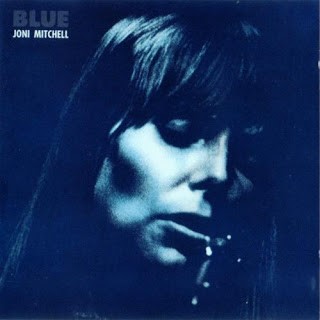
Top Fifty 25: Joni Mitchell – Blue, 1971

[Originally posted August 2011]

65

The perfect album. This is Joni Mitchell’s fourth, released in 1971, and her best. The perfection is in the songwriting and performance; in the storytelling and poetry. It does seem to be totally honest, without melodrama or pretence, and there is a purity in the simplicity of playing and production. This isn’t a difficult choice for a top fifty. An obvious personal tattoo.

I find listening to the album a totally calming experience. This is partly to do, inevitably, with the nostalgia of memories prompted and conjured, but it is essentially the beauty of the music, and of course the lyrics which don’t require analysis because in a song it is about sound as well as meaning and Joni Mitchell combined this with an instinctive compromise of ear and mind [you know what I mean – language can date and jolt but it’s all about intention and effect and I think hers are sincere, lively and at times playful]:

Blue

Songs are like tattoos
You know I’ve been to sea before
Crown and anchor me
Or let me sail away
Hey Blue, here is a song for you
Ink on a pin
Underneath the skin
An empty space to fill in
Well there’re so many sinking now

You’ve got to keep thinking
You can make it thru these waves
Acid, booze, and ass
Needles, guns, and grass
Lots of laughs lots of laughs
Everybody’s saying that hell’s the hippest way to go
Well I don’t think so
But I’m gonna take a look around it though
Blue I love you

Blue here is a shell for you
Inside you’ll hear a sigh
A foggy lullaby
There is your song from me
© 1970; Joni Mitchell

Acid, booze and ass – that’s what I call a Magic 3!

66 - Copy