

[Originally posted February 2012]
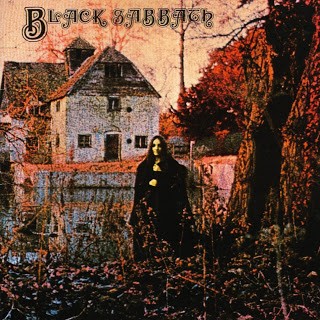
Rain, tolling bell, thunder, drawl of a heavy riff, and slow bleak questions before the apocalypse strikes its shocked response Oh No, Black Sabbath announces Black Sabbath, and the demons, wizards and devils therein are dark procreative forces announcing a new genre through this Satanic birthyell, or the vivaparous voice that is Heavy Metal God Ozzie Osbourne.
Raw as a pig’s hide kicked by a mad farmer’s boot in the wild black of night, the relentless ramrod riffs and largely monosyllabic lyrics pound out again and again the most sublime new testament of Rock. By the time we get to N.I.B. – 40 seconds in to be precise –
DAA DAA DAA DAA DAA DAA DAA DAA DAA DAA
the most memorably malevolent iambic pentameter in Rock is fully realised: OH YEAH!
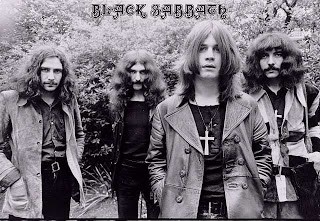
Diablo Tony Iommi lays down his own straightforward but powerful incantations in dark worship at the altar of Blue Cheer, and Fiend Geezer Butler provides roars from other visiting daemons carried on the rumbling rolls of Beast Bill Ward.
I bought this album not really knowing who or what it was – but drawn by the cover – somewhere on a market stall in London. I played it for the first time, as memory serves, at the house of a female student friend and other likeminded 5th year musical vampires where we sucked its fresh blood with relish. I do believe there was a collective and spontaneous headbang, but reality and myth merge after all these years.
I do know that its dark drones merged with simple melodic lines still thrills today. I might be wrong, but it seems to me that Paranoid has more acclaim, and War Pigs is the common choice for a fans’ anthem, but this debut raw assault on the senses has left its permanent mark on my musical hide and long listening ride.

beau
beau
beau
this pattern of a
hue
how the Egyptians
first stained goblets in its
synthetic
baby blue
named in 1892
code 199
baby blue eyes
little boy blue
and – losing
focus –
bubbles
colour of custom cars
and sprayed on the body shell
of model kits
dreaming as a kid
one day
one day
not just plastic
and glue
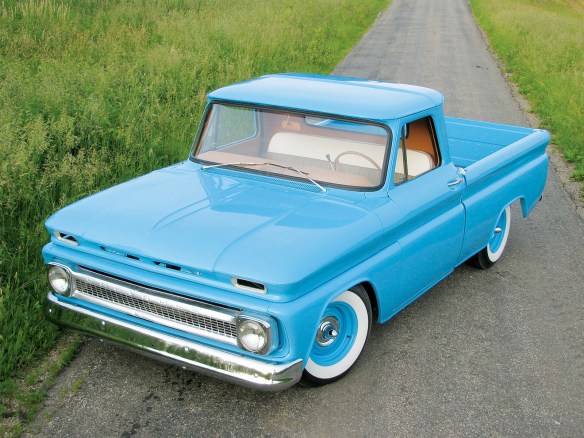
This has been a childhood, nostalgic prompt as well as one about a poet wearing a baby blue mask [he posted the pic, and yesterday’s posting featuring the poem from this] and by one of those uncanny coincidences, re-watching The Sopranos series last night – I am on Series 1 episode 7 Down Neck – these two baby blue cars appeared in one shot,

Blue Mood Poet
He is reciting
baby blue
muffled poems
as if through
a cloudless
morning sky,
words filtered
by a soft
mask of beauty
to clarify.
As I have written elsewhere [type National Poetry Day… in search bar] I am preparing free poetry writing ideas for this day, the 4th October.
This resource fully embraces the theme of Change by providing options for this to change the ‘lead’ poem above.
Just click on the links below to see a preview [there may well be further work] but also to have a go at one on your own.
The first will open as a document and if you ‘enable editing’ by clicking this option, you can change the copy; the second will open as a pdf that you can download:
[NB I post this on a PC, and usually open links on a PC. I noticed when opening these on my iPad, they do not work as intended: the word document doesn’t appear to offer editing, and the pdf does not open as intended in terms of presentation. Apologies, and I will search for a fix, but anyone in the know who can advise…]
I posted yesterday of my sadness in hearing about the passing of poet Matthew Sweeney. I had written in April here on the announcement of his having motor neuron disease so it wasn’t a shock but nonetheless a surprise to hear of his death so soon, aged 65.
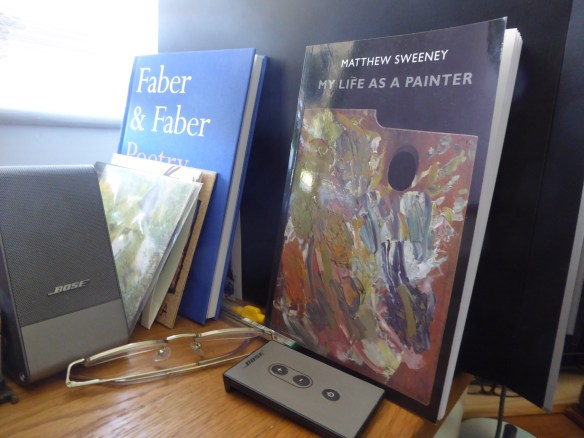
And it is neither here nor there, but I regret not having written my review of his latest collection My Life as a Painter sooner rather than now, though it is never too late to celebrate and pay tribute to such a distinctive writer. Not by way of defense but rather sad irony, the picture leading on this piece is of his book next to my computer, ready for reviewing, placed there no more than a few days ago.
This is a snapshot look at a collection I am still reading and enjoying so much. It is, as ever, wonderfully peculiar in its poetic circumnavigating through a world he narrates like a spinning top of images and ideas.
In the opening poem The Prayer, a prayer ‘intoned to a sunflower’ that was watched – the sunflower – by a neighbour’s black cat, prompts the moon to rise again ‘and regain its rightful place in the sky’ as we also rise to enter a magical universe controlled by the imagination of Matthew Sweeney.
In Five Yellow Roses, a regular visiting Siamese cat – we know it isn’t the neighbour’s – is again an animal witness to another splendid scenario as it hisses at the back of a delivery man who has delivered five yellow roses. In ‘the shit-faced side-streets of life’ and this poem, the flowers’ recipient is so moved
‘…to encourage her
to cook saffron rice, with turmeric-tinged prawns
and sautéed yellow courgettes. She didn’t play
the Ry Cooder where yellow roses say goodbye’
and now I know I share a taste in music with Sweeney.
These few extracts are mere farts in the storm of imagining to come. No Maps begins in the colour yellow again, opening with
‘Instead of studying the map any further,
get on your yellow Vespa and fart off
into the forest to bump along that dirt-
track…’
but what follows is a cascade of poetic incident and journeying that makes one dizzy to read by following round and round in utter delight.
In The Parrot’s Soliloquy, Sweeney places the savage plight of refugees within the frame of birds flying freely across borders, and in this overall straight account, absurdity is found not in the usual wilder imagining but in the contrast between the natural world and that of human experience,
‘I speak for all feathered
folk on this matter, watching
you people mass in stations
or slip through razor wire
or suffocate in airless trucks
or drown in the still sea.’
This contrast is our focus until the mention at the poem’s end of the ortolan, that marinated and fattened bird eaten traditionally by the French with a cloth over the eyes so the biting off the body from the head is not witnessed: more fake unseeing in an uncaring world.
The Dance of the Rats is a longer poem of 18 stanzas in three parts. Where Sweeney’s storytelling so often romps surreally at pace through single blocks of prose, this takes a longer route through the absurd when rats squeal like a Mozart piece, and passing a funeral makes the narrator think only of a waiting Malbec and an already prepared chili con carne ‘defying/any Texan to better’. The poem includes seagulls, crows, bats, ‘my dog Bonzo’ and references to
‘…a man who longed to eat
the fingers of monkeys, fried with garlic
and wash them down with glasses of piss.’
And earlier before the poem reaches its violent ending – which I won’t spoil by describing – there are these lines that I imagine are one of the many truths within these poems, and which here I assume are about Sweeney’s disease and ultimate dying, but of course I can’t be sure,
‘No, the pains come unannounced
in all parts of the body now, as if
the end is being introduced gradually.’
As I said earlier, this is just a brief light on a few poems in the whole, taken from early ones, and there is so much more vibrant storytelling of continually surprising routes for readers to meander and/or be driven through in a vivid stream of consciousness.
I’ll close with the title poem and latch on to the fact that Sweeney chooses pigeon as his favourite of the three birds in the piece, which would be my selection too, like listening to Cooder, all shot by his father and pot-roasted by his grandfather. It is a story unusually sustained as a singular focus on this apparent reminiscence – that is until the end where he contemplates painting [as still life, not literally] coloured loaves of rye.
[I did also yesterday write a poem here in homage to Sweeney’s influence on me whenever I attempt a prose poem approximating to his sense of exploration and entertainment]
I went from Matthew to Matalan on the
search engine, this day of Sweeney’s death,
and would like to guess he too would find
a narrative that accounts for this: imagine
buying shorts for him and me to wear walking
together into surprises, finding ourselves in
the woods and then by the lake where dozens
of other men are dressed in chinos or cargo
comfort ones, pockets at the sides filled with
string and salt for after, and nodding to some,
then blanking others – you can never be too
sure of everything – so when it was time to
make our dash deep back within the trees,
those who rushed ahead had their bare legs
scratched while ours remained unscathed
following in these new trails, and at this
clearing, a ring of cairns like mini gravestones
marked out a destination where I would tie my
string from one to the other, looped on each
varying peak, saving the salt for cooking later.
[Sorry to hear of the passing of poet Matthew Sweeney today. I wrote about him recently here.]
There really are doggie lawns…

Real grass meets real ass
– W.D. –Hund
Yesterday, I got the
patio gas;
now for the patio
potty grass
it seems, if I had a dog:
this REAL lawn
and REAL dog combo
delivers more bang
for your buck.
20 x 24 inches
straight to your door
and larger than out-
doors when you don’t
have any.
Friend of the
green bin
and friend of odour-
less inches on verandas.
Or inside if
no outside
for weeks
not hours
day or rain
night or shine:
doggie potty size
to fully neutralize.
[Originally posted July 2012]

NRBQ – New Rhythm and Blues Quartet – formed in 1967 and brought out this debut eponymous album in 1969 on Columbia Records. It is an infectious, eclectic offering including covers of Eddie Cochran, Sun Ra and Brownie McGee/Sonny Terry.
The album starts with the brisk C’mon Everybody, essentially a straight rock’n’roll cover, but second track, the Sun Ra Rocket Number 9, immediately introduces the lively variation on this album, its jagged jazz rhythms delivered with dominant percussion, monotone vocals and Don Adams on trombone as the song launches into its discordant close. Third track Kentucky Slop Song is a rousing and comic Country pastiche, and this opening trio establishes the delightful diversity that so appealed when I first acquired the album in ’69 not knowing anything at all about the band.
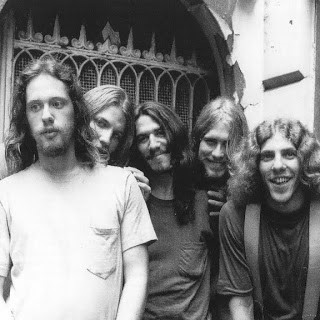
Fourth track Ida, written by band member Terry Adams and jazz composer/pianist Carla Bley, is the first ‘rock’ number in as much as this was the genre I was expecting in looking at the longhair photobooth snapshots on the album cover. The McGee/Terry track C’mon If You’re Comin’ is a wonderful and honest acoustic version, with fine harp playing by Terry Adams. Side one of the album closes on band member Steve Ferguson’s song I Don’t Know Myself, carrying its early Rolling Stones ballad echo with confidence.
Side two of the album begins with another Ferguson number Stomp, which according to the liner notes he introduces when playing for this recording as This is a tune ah wrote, itsa stompin’ song an’ ah hope it makes every one of you wanna do jes’ that, and the phonetic presentation accurately reflects the intonation and inflection of much of the singing, delivered again, for example, in next track Fergie’s Prayer where I can hear that similar modulation in the singing of Kings of Leon today. The album continues with another cover, the Cobb/Channel Hey! Baby, and it is Countrified rock of the best head-bobbing, foot-tapping kind. Side two closes with a Terry Adams’ jazz tune Stay With Me, a neat final stamp of the whole album’s eclecticism, though it must be stressed how simply and unpretentiously that has been represented.
For a band that was never that well known and who certainly didn’t produce ‘hits’, they have a substantial discography and devoted following, and though going not surprisingly through a number of personnel changes, they continue today.



 gravyfromthegazebo